Step 1 - Raised Beds
The Best Raised Garden Beds Under $100
Under $100 you are choosing between growing area, protection and working height. You cannot have all three -- here is which to pick.
Janet H. - the hands-on owner behind Janet Media Group.
Published
This page contains affiliate links. If you buy through them we may earn a commission at no cost to you, and it never decides what we recommend. How this site is funded.
The short version. Under a hundred dollars the Land Guard galvanized 8 x 4 is the most bed you can buy: a full-size steel frame with the largest growing area in the bracket, for someone who wants to grow food and does not need the bed to be beautiful. If something is already eating your garden, the Quictent galvanized bed with cover spends part of that hundred on hoops and mesh instead of on area, and it is the right call for brassicas and salad. The budget pick is the VIVOSUN 5-pack of 10-gallon grow bags -- not a bed at all, but five growing spaces for about a fifth of the bracket, and the cheapest thing on this site that genuinely does the job.
Every pick on this page sits under $100 at the price our pipeline read from the retailer, and each buy control carries the date that price was checked. If a listing loses its offer, the number disappears rather than going stale -- we would rather show you nothing than show you a price that was true last month.
How we chose
- Under the line with a live price. Every pick is confirmed under $100 by the price layer, with the date shown. Nothing here is listed on a remembered number.
- It has to be a growing space, not a trough. Eight inches of usable depth is the floor; anything shallower is a planter and we say so.
- Materials that last more than one season. Galvanized steel, food-grade vinyl and non-woven fabric all qualify at this price. Thin painted softwood does not.
- Honest about the soil bill. The bed is the small cost in this bracket. We say what each one takes to fill, because that is the number that surprises people.
- No invented testing. Scores are editorial judgment from published specifications and Extension guidance, not hands-on trials or rating averages.
Quick picks
| # | Product | Best for | Score | Price |
|---|---|---|---|---|
| 1 | 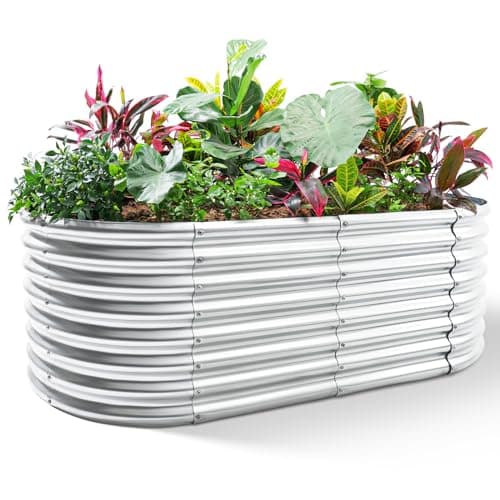 Top pickLand Guard Galvanized Raised Garden BedGalvanized steel, large footprints, budget price | Most growing area per dollar | 8.2 | $63.99 - View on Amazon |
| 2 | 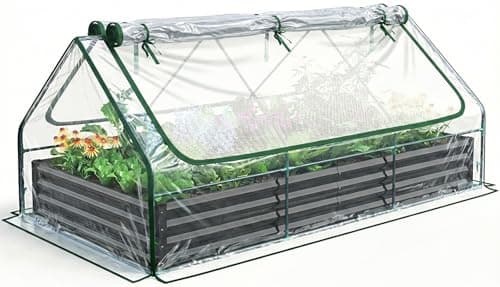 Quictent Galvanized Raised Bed with CoverMetal bed with hooped mesh and cover | Pest and frost protection | 8.0 | $99.99 - View on Amazon |
| 3 | 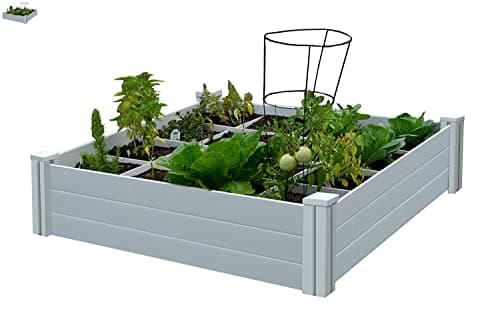 Vita Classic 4 x 4 ft Vinyl Raised Garden Bed11 in deep food-grade vinyl, tool-free posts | A tidy bed with no upkeep | 8.1 | $80.00 - View on Amazon |
| 4 | 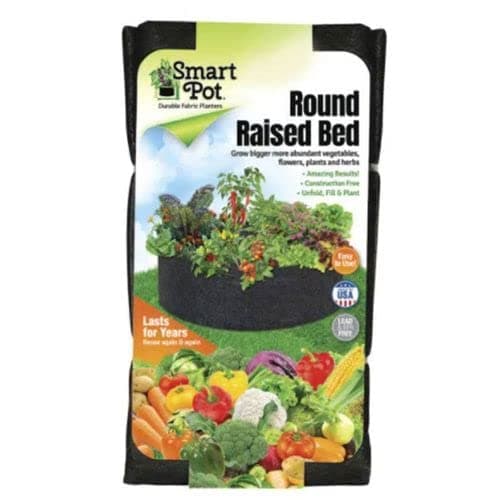 Smart Pot Round Raised Bed, 100 Gallon50 in across, 12 in deep, about 13.5 sq ft | A whole bed's worth | 8.8 | $69.95 - View on Amazon |
| 5 | 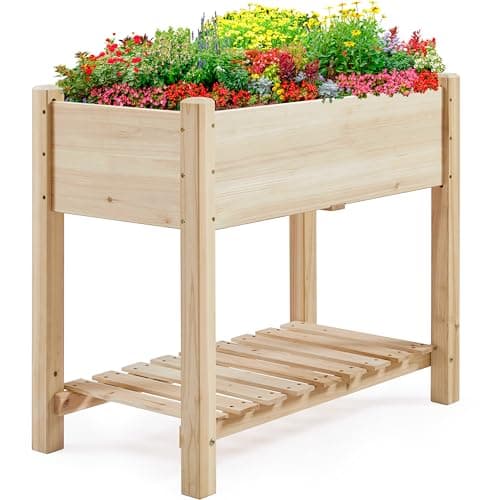 Yaheetech Elevated Wooden Planter BoxWaist-height fir planter with drainage liner | Balconies and bad backs | 8.0 | $47.99 - View on Amazon |
| 6 | 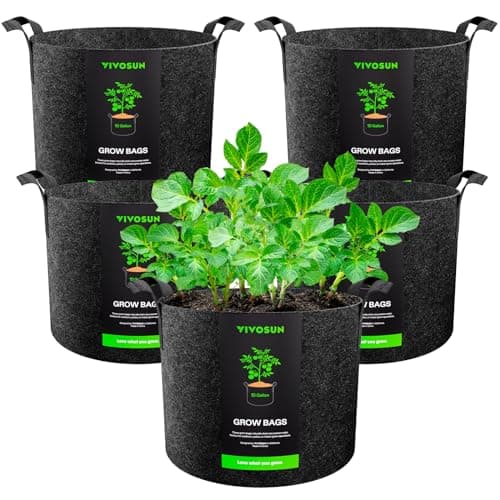 VIVOSUN 5-Pack 10 Gallon Grow BagsFive 10 gal bags with stitched handles | A first set of bags | 8.4 | $17.84 - View on Amazon |
#ad We may earn a commission - Price as of November 24, 2026
Scores are our own editorial judgment, formed from published specifications and independent sources. They are not aggregated customer ratings, and they are not the result of hands-on testing, which we do not currently do. See how we choose.
What the bracket forces you to choose between
A hundred dollars is enough for exactly one priority. The picks above are really four different answers to the same question, and the right one depends on which problem you have.
| Priority | What you buy | What you give up |
|---|---|---|
| Maximum growing area | A full 8 x 4 steel frame | Depth beyond about a foot, and any pest protection |
| Protection | A smaller bed that arrives with hoops and mesh | Roughly half the growing area |
| Working height | A waist-height planter on legs | Root depth -- the box is shallow by necessity |
| Lowest possible cost | Fabric bags or a fabric round bed | The bed looking like a bed |
| Tidiness and zero upkeep | A vinyl frame that stays white | Area, and the option to stack it deeper |
There is no pick in this bracket that does two of those well. That is not a criticism of the products -- it is what a hundred dollars buys. The mistake to avoid is buying for area and then discovering you needed protection, which is how people end up buying twice.
The soil costs more than the bed
This is the single most useful thing to know before spending in this bracket. An 8 x 4 bed at twelve inches deep holds roughly thirty-two cubic feet of fill. Bought entirely in bags of purpose-made raised bed mix, that costs several times what the frame cost.
- Work out the volume before you buy the frame. The raised bed soil calculator does it in one step, and the answer often changes which bed people choose.
- Bulk beats bags above about fifteen cubic feet. Bulk soil vs bagged soil has the crossover point and what to ask a supplier for.
- Fill the bottom third cheaply. What to put at the bottom of a raised garden bed covers what actually works down there and what causes problems.
- A smaller bed filled well beats a big bed filled badly. Every time. This is the argument for the 4 x 4 over the 8 x 4 on a tight total budget.
Where the money is better spent elsewhere
If you already own a bed, almost nothing in this bracket improves your garden as much as spending the same money on what goes over it or into it. A hoop-and-net kit protects a bed you already have for a fraction of the cost of a second bed. A soaker hose on a tap timer fixes the problem that actually kills most crops. And a bag of decent mix turns a tired bed back into a productive one.
The case for buying a second bed is succession and rotation rather than area as such -- two beds let you follow a crop with a different family, which is worth more over three years than one larger bed. Raised bed size guide covers how to lay that out in a small garden.
The picks in full
Top pick
Land Guard Galvanized Raised Garden Bed
Land Guard
The cheapest honest way to get a large steel bed, as long as you accept plain galvanizing instead of an Aluzinc coating.
If the goal is to grow the most food this year for the least money, area beats coating. A large cheap bed you can actually fill will feed you better than a small premium one, and Land Guard exists for exactly that calculation.
Understand what you are giving up. Plain galvanizing is a zinc coating; Aluzinc adds aluminum and magnesium and holds up considerably better at the soil line, which is where beds fail. Expect good years rather than decades.
The panels are thinner too, so use the supplied braces and do not skip the center support on the long sizes.
What works
- Lowest cost per square foot of growing area
- Large sizes available in one kit
- Simple assembly with basic tools
- Good way to trial a big bed before committing
What does not
- Plain galvanizing, not the longer-lived Aluzinc
- Thinner panels flex more when filled
- Edges deserve a careful check during assembly
Skip it if: you want the bed to outlive the mortgage. Plain galvanized steel is fine for years, not decades, especially where soil stays wet.
| Material | Galvanized steel |
|---|---|
| Depth | Commonly 12 in and 17 in |
| Footprint | Large rectangles including 8 x 4 ft |
| Assembly | Bolt-together panels |
| Soil needed | About 32 cu ft for 8 x 4 ft at 12 in |
Pest and frost protection
Quictent Galvanized Raised Bed with Cover
Quictent
A bed and a crop cover in one box, which is the cheapest way to stop cabbage moths, birds and a light frost at the same time.
The cover is the product here. Cabbage white caterpillars can strip a row of kale in days, birds will take strawberries the moment they blush, and a late frost can end a first tomato planting. A hooped mesh over the bed handles all three.
Fitting the hoops to the bed from the start avoids the usual improvised arrangement of sticks and clothes pegs, and they fold back rather than having to come off entirely.
Remember to open or remove the cover once fruiting crops flower. Netting that keeps moths out also keeps pollinators out, and an unpollinated squash plant is a lot of leaf for no dinner.
What works
- Cover keeps cabbage moths and birds off brassicas and greens
- The clear cover buys a few weeks at each end of the season
- Hoops fold back for access
- Cheaper than buying a bed and a cover separately
What does not
- The bed itself is ordinary galvanized steel
- Covers need removing when crops flower and need pollinating
- Mesh is a wearing part in a windy yard
Skip it if: you already own a bed. A separate hoop-and-net kit over what you have costs far less than buying the whole thing again.
| Material | Galvanized steel bed with steel hoops |
|---|---|
| Cover | Mesh net plus a clear cover on most versions |
| Depth | Commonly 12 in |
| Assembly | Bolt-together bed, push-fit hoops |
| Soil needed | About 32 cu ft for 8 x 4 ft at 12 in |
A tidy bed with no upkeep
Vita Classic 4 x 4 ft Vinyl Raised Garden Bed
Vita
Board-and-post vinyl that goes together in about twenty minutes and never needs staining -- the lowest-maintenance of the kits sold on a store shelf.
Vinyl is the family most people overlook, and it earns its place on one argument: there is no maintenance at all. Cedar weathers and eventually rots, steel can scuff at the cut edges, and this does neither. The boards slide down into corner posts with no fasteners, so assembly is genuinely a twenty-minute job for one person.
The trade is depth. Eleven inches is enough for salad, bush beans, chard, herbs, strawberries and determinate tomatoes, and it is not enough for carrots, parsnips or a decent potato crop. Buy it knowing which half of the seed catalog it serves rather than discovering that in July.
Volume is modest too -- a 4 x 4 ft frame takes roughly 13.5 cubic feet of mix, which is one of the cheapest fills on this page and a real part of the appeal if the soil bill is what has been putting you off.
What works
- Tool-free assembly -- boards drop into the posts
- Nothing to stain, seal or re-treat, ever
- A white frame reflects more sun than dark steel in a hot yard
- The Grow Grid version marks out square-foot spacing for you
What does not
- Eleven inches is shallow for anything with a long root
- It reads as white vinyl fencing, which will not suit every garden
- A narrower range of sizes than the steel and cedar lines
Skip it if: you want carrots or potatoes. Eleven inches is the whole depth of the classic frame, and it does not stack the way a cedar or composite kit does.
| Material | Food-grade vinyl, BPA and phthalate free (manufacturer's figures) |
|---|---|
| Size | About 48 x 48 in, 11 in high |
| Assembly | Boards slide into corner posts, no tools |
| Warranty | 20-year limited, per the manufacturer |
| Soil needed | About 13.5 cu ft to fill |
A whole bed's worth
Smart Pot Round Raised Bed, 100 Gallon
Smart Pot
A fabric raised bed rather than a pot: wide enough to plant like a bed, cheap enough to buy two, and it folds flat in October.
This is the grow bag that behaves like a bed -- Smart Pot has also sold it as the Big Bag Bed. At roughly 50 inches across it gives you about 13.5 square feet of planting area -- the same growing area as a 4 x 4 ft frame -- in something that arrives folded in a flat parcel and needs no assembly at all.
Twelve inches of depth is the number that matters. That is enough for lettuce, beans, chard, bush cucumbers, peppers and determinate tomatoes, and it is shallow for carrots, parsnips and a serious potato crop. It is the same depth limit a shallow metal or vinyl bed has.
The cost is the fill. A bed-sized bag needs a bed-sized volume of potting mix, so the bag being inexpensive does not make the project inexpensive. Work out the mix cost first, using the soil calculator on this site, because that number rather than the bag decides whether this is the cheap option for you.
What works
- Gives you bed-scale planting area without a frame to assemble
- Twelve inches of depth is enough for most vegetables, including determinate tomatoes
- Folds flat for winter storage, which no rigid bed does
- Enclosed bottom means you can put it on a patio, gravel or a driveway
What does not
- Needs a full 13.5 sq ft of potting mix, which is the real cost of the format
- Dries out faster than a soil-filled frame of the same depth
- Fabric is a consumable -- plan on replacing it after a few seasons
Skip it if: you want the garden to look built. This is a black fabric circle sitting on the ground, and planting around it does not disguise that.
| Type | Round fabric raised bed |
|---|---|
| Capacity | 100 gal |
| Footprint | About 50 in across |
| Depth | 12 in |
| Growing area | About 13.5 sq ft |
| Base | Enclosed fabric bottom |
| Service life | Manufacturer states 3 to 5 years outdoors |
Balconies and bad backs
Yaheetech Elevated Wooden Planter Box
Yaheetech
A standing-height planter on legs for patios and balconies, where the point is reach rather than growing volume.
An elevated planter is a different product from a raised bed, even though the categories get mixed together. You are buying reach: a box at waist height that you can work at standing up, on a surface where digging is not an option.
The trade is depth. Eight to ten inches of soil is plenty for salad leaves, bush beans, herbs, chard and dwarf tomatoes, and not enough for anything that makes a long root. Plan the planting list around that instead of fighting it.
Small soil volumes dry fast, so this is the one bed type where a mulch layer and a watering habit really are the difference between a crop and a disappointment.
What works
- No bending at all -- true standing height
- Fits a balcony, deck or patio where a ground bed cannot go
- Small soil volume keeps the fill cost low
- Easy one-person assembly
What does not
- Shallow box rules out carrots, parsnips and potatoes
- Dries out quickly in summer and needs frequent watering
- Softwood frame will weather faster than cedar
Skip it if: you want to grow root crops. The growing box on an elevated planter is shallow by design -- it has to be, or the legs could not hold it.
| Material | Fir wood frame with liner |
|---|---|
| Working height | About 30 in to the rim |
| Soil depth | Typically 8 to 10 in in the box |
| Drainage | Slatted base with liner |
| Soil needed | Usually under 6 cu ft |
A first set of bags
VIVOSUN 5-Pack 10 Gallon Grow Bags
VIVOSUN
Five bags for about what one rigid planter costs, and 10 gallons is the size that actually grows a tomato rather than keeping one alive.
Ten gallons is the useful number here. University of Maryland Extension puts the minimum container size for a standard tomato, a pepper, an eggplant or a cucumber at 5 gallons, so a 10 gallon bag is comfortably above the floor rather than at it -- which in practice means fewer collapses on a hot afternoon.
The fabric is mid-weight: thicker than the throwaway bags sold ten to a pack, thinner than the bonded-fabric pots that last a decade. For a first season, while you are deciding whether you like growing this way, that is the right place on the scale.
Fill them with potting mix, not garden soil or raised bed mix. Soil in a container compacts and drains badly, which is the single most common reason a bag of tomatoes underperforms the same plant in the ground.
What works
- Ten gallons is the right size for one tomato, pepper or eggplant
- Handles are stitched rather than glued, so a full bag can be moved
- Five bags let you chase the sun around a patio
- Folds away flat at the end of the season
What does not
- Thinner fabric than the premium bags, so expect a shorter life
- Needs watering far more often than a bed of the same volume
- Dark fabric gets genuinely hot in full afternoon sun
Skip it if: you are growing root crops. Ten gallons is 11 or 12 inches of depth once settled, which is short for carrots and parsnips.
| Type | Nonwoven fabric pot with handles |
|---|---|
| Capacity | 10 gal each |
| Size | Roughly 16 in across and 12 in tall at 10 gal |
| Fabric | Mid-weight nonwoven polypropylene |
| Handles | Reinforced, stitched to the body |
| Pack | 5 bags |
Common questions
Can you get a decent raised garden bed for under $100?
Yes. The bracket covers a full-size 8 x 4 galvanized steel frame, a smaller covered bed with hoops and mesh included, a waist-height planter on legs, or a fabric round bed. What it does not cover is heavy-gauge Aluzinc steel, cedar at any useful size, or a bed deeper than about a foot.
What is the cheapest raised bed that actually works?
Fabric. A pack of ten-gallon grow bags or a hundred-gallon fabric round bed gives you real root volume, excellent drainage and no assembly, for a fraction of the price of a framed bed. The trade is appearance and a shorter life -- fabric is a several-season product, not a decade one.
Is a cheap galvanized raised bed safe for vegetables?
Galvanized steel beds are widely used for food growing and the zinc coating is not considered a meaningful risk at garden soil pH. The honest caveat on budget beds is durability rather than safety: thinner steel and plain galvanizing mean a bed measured in years rather than decades.
How much soil does an 8 x 4 bed take?
Roughly thirty-two cubic feet at twelve inches deep. Bought entirely in bags of purpose-made raised bed mix that costs several times what a budget frame costs, which is why bulk delivery and a cheap bottom layer are worth considering before you choose a size.
Should I buy one big bed or two small ones?
Two small ones, usually. Separate beds let you rotate crop families and run succession sowings independently, which matters more over three seasons than raw area does. A single large bed is harder to reach into and ties your whole garden to one plan.
Sources
Factual claims on this page are backed by the published sources below, and product specifications are the manufacturers’ own. Where a figure is not published, we say so rather than estimating it.