Step 1 - Raised Beds
How Long Do Metal Raised Garden Beds Last?
The frame almost never wears out. What fails is the coating, at the one place every bed gets wet and stays wet.
Janet H. - the hands-on owner behind Janet Media Group.
Published
This page contains affiliate links. If you buy through them we may earn a commission at no cost to you, and it never decides what we recommend. How this site is funded.
A coated steel raised bed from a reputable maker lasts 15 to 20 years and often longer, against roughly 7 to 10 years for an untreated cedar bed and 3 to 5 for cheap softwood. The variable that decides it is not thickness and not brand -- it is the coating. Aluzinc, an aluminum-zinc alloy coating, holds up substantially longer in contact with wet soil than plain galvanized zinc, and the beds that fail early almost always fail at the bottom inch of panel where soil, water and air meet.
What actually fails, and where
Steel does not rot and the panels do not wear out. Corrosion starts where the protective coating is breached or exhausted, and on a raised bed there are only three such places. The bottom edge, permanently in damp soil and the first thing to go. The cut edges and bolt holes, where bare steel is exposed by the manufacturing process. And anywhere the coating is scratched during assembly -- dragging a loaded bed across concrete is a surprisingly common way to shorten its life.
Because of that, the honest failure mode of a metal bed is not collapse. It is a slow rust line creeping up from the base over a decade and a half, long before the structure is compromised. Plenty of steel beds get replaced for looks rather than for function.
| Material | Typical life | What ends it | Replace or repair |
|---|---|---|---|
| Aluzinc-coated steel | 15 to 20+ years | Coating exhaustion at the base | Replace panels individually |
| Plain galvanized steel | 8 to 15 years | Rust at the base and cut edges | Replace panels individually |
| Uncoated or painted steel | 3 to 8 years | Rust through | Not worth repairing |
| Untreated cedar | 7 to 10 years | Rot at the lowest board | Replace the bottom board |
| Cheap softwood (pine, fir) | 3 to 5 years | Rot throughout | Replace the bed |
| Composite boards | 20+ years | Essentially nothing | Replace boards individually |
The three things to check before buying
- The coating, named. A listing that says 'Aluzinc' or gives an aluminum-zinc specification is telling you something. One that only says 'galvanized' or 'rust-resistant metal' is telling you less, and one that says nothing at all is usually the cheapest coating available.
- The gauge. Lower numbers are thicker steel. Around 22-gauge is the common quality mark on garden beds; thin panels bow outward under the pressure of wet soil, and a bowed panel stresses the coating at every bolt.
- Modularity. A bed built from individual bolted panels can have one rusted panel swapped out in year sixteen. A welded or riveted one-piece frame is a single disposable object.
Quick picks
| # | Product | Best for | Score | Price |
|---|---|---|---|---|
| 1 | 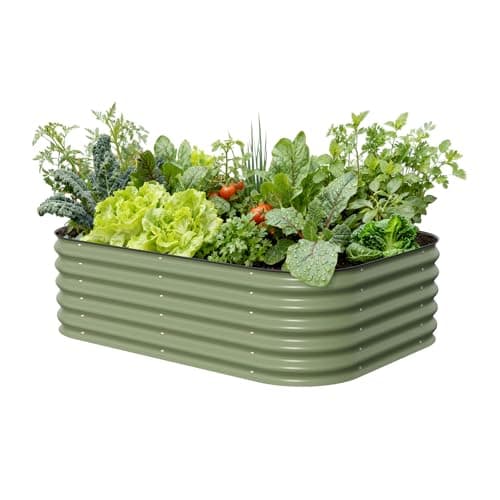 Top pickVego Garden 17" Modular Metal Raised Bed17 in deep, modular Aluzinc steel panels | Most first gardens | 9.2 | $159.95 - View on Amazon |
| 2 |  Vegega 17" Metal Raised Garden Bed17 in deep, Aluzinc steel, fixed footprint | The same steel, less money | 9.0 | Check price on Amazon |
| 3 | 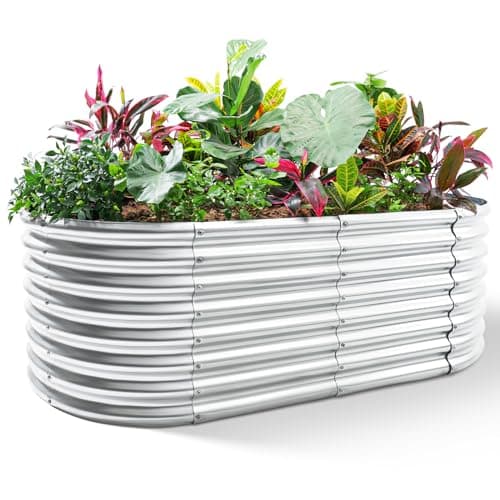 Land Guard Galvanized Raised Garden BedGalvanized steel, large footprints, budget price | Most growing area per dollar | 8.2 | $79.99 - View on Amazon |
| 4 | 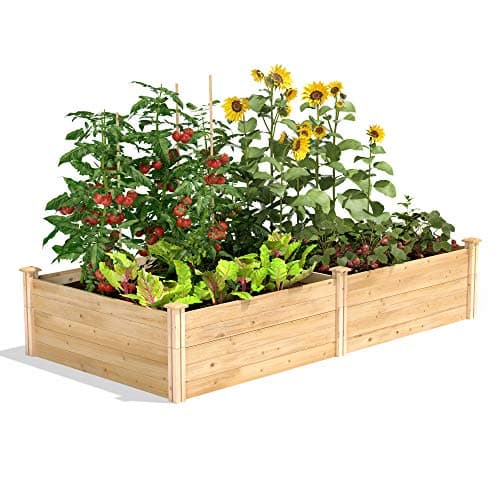 Greenes Fence Cedar Raised Garden Bed KitUntreated North American cedar, dovetail corners | People who want wood | 8.4 | $227.03 - View on Amazon |
#ad We may earn a commission - Price as of October 11, 2026
Scores are our own editorial judgment, formed from published specifications and independent sources. They are not aggregated customer ratings, and they are not the result of hands-on testing, which we do not currently do. See how we choose.
What you can do to add years
- Assemble it where it will live. Most coating damage happens during the move, not during the twenty years afterward.
- Stand it on soil or gravel, not a puddle. A bed sitting in standing water on a slab corrodes from the base much faster than one on free-draining ground.
- Do not line it with plastic sheet. A liner traps water against the inside of the panel at the bottom, which is precisely the wrong thing to do. Cardboard, which breaks down, is fine.
- Leave the paint alone. Painting over an intact coating does nothing useful and the paint will flake; touching up a genuine scratch with a cold-galvanizing compound does help.
- Check the bolts once a season. A loose panel moves, and movement abrades coating.
Cost per year, which is the number that matters
Comparing a steel bed and a cedar bed on sticker price is the mistake almost everyone makes, and it is the wrong comparison twice over. Steel typically costs more up front and lasts roughly twice as long, so on cost per year the two are much closer than the shelf price suggests -- and in many cases steel is cheaper. More importantly, neither number is the real bill. The soil to fill a 17-inch-deep bed costs more than the bed, every time, which is why how to fill a raised garden bed cheap matters more to the budget than the frame choice does.
The one place the longevity argument genuinely flips is if you expect to move house inside five years, or you are gardening on rented ground. Then nothing lasting twenty years is worth paying for, and cheap raised garden beds is the more sensible page to read.
The two questions that always come with this one
Does the steel cook the soil? Not measurably at bed scale. The panels warm in sun, but the thermal mass of several cubic feet of damp soil dominates, and the effect on root-zone temperature a few inches in is small. Metal vs wood covers the measured picture.
Is a galvanized bed safe for vegetables? Yes. Zinc is a plant micronutrient, the quantity released from a coated panel into soil at garden pH is tiny, and the question is addressed directly in the metal raised garden beds roundup. What is not safe is a reclaimed container that previously held something you cannot identify.
What a twenty-year bed asks of you in return
Very little, structurally. The ongoing work on any raised bed is the soil, not the frame: the fill settles an inch or two a year as organic matter breaks down, and topping it up annually with compost is the entire maintenance routine. That is a bed's whole running cost, and it is the argument for making your own compost rather than buying bags of it forever -- see the best compost for raised beds for where home compost beats bagged and where it does not.
Common questions
How long do metal raised garden beds last?
15 to 20 years or more for an Aluzinc-coated steel bed, and 8 to 15 for plain galvanized. The coating decides it, not the brand or the thickness. Failure shows up as a rust line creeping up from the bottom inch of panel long before the bed is structurally unsound.
Do metal raised garden beds rust?
Eventually, at the base and at cut edges, once the protective coating in contact with damp soil is exhausted. An intact coating on good steel resists it for well over a decade. Standing a bed in a puddle, lining it with plastic sheet, or scratching the coating during assembly all bring that forward.
Are metal raised beds better than wood?
They last roughly twice as long, which makes cost per year comparable or better despite the higher sticker price, and they do not need the bottom board replaced mid-life. Wood looks warmer, insulates the root zone slightly more, and is easier to attach trellising and hoops to.
Can you repair a rusted metal raised bed?
If it is modular, yes -- replace the one corroded panel and keep the rest. A cold-galvanizing compound will also cover a genuine scratch before it becomes a rust spot. A welded one-piece frame that has rusted through at the base is not economically repairable.
Does a metal raised bed get too hot for plants?
Not measurably at bed scale. The panels warm in direct sun but several cubic feet of damp soil has far more thermal mass than the steel does, and root-zone temperature a few inches in behaves much like any other bed. Mulching the surface matters far more than the frame material.
Sources
Factual claims on this page are backed by the published sources below, and product specifications are the manufacturers’ own. Where a figure is not published, we say so rather than estimating it.