Step 4 - Composting
The Best Compost Bin for Beginners
A beginner bin is not a smaller bin. It is one that still works when you get the ratio wrong and forget about it for a month.
Janet H. - the hands-on owner behind Janet Media Group.
Published
This page contains affiliate links. If you buy through them we may earn a commission at no cost to you, and it never decides what we recommend. How this site is funded.
The best first compost bin for most people with a yard is a dual-chamber tumbler like the FCMP Outdoor IM4000. It is enclosed so rodents are not an issue, it turns with a handle rather than a fork, and the two chambers mean one batch is always finishing while you fill the other -- which is the thing that stops a first attempt from stalling. If your waste is mostly leaves and grass rather than kitchen scraps, buy a large open bin instead; a tumbler will be full before you have cleared the lawn.
The two mistakes that stall every beginner
One: a single chamber you keep adding to. You put scraps in continuously, so the contents are always part-finished and you can never take any out. Eventually the bin is full of material at every stage of decomposition and the whole thing feels like a failure. Two chambers fixes this mechanically. One chamber fixes it by discipline -- stop adding for a few weeks and let a batch finish.
Two: not enough browns. A bin of kitchen scraps alone goes wet, dense and sour, and that smell is why most abandoned compost bins were abandoned. Composting wants far more dry carbon material -- leaves, shredded cardboard, straw, paper -- than people expect. Keep a sack of dry leaves next to the bin and add a few handfuls with every bucket of scraps.
Quick picks
| # | Product | Best for | Score | Price |
|---|---|---|---|---|
| 1 |  Top pickFCMP Outdoor IM4000 Tumbling ComposterDual chamber, roughly 37 gal total | Most backyards | 9.1 | Check price on Amazon |
| 2 | 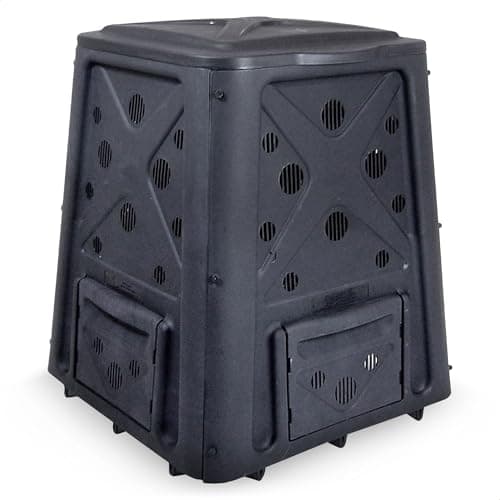 Redmon Green Culture 65-Gallon Compost Bin65 gal enclosed bin with lid and access doors | A lidded static bin | 8.1 | $69.99 - View on Amazon |
| 3 | 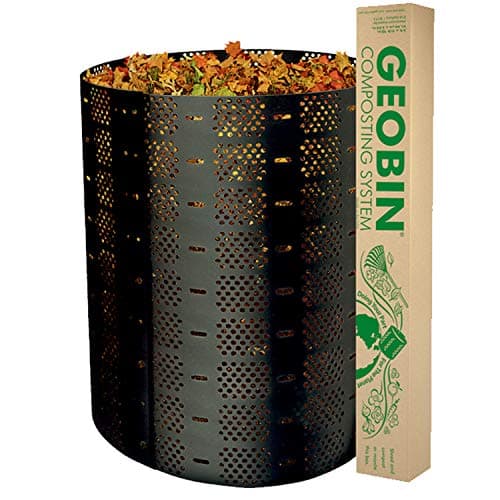 GEOBIN Expandable Compost BinExpands to roughly 216 gal, 36 in tall | Leaves and yard waste | 8.7 | $35.99 - View on Amazon |
| 4 | 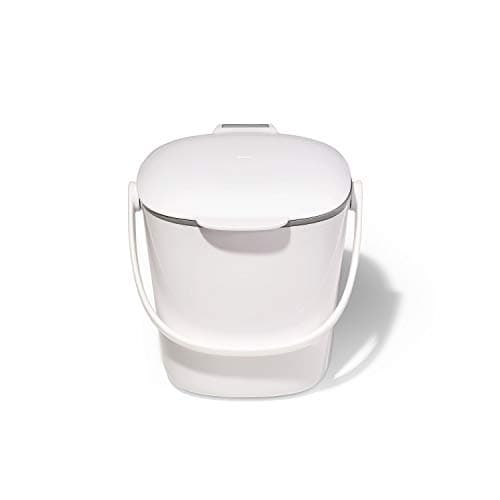 OXO Good Grips Easy-Clean Compost BinSmall lidded pail, smooth-walled for rinsing | The counter caddy | 8.3 | $25.89 - View on Amazon |
#ad We may earn a commission - Price as of October 10, 2026
Scores are our own editorial judgment, formed from published specifications and independent sources. They are not aggregated customer ratings, and they are not the result of hands-on testing, which we do not currently do. See how we choose.
Which bin, by what you throw away
| Your waste | Buy | Why it forgives a beginner |
|---|---|---|
| Mostly kitchen scraps, small yard | Dual-chamber tumbler | Sealed, turns by handle, one batch always finishing |
| Mixed scraps and some yard waste | Lidded static bin, around 65 gal | Lid keeps rain out, nothing mechanical to fail, real capacity |
| Autumn leaves, grass clippings | Large expandable open bin | Volume is the problem and this is the cheap solution |
| No outdoor space at all | Worm bin or electric unit | Works indoors -- see our apartment guide |
| You are not sure yet | An expandable open bin plus a counter caddy | Cheapest possible start, and nothing to regret |
If you are still deciding between the two main types, compost bin vs tumbler sets them against each other on speed, capacity, effort and cost.
Buy the counter caddy at the same time
This is the part beginners skip and it determines whether the bin gets used at all. If collecting scraps means walking to the end of the garden every time you chop an onion, the scraps go in the trash. A small lidded pail on the counter -- emptied every couple of days -- is what makes composting a habit rather than a project.
Get a smooth-walled one you can rinse. Charcoal filters exist and work, but they are only needed if you want to leave it longer between trips. Our kitchen compost bins page covers both styles.
The ratio, as simply as it can be put
- Greens are wet and nitrogen-rich: kitchen scraps, fresh grass clippings, coffee grounds, plant trimmings.
- Browns are dry and carbon-rich: autumn leaves, shredded cardboard, paper, straw, small woody prunings.
- Aim for noticeably more browns than greens by volume. If in doubt, add browns.
- Too wet and smelly? Add browns and mix. Too dry and nothing happening? Add water and greens.
- Keep out: meat, fish, dairy, oils, cooked food, pet waste. Home piles do not reach the temperatures needed to handle them safely.
That is genuinely the whole of it. Composting for beginners goes through the habits in more detail, and what to put in a compost bin has the full in-and-out list.
Siting the bin
Close enough that you will walk to it in the rain, and that is the main criterion. A bin at the far end of a long garden gets used in July and ignored in January, which is exactly backwards -- winter is when a bin needs the kitchen scraps most, because there is nothing else going in.
Part shade is ideal: full sun dries a bin out and full shade keeps it cold. Level ground matters for a tumbler, because an unbalanced drum is unpleasant to turn. And leave room to get a wheelbarrow alongside, because one day you will be emptying it.
What a first year actually looks like
Slower than you expect. A tumbler in warm weather with a decent ratio and regular turning produces finished compost in weeks; the same tumbler filled with wet scraps in October produces very little until spring. Cold weather effectively stops the process, and that is normal, not a fault.
The first batch is also the worst batch, because you are learning the ratio by looking at it. By the second year you will be adding browns without thinking and the bin will behave. Nothing about that first slow batch means you bought the wrong bin.
What not to buy first
Not an electric countertop unit, unless you genuinely have no outdoor space. They grind and dry food scraps in hours, which is useful, but the output is pre-compost rather than finished compost and still has to break down in soil. As a first purchase for someone with a yard it solves a problem you do not have -- electric composter vs compost bin explains the distinction.
Not a worm bin either, if you have outdoor space. Worm bins produce castings that outperform ordinary compost and they are genuinely good -- but they are livestock, and livestock is a second-year project. The best worm composting bins covers them when you are ready.
The picks in full
Top pick
FCMP Outdoor IM4000 Tumbling Composter
FCMP Outdoor
#ad We may earn a commission - prices are shown by Amazon, not by us
Two chambers is the whole point: you keep adding to one side while the other finishes, so you get a batch out instead of a bin that is never quite ready.
The single-chamber problem is why most first composters give up. You keep adding kitchen scraps to the same bin, so the contents are always part-finished, and you can never take any out.
Two chambers solves it mechanically. Fill side A until it is full, then switch to side B and leave A alone. By the time B is full, A is finished compost you can empty in one go. In warm weather that cycle runs in a matter of weeks.
Understand the capacity limit going in. Around 37 gallons total is generous for kitchen scraps from a household, and small if you also want to compost lawn clippings and autumn leaves. Those belong in an open bin.
What works
- Dual chambers give you a finishing batch and an active batch at once
- Off the ground, so rodents are not the problem they are with an open pile
- Turning is a handle pull rather than a fork job
- Closed drum keeps rain from waterlogging the mix
What does not
- Capacity fills fast if you also compost yard waste
- Heavy to turn when a chamber is full and wet
- Assembly takes longer than the box suggests
Skip it if: you generate a lot of yard waste. A tumbler is volume-limited by design, and a big open pile handles leaves and grass far better.
| Type | Rotating dual-chamber tumbler |
|---|---|
| Capacity | About 37 gal across two chambers |
| Material | UV-resistant recycled polypropylene |
| Aeration | Deep fins and internal mixing bar |
| Assembly | Bolt-together frame and drum |
A lidded static bin
Redmon Green Culture 65-Gallon Compost Bin
Redmon
The middle ground: more volume than a tumbler, a lid and a floor unlike an open bin, and no turning mechanism to go wrong.
A static bin is the traditional answer and it still works. You add material at the top, it breaks down, and finished compost comes out of the doors at the bottom months later.
The lid is the reason to choose this over an open bin. Composting needs the mix damp, not saturated, and an uncovered pile in a wet climate turns into an anaerobic, sour mess.
If you want it faster, fork it over every few weeks. Turning is what a tumbler does mechanically, and doing it by hand gets you most of the same speed for none of the money.
What works
- Lid keeps rain out and heat in
- Base doors let you take finished compost from the bottom
- Good capacity for a mixed kitchen and garden stream
- Nothing mechanical to break
What does not
- Slow unless you turn it with a fork
- Base doors clog if the material is too wet
- Panels can be fiddly to assemble
Skip it if: you want compost quickly. A static bin without regular forking is a year-long process, not a three-week one.
| Type | Static enclosed bin |
|---|---|
| Capacity | 65 gal |
| Access | Lid on top, sliding doors at the base |
| Material | Recycled plastic panels |
| Assembly | Snap-together panels |
Leaves and yard waste
GEOBIN Expandable Compost Bin
GEOBIN
Barely a product -- a sheet of perforated plastic you roll into a circle -- and by far the most volume per dollar in composting.
If your composting problem is autumn leaves and grass clippings rather than kitchen scraps, this is the answer and a tumbler is not. Volume is what yard waste needs, and 216 gallons of volume costs less here than 40 gallons costs anywhere else.
The adjustable diameter is genuinely useful: start it small so the pile stays deep enough to heat, and expand it as the material accumulates.
Keep cooked food, meat and dairy out. An open bin with no floor is accessible to every rodent in the neighborhood, and the standard advice on that is not squeamishness, it is experience.
What works
- Enormous capacity for the money
- Adjustable diameter -- start small, expand as you fill it
- Perforations give good airflow through the pile
- Unclips and stores flat
What does not
- No lid, so heavy rain waterlogs it
- No rodent protection whatsoever
- Turning it means a fork and some effort
Skip it if: you are composting cooked food or meat. An open bin is an open invitation, and this one has no lid and no floor.
| Type | Open expandable bin |
|---|---|
| Capacity | Up to about 216 gal depending on diameter |
| Height | 36 in |
| Material | Perforated recycled plastic sheet |
| Assembly | Roll and clip, under five minutes |
The counter caddy
OXO Good Grips Easy-Clean Compost Bin
OXO
The unglamorous item that determines whether you compost at all: if scraps are inconvenient to collect, they go in the trash.
Compost systems fail at the kitchen end far more often than at the bin end. If collecting scraps means opening a cupboard, finding a container and then washing it out, the scraps go in the trash instead.
What makes a caddy work is mundane: a lid you can flip open with one hand while the other holds a chopping board, and an interior with no corners so a rinse actually cleans it.
Empty it every two or three days regardless of how full it is. Nearly every complaint about a smelly kitchen caddy is a caddy that sat for a week.
What works
- Lid opens one-handed and stays open
- No corners for food to lodge in
- Small enough to leave on a counter
- No filter to buy
What does not
- Needs emptying every couple of days
- No carbon filter, so it relies on being emptied
- Plastic rather than steel
Skip it if: you would rather keep scraps in the freezer, which is free, smell-free and works perfectly well.
| Type | Countertop collection pail |
|---|---|
| Capacity | Around 0.75 gal |
| Lid | Flips up and stays open while you scrape |
| Cleaning | Smooth interior, dishwasher safe |
Common questions
What is the best compost bin for a beginner?
A dual-chamber tumbler for most people with a yard. It is enclosed so rodents are not a concern, it turns with a handle instead of a fork, and the two chambers mean one batch is always finishing while you fill the other -- which avoids the never-ready problem that stalls most first attempts.
Why is my compost bin not working?
Almost always one of two things. Either it is a single chamber you keep adding to, so nothing is ever finished -- stop adding for a few weeks and let a batch complete. Or there are not enough dry browns in it, so it has gone wet, dense and sour. Add leaves, shredded cardboard or straw and mix.
How long does compost take for a beginner?
A few weeks in a tumbler in warm weather with a good ratio and regular turning; six months to a year in a static bin that is never turned. Cold weather effectively stops the process. A first batch is usually slower than later ones because the ratio is still being learned by eye.
Do I need a compost bin or can I just use a pile?
A pile works and costs nothing. A bin keeps it tidy, keeps rain out, retains heat better and -- if it is enclosed -- keeps rodents out. If appearance and neighbours are not a factor and you have space, start with a pile or a cheap expandable bin and spend the money on soil instead.
Should I buy a kitchen caddy as well as a compost bin?
Yes, and at the same time. The single biggest determinant of whether a compost bin gets used is whether collecting scraps is convenient. If it means a trip down the garden every time you chop an onion, the scraps go in the trash and no bin fixes that.
Sources
Factual claims on this page are backed by the published sources below, and product specifications are the manufacturers’ own. Where a figure is not published, we say so rather than estimating it.