Step 4 - Composting
Gifts for the Gardener Who Has Everything
They own the beds and the tools. These are the things they keep meaning to buy and never do.
Janet H. - the hands-on owner behind Janet Media Group.
Published - last updated
This page contains affiliate links. If you buy through them we may earn a commission at no cost to you, and it never decides what we recommend. How this site is funded.
The established gardener has the beds, the tools and a shed full of pots. What they usually do not have is a worm bin, a thermometer that records overnight lows, or trays that do not fold when you pick them up. Those are the gifts that get used every season rather than admired once.
Quick picks
| # | Product | Best for | Score | Price |
|---|---|---|---|---|
| 1 | 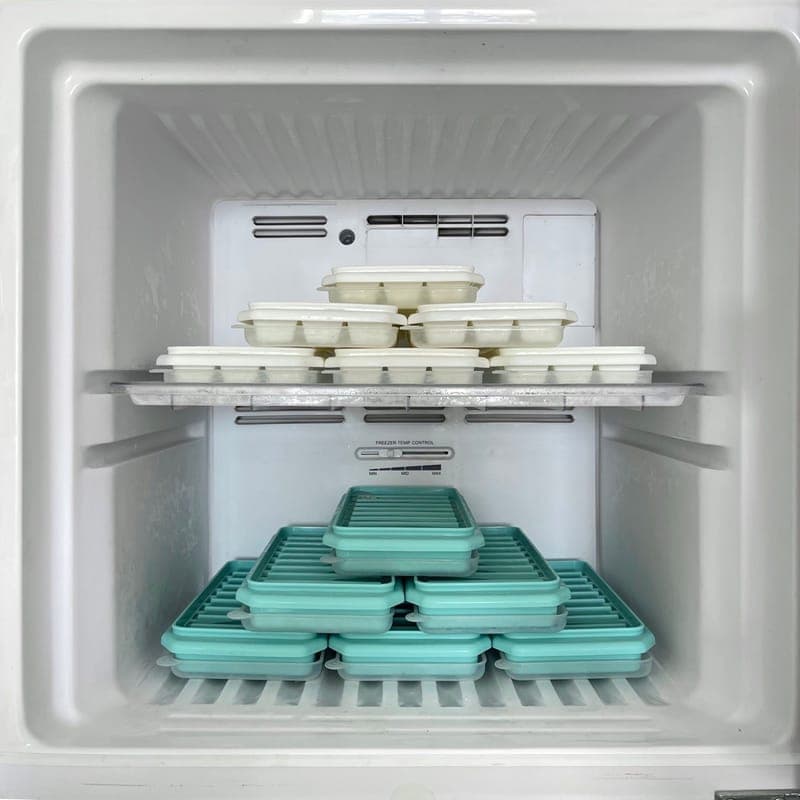 Top pickVermiHut Plus 5-Tray Worm Composter5 stacking trays with moisture and odor boards | Indoor composting, no yard | 8.6 | Check price on Amazon |
| 2 |  Red Wiggler Composting WormsLive red wigglers, sold by count | Stocking a worm bin | 8.5 | Check price on Amazon |
| 3 |  Min/Max Greenhouse ThermometerRecords the high and low since last reset | Knowing what actually happened overnight | 8.6 | Check price on Amazon |
| 4 |  FCMP Outdoor IM4000 Tumbling ComposterDual chamber, roughly 37 gal total | Most backyards | 9.1 | Check price on Amazon |
| 5 |  Wiggle Worm Pure Earthworm CastingsPure castings, used at low rates | Topping up a tired bed | 8.8 | Check price on Amazon |
| 6 |  Bootstrap Farmer 1020 Seed TraysHeavy-gauge 1020 trays, reusable for years | Trays that last more than one season | 8.5 | Check price on Amazon |
#ad We may earn a commission - prices are shown by Amazon, not by us
Scores are our own editorial judgment, formed from published specifications and independent sources. They are not aggregated customer ratings, and they are not the result of hands-on testing, which we do not currently do. See how we choose.
Why these specific things
A worm bin, with worms
Vermicomposting is the classic next step for someone who already composts outdoors, because it keeps working through winter when an outdoor pile has gone cold and dormant. Castings are also a stronger amendment than ordinary compost. Buy the bin and the worms together -- a worm bin without worms is a plastic box, and red wigglers are a separate purchase people forget.
A min/max thermometer
Cheap, unglamorous, and it changes every decision in a greenhouse or cold frame. It records the high and low since you last reset it, so a morning glance shows what actually happened overnight -- the number that decides whether the fleece worked and whether it is safe to sow yet.
Heavy-gauge trays
Anyone who has carried a cheap 1020 tray full of wet compost knows the failure mode. Heavy-gauge trays cost several times as much, last for years, and are exactly the thing an experienced gardener grumbles about and never replaces.
A dual-chamber tumbler
If they compost in an open heap and complain that it is never ready, two chambers is the fix. Fill one, switch to the other, empty the first. It turns a permanent work in progress into a rhythm of finished batches.
Consumables are a better gift than they sound
Worm castings, good compost and seed starting mix all get used every single year, and an experienced gardener will happily accept more. They are also safe: you cannot duplicate something they already own, because it is consumed.
The same logic makes a gift card to a seed company a genuinely good present rather than a lazy one -- choosing varieties is the part experienced gardeners most enjoy, and it is the part you cannot choose for them.
What to avoid
- Another trowel, pruner or fork. They have a favorite and they are not switching.
- Decorative garden ornaments, unless you know their taste precisely.
- Anything requiring a permanent installation they have not asked for -- a greenhouse, an arch, a structure.
- Plants, unless you know exactly what they grow and what they have already failed with.
For more on the systems these gifts feed into, see the best compost bins and worm composting bins.
The picks in full
Top pick
VermiHut Plus 5-Tray Worm Composter
VermiHut
#ad We may earn a commission - prices are shown by Amazon, not by us
A worm bin that works indoors year-round, which is the only real option for an apartment -- and worm castings are better than compost anyway.
Vermicomposting is the answer to two problems at once: no outdoor space, and winter. A worm bin lives under a sink or in a garage and keeps working at room temperature when an outdoor pile has gone cold and dormant.
The stacking system does the sorting for you. Worms finish a tray and migrate up toward the fresh food in the tray above, leaving finished castings behind to lift off.
Two habits make the difference between an odor-free bin and a bad experience: feed small amounts, and keep the bedding damp rather than wet. Smell is almost always overfeeding.
What works
- Genuinely odor-free when run correctly
- Works indoors through winter, when outdoor piles stall
- Castings are a stronger soil amendment than ordinary compost
- Worms migrate upward, so harvesting is mostly self-sorting
What does not
- Worms are a separate purchase and a living thing to look after
- Cannot take onion, citrus or large amounts at once
- Small throughput compared with an outdoor bin
Skip it if: the idea of keeping worms in the house is a hard no. It works, it does not smell, and it is still not for everyone.
| Type | Stacking-tray vermicomposter |
|---|---|
| Trays | 5 |
| Features | Airflow board and moisture-control board |
| Liquid | Tap at the base for drainage |
| Worms | Not included -- buy red wigglers separately |
Stocking a worm bin
Red Wiggler Composting Worms
Uncle Jim's Worm Farm
#ad We may earn a commission - prices are shown by Amazon, not by us
A worm bin without worms is a plastic box. Red wigglers are the composting species -- garden earthworms will not do this job.
The species matters and beginners often get this wrong. Red wigglers live in decaying organic matter at the surface, which is exactly what a worm bin is. The nightcrawlers you dig up in the yard live in soil burrows and will try to escape a bin, or die in it.
Start with a modest quantity and let them multiply. Worm populations track their food supply, so a starter batch in a well-run bin grows to fill it within a season.
Order for a mild week. They ship as live animals in a box, and a heat wave or a hard freeze in transit is the main reason a delivery arrives dead.
What works
- The correct species for a worm bin -- they live in decaying material, not soil
- Population self-regulates to the food supply
- Produces castings, the strongest common soil amendment
- A starter quantity multiplies over a season
What does not
- Living animals, so shipping heat and cold are real risks
- Will die if the bin dries out or floods
- Not the same as the earthworms in your yard
Skip it if: your bin will live somewhere that freezes or bakes. Worms are livestock and they die in both directions.
| Species | Eisenia fetida (red wiggler) |
|---|---|
| Sold by | Count, commonly 250 to 2,000 |
| Shipping | Live, so delivery timing matters |
| Temperature | Comfortable in the range a house stays at |
Knowing what actually happened overnight
Min/Max Greenhouse Thermometer
Various
#ad We may earn a commission - prices are shown by Amazon, not by us
The cheapest accessory that changes decisions: it tells you the overnight low and the midday high, not the temperature at the moment you happened to look.
Every greenhouse decision -- when to sow, when to vent, whether you need a heater, whether the frost cloth is doing anything -- depends on a number most owners never measure: the overnight low inside the structure.
A min/max thermometer records the high and low since you last reset it, so a morning glance tells you what happened while you slept. That turns guessing into knowing, for the price of a bag of compost.
Hang it at plant height and out of direct sun. A thermometer in a sunbeam reports the sunbeam, not the greenhouse.
What works
- Shows the overnight low, which is the number that kills plants
- Cheap enough to put one in the greenhouse and one in the cold frame
- Tells you whether venting is working
- No installation
What does not
- Reads wrong if hung in direct sun
- Digital versions need a battery
- It measures, it does not fix anything
Skip it if: nothing. If you own a greenhouse and not one of these, you are guessing about the only variable that matters.
| Type | Min/max recording thermometer |
|---|---|
| Reading | Current, plus high and low since reset |
| Mounting | Hangs at plant height, out of direct sun |
| Power | Digital models take a single cell |
Most backyards
FCMP Outdoor IM4000 Tumbling Composter
FCMP Outdoor
#ad We may earn a commission - prices are shown by Amazon, not by us
Two chambers is the whole point: you keep adding to one side while the other finishes, so you get a batch out instead of a bin that is never quite ready.
The single-chamber problem is why most first composters give up. You keep adding kitchen scraps to the same bin, so the contents are always part-finished, and you can never take any out.
Two chambers solves it mechanically. Fill side A until it is full, then switch to side B and leave A alone. By the time B is full, A is finished compost you can empty in one go. In warm weather that cycle runs in a matter of weeks.
Understand the capacity limit going in. Around 37 gallons total is generous for kitchen scraps from a household, and small if you also want to compost lawn clippings and autumn leaves. Those belong in an open bin.
What works
- Dual chambers give you a finishing batch and an active batch at once
- Off the ground, so rodents are not the problem they are with an open pile
- Turning is a handle pull rather than a fork job
- Closed drum keeps rain from waterlogging the mix
What does not
- Capacity fills fast if you also compost yard waste
- Heavy to turn when a chamber is full and wet
- Assembly takes longer than the box suggests
Skip it if: you generate a lot of yard waste. A tumbler is volume-limited by design, and a big open pile handles leaves and grass far better.
| Type | Rotating dual-chamber tumbler |
|---|---|
| Capacity | About 37 gal across two chambers |
| Material | UV-resistant recycled polypropylene |
| Aeration | Deep fins and internal mixing bar |
| Assembly | Bolt-together frame and drum |
Topping up a tired bed
Wiggle Worm Pure Earthworm Castings
Wiggle Worm
#ad We may earn a commission - prices are shown by Amazon, not by us
The concentrate: a small amount worked into the root zone does more than a much larger volume of ordinary compost.
Castings are what a worm bin produces, and they are the most concentrated common soil amendment available in a bag. The useful property is that they are gentle -- unlike fresh manure, castings will not scorch a seedling.
Use them where roots will find them: a handful in each planting hole, or a thin layer raked into the top few inches before planting. Spreading them thinly across an entire bed is largely wasted.
If this becomes a regular purchase, that is the argument for a worm bin. You would be making the same material at home from material you currently throw away.
What works
- Very effective at small application rates
- Will not burn seedlings the way raw manure can
- Improves structure as well as feeding
- Stores well between seasons
What does not
- Expensive by volume
- Too dense to use as a bulk fill
- Easy to overuse and waste
Skip it if: you are trying to add volume. Castings are an amendment, not a fill -- a bed of pure castings is both wasteful and too dense.
| Type | Pure earthworm castings |
|---|---|
| Use rate | Worked in at low rates, not used as a bulk fill |
| Texture | Fine, dark, uniform |
| Bag size | Commonly 15 and 30 lb |
Trays that last more than one season
Bootstrap Farmer 1020 Seed Trays
Bootstrap Farmer
#ad We may earn a commission - prices are shown by Amazon, not by us
Thick enough to pick up full without folding, which is the entire complaint about cheap trays and the reason these cost more.
Anyone who has carried a cheap 1020 tray full of wet compost knows the failure mode: it folds in the middle and the seedlings go on the floor. Heavy-gauge trays do not do that.
The 1020 name is a standard footprint, roughly 10 by 20 inches, and it is worth sticking to. Every humidity dome, heat mat, cell insert and shelf is built around it.
Buy a couple of solid, undrained trays alongside the drained ones. A solid tray underneath lets you water from below, which is gentler on small seedlings than watering from above and keeps the leaves dry.
What works
- Can be lifted full of wet medium without collapsing
- Lasts many seasons rather than one
- Standard 1020 footprint fits every dome and mat
- Solid trays double as reservoirs for bottom watering
What does not
- Several times the price of disposable trays
- Only worth it if you actually reuse them
- Heavier to store in quantity
Skip it if: you start one tray a year. The economics only work once you are reusing them season after season.
| Type | 1020 standard seedling trays |
|---|---|
| Gauge | Heavy-duty, substantially thicker than standard |
| Drainage | Drain-hole and solid versions sold |
| Compatibility | Fits standard domes, mats and inserts |
Common questions
What do you get a gardener who already has everything?
The boring upgrade they keep putting off: a worm bin with worms, a min/max thermometer, heavy-gauge seed trays, or a dual-chamber compost tumbler. Experienced gardeners have the tools and lack the unglamorous equipment that makes the season easier.
Is a worm bin a good gift?
For someone who already composts outdoors, yes -- it keeps working indoors through winter when an outdoor pile has stalled, and castings are a stronger amendment than ordinary compost. Buy the worms at the same time; the bin does nothing without them.
Are consumables a lazy gift for a gardener?
Not at all. Compost, worm castings and seed starting mix get used every year, so they cannot duplicate something the recipient already owns. For an experienced gardener that makes them safer than equipment, which they have usually already chosen for themselves.
Should I buy a gardener plants as a gift?
Only if you know exactly what they grow and what has failed for them before. Plants arrive with a deadline and a set of requirements the recipient may not be able to meet, and an experienced gardener usually has firm views about varieties.
Sources
Factual claims on this page are backed by the published sources below, and product specifications are the manufacturers’ own. Where a figure is not published, we say so rather than estimating it.