Step 1 - Raised Beds
Cheap Raised Garden Beds
The cheapest bed is rarely the cheapest garden. Here is where to save, where not to, and the one line item that dwarfs the bed itself.
Janet H. - the hands-on owner behind Janet Media Group.
Published
This page contains affiliate links. If you buy through them we may earn a commission at no cost to you, and it never decides what we recommend. How this site is funded.
The best cheap raised garden bed is the Land Guard galvanized bed: it gives you more growing area per dollar than anything else here, in a corrugated steel panel that will not rot. But read the next section before you buy anything, because on a tight budget the bed is not where the money goes -- the soil to fill it costs more than the bed on almost every size, and that is the number that decides what you can afford.
Quick picks
| # | Product | Best for | Score | Price |
|---|---|---|---|---|
| 1 | 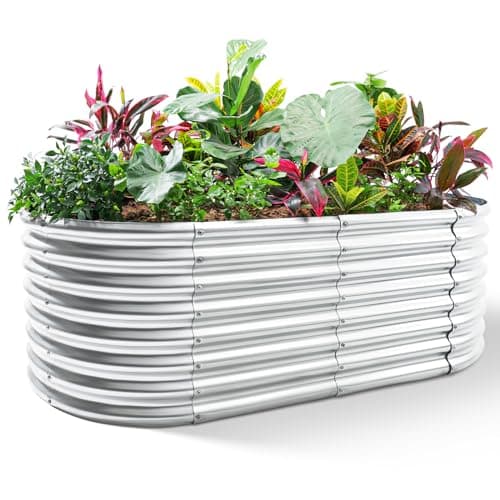 Top pickLand Guard Galvanized Raised Garden BedGalvanized steel, large footprints, budget price | Most growing area per dollar | 8.2 | $79.99 - View on Amazon |
| 2 |  Vegega 17" Metal Raised Garden Bed17 in deep, Aluzinc steel, fixed footprint | The same steel, less money | 9.0 | Check price on Amazon |
| 3 | 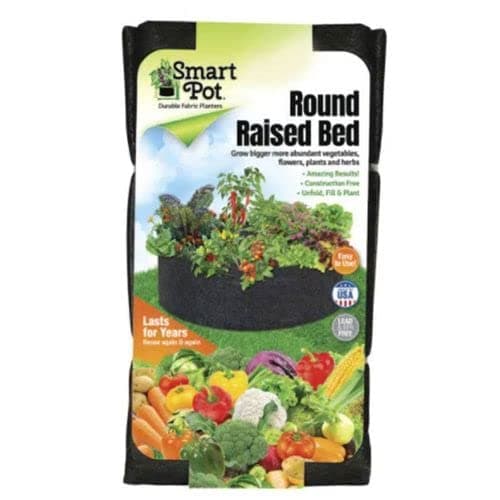 Smart Pot Round Raised Bed, 100 Gallon50 in across, 12 in deep, about 13.5 sq ft | A whole bed's worth | 8.8 | $69.95 - View on Amazon |
| 4 | 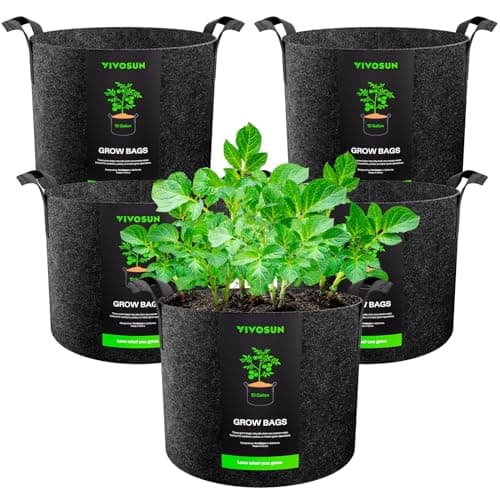 VIVOSUN 5-Pack 10 Gallon Grow BagsFive 10 gal bags with stitched handles | A first set of bags | 8.4 | Check price on Amazon |
| 5 | 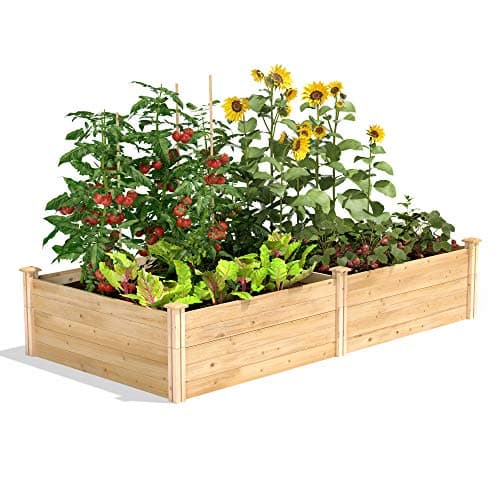 Greenes Fence Cedar Raised Garden Bed KitUntreated North American cedar, dovetail corners | People who want wood | 8.4 | $227.03 - View on Amazon |
#ad We may earn a commission - Price as of October 10, 2026
Scores are our own editorial judgment, formed from published specifications and independent sources. They are not aggregated customer ratings, and they are not the result of hands-on testing, which we do not currently do. See how we choose.
Cost per square foot, which is the honest comparison
| Option | What you get | The catch |
|---|---|---|
| Large galvanized steel bed | The most growing area per dollar, in a panel that will not rot | Fixed footprint, and large sizes need a lot of fill |
| Metal bed from a value brand | The same Aluzinc steel specification as the premium names | Fewer size options and less generous support |
| Fabric round raised bed | A whole bed's worth of area for very little, no assembly | Soft sides, and it dries out faster than rigid walls |
| Pack of grow bags | The cheapest way to grow in volume at all | Daily watering in summer; a few seasons of life |
| Small cedar kit | Real wood, dovetail corners, no tools | Cheapest only in small sizes; untreated wood is a consumable |
Cost per square foot of growing area is the comparison that matters, not the sticker price. A small bed is cheap and grows almost nothing; a large flat-pack steel bed costs more and grows several times as much food. If the goal is vegetables rather than a tidy feature, go for area.
The false economies
- Thin-gauge steel. Panel thickness is what stops a long side bowing outwards under the weight of wet soil. The very cheapest beds bow in their first season and the bow does not come back out.
- Pressure-treated lumber for a food bed. It is cheap and it is the wrong material here. Untreated cedar or steel costs more and does not raise a question you then have to research.
- A bed with no depth. Anything under about 10 inches restricts what you can grow enough that you will be buying a second bed. Depth is cheaper to buy once than twice.
- Buying the bed and then running out of money for soil. The commonest version of this mistake. Size the bed to the fill you can actually afford.
- Landscape fabric instead of cardboard. Cardboard under the bed kills grass for free and then disappears. Fabric is a cost that becomes a problem in year three.
Where it is fine to save
On the brand. The metal raised bed market is largely the same Aluzinc-coated steel panel in different colours, and the value names use the same specification as the premium ones. You are paying the difference for size options, finish and support, not for a better steel.
On the corner hardware. Bolted corrugated panels are strong because of the corrugation, not because of expensive brackets. And on height, if you are young and flexible: a 17 inch bed costs less than a 30 inch one and grows exactly the same crops. Standing height is a comfort purchase, and a legitimate one -- see elevated raised beds if that is the priority.
Our Vegega review goes through the value-brand steel question in detail, and metal vs wood covers the material decision with cost included.
The genuinely cheapest way to start growing food
A pack of 10 gallon grow bags and one bag of good mix. It is not a raised bed and it will not last, but it grows tomatoes, peppers, potatoes and greens for the price of a takeaway, and it tells you within one season whether you are going to keep doing this.
A fabric round raised bed is the next step up: roughly 13 square feet of growing area, no assembly, and far cheaper than rigid walls covering the same ground. It dries out faster than steel or wood, so it suits somewhere you water regularly. Full detail on both in the best grow bags for vegetables.
If you want to build rather than buy, reclaimed scaffold boards or unsorted cedar fence pickets make a perfectly good bed and a cheap one -- how to build a raised garden bed has the dimensions and the corner detail.
Clearance and end-of-season
Raised bed pricing is seasonal. Stock is heaviest and dearest in March and April, and the discounts appear once the planting window has closed. A bed bought in late summer and filled over autumn is ready to plant in spring and costs less than the same bed bought the week you want it.
Autumn buying has a second advantage that has nothing to do with price. A bed filled in September settles over winter, the layers break down, and by spring the mix has dropped and been topped up and is biologically alive. A bed filled the day you plant into it is a bag of ingredients.
If you are starting from nothing and want the order of purchases rather than the cheapest single item, start here sequences the whole thing.
The picks in full
Top pick
Land Guard Galvanized Raised Garden Bed
Land Guard
The cheapest honest way to get a large steel bed, as long as you accept plain galvanizing instead of an Aluzinc coating.
If the goal is to grow the most food this year for the least money, area beats coating. A large cheap bed you can actually fill will feed you better than a small premium one, and Land Guard exists for exactly that calculation.
Understand what you are giving up. Plain galvanizing is a zinc coating; Aluzinc adds aluminum and magnesium and holds up considerably better at the soil line, which is where beds fail. Expect good years rather than decades.
The panels are thinner too, so use the supplied braces and do not skip the center support on the long sizes.
What works
- Lowest cost per square foot of growing area
- Large sizes available in one kit
- Simple assembly with basic tools
- Good way to trial a big bed before committing
What does not
- Plain galvanizing, not the longer-lived Aluzinc
- Thinner panels flex more when filled
- Edges deserve a careful check during assembly
Skip it if: you want the bed to outlive the mortgage. Plain galvanized steel is fine for years, not decades, especially where soil stays wet.
| Material | Galvanized steel |
|---|---|
| Depth | Commonly 12 in and 17 in |
| Footprint | Large rectangles including 8 x 4 ft |
| Assembly | Bolt-together panels |
| Soil needed | About 32 cu ft for 8 x 4 ft at 12 in |
The same steel, less money
Vegega 17" Metal Raised Garden Bed
Vegega
#ad We may earn a commission - prices are shown by Amazon, not by us
The same zinc-aluminum-magnesium steel as the premium brand in a fixed shape, which is the trade most first-time gardeners should take.
Vegega is the value answer to the obvious question: if the steel is what makes a metal bed last, can you buy the steel without the premium? Largely, yes. Vegega uses the same zinc-aluminum-magnesium coating, and what you give up is the panel-swap modularity.
For a first bed that is usually the right trade. Most people put a bed where the sun is and then never move it, so paying for reconfigurability you will not use is a bad first purchase when the same money buys the soil to fill it.
Fill cost is the number beginners underestimate. A 4 x 8 bed at 12 inches of fill takes roughly 32 cubic feet, which is around sixteen 2-cubic-foot bags. Work yours out on the soil calculator before you choose a size, not after.
What works
- Same Aluzinc steel specification as the premium option
- Consistently cheaper than the modular equivalent
- Several footprints and heights in the range
- Straightforward bolt-together build
What does not
- Panels do not reconfigure into other shapes
- Smaller accessory range than the bigger brand
- Colorways are limited
Skip it if: you genuinely expect to redesign your garden layout. Reshaping is the one thing this bed cannot do, and it is exactly what Vego charges extra for.
| Material | Aluzinc-coated steel |
|---|---|
| Depth | 17 in (taller sizes offered) |
| Shape | Fixed footprint, several sizes sold separately |
| Assembly | Bolt-together panels |
| Soil needed | About 32 cu ft for a 4 x 8 ft bed at 12 in of fill |
A whole bed's worth
Smart Pot Round Raised Bed, 100 Gallon
Smart Pot
A fabric raised bed rather than a pot: wide enough to plant like a bed, cheap enough to buy two, and it folds flat in October.
This is the grow bag that behaves like a bed -- Smart Pot has also sold it as the Big Bag Bed. At roughly 50 inches across it gives you about 13.5 square feet of planting area -- the same growing area as a 4 x 4 ft frame -- in something that arrives folded in a flat parcel and needs no assembly at all.
Twelve inches of depth is the number that matters. That is enough for lettuce, beans, chard, bush cucumbers, peppers and determinate tomatoes, and it is shallow for carrots, parsnips and a serious potato crop. It is the same depth limit a shallow metal or vinyl bed has.
The cost is the fill. A bed-sized bag needs a bed-sized volume of potting mix, so the bag being inexpensive does not make the project inexpensive. Work out the mix cost first, using the soil calculator on this site, because that number rather than the bag decides whether this is the cheap option for you.
What works
- Gives you bed-scale planting area without a frame to assemble
- Twelve inches of depth is enough for most vegetables, including determinate tomatoes
- Folds flat for winter storage, which no rigid bed does
- Enclosed bottom means you can put it on a patio, gravel or a driveway
What does not
- Needs a full 13.5 sq ft of potting mix, which is the real cost of the format
- Dries out faster than a soil-filled frame of the same depth
- Fabric is a consumable -- plan on replacing it after a few seasons
Skip it if: you want the garden to look built. This is a black fabric circle sitting on the ground, and planting around it does not disguise that.
| Type | Round fabric raised bed |
|---|---|
| Capacity | 100 gal |
| Footprint | About 50 in across |
| Depth | 12 in |
| Growing area | About 13.5 sq ft |
| Base | Enclosed fabric bottom |
| Service life | Manufacturer states 3 to 5 years outdoors |
A first set of bags
VIVOSUN 5-Pack 10 Gallon Grow Bags
VIVOSUN
#ad We may earn a commission - prices are shown by Amazon, not by us
Five bags for about what one rigid planter costs, and 10 gallons is the size that actually grows a tomato rather than keeping one alive.
Ten gallons is the useful number here. University of Maryland Extension puts the minimum container size for a standard tomato, a pepper, an eggplant or a cucumber at 5 gallons, so a 10 gallon bag is comfortably above the floor rather than at it -- which in practice means fewer collapses on a hot afternoon.
The fabric is mid-weight: thicker than the throwaway bags sold ten to a pack, thinner than the bonded-fabric pots that last a decade. For a first season, while you are deciding whether you like growing this way, that is the right place on the scale.
Fill them with potting mix, not garden soil or raised bed mix. Soil in a container compacts and drains badly, which is the single most common reason a bag of tomatoes underperforms the same plant in the ground.
What works
- Ten gallons is the right size for one tomato, pepper or eggplant
- Handles are stitched rather than glued, so a full bag can be moved
- Five bags let you chase the sun around a patio
- Folds away flat at the end of the season
What does not
- Thinner fabric than the premium bags, so expect a shorter life
- Needs watering far more often than a bed of the same volume
- Dark fabric gets genuinely hot in full afternoon sun
Skip it if: you are growing root crops. Ten gallons is 11 or 12 inches of depth once settled, which is short for carrots and parsnips.
| Type | Nonwoven fabric pot with handles |
|---|---|
| Capacity | 10 gal each |
| Size | Roughly 16 in across and 12 in tall at 10 gal |
| Fabric | Mid-weight nonwoven polypropylene |
| Handles | Reinforced, stitched to the body |
| Pack | 5 bags |
People who want wood
Greenes Fence Cedar Raised Garden Bed Kit
Greenes Fence
Real untreated cedar with tool-free dovetail corners -- the honest wood option, with the shorter lifespan that comes with wood.
Cedar is chosen for looks and for the fact that it is untreated, which matters if you are uneasy about what a pressure-treated board leaches into a bed you eat from. Cedar's natural oils slow rot without any chemistry at all.
The dovetail corner system is the reason to buy this particular kit rather than cutting boards yourself: the ends slot together, no hardware, and a second kit stacks on top to take a 7-inch tier up to 14 inches. That is worth doing -- one tier is too shallow for much beyond lettuce and herbs.
Set expectations on lifespan. In a wet climate a cedar bed is a multi-year item, not a permanent structure, and the boards touching soil go first.
What works
- Genuinely untreated cedar, no chemical concerns for food crops
- Tool-free dovetail corners go together in minutes
- Stack a second kit to double the depth
- Looks right in an ornamental garden
What does not
- Wood is a consumable -- expect years, not decades
- A single tier is shallow for root crops
- Cedar prices move a lot season to season
Skip it if: you want to buy a bed once. Even cedar is a wearing part in a wet climate, and steel is the better long-run answer.
| Material | Untreated North American cedar |
|---|---|
| Depth | Stackable boards, commonly 7 in per tier |
| Assembly | Dovetail corner joints, no tools required |
| Expandable | Kits stack to add depth |
| Soil needed | About 18 cu ft for 4 x 8 ft at 7 in |
Common questions
What is the cheapest type of raised garden bed?
Grow bags, by a wide margin, followed by a fabric round raised bed -- roughly 13 square feet of growing area with no assembly. Among rigid beds, a large galvanized steel panel bed gives the most growing area per dollar, and it will not rot the way untreated wood eventually does.
Are cheap metal raised garden beds any good?
The value brands mostly use the same Aluzinc-coated corrugated steel as the premium names, so yes. What you give up is size options, finish and customer support, not the steel itself. The thing to avoid is very thin-gauge panels, which bow outwards under wet soil in their first season.
Is it cheaper to build or buy a raised garden bed?
Building is cheaper if you use reclaimed timber or unsorted cedar pickets and already own a drill. Buying a flat-pack steel bed is usually cheaper than buying new dimensional lumber, once you count the cost of the boards plus fixings plus your afternoon.
Can I use pressure-treated wood to save money on a raised bed?
We do not recommend it for a food bed. Untreated cedar, steel or a composite board costs more and avoids a question you would otherwise have to research for every crop you plant. If budget is the constraint, a cheap steel bed is a better answer than treated lumber.
What is the real cost of a raised bed garden?
The soil, on almost every size. A 4 x 8 bed at 17 inches deep takes roughly 38 cubic feet of fill, and bagged mix at that volume costs more than the bed. Size the bed to the fill you can afford, and read our cheap-fill guide before buying either.
Sources
Factual claims on this page are backed by the published sources below, and product specifications are the manufacturers’ own. Where a figure is not published, we say so rather than estimating it.