Step 1 - Raised Beds
The Best Grow Bags for Vegetables
The cheapest honest way into a first productive garden -- as long as you know going in that you are trading money for watering.
Janet H. - the hands-on owner behind Janet Media Group.
Published
This page contains affiliate links. If you buy through them we may earn a commission at no cost to you, and it never decides what we recommend. How this site is funded.
Buy 10 gallon bags rather than 5 gallon bags, and fill them with potting mix rather than garden soil. Those two decisions account for most of the difference between a grow bag garden that feeds you and one that wilts every afternoon in July. If you want bed-scale planting without building a bed, the 100 gallon fabric bed below is the format to look at: it gives you the same growing area as a 4 x 4 ft frame and folds flat in October.
Grow bags are the cheapest real entry to growing food. A set of five costs less than a single rigid planter, they need no assembly, they work on a patio, a driveway or a rented balcony, and nothing is permanent. What you pay for that is water. A fabric bag loses moisture through every surface, which is the whole point of the design and also its single biggest drawback.
Quick picks
| # | Product | Best for | Score | Price |
|---|---|---|---|---|
| 1 | 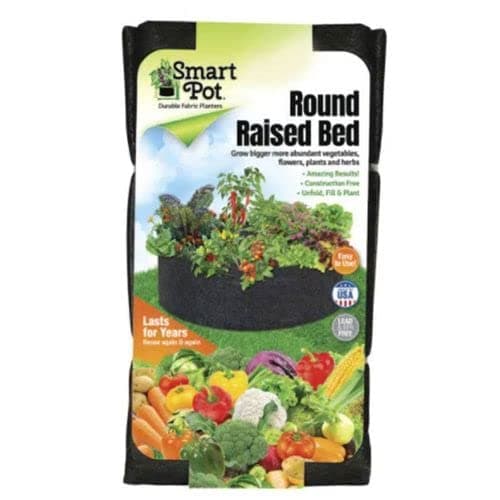 Top pickSmart Pot Round Raised Bed, 100 Gallon50 in across, 12 in deep, about 13.5 sq ft | A whole bed's worth | 8.8 | $69.95 - View on Amazon |
| 2 | 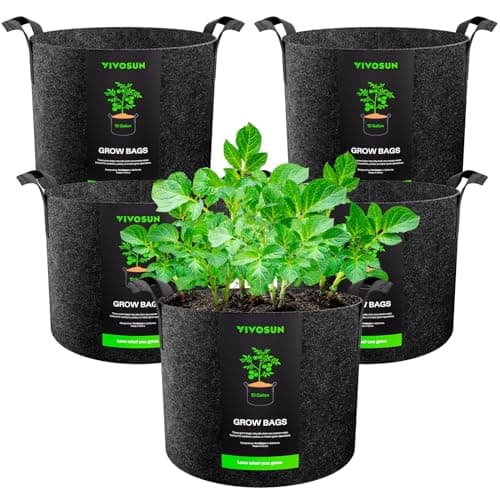 VIVOSUN 5-Pack 10 Gallon Grow BagsFive 10 gal bags with stitched handles | A first set of bags | 8.4 | $20.99 - View on Amazon |
| 3 | 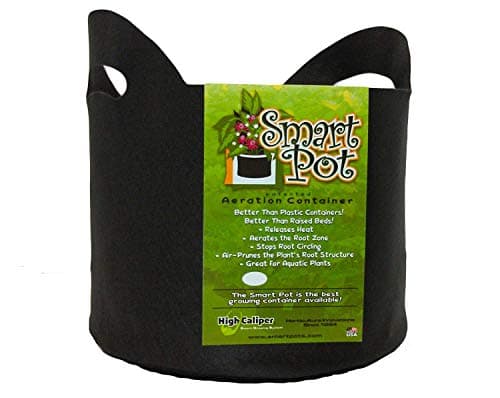 Smart Pot 10-Gallon Soft-Sided Container16 in across, 11.5 in tall, 1.33 cu ft | Bags you keep for years | 8.6 | $18.04 - View on Amazon |
| 4 | 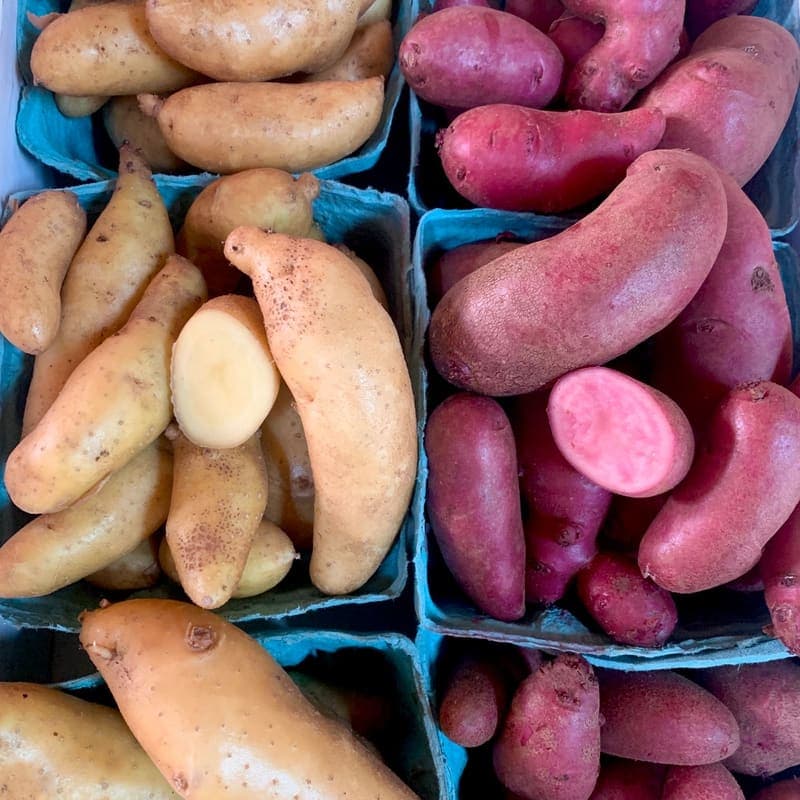 Potato Grow Bags with Harvest Flap10 gal with a side access window | Potatoes and sweet potatoes | 7.9 | Check price on Amazon |
| 5 | 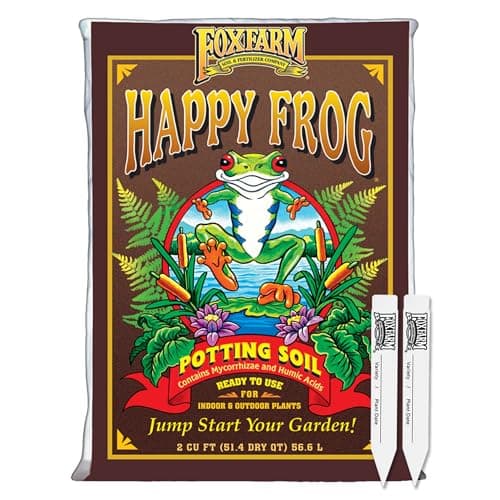 FoxFarm Happy Frog Potting SoilLight, biologically inoculated potting soil | Containers and intensive plantings | 8.5 | $38.94 - View on Amazon |
#ad We may earn a commission - Price as of October 5, 2026
Scores are our own editorial judgment, formed from published specifications and independent sources. They are not aggregated customer ratings, and they are not the result of hands-on testing, which we do not currently do. See how we choose.
What we judged them on
Fabric bags are close to a commodity, so the criteria have to be the things that genuinely differ between them rather than the claims on the label.
- Volume, not nominal size. A bag that holds 10 gallons is roughly 16 inches across and about a foot deep once the mix settles. That is the dimension that decides what you can grow, and it is the number brands are vaguest about.
- Fabric weight and UV stabilization. Thin nonwoven fabric goes brittle in one summer of direct sun and splits at the seam, usually while full of wet mix. Heavier bonded fabric with a UV stabilizer survives several seasons. Weight is the main reason one bag costs five times another.
- Handles that are stitched, not glued. A 10 gallon bag of wet mix is heavy. Handles sewn into the body with reinforced stitching will move it; handles tacked on tear off and take a patch of sidewall with them.
- An enclosed base. Bags with a sewn bottom can sit on a patio, a deck or gravel. Open-bottomed designs have to sit on soil, which quietly removes the main advantage of the format.
- Shape for the crop. Tall and narrow suits potatoes and tomatoes; wide and shallow suits salad, bush beans and strawberries. A 100 gallon fabric bed is a different product from a 100 gallon fabric barrel, even at the same stated volume.
Size by crop: what actually fits
University of Maryland Extension publishes minimum container volumes for common vegetables, and those minimums are a floor rather than a target. A plant at the minimum survives; a plant with half again as much root room goes a full day longer between waterings and crops harder in heat.
| Crop | Extension minimum | Bag to buy |
|---|---|---|
| Standard tomato | 5 gal | 10 gal, or 15 if you have the room |
| Cherry tomato | 2 gal | 10 gal -- it outgrows anything smaller |
| Pepper | 5 gal | 10 gal, one plant per bag |
| Eggplant | 5 gal | 10 gal, one plant per bag |
| Cucumber | 5 gal | 10 gal with something to climb |
| Lettuce and salad leaves | Shallow is fine | A wide fabric bed, sown in rows |
| Bush beans | Shallow is fine | A wide fabric bed, three or four plants |
| Potatoes | Depth matters most | A 10 gal potato bag with a harvest flap |
| Carrots and parsnips | Depth matters most | Not a grow bag crop -- use a deep bed |
The pattern is worth stating plainly: one fruiting plant per 10 gallon bag, several leafy plants per wide bed, and root crops needing more than a foot of depth belong somewhere else. Crowding three tomatoes into one bag is the most common way a first grow bag season goes wrong, and it is not a mistake you can fix in August.
Watering is the real price of the format
A fabric bag breathes through its whole surface. That is the feature: air reaches the root zone, and roots that hit open fabric branch instead of circling the wall of a plastic pot, which extension guidance describes as air pruning. It is also the bill. The same bag that drains freely in April is dry by lunchtime in July.
Extension guidance on containers is blunt about the habit required: check them daily, especially in summer, and water when the mix is dry an inch or two down. Frequency swings from once or twice a week in cool weather to once or twice a day for a small container in hot wind. A raised bed of the same depth, in the same weather, goes two or three days.
- Group bags together. A cluster shades its own sidewalls and dries more slowly than bags spaced out in a row.
- Stand them on soil or mulch where you can. A black bag on a south-facing concrete patio is sitting on a radiator.
- Go bigger than you need. Volume is the cheapest drought protection there is. A 15 gallon bag costs very little more than a 10 and buys you half a day.
- Consider a drip line on a timer if you are away midweek. Hand watering a dozen bags daily is the point at which most people quietly give up on the format.
Feeding: bags leach, beds do not
Every time water runs out of the bottom of a bag it carries dissolved nutrients with it. Extension guidance on containers recommends regular feeding specifically to replace what frequent watering flushes away, suggesting roughly a 3-1-2 ratio of nitrogen, phosphorus and potassium and a feed every two weeks for long-season crops such as tomatoes.
In practice that means a container-grown tomato needs feeding where a bed-grown tomato in decent soil often does not. Budget for a liquid feed alongside the bags, and treat it as an ongoing cost of the format rather than an optional upgrade.
How long fabric actually lasts
Expect one to two seasons from a thin bag out of a multipack, and three to five from UV-stabilized bonded fabric -- which is what Smart Pot states for its fabric bed. Sunlight destroys these bags, not soil: the sides go chalky, then brittle, then the seam opens. Bags emptied and stored dry and out of the light over winter last noticeably longer than bags left outdoors full of frozen mix.
That life expectancy is the honest case against going all in on bags. A galvanized steel bed is a decade-plus purchase; a fabric bag is a consumable. Over ten years the bags cost more than the bed, and the gap is wider than most grow bag enthusiasm admits.
Where bags genuinely beat a raised bed
- You rent. Nothing is fixed to the property and the whole garden fits in a car.
- You are growing on a hard surface. A patio, a driveway or a flat roof -- an enclosed-base bag needs no soil underneath it.
- You want to chase the sun. Six hours of direct light is the practical minimum for fruiting crops, and a bag can be moved to find it.
- You are testing the idea. A set of bags is the cheapest way to find out whether you will still care about this in August, before committing to a bed and a mountain of mix.
- You are growing potatoes. A bag with a harvest flap does something no bed does: it lets you take a meal of new potatoes without ending the plant.
Where a raised bed wins
Depth, thermal mass and water. A bed holds enough volume to buffer heat and drought, it can be filled with a cheaper mix because it is not relying on a potting medium for structure, and it will grow carrots. We have laid the two formats out side by side in raised beds vs grow bags, and if the decision you are actually making is bed or pots, raised beds vs containers covers the rigid-pot version of the same question.
The mix bill is the real cost
A 100 gallon fabric bed needs roughly 13 cubic feet of mix -- the same volume as a 4 x 4 ft frame. At potting-mix prices that is several times what the bag itself costs, and it is the number that catches people out. Work it out before you buy: the raised bed soil calculator takes dimensions and returns cubic feet, and the same arithmetic applies to a bag.
For a handful of 10 gallon bags the sums are friendlier -- about 1.3 cubic feet each, so one or two bags of potting mix covers a set of five. That is a genuinely low-cost start, and it is why we would put a beginner in five bags before a 100 gallon bed.
Buy in this order
- Five 10 gallon bags. Enough for two tomatoes, two peppers and something to experiment with.
- Potting mix, roughly 1.3 cubic feet per bag. Not raised bed mix, not topsoil.
- A liquid feed, because the bags will leach and the plants will tell you so by midsummer.
- Supports. A cage or a stake per fruiting bag, pushed in at planting rather than in July.
- Then, if the first season went well, a 100 gallon fabric bed or a proper raised bed for the crops bags cannot hold.
Once the bags are planted, what you feed them decides the harvest -- see the best compost for raised beds for the amendment side, and how to fill a raised garden bed if the bags are a stepping stone to a bed next spring.
The picks in full
Top pick
Smart Pot Round Raised Bed, 100 Gallon
Smart Pot
A fabric raised bed rather than a pot: wide enough to plant like a bed, cheap enough to buy two, and it folds flat in October.
This is the grow bag that behaves like a bed -- Smart Pot has also sold it as the Big Bag Bed. At roughly 50 inches across it gives you about 13.5 square feet of planting area -- the same growing area as a 4 x 4 ft frame -- in something that arrives folded in a flat parcel and needs no assembly at all.
Twelve inches of depth is the number that matters. That is enough for lettuce, beans, chard, bush cucumbers, peppers and determinate tomatoes, and it is shallow for carrots, parsnips and a serious potato crop. It is the same depth limit a shallow metal or vinyl bed has.
The cost is the fill. A bed-sized bag needs a bed-sized volume of potting mix, so the bag being inexpensive does not make the project inexpensive. Work out the mix cost first, using the soil calculator on this site, because that number rather than the bag decides whether this is the cheap option for you.
What works
- Gives you bed-scale planting area without a frame to assemble
- Twelve inches of depth is enough for most vegetables, including determinate tomatoes
- Folds flat for winter storage, which no rigid bed does
- Enclosed bottom means you can put it on a patio, gravel or a driveway
What does not
- Needs a full 13.5 sq ft of potting mix, which is the real cost of the format
- Dries out faster than a soil-filled frame of the same depth
- Fabric is a consumable -- plan on replacing it after a few seasons
Skip it if: you want the garden to look built. This is a black fabric circle sitting on the ground, and planting around it does not disguise that.
| Type | Round fabric raised bed |
|---|---|
| Capacity | 100 gal |
| Footprint | About 50 in across |
| Depth | 12 in |
| Growing area | About 13.5 sq ft |
| Base | Enclosed fabric bottom |
| Service life | Manufacturer states 3 to 5 years outdoors |
A first set of bags
VIVOSUN 5-Pack 10 Gallon Grow Bags
VIVOSUN
Five bags for about what one rigid planter costs, and 10 gallons is the size that actually grows a tomato rather than keeping one alive.
Ten gallons is the useful number here. University of Maryland Extension puts the minimum container size for a standard tomato, a pepper, an eggplant or a cucumber at 5 gallons, so a 10 gallon bag is comfortably above the floor rather than at it -- which in practice means fewer collapses on a hot afternoon.
The fabric is mid-weight: thicker than the throwaway bags sold ten to a pack, thinner than the bonded-fabric pots that last a decade. For a first season, while you are deciding whether you like growing this way, that is the right place on the scale.
Fill them with potting mix, not garden soil or raised bed mix. Soil in a container compacts and drains badly, which is the single most common reason a bag of tomatoes underperforms the same plant in the ground.
What works
- Ten gallons is the right size for one tomato, pepper or eggplant
- Handles are stitched rather than glued, so a full bag can be moved
- Five bags let you chase the sun around a patio
- Folds away flat at the end of the season
What does not
- Thinner fabric than the premium bags, so expect a shorter life
- Needs watering far more often than a bed of the same volume
- Dark fabric gets genuinely hot in full afternoon sun
Skip it if: you are growing root crops. Ten gallons is 11 or 12 inches of depth once settled, which is short for carrots and parsnips.
| Type | Nonwoven fabric pot with handles |
|---|---|
| Capacity | 10 gal each |
| Size | Roughly 16 in across and 12 in tall at 10 gal |
| Fabric | Mid-weight nonwoven polypropylene |
| Handles | Reinforced, stitched to the body |
| Pack | 5 bags |
Bags you keep for years
Smart Pot 10-Gallon Soft-Sided Container
Smart Pot
The original bonded-fabric pot, and the one still in use when the cheap multipacks have gone brittle and split at the seams.
Fabric pots are a commodity with one real quality variable: how long the fabric lasts outdoors in sun. A bag that splits at the seam in August, full of wet mix and a fruiting plant, is a bad afternoon.
At 16 inches across and 11.5 inches tall this holds about 1.33 cubic feet, which is one indeterminate tomato with a cage, or two peppers, or a generous clump of basil and chard. It is not a mixed planter.
The honest way to buy fabric pots is to split the difference: a couple of pots like this for the plants you grow every year, and a cheap multipack for the extras you are experimenting with.
What works
- Heavier fabric than the multipack bags, and it holds its shape when full
- UV stabilized, which is what decides whether a bag survives a second summer outdoors
- Aeration through the sidewall air-prunes roots instead of letting them circle
- Folds flat for storage like any fabric pot
What does not
- Costs several times what a bag from a five-pack costs
- Sixteen inches across is one plant, not a mixed planting
- Still needs daily watering in summer -- fabric does not change that
Skip it if: you want five bags today for the price of one. This is a single pot at a single-pot price, and the case for it is the fifth season rather than the first.
| Type | Bonded fabric aeration container |
|---|---|
| Capacity | 10 gal, about 1.33 cu ft |
| Size | 16 in across, 11.5 in tall |
| Fabric | UV-stabilized nonwoven, no plastic liner |
| Handles | Available with or without |
Potatoes and sweet potatoes
Potato Grow Bags with Harvest Flap
Various
#ad We may earn a commission - prices are shown by Amazon, not by us
The one grow bag with a feature you cannot get any other way: a flap at the base, so you can take new potatoes out without ending the plant.
Potatoes are the crop that justifies a grow bag on its own terms rather than as a substitute for a bed. They want depth, they want to be earthed up as they grow, and they are the one crop where harvesting means destroying the root zone anyway.
The flap is the real feature. Open it in midsummer, feel for the potatoes nearest the surface, take a meal's worth and close it again. The plant keeps growing and keeps setting tubers.
Buy on fabric weight rather than on the number of bags in the pack. The flap seam carries the load of wet mix, and that is where a thin bag gives out.
What works
- The harvest flap lets you pull early potatoes and leave the plant growing
- Deep enough to earth up a potato crop as it grows, which a shallow bed is not
- No digging, so no fork through a tuber
- Empties in one tip at the end of the season
What does not
- The flap is a weak point and the first place a bag fails
- Fabric quality varies a lot across brands in this category
- Needs steady watering -- potatoes in a dry bag crack and go knobbly
Skip it if: you are not growing potatoes. For everything else the flap is a seam waiting to leak, and a plain bag is the better buy.
| Type | Nonwoven fabric bag with hook-and-loop side flap |
|---|---|
| Capacity | Commonly 7 to 10 gal per bag |
| Access | Flap at the base for harvesting |
| Handles | Side handles for moving a full bag |
| Pack | Usually sold in multipacks |
Containers and intensive plantings
FoxFarm Happy Frog Potting Soil
FoxFarm
Excellent in containers and as the top layer of an intensively planted bed -- but it is potting soil, so blend it rather than filling with it.
Happy Frog earns its reputation in containers, where a light, fast-draining, biologically active mix is exactly right. In a raised bed it needs a job description.
The sensible use is blending: mix it with compost and a heavier component for the top layer of an intensively planted bed, particularly where you are growing a lot in a small area. Used neat across a whole bed it is both costly and too light to hold structure.
Anything labeled potting soil is designed for the physics of a pot -- limited volume, frequent watering, free drainage from the base. A bed is a different environment, and the mix should match it.
What works
- Strong early growth and quick root establishment
- Stays loose rather than compacting in containers
- Inoculated with beneficial microbes
- Reliable, consistent product
What does not
- It is potting soil, not bed fill
- Expensive per cubic foot at bed scale
- Needs blending with compost or topsoil in a bed
Skip it if: you are filling a bed. Used neat in a large bed it is both expensive and too light, and it will slump.
| Type | Potting soil |
|---|---|
| Listed inputs | Aged forest products, bat guano, earthworm castings, beneficial microbes |
| Texture | Light and fast-draining |
| Bag size | Commonly 1 and 2 cu ft |
Common questions
What size grow bag is best for vegetables?
Ten gallons for one fruiting plant -- a tomato, pepper, eggplant or cucumber. Extension guidance puts the minimum at 5 gallons for those crops, so 10 gives you headroom rather than sitting on the floor of what works. Salad, herbs and bush beans do better in a wide, shallow fabric bed than in individual bags.
Do grow bags need more watering than raised beds?
Yes, substantially. Fabric loses moisture through every surface, so bags should be checked daily in summer and may need water once or twice a day in hot, windy weather. A raised bed of similar depth typically goes two or three days. If daily watering is not realistic, a bed or a drip line on a timer is the better answer.
Can I fill grow bags with garden soil or raised bed mix?
No. Extension guidance puts garden soil at around 75 pounds per cubic foot against about 10 for a soilless potting mix -- soil is too dense to move air and water inside a container, and it compacts. Use potting mix in bags, and save raised bed mix for beds, where depth and volume let it behave properly.
How long do fabric grow bags last?
One to two seasons for a thin bag from a multipack, three to five for UV-stabilized bonded fabric. Sunlight destroys the fabric rather than soil or water: the sides go chalky, then brittle, then the seam fails. Emptying them and storing them dry and out of the light over winter extends their life noticeably.
Are grow bags better than plastic pots?
For most vegetables, yes. Roots that reach the fabric wall branch instead of circling, which extension guidance calls air pruning, and sidewall drainage makes overwatering much harder. The trade is that bags dry out faster than a plastic pot of the same volume, and they do not last as long.
Can you grow potatoes in grow bags?
Potatoes are the crop bags suit best. They want depth, they want earthing up as they grow, and harvesting destroys the root zone anyway. A bag with a hook-and-loop flap near the base lets you take early potatoes and leave the plant producing, which neither a bed nor a pot allows.
Sources
Factual claims on this page are backed by the published sources below, and product specifications are the manufacturers’ own. Where a figure is not published, we say so rather than estimating it.