Step 2 - Soil & Fill
The Best Soil for Grow Bags
A grow bag drains and breathes on every side. Fill it like a raised bed and you will be watering twice a day.
Janet H. - the hands-on owner behind Janet Media Group.
Published
This page contains affiliate links. If you buy through them we may earn a commission at no cost to you, and it never decides what we recommend. How this site is funded.
Fill grow bags with a quality potting soil, not raised bed mix and never garden soil. FoxFarm Happy Frog is the straightforward choice -- light, fast-draining and biologically inoculated, which is exactly what a fabric pot wants. Coast of Maine Castine Blend is the compost-rich option if you would rather feed the bag once and leave it. Espoma Organic Raised Bed Mix works well in the larger 15- and 20-gallon bags where a slightly heavier mix holds water better. And a few handfuls of Wiggle Worm castings blended through any of them improves water holding noticeably, which is the one property every fabric pot is short of.
The reason the answer differs from a raised bed is physical. A fabric pot is porous on every surface, so it air-prunes roots and dries from the sides as well as the top. That is why plants in them root so well, and it is also why a dense, heavy bed mix behaves badly in one -- it compacts, then it either stays sodden or sets hard.
What a grow bag mix needs to do
- Drain freely but hold moisture. The contradiction is the whole job. A light mix with plenty of compost and some coir or peat does both.
- Stay open rather than compacting. Perlite, bark fines or coarse compost keep air space, which the roots need as much as water.
- Carry enough fertility for a season in a small volume. A 10-gallon bag is 1.33 cubic feet of soil supporting a plant that would have the run of several cubic feet in a bed.
- Be light enough to move. A fabric pot is portable until you fill it with wet topsoil, at which point it is not.
| Product | In a grow bag? | Why |
|---|---|---|
| Potting soil | Yes -- the default | Light, open, designed for containers |
| Raised bed mix | Yes in large bags, 15 gal and up | Slightly heavier, holds water better in a bigger volume |
| Seed starting mix | No | Far too low in nutrients, and too fine to drain well at depth |
| Garden soil, bagged | No | Formulated to be dug into ground; compacts badly in a pot |
| Native soil from the yard | No | Compacts, drains poorly, carries weed seed |
| Pure compost | No | Too dense on its own; it slumps and stays wet |
| Potting soil plus castings and perlite | The best of the lot | Holds water, stays open, feeds steadily |
How these were chosen
- Container texture first. Everything on this list is light and open enough to work in a fabric pot across a full season without compacting.
- Listed inputs. Each product names what is in the bag, which is the only way to reason about fertility in a volume this small.
- Sold in sizes that match the job. Filling four 10-gallon bags takes about 5.3 cubic feet, so bag size matters to the cost.
- One amendment, not a shelf of them. Castings earn their place because they improve both water holding and fertility; nothing else here is a cocktail.
- Currently stocked. Each listing was confirmed live and currently sold before it was written in.
Quick picks
| # | Product | Best for | Score | Price |
|---|---|---|---|---|
| 1 | 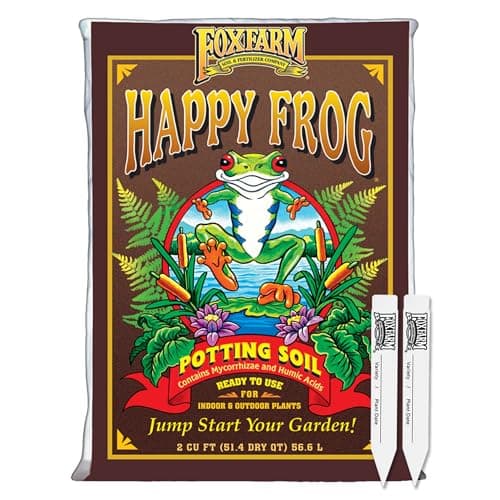 Top pickFoxFarm Happy Frog Potting SoilLight, biologically inoculated potting soil | Containers and intensive plantings | 8.5 | $38.94 - View on Amazon |
| 2 | 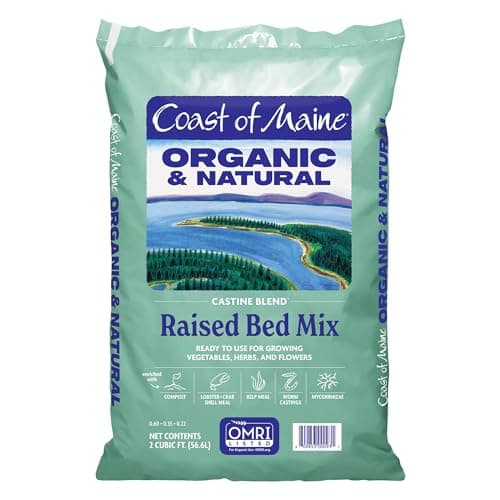 Coast of Maine Castine Blend Raised Bed MixCompost-rich blend with castings, kelp and biochar | A bed you fill once and feed | 9.0 | $43.69 - View on Amazon |
| 3 | 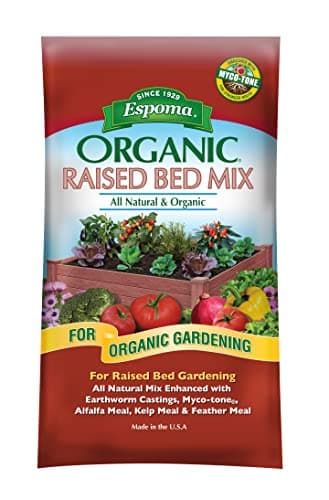 Espoma Organic Raised Bed MixPurpose-made raised bed mix, widely stocked | The simple bagged default | 8.7 | $29.85 - View on Amazon |
| 4 | 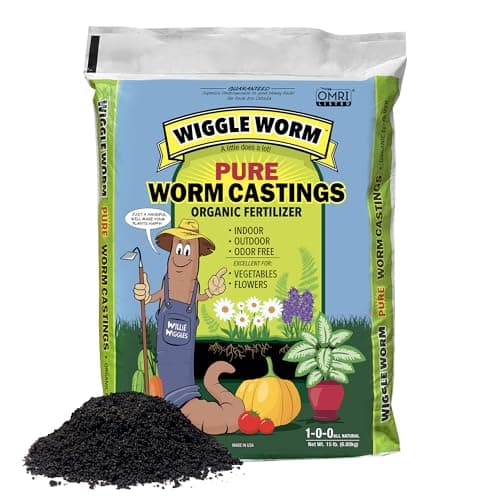 Wiggle Worm Pure Earthworm CastingsPure castings, used at low rates | Topping up a tired bed | 8.8 | $26.75 - View on Amazon |
#ad We may earn a commission - Price as of October 17, 2026
Scores are our own editorial judgment, formed from published specifications and independent sources. They are not aggregated customer ratings, and they are not the result of hands-on testing, which we do not currently do. See how we choose.
How much a bag takes
| Bag size | Approximate volume | 1.5 cu ft bags of mix |
|---|---|---|
| 5 gal | About 0.67 cu ft | About 2 bags fills 4 pots |
| 7 gal | About 0.94 cu ft | About 2 bags fills 3 pots |
| 10 gal | About 1.33 cu ft | About 1 bag per pot |
| 15 gal | About 2 cu ft | About 1.3 bags per pot |
| 20 gal | About 2.67 cu ft | About 1.8 bags per pot |
| 100 gal fabric bed | About 13.4 cu ft | About 9 bags |
Fill to about an inch below the rim and do not firm it down hard. A fabric pot settles on its own after the first few waterings, and a mix packed in tightly never recovers the air space it loses.
The drying-out problem, and what actually helps
Every honest page about fabric pots says the same thing: they dry out faster than plastic. In midsummer heat a 10-gallon bag with a tomato in it can need water daily, sometimes twice. Four things measurably reduce that, and only one of them is the soil.
- Go bigger than feels necessary. A 15-gallon bag dries far more slowly than a 10, and the cost difference is small compared with a season of daily watering.
- Blend castings or extra compost into the mix. Both improve water holding without making the mix dense.
- Mulch the surface. An inch of straw or compost on top of a grow bag is as effective there as it is in a bed, and it is routinely skipped.
- Stand bags out of the wind and off hot paving. Wind across a porous fabric wall is a drying machine, and a dark bag on concrete bakes.
Reusing the mix next year
Grow bag soil is reusable, which changes the cost picture considerably over three or four seasons. Tip each bag out in fall, break up the root ball, pull out the big roots, and blend roughly a third fresh compost through it before refilling in spring. Do not plant the same crop family in the same recycled mix two years running -- that is how soil-borne disease accumulates.
If a bag held something diseased, start that bag fresh. Everything else can be refreshed and used again. For which crops suit bags in the first place, the best grow bags for vegetables covers sizing by crop, and raised beds vs grow bags sets the two approaches against each other.
The picks in full
Top pick
FoxFarm Happy Frog Potting Soil
FoxFarm
Excellent in containers and as the top layer of an intensively planted bed -- but it is potting soil, so blend it rather than filling with it.
Happy Frog earns its reputation in containers, where a light, fast-draining, biologically active mix is exactly right. In a raised bed it needs a job description.
The sensible use is blending: mix it with compost and a heavier component for the top layer of an intensively planted bed, particularly where you are growing a lot in a small area. Used neat across a whole bed it is both costly and too light to hold structure.
Anything labeled potting soil is designed for the physics of a pot -- limited volume, frequent watering, free drainage from the base. A bed is a different environment, and the mix should match it.
What works
- Strong early growth and quick root establishment
- Stays loose rather than compacting in containers
- Inoculated with beneficial microbes
- Reliable, consistent product
What does not
- It is potting soil, not bed fill
- Expensive per cubic foot at bed scale
- Needs blending with compost or topsoil in a bed
Skip it if: you are filling a bed. Used neat in a large bed it is both expensive and too light, and it will slump.
| Type | Potting soil |
|---|---|
| Listed inputs | Aged forest products, bat guano, earthworm castings, beneficial microbes |
| Texture | Light and fast-draining |
| Bag size | Commonly 1 and 2 cu ft |
A bed you fill once and feed
Coast of Maine Castine Blend Raised Bed Mix
Coast of Maine
The premium bagged mix: a genuinely complex blend rather than peat with a handful of fertilizer, and it shows in the second season.
Bagged raised bed mixes vary enormously, and the ingredient list is how you tell them apart. A cheap mix is mostly peat or bark fines with a starter fertilizer. This one lists compost, worm castings, kelp, biochar and crustacean meal, which is a different product doing a different job.
The practical difference shows up in year two. Simple mixes slump and compact; a compost-rich, biologically active blend keeps its structure and keeps releasing nutrients.
Use it where it counts. Vegetable roots mostly live in the top 10 to 12 inches, so put the good mix there and use cheaper bulk material below. Filling a 17-inch bed entirely with premium bagged mix is how people end up spending more on soil than on the bed.
What works
- Genuinely diverse ingredient list, not a peat-and-fertilizer mix
- Holds structure rather than compacting over a season
- Biologically active, so it keeps improving
- Works straight from the bag with no amending
What does not
- Among the most expensive options per cubic foot
- Regional availability varies
- Overkill as bulk fill for a deep bed
Skip it if: you are filling a large bed from empty. At premium prices per cubic foot, a full fill costs more than the bed did.
| Type | Ready-to-use raised bed mix |
|---|---|
| Listed inputs | Compost, worm castings, kelp, biochar, greensand, crustacean meal |
| Use | Fill the top layer, or top up each spring |
| Bag size | Commonly 1 and 2 cu ft |
The simple bagged default
Espoma Organic Raised Bed Mix
Espoma
The easy recommendation: purpose-built for raised beds, organic inputs, and available almost everywhere.
If you want one bagged mix and no decisions, this is it. It is blended for raised beds specifically, which matters: potting mix is designed to drain fast in a small container, and garden soil is designed to sit in the ground. Neither behaves well as a bed fill on its own.
The input list is straightforward organic material -- castings, alfalfa, kelp, feather meal -- and there are no synthetic feeds in it, which is what most people asking about organic actually want to know.
Availability is a genuine advantage. Mid-season top-ups are a real need, and a mix you can pick up locally beats a better one you have to order.
What works
- Made for raised beds rather than repurposed potting soil
- Organic input list with no synthetic feeds
- Very widely stocked, so easy to top up mid-season
- Good structure straight from the bag
What does not
- Bag sizes are small for a full fill
- Less ingredient complexity than the premium blends
- Still a bagged-mix price, not a bulk price
Skip it if: you need volume. It is a good mix at a normal price, which still adds up fast across 30-plus cubic feet.
| Type | Ready-to-use raised bed mix |
|---|---|
| Listed inputs | Earthworm castings, alfalfa meal, kelp meal, feather meal |
| Fertilizer | No synthetic plant foods listed |
| Bag size | Commonly 1 and 1.5 cu ft |
Topping up a tired bed
Wiggle Worm Pure Earthworm Castings
Wiggle Worm
The concentrate: a small amount worked into the root zone does more than a much larger volume of ordinary compost.
Castings are what a worm bin produces, and they are the most concentrated common soil amendment available in a bag. The useful property is that they are gentle -- unlike fresh manure, castings will not scorch a seedling.
Use them where roots will find them: a handful in each planting hole, or a thin layer raked into the top few inches before planting. Spreading them thinly across an entire bed is largely wasted.
If this becomes a regular purchase, that is the argument for a worm bin. You would be making the same material at home from material you currently throw away.
What works
- Very effective at small application rates
- Will not burn seedlings the way raw manure can
- Improves structure as well as feeding
- Stores well between seasons
What does not
- Expensive by volume
- Too dense to use as a bulk fill
- Easy to overuse and waste
Skip it if: you are trying to add volume. Castings are an amendment, not a fill -- a bed of pure castings is both wasteful and too dense.
| Type | Pure earthworm castings |
|---|---|
| Use rate | Worked in at low rates, not used as a bulk fill |
| Texture | Fine, dark, uniform |
| Bag size | Commonly 15 and 30 lb |
Common questions
What is the best soil to use in grow bags?
A quality potting soil, ideally with extra compost or earthworm castings blended through it. Potting soil is light and open enough to drain freely in a fabric pot while still holding moisture. Raised bed mix works in larger bags of 15 gallons and up, where the extra volume carries the slightly heavier texture.
Can I use raised bed soil in grow bags?
In large bags, yes. In 5- and 10-gallon bags a bed mix tends to compact and hold water unevenly, because a fabric pot already drains and breathes on every surface. Potting soil is the better match at those sizes, and the difference shows up as fewer waterings and better root growth.
How much soil do I need for a 10-gallon grow bag?
About 1.33 cubic feet, so roughly one standard 1.5 cubic foot bag of mix fills one pot with a little left over. A 5-gallon bag takes about 0.67 cubic feet, a 15-gallon takes about 2, and a 100-gallon fabric raised bed takes about 13.4.
Can I use garden soil in grow bags?
No. Garden soil and native soil from the yard both compact in a container, drain poorly once they do, and often carry weed seed. The result is a heavy bag that is either waterlogged or set hard. Use a container mix and keep garden soil for the ground.
Why do my grow bags dry out so fast?
Because fabric is porous on every side, so water evaporates from the walls as well as the surface. Use a larger bag than feels necessary, blend castings or compost into the mix for water holding, mulch the surface, and keep bags out of the wind and off hot paving.
Can I reuse grow bag soil next year?
Yes. Tip it out in fall, break up the root ball and remove large roots, then blend about a third fresh compost through it before refilling in spring. Rotate what you plant in it so the same crop family is not grown in the same recycled mix twice running, and start fresh in any bag that held a diseased plant.
Sources
Factual claims on this page are backed by the published sources below, and product specifications are the manufacturers’ own. Where a figure is not published, we say so rather than estimating it.