Step 2 - Soil & Fill
What to Put at the Bottom of a Raised Garden Bed
The bottom of a bed has exactly two jobs: stopping weeds coming up and stopping animals coming in. Drainage is not one of them.
Janet H. - the hands-on owner behind Janet Media Group.
Published
This page contains affiliate links. If you buy through them we may earn a commission at no cost to you, and it never decides what we recommend. How this site is funded.
Put a single layer of plain corrugated cardboard at the bottom of a raised bed to smother the grass and weeds underneath, and add galvanized hardware cloth under the cardboard only if you have gophers, voles or moles. That is the whole answer. Do not add gravel, do not add landscape fabric, and do not add a plastic liner -- all three make the bed worse, and the gravel layer in particular is a drainage myth that does the opposite of what people expect.
The base has two jobs, and only two
- Weed suppression. Whatever is growing on the ground where the bed will sit -- grass, bindweed, dandelions -- will push up through a foot of new soil given the chance. A light-blocking layer that then rots away is the fix.
- Exclusion of burrowing animals. If voles or gophers are a known problem where you garden, a metal mesh across the base is the only reliable answer and it has to go in before the soil does.
- Not drainage. A bed open to the ground drains into the ground. Adding a layer of a different-textured material in between actively slows it down.
- Not soil separation. You want the bed soil and the native soil to knit together over the first couple of seasons. That is how roots get deeper than the frame.
The right materials, in the order they go in
- 1
Cut the grass short and leave it
Do not strip the turf. Mow or scalp it, leave the clippings, and let the cardboard do the killing. The dead turf becomes organic matter at the bottom of your bed.
- 2
Hardware cloth, if you need it
Half-inch galvanized hardware cloth, cut to the footprint and turned up a couple of inches at the sides. Only for burrowing rodent pressure -- it is not a weed barrier and not worth the money otherwise.
- 3
Plain corrugated cardboard, one overlapping layer
Remove tape and plastic labels. Overlap the sheets by several inches so there are no gaps for weeds to find. Wet it down thoroughly before the soil goes on, or it will shed water for weeks.
- 4
Bulk organic material if the bed is deep
In a bed over about 14 inches, the lower third can be coarse brown material -- small branches, autumn leaves, straw, untreated wood chips -- rather than purchased mix. This is where the real money is saved.
- 5
Good bed mix on top
The top 10 to 12 inches is where almost all root activity happens, and it is the layer worth buying properly.
Quick picks
| # | Product | Best for | Score | Price |
|---|---|---|---|---|
| 1 |  Top pickEspoma Organic Raised Bed MixPurpose-made raised bed mix, widely stocked | The simple bagged default | 8.7 | $29.67 - View on Amazon |
| 2 | 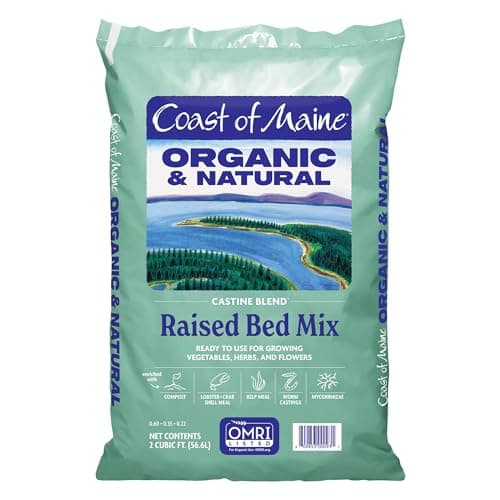 Coast of Maine Castine Blend Raised Bed MixCompost-rich blend with castings, kelp and biochar | A bed you fill once and feed | 9.0 | $43.28 - View on Amazon |
| 3 | 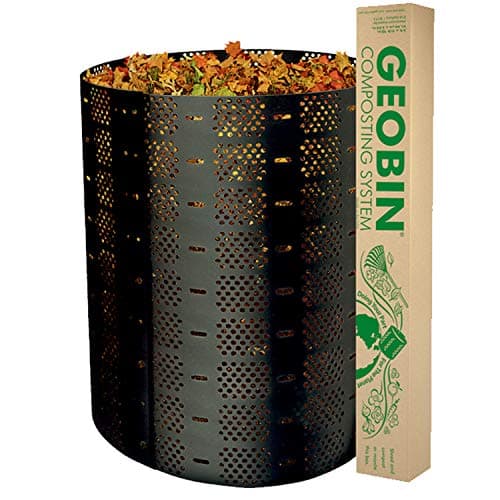 GEOBIN Expandable Compost BinExpands to roughly 216 gal, 36 in tall | Leaves and yard waste | 8.7 | $35.99 - View on Amazon |
#ad We may earn a commission - Price as of October 11, 2026
Scores are our own editorial judgment, formed from published specifications and independent sources. They are not aggregated customer ratings, and they are not the result of hands-on testing, which we do not currently do. See how we choose.
What not to put in, and why
| Material | The claim | What really happens |
|---|---|---|
| Gravel or stones | Improves drainage | Creates a perched water table -- water stalls at the texture boundary and the soil above it stays wetter |
| Landscape fabric | Stops weeds forever | Blocks root growth into the subsoil and clogs; perennial weeds eventually find the edges anyway |
| Plastic sheet or pond liner | Keeps soil in, weeds out | Turns the bed into a bathtub with no outlet; roots drown and a steel frame corrodes faster at the base |
| Fresh manure or kitchen scraps | Feeds the bed | Goes anaerobic under a foot of soil, smells, and can burn roots; compost it first instead |
The gravel one deserves spelling out because it is so widespread. Water does not move freely from a fine-textured material into a coarse one -- it has to saturate the fine layer first. So a gravel layer under bed soil holds water *up* in the root zone rather than letting it away. Extension guidance has been making this point about gravel in the bottom of containers for decades, and a raised bed behaves the same way.
The weed question, honestly
Cardboard handles annual weeds and ordinary lawn grass completely -- they are dead within a season and the cardboard has rotted into the bed by the end of year one. Where it is not a complete answer is aggressive perennials: bindweed, Japanese knotweed, couch grass and horsetail can survive and find the edges.
For those, you need either more depth -- 18 inches or more of soil makes it a long climb -- or to deal with the weed before the bed goes down, by sheet-mulching the area for a full season first. Putting a bed on top of a healthy bindweed patch and hoping is the one scenario where people come back a year later disappointed.
Beds that cannot drain into the ground
On a concrete patio, a deck or a roof terrace, the base rules change because there is nowhere for water to go. There you do need drainage provision: the bed must have holes or an open mesh base, it should stand on feet or battens so water can escape underneath, and the mix should be lighter and more porous than a ground-level bed mix. A fabric bed is the simplest solution of all on a hard surface because it drains through every surface at once.
That case gets its own treatment in raised beds for a deck, patio or balcony, which covers the weight question too -- wet soil is heavier than most people assume and a deck has a rated load.
How much the base layer saves you
Quite a lot, in a deep bed. Filling a 17-inch 8 x 4 bed entirely with bagged mix is a serious purchase; filling the bottom 5 or 6 inches with branches, leaves and coarse brown material cuts that bill by around a third. The material is free if you have trees, and if you have a compost bin you will already be collecting exactly the right stuff. Run the numbers for your own bed on the raised bed soil calculator before buying anything.
The two pages that go further on this are how to fill a raised garden bed, which is the full step-by-step for the whole depth, and hugelkultur raised beds, which is the committed version of the coarse-bottom-layer idea.
Expect it to settle
A bed with organic material in the base will drop. Over the first year or two the branches and leaves break down and the surface can fall by several inches, which is normal and not a fault. Top up with compost each spring. That annual inch or two is the ongoing cost of a raised bed and the clearest reason to make your own compost -- a bin pays for itself on a deep bed in about two seasons.
Common questions
What should you put at the bottom of a raised garden bed?
One overlapping layer of plain corrugated cardboard to smother grass and weeds, with galvanized hardware cloth underneath it only if burrowing rodents are a known problem. In a bed deeper than about 14 inches, coarse brown material such as branches, leaves and straw can fill the lower third to cut the fill cost.
Should I put gravel in the bottom of a raised bed for drainage?
No. Water does not move freely from fine-textured soil into coarse gravel, so a gravel layer holds water up in the root zone rather than letting it drain away. A bed open to the ground drains into the ground, and a layer of different material in between only slows it down.
Do I need landscape fabric under a raised bed?
No, and it does more harm than good. Fabric blocks roots from reaching into the subsoil, clogs over time, and perennial weeds find the edges anyway. Cardboard kills the weeds and then rots away, which is what you actually want.
Will cardboard stop weeds in a raised bed?
It stops lawn grass and annual weeds completely -- they are dead within a season. It is not a reliable answer to aggressive perennials such as bindweed, couch grass or horsetail, which need either 18 inches or more of soil above them or a season of sheet-mulching before the bed goes down.
Can you put a raised bed straight on grass?
Yes. Mow the grass short, leave the clippings, lay wet cardboard over it and fill the bed. Do not strip the turf -- the dead sod becomes organic matter at the base, and digging it out is unnecessary work.
Sources
Factual claims on this page are backed by the published sources below, and product specifications are the manufacturers’ own. Where a figure is not published, we say so rather than estimating it.