Step 1 - Raised Beds
The Best Raised Beds for a Deck or Balcony
A full raised bed on decking is a weight and water problem before it is a gardening one. Both are solvable, and both are worth solving before you buy.
Janet H. - the hands-on owner behind Janet Media Group.
Published
This page contains affiliate links. If you buy through them we may earn a commission at no cost to you, and it never decides what we recommend. How this site is funded.
On a deck or balcony, the best choice for most people is the Keter Easy Grow elevated bed: a resin planter with a self-watering reservoir, a sealed base so nothing drains onto the boards, and a footprint that spreads its weight across several joists. The two things to settle before buying anything are what the structure can carry and where the water goes -- a standard bottomless raised bed is the wrong product up there on both counts.
Quick picks
| # | Product | Best for | Score | Price |
|---|---|---|---|---|
| 1 | 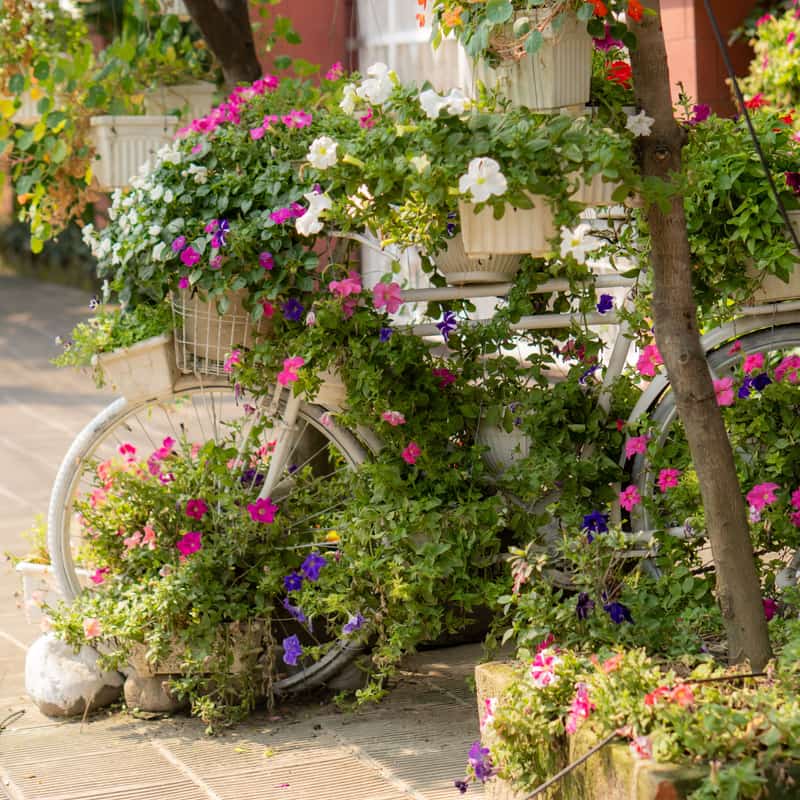 Top pickKeter Easy Grow Elevated Garden BedResin planter with self-watering reservoir | Low-maintenance patio growing | 8.1 | Check price on Amazon |
| 2 | 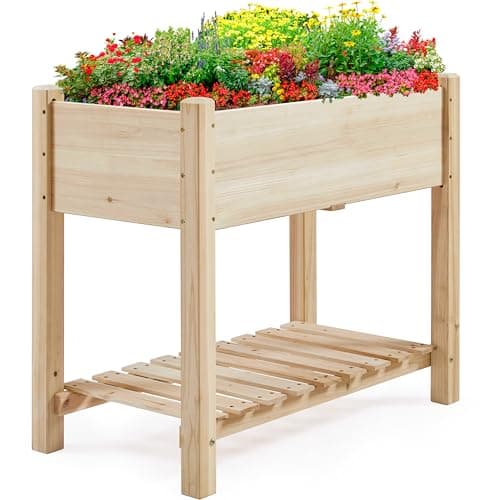 Yaheetech Elevated Wooden Planter BoxWaist-height fir planter with drainage liner | Balconies and bad backs | 8.0 | $47.99 - View on Amazon |
| 3 | 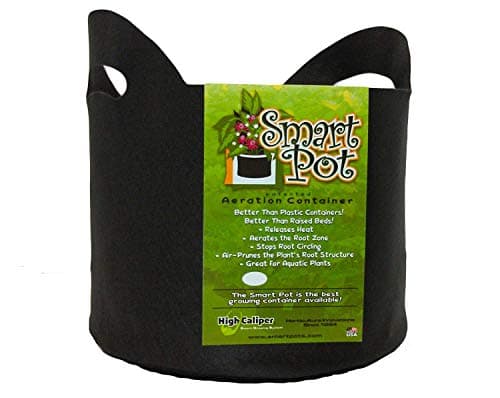 Smart Pot 10-Gallon Soft-Sided Container16 in across, 11.5 in tall, 1.33 cu ft | Bags you keep for years | 8.6 | $13.59 - View on Amazon |
| 4 | 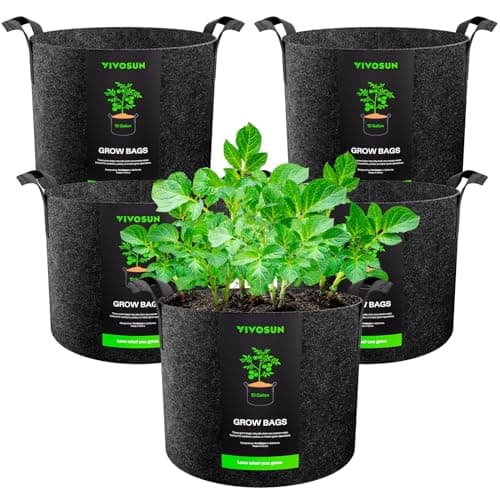 VIVOSUN 5-Pack 10 Gallon Grow BagsFive 10 gal bags with stitched handles | A first set of bags | 8.4 | Check price on Amazon |
#ad We may earn a commission - Price as of October 10, 2026
Scores are our own editorial judgment, formed from published specifications and independent sources. They are not aggregated customer ratings, and they are not the result of hands-on testing, which we do not currently do. See how we choose.
The three deck-specific problems
| Problem | Why it happens | The fix |
|---|---|---|
| Weight | Wet soil is far heavier than people expect, concentrated on a small footprint | Shallow and wide rather than deep and small; position over joists |
| Water on the boards | A bottomless bed drains straight down and keeps timber permanently damp | A planter with a sealed base and a drain point, or a tray |
| Staining and rot | Soil and tannins sit against the boards under the planter | Feet or a stand so air circulates underneath; move it annually |
| Drying out | Decks are exposed, reflective and windy; containers dry fast | A water reservoir, or a shallow mulch and daily summer watering |
| Wind | Balconies funnel wind; tall plants act as levers | Low planters, heavier containers at the edge, no tall trellising |
Of those, the water one causes the damage you cannot undo. Permanently damp decking boards rot from underneath and you find out years later. Anything you put up there needs either a sealed base you empty deliberately or air and daylight under it.
What works up there
Elevated planters with a liner or sealed base. These are designed for exactly this: contained soil, controlled drainage, legs that keep the body off the boards, and a narrow footprint you can place over a joist. Waist height also means you are not kneeling on decking.
Self-watering resin planters. The reservoir is the right feature in the wrong place -- decks and balconies are the driest, windiest, most reflective growing positions most people have, and a reservoir evens out a hot week when you are not home.
Fabric pots on a tray or stand. Cheap, light when empty, and they hold a surprising amount of crop. They drain from everywhere, though, so they need a tray or a stand. A 10 gallon bag grows one tomato, one pepper plant, or a good quantity of salad.
What not to put on a deck
- A bottomless metal or wooden bed. Designed to drain into the ground. On decking it drains into your joists.
- A deep bed filled to the top with heavy mix. Depth is weight. Use the shallowest bed your crops allow -- see the depth table in our raised bed size guide.
- Anything with a tall trellis on a balcony. A trellis is a sail, and a planter is its anchor point. One gust and you have an expensive mess and possibly a hazard below.
- Untreated timber sitting flat on the boards. Two timber surfaces in permanent contact, both staying wet. Both rot.
- Garden soil or topsoil. Heavier than a purpose-made mix and no better up here. Use a light raised bed or potting mix.
Keeping the weight down
Use a light, purpose-made raised bed or potting mix rather than topsoil -- it holds moisture better anyway. Choose the shallowest depth your crops will tolerate: salads, herbs, bush beans and radishes are all happy in 8 inches, where tomatoes and carrots want 12 or more.
Several small planters spread load better than one large one, and they are far easier to move when you want the deck back. Keep everything close to the house wall or the deck perimeter where the structure is stiffest, and avoid lining up heavy planters in a row across the middle of a span.
If you want to be sure of the volume you are committing to before you buy, put your dimensions into the raised bed soil calculator -- seeing the cubic feet written down changes how people feel about depth.
Shallow and wide also beats deep and narrow for stability. A low, broad planter is far harder to tip than a tall one holding the same volume, which matters on a balcony where wind funnels between buildings and where there is somewhere below for a falling planter to land.
What actually grows well on a deck
Decks are usually sunnier and hotter than the garden, which suits a specific list. Tomatoes, peppers, chillies, bush beans and salad leaves all do well. Herbs do very well -- it is the right spot for them for the same reason it is the right spot for people. Strawberries are excellent in a shallow planter.
What does not work is anything needing depth or a long season undisturbed: parsnips, maincrop potatoes, brassicas, sweetcorn. Those are bed crops. For strawberries specifically we have the best raised beds for strawberries, and for herbs, the best raised garden bed for herbs.
One last practical point: whatever you put up there, lift it and sweep underneath at least once a year. Ten minutes, and it is the difference between a planter that leaves a mark and one that leaves a repair.
The picks in full
Top pick
Keter Easy Grow Elevated Garden Bed
Keter
#ad We may earn a commission - prices are shown by Amazon, not by us
Resin rather than wood, with a water reservoir underneath -- the low-effort pick for a patio you do not want to water daily.
The reservoir is the feature. A shallow box on legs is the fastest-drying growing situation in the garden, and a water store underneath turns a daily chore into a weekly one. If the reason your last patio tomato died was a long weekend away, this is the fix.
Resin also removes the maintenance that wood adds. Nothing to seal, nothing to rot, and it comes apart for storage.
Drain the reservoir before the first hard freeze. Trapped water expands, and that is how a plastic planter cracks.
What works
- Reservoir buys you days between waterings
- Resin does not rot, split or need sealing
- Assembles without tools in minutes
- Wipes clean at the end of the season
What does not
- Shallow growing depth, like all elevated planters
- Plastic look is not for every garden
- Reservoir needs draining before a hard freeze
Skip it if: you dislike the look of plastic garden furniture. It performs well; it does not pretend to be timber.
| Material | Weather-resistant resin |
|---|---|
| Working height | About 30 in |
| Watering | Built-in reservoir with drainage control |
| Assembly | Snap-together, no tools |
| Soil needed | Usually under 6 cu ft |
Balconies and bad backs
Yaheetech Elevated Wooden Planter Box
Yaheetech
A standing-height planter on legs for patios and balconies, where the point is reach rather than growing volume.
An elevated planter is a different product from a raised bed, even though the categories get mixed together. You are buying reach: a box at waist height that you can work at standing up, on a surface where digging is not an option.
The trade is depth. Eight to ten inches of soil is plenty for salad leaves, bush beans, herbs, chard and dwarf tomatoes, and not enough for anything that makes a long root. Plan the planting list around that instead of fighting it.
Small soil volumes dry fast, so this is the one bed type where a mulch layer and a watering habit really are the difference between a crop and a disappointment.
What works
- No bending at all -- true standing height
- Fits a balcony, deck or patio where a ground bed cannot go
- Small soil volume keeps the fill cost low
- Easy one-person assembly
What does not
- Shallow box rules out carrots, parsnips and potatoes
- Dries out quickly in summer and needs frequent watering
- Softwood frame will weather faster than cedar
Skip it if: you want to grow root crops. The growing box on an elevated planter is shallow by design -- it has to be, or the legs could not hold it.
| Material | Fir wood frame with liner |
|---|---|
| Working height | About 30 in to the rim |
| Soil depth | Typically 8 to 10 in in the box |
| Drainage | Slatted base with liner |
| Soil needed | Usually under 6 cu ft |
Bags you keep for years
Smart Pot 10-Gallon Soft-Sided Container
Smart Pot
The original bonded-fabric pot, and the one still in use when the cheap multipacks have gone brittle and split at the seams.
Fabric pots are a commodity with one real quality variable: how long the fabric lasts outdoors in sun. A bag that splits at the seam in August, full of wet mix and a fruiting plant, is a bad afternoon.
At 16 inches across and 11.5 inches tall this holds about 1.33 cubic feet, which is one indeterminate tomato with a cage, or two peppers, or a generous clump of basil and chard. It is not a mixed planter.
The honest way to buy fabric pots is to split the difference: a couple of pots like this for the plants you grow every year, and a cheap multipack for the extras you are experimenting with.
What works
- Heavier fabric than the multipack bags, and it holds its shape when full
- UV stabilized, which is what decides whether a bag survives a second summer outdoors
- Aeration through the sidewall air-prunes roots instead of letting them circle
- Folds flat for storage like any fabric pot
What does not
- Costs several times what a bag from a five-pack costs
- Sixteen inches across is one plant, not a mixed planting
- Still needs daily watering in summer -- fabric does not change that
Skip it if: you want five bags today for the price of one. This is a single pot at a single-pot price, and the case for it is the fifth season rather than the first.
| Type | Bonded fabric aeration container |
|---|---|
| Capacity | 10 gal, about 1.33 cu ft |
| Size | 16 in across, 11.5 in tall |
| Fabric | UV-stabilized nonwoven, no plastic liner |
| Handles | Available with or without |
A first set of bags
VIVOSUN 5-Pack 10 Gallon Grow Bags
VIVOSUN
#ad We may earn a commission - prices are shown by Amazon, not by us
Five bags for about what one rigid planter costs, and 10 gallons is the size that actually grows a tomato rather than keeping one alive.
Ten gallons is the useful number here. University of Maryland Extension puts the minimum container size for a standard tomato, a pepper, an eggplant or a cucumber at 5 gallons, so a 10 gallon bag is comfortably above the floor rather than at it -- which in practice means fewer collapses on a hot afternoon.
The fabric is mid-weight: thicker than the throwaway bags sold ten to a pack, thinner than the bonded-fabric pots that last a decade. For a first season, while you are deciding whether you like growing this way, that is the right place on the scale.
Fill them with potting mix, not garden soil or raised bed mix. Soil in a container compacts and drains badly, which is the single most common reason a bag of tomatoes underperforms the same plant in the ground.
What works
- Ten gallons is the right size for one tomato, pepper or eggplant
- Handles are stitched rather than glued, so a full bag can be moved
- Five bags let you chase the sun around a patio
- Folds away flat at the end of the season
What does not
- Thinner fabric than the premium bags, so expect a shorter life
- Needs watering far more often than a bed of the same volume
- Dark fabric gets genuinely hot in full afternoon sun
Skip it if: you are growing root crops. Ten gallons is 11 or 12 inches of depth once settled, which is short for carrots and parsnips.
| Type | Nonwoven fabric pot with handles |
|---|---|
| Capacity | 10 gal each |
| Size | Roughly 16 in across and 12 in tall at 10 gal |
| Fabric | Mid-weight nonwoven polypropylene |
| Handles | Reinforced, stitched to the body |
| Pack | 5 bags |
Common questions
Can you put a raised bed on a deck?
Yes, with two conditions. It needs a sealed or lined base so water does not drain onto the boards, and the weight needs spreading over several joists rather than concentrated mid-span. A standard bottomless raised bed is the wrong product on decking because it is designed to drain into the ground.
How heavy is a raised bed full of soil?
Heavy enough that it should be treated as a structural question rather than a gardening one. Wet raised bed mix is several times the weight of the dry bagged material, and a planter holding a few cubic feet is a concentrated point load. On a balcony or upper-storey deck, check the rated load before filling anything.
How do you protect decking from a planter?
Keep air and daylight under it. Use a planter on legs or stand it on feet, use a sealed base or a drip tray rather than letting it drain through, and lift it and sweep underneath once a year. Permanently damp boards rot from below, and you do not see it until it is a repair.
What is the best planter for a balcony vegetable garden?
An elevated planter with a contained base, or fabric pots on a stand or tray. Keep everything low -- balconies funnel wind, and a tall trellis turns a planter into a lever. Avoid deep heavy beds; most balcony crops are happy in 8 to 12 inches.
What vegetables grow best on a deck?
Tomatoes, peppers, chillies, bush beans, salad leaves, strawberries and almost all herbs, because decks are typically sunnier and hotter than the garden. Avoid anything needing real depth or a long undisturbed season, such as parsnips, maincrop potatoes and brassicas.
Sources
Factual claims on this page are backed by the published sources below, and product specifications are the manufacturers’ own. Where a figure is not published, we say so rather than estimating it.