Step 1 - Raised Beds
The Best Raised Garden Bed for Herbs
Herbs are the one crop where a smaller, shallower, drier bed beats a bigger one. Position matters more than size.
Janet H. - the hands-on owner behind Janet Media Group.
Published
This page contains affiliate links. If you buy through them we may earn a commission at no cost to you, and it never decides what we recommend. How this site is funded.
For most kitchens the best herb bed is the Yaheetech elevated planter: waist height, a drainage liner, and small enough to put within a few steps of the back door, which is the single thing that decides whether herbs get used. Herbs do not need the 17 inch depth a vegetable bed wants -- most of them do better in a shallower, faster-draining bed -- and they absolutely need to be somewhere you will walk past while cooking.
Why herbs want a different bed
Most culinary herbs are Mediterranean in origin: rosemary, thyme, oregano, sage, marjoram, lavender. They evolved on thin, stony, sharply drained ground, and the way to kill them is a deep, rich, moisture-retentive bed -- exactly the mix that grows the best tomatoes. In a wet winter, a herb sitting in a water-holding raised bed mix rots at the crown.
The softer herbs are the exception. Basil, parsley, cilantro, chives, dill and mint are leafy annuals or vigorous perennials that want the normal treatment: steady moisture and reasonable fertility. Those two groups genuinely want different conditions, which is the one real complication in herb growing.
Quick picks
| # | Product | Best for | Score | Price |
|---|---|---|---|---|
| 1 | 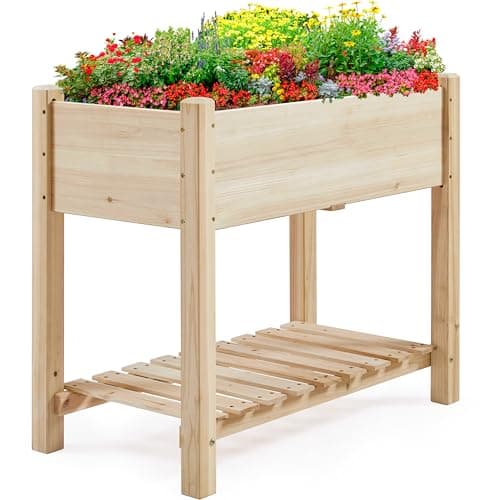 Top pickYaheetech Elevated Wooden Planter BoxWaist-height fir planter with drainage liner | Balconies and bad backs | 8.0 | $47.99 - View on Amazon |
| 2 |  Keter Easy Grow Elevated Garden BedResin planter with self-watering reservoir | Low-maintenance patio growing | 8.1 | Check price on Amazon |
| 3 | 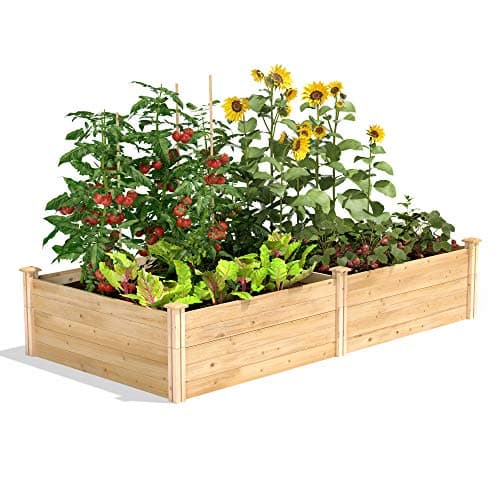 Greenes Fence Cedar Raised Garden Bed KitUntreated North American cedar, dovetail corners | People who want wood | 8.4 | $227.03 - View on Amazon |
| 4 | 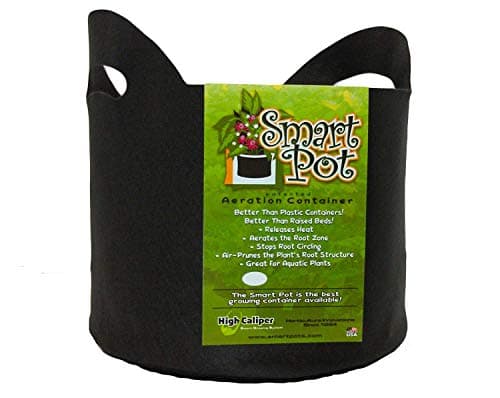 Smart Pot 10-Gallon Soft-Sided Container16 in across, 11.5 in tall, 1.33 cu ft | Bags you keep for years | 8.6 | $13.59 - View on Amazon |
#ad We may earn a commission - Price as of October 10, 2026
Scores are our own editorial judgment, formed from published specifications and independent sources. They are not aggregated customer ratings, and they are not the result of hands-on testing, which we do not currently do. See how we choose.
Depth, by herb
| Herb group | Depth | Mix |
|---|---|---|
| Thyme, oregano, marjoram, savory | 6 to 8 in | Free-draining, grit added, low fertility |
| Rosemary, sage, lavender | 10 to 12 in | Free-draining, grit added, low fertility |
| Basil, parsley, cilantro, dill | 8 to 10 in | Ordinary raised bed mix, kept moist |
| Chives and other alliums | 8 in | Ordinary raised bed mix |
| Mint and lemon balm | 8 in, contained | Ordinary mix -- but in its own container |
| Bay, in a pot | 12 in and upward | Free-draining, and moved under cover in hard winters |
Nothing on that list needs the depth a vegetable bed needs, which is why an elevated planter works so well here and works badly for carrots or tomatoes. If you are planning a mixed bed, our raised bed size guide has the depth-by-crop table for everything else.
The mint problem
Mint spreads by runners and it will take an entire herb bed in two seasons. It is not badly behaved so much as extremely successful, and no amount of pulling fixes it once the runners are through the bed.
Give it a container of its own, standing beside the bed rather than sunk into it -- a 10 gallon fabric pot does the job and costs very little. Lemon balm, tarragon and horseradish all deserve the same treatment for the same reason.
Position beats everything
Herbs are a convenience crop. The difference between a herb bed that gets used every evening and one that gets harvested twice a summer is how far it is from the kitchen, and nothing else. Six steps from the door, within reach, at a height you can cut from without bending -- that is the specification.
Sun is the second requirement. The Mediterranean group wants as much as you can give it, six hours minimum and ideally more, and will sulk in shade. The soft leafy herbs are more forgiving and actually prefer some afternoon shade in a hot summer, which is useful if your only spot is partly shaded.
The self-watering resin planter on the list above exists for a specific case: a sunny patio where you are not home every day. The reservoir evens out the soft herbs and is worth having, though it suits basil and parsley far better than it suits thyme.
What to do about drainage
- Check the bed actually drains. An elevated planter needs open drainage holes and a liner that lets water out, not a sealed tray.
- Add grit to the Mediterranean half. A third coarse grit or perlite by volume into an ordinary raised bed mix is enough to change the character completely.
- Do not add extra compost for the woody herbs. Rich soil gives soft, floppy, less aromatic growth that then dies over winter. Thyme grown hard tastes better.
- Raise the crown. Plant woody herbs slightly high so water runs away from the stem base rather than sitting against it.
If you want to understand the mix itself rather than just amend it, the raised bed soil mix recipe explains what each component does and what happens when you change the ratio.
Harvesting is what keeps a herb bed alive
Herbs are the only crop that is improved by being used. Basil pinched back weekly stays bushy and productive; basil left alone flowers and goes bitter within a month. Thyme and oregano get woody and sparse in the centre unless they are cut regularly. Chives want shearing to the base two or three times a season. A neglected herb bed does not just stop producing -- it actively declines.
Which is the real argument for putting the bed by the door at a height you can cut from. Not convenience for its own sake: harvesting is the maintenance.
Perennial or annual, which changes the bed
A herb bed is partly permanent planting, which makes it unlike a vegetable bed. Rosemary, thyme, sage and oregano stay put for years and will resent being dug around, so plan the layout once: woody perennials toward the back or the drier end, annual leafy herbs at the front where you can replant them twice a season.
That permanence is an argument for a material that lasts. Untreated cedar is pleasant and will need replacing within about a decade; coated steel will outlast the plants in it. Either is fine, but a bed you will not be rebuilding around established rosemary is worth a little more.
Starting herbs from seed is cheap and mostly easy -- basil, parsley, cilantro and dill all germinate readily. The woody perennials are slow and fiddly from seed and are worth buying as plants. The best seed starting kits covers the equipment for the annuals.
The picks in full
Top pick
Yaheetech Elevated Wooden Planter Box
Yaheetech
A standing-height planter on legs for patios and balconies, where the point is reach rather than growing volume.
An elevated planter is a different product from a raised bed, even though the categories get mixed together. You are buying reach: a box at waist height that you can work at standing up, on a surface where digging is not an option.
The trade is depth. Eight to ten inches of soil is plenty for salad leaves, bush beans, herbs, chard and dwarf tomatoes, and not enough for anything that makes a long root. Plan the planting list around that instead of fighting it.
Small soil volumes dry fast, so this is the one bed type where a mulch layer and a watering habit really are the difference between a crop and a disappointment.
What works
- No bending at all -- true standing height
- Fits a balcony, deck or patio where a ground bed cannot go
- Small soil volume keeps the fill cost low
- Easy one-person assembly
What does not
- Shallow box rules out carrots, parsnips and potatoes
- Dries out quickly in summer and needs frequent watering
- Softwood frame will weather faster than cedar
Skip it if: you want to grow root crops. The growing box on an elevated planter is shallow by design -- it has to be, or the legs could not hold it.
| Material | Fir wood frame with liner |
|---|---|
| Working height | About 30 in to the rim |
| Soil depth | Typically 8 to 10 in in the box |
| Drainage | Slatted base with liner |
| Soil needed | Usually under 6 cu ft |
Low-maintenance patio growing
Keter Easy Grow Elevated Garden Bed
Keter
#ad We may earn a commission - prices are shown by Amazon, not by us
Resin rather than wood, with a water reservoir underneath -- the low-effort pick for a patio you do not want to water daily.
The reservoir is the feature. A shallow box on legs is the fastest-drying growing situation in the garden, and a water store underneath turns a daily chore into a weekly one. If the reason your last patio tomato died was a long weekend away, this is the fix.
Resin also removes the maintenance that wood adds. Nothing to seal, nothing to rot, and it comes apart for storage.
Drain the reservoir before the first hard freeze. Trapped water expands, and that is how a plastic planter cracks.
What works
- Reservoir buys you days between waterings
- Resin does not rot, split or need sealing
- Assembles without tools in minutes
- Wipes clean at the end of the season
What does not
- Shallow growing depth, like all elevated planters
- Plastic look is not for every garden
- Reservoir needs draining before a hard freeze
Skip it if: you dislike the look of plastic garden furniture. It performs well; it does not pretend to be timber.
| Material | Weather-resistant resin |
|---|---|
| Working height | About 30 in |
| Watering | Built-in reservoir with drainage control |
| Assembly | Snap-together, no tools |
| Soil needed | Usually under 6 cu ft |
People who want wood
Greenes Fence Cedar Raised Garden Bed Kit
Greenes Fence
Real untreated cedar with tool-free dovetail corners -- the honest wood option, with the shorter lifespan that comes with wood.
Cedar is chosen for looks and for the fact that it is untreated, which matters if you are uneasy about what a pressure-treated board leaches into a bed you eat from. Cedar's natural oils slow rot without any chemistry at all.
The dovetail corner system is the reason to buy this particular kit rather than cutting boards yourself: the ends slot together, no hardware, and a second kit stacks on top to take a 7-inch tier up to 14 inches. That is worth doing -- one tier is too shallow for much beyond lettuce and herbs.
Set expectations on lifespan. In a wet climate a cedar bed is a multi-year item, not a permanent structure, and the boards touching soil go first.
What works
- Genuinely untreated cedar, no chemical concerns for food crops
- Tool-free dovetail corners go together in minutes
- Stack a second kit to double the depth
- Looks right in an ornamental garden
What does not
- Wood is a consumable -- expect years, not decades
- A single tier is shallow for root crops
- Cedar prices move a lot season to season
Skip it if: you want to buy a bed once. Even cedar is a wearing part in a wet climate, and steel is the better long-run answer.
| Material | Untreated North American cedar |
|---|---|
| Depth | Stackable boards, commonly 7 in per tier |
| Assembly | Dovetail corner joints, no tools required |
| Expandable | Kits stack to add depth |
| Soil needed | About 18 cu ft for 4 x 8 ft at 7 in |
Bags you keep for years
Smart Pot 10-Gallon Soft-Sided Container
Smart Pot
The original bonded-fabric pot, and the one still in use when the cheap multipacks have gone brittle and split at the seams.
Fabric pots are a commodity with one real quality variable: how long the fabric lasts outdoors in sun. A bag that splits at the seam in August, full of wet mix and a fruiting plant, is a bad afternoon.
At 16 inches across and 11.5 inches tall this holds about 1.33 cubic feet, which is one indeterminate tomato with a cage, or two peppers, or a generous clump of basil and chard. It is not a mixed planter.
The honest way to buy fabric pots is to split the difference: a couple of pots like this for the plants you grow every year, and a cheap multipack for the extras you are experimenting with.
What works
- Heavier fabric than the multipack bags, and it holds its shape when full
- UV stabilized, which is what decides whether a bag survives a second summer outdoors
- Aeration through the sidewall air-prunes roots instead of letting them circle
- Folds flat for storage like any fabric pot
What does not
- Costs several times what a bag from a five-pack costs
- Sixteen inches across is one plant, not a mixed planting
- Still needs daily watering in summer -- fabric does not change that
Skip it if: you want five bags today for the price of one. This is a single pot at a single-pot price, and the case for it is the fifth season rather than the first.
| Type | Bonded fabric aeration container |
|---|---|
| Capacity | 10 gal, about 1.33 cu ft |
| Size | 16 in across, 11.5 in tall |
| Fabric | UV-stabilized nonwoven, no plastic liner |
| Handles | Available with or without |
Common questions
What is the best raised bed for herbs?
A shallow, well-drained, waist-height planter placed within a few steps of the kitchen door. Herbs do not need the 17 inch depth a vegetable bed wants -- 8 to 12 inches is plenty for almost all of them -- and the Mediterranean herbs actively do better in a drier, less rich bed.
How deep does a raised bed need to be for herbs?
Six to eight inches for low herbs like thyme and oregano, 10 to 12 inches for rosemary, sage and lavender, and 8 to 10 inches for basil, parsley and cilantro. Nothing in the herb garden needs the depth that root vegetables and tomatoes do.
Can you plant all herbs in the same raised bed?
Mostly, with two rules. Keep mint, lemon balm and tarragon in their own containers, because they spread by runners and will take the bed. And add grit to the end where the woody Mediterranean herbs go, because the moisture-retentive mix that suits basil and parsley rots rosemary and thyme over winter.
Do herbs need full sun in a raised bed?
The Mediterranean herbs do -- six hours minimum and more is better. The soft leafy herbs, basil and parsley and cilantro in particular, tolerate and in a hot summer prefer some afternoon shade, which makes them the better choice for a partly shaded spot.
Should I use potting mix or raised bed mix for herbs?
Either works for the leafy annuals. For the woody perennials, start with a raised bed or potting mix and cut it with about a third coarse grit or perlite by volume -- the drainage matters more than the fertility, and too much compost gives soft growth that dies over winter.
Sources
Factual claims on this page are backed by the published sources below, and product specifications are the manufacturers’ own. Where a figure is not published, we say so rather than estimating it.