Step 1 - Raised Beds
Are Galvanized Raised Garden Beds Safe for Vegetables?
The short answer is yes for food growing. The longer answer is about zinc, soil pH, and which coating you are actually buying.
Janet H. - the hands-on owner behind Janet Media Group.
Published
This page contains affiliate links. If you buy through them we may earn a commission at no cost to you, and it never decides what we recommend. How this site is funded.
Galvanized steel raised beds are considered safe for growing vegetables. The coating is zinc, zinc is a plant micronutrient rather than a heavy-metal contaminant like lead or cadmium, and the rate at which it moves from a bed wall into soil is very slow in the near-neutral soil a vegetable bed runs at. The exception worth knowing is acidic soil -- below roughly pH 5.5 zinc becomes much more soluble -- which matters if you are growing blueberries in a metal bed, and almost never otherwise.
What galvanizing actually is
Galvanizing is a zinc coating bonded to steel to stop the steel rusting. The zinc corrodes in preference to the iron underneath, which is why a scratched galvanized panel does not rust out at the scratch the way painted steel does. That sacrificial behavior is the whole engineering point, and it is also the reason the question comes up: the coating is designed to slowly give itself up.
Slowly is the operative word. The corrosion rate of zinc in soil at normal garden pH is measured in decades, and it is happening at the bed wall rather than throughout the growing volume. Most of a plant's roots are nowhere near that wall.
| Coating | What it is | Practical difference |
|---|---|---|
| Plain galvanized | Hot-dip or electro-galvanized zinc over steel | The budget standard. Fine for years; shortest life where soil stays wet |
| Aluzinc / Zn-Al-Mg | Zinc with aluminum and magnesium added | Substantially more corrosion resistant than plain zinc; what the premium beds use |
| Powder-coated steel | A baked polymer finish over galvanized steel | Adds a color layer and a second barrier; chips can rust if the zinc below is damaged too |
| Corten / weathering steel | Alloy steel that forms a stable rust layer | No zinc at all. It is meant to look rusted, and it stains whatever it sits on |
The lead question, which is a different question
Searches about metal bed safety usually mix two separate worries: zinc from the coating, and lead. They are not the same issue and they do not have the same answer.
- Modern galvanized steel sold as garden beds is not a lead source. The coating is zinc, and manufacturers of food-contact-marketed beds state so on the listing.
- Old reclaimed galvanized -- water troughs, roofing, salvaged panels -- is a fair question. Older galvanizing processes used alloys that could contain lead. If you are repurposing something from a farm, that is a reason to test, and a cheap soil test is how you would find out.
- Soil itself is the far more common lead source, particularly near an older house where exterior paint has weathered into the ground. That risk exists whether the bed is steel, cedar or plastic, and it is the actual argument for raised beds rather than against them.
- Pressure-treated lumber is the historical version of this worry. Arsenic-treated wood was phased out of residential use in 2003; current treatments use copper-based preservatives.
When pH changes the answer
Zinc solubility rises sharply as soil gets more acidic. A vegetable bed usually sits somewhere around pH 6.0 to 7.0, where zinc movement is negligible. Blueberries are the outlier: they want pH 4.5 to 5.5, and gardeners deliberately acidify the bed to get there. That is the one combination where a metal bed is a slightly awkward choice.
It is not a disaster -- plenty of people grow blueberries in steel beds -- but if you want to remove the variable entirely, use a wooden or fabric bed for the acid-loving crops and keep the steel for everything else. The best raised bed for blueberries works through the pH and bed-material choice together.
Do you need to line a galvanized bed?
For food safety, no. The common reasons people line a metal bed are different ones, and only one of them holds up.
| Reason | Verdict |
|---|---|
| To stop zinc reaching the soil | Unnecessary at normal vegetable-bed pH |
| To slow corrosion and extend bed life | Counterproductive if the liner traps wet soil against the steel |
| To stop soil leaking from panel seams in the first season | Reasonable -- landscape fabric along the inside walls only, not the base |
| To block burrowing animals | Use hardware cloth across the base instead; fabric will not stop a gopher |
| To keep the bed cooler | Mulch the surface and water properly. A liner does very little |
If you do line a bed, never line the bottom with plastic. A raised bed drains through its base into the ground, and a sealed floor turns it into a very large pot with no drainage hole. Do raised beds need a liner? covers the cases properly.
What to buy, and how long it lasts
If you expect the bed to be in place for a decade or more, the coating is the specification that matters. Aluzinc -- zinc with aluminum and magnesium -- is meaningfully more corrosion resistant than plain galvanizing, and it is what the premium beds use. Plain galvanized steel is cheaper, entirely safe, and simply has a shorter service life, which is a budget decision rather than a safety one. How long do metal raised garden beds last? puts numbers on the difference.
What to buy
The products that fit the advice above, chosen by the process on our how we choose page. We have not hands-on tested them; specifications are the manufacturers’ own.
Quick picks
| # | Product | Best for | Score | Price |
|---|---|---|---|---|
| 1 | 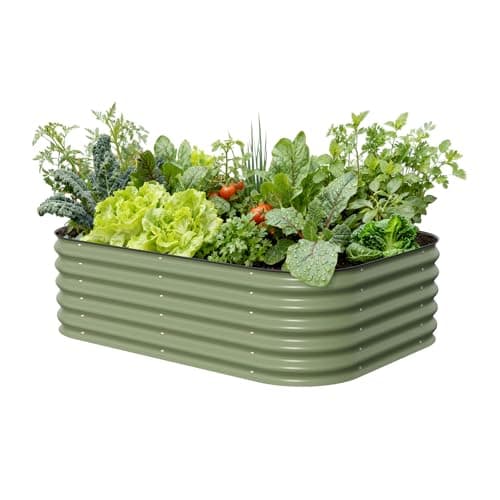 Top pickVego Garden 17" Modular Metal Raised Bed17 in deep, modular Aluzinc steel panels | Most first gardens | 9.2 | $159.95 - View on Amazon |
| 2 |  Vegega 17" Metal Raised Garden Bed17 in deep, Aluzinc steel, fixed footprint | The same steel, less money | 9.0 | Check price on Amazon |
| 3 | 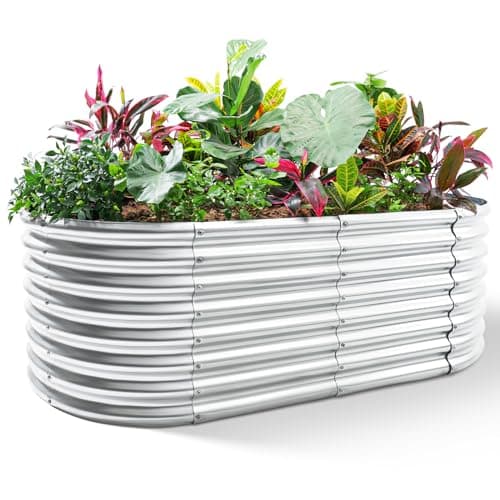 Land Guard Galvanized Raised Garden BedGalvanized steel, large footprints, budget price | Most growing area per dollar | 8.2 | $79.99 - View on Amazon |
#ad We may earn a commission - Price as of October 17, 2026
Scores are our own editorial judgment, formed from published specifications and independent sources. They are not aggregated customer ratings, and they are not the result of hands-on testing, which we do not currently do. See how we choose.
Common questions
Are galvanized raised garden beds safe for growing food?
Yes. The coating is zinc, which is a plant micronutrient rather than a toxic heavy metal, and it moves into soil extremely slowly at the near-neutral pH a vegetable bed runs at. Raised beds are widely recommended by extension services precisely because they let you control the soil your food grows in.
Do galvanized beds leach zinc into the soil?
Very slowly, and mostly at the bed wall rather than throughout the growing volume. Zinc corrosion in soil at pH 6 to 7 is measured in decades. Solubility rises sharply below about pH 5.5, which is why acid-loving crops such as blueberries are the one case worth thinking about.
Is there lead in galvanized raised beds?
Not in modern beds sold for gardening -- the coating is zinc. Older salvaged galvanized metal, such as farm troughs or reclaimed roofing, used processes that could involve lead-containing alloys, so test the soil if you are repurposing something old. Weathered exterior house paint is a far more common source of lead in garden soil.
Should I line a galvanized raised bed?
Not for safety. A strip of landscape fabric along the inside walls is reasonable if fine soil is escaping through the panel seams, but never line the base with plastic -- a raised bed drains through its bottom, and sealing it creates a waterlogged container. Use hardware cloth across the base if you need to stop burrowing animals.
What is the difference between galvanized and Aluzinc beds?
Aluzinc adds aluminum and magnesium to the zinc coating, which is substantially more corrosion resistant than plain galvanizing. Both are safe for food. The difference is service life: plain galvanized steel is fine for years, Aluzinc for considerably longer, especially where the soil at the base stays wet.
Sources
Factual claims on this page are backed by the published sources below, and product specifications are the manufacturers’ own. Where a figure is not published, we say so rather than estimating it.
- Raised beds: will they benefit your vegetable garden? - Washington State University Extension
- Raised bed gardening, FS 270 - Oregon State University Extension
- Soil health in raised beds - Penn State Extension
- Soils and plant nutrients - North Carolina Extension Gardener Handbook, NC State Extension
- Soil testing - Penn State Extension