Step 1 - Raised Beds
The Best Raised Bed for Blueberries
Blueberries are the one crop where the bed is a container for a completely different soil. Isolation matters more than size.
Janet H. - the hands-on owner behind Janet Media Group.
Published
This page contains affiliate links. If you buy through them we may earn a commission at no cost to you, and it never decides what we recommend. How this site is funded.
For blueberries, buy the deepest bed you can justify and treat it as a sealed container of acid soil: the Anleolife 8 x 4 ft bed in its 24-inch depth is the pick for most gardens, because 24 inches of dedicated acid mix is enough root volume for two or three bushes and enough depth that surrounding soil chemistry stops mattering. Blueberries want a soil pH of roughly 4.5 to 5.5 -- far more acid than any vegetable in the rest of your garden -- so the real job of the bed is to hold that mix apart from everything else and stop it being diluted from below.
Why this crop changes the brief
Every other roundup on this site treats the bed as a frame and the soil as a filling decision. Blueberries invert that. The bush will live in the same spot for fifteen to twenty years, it is a shallow-rooted woody perennial with fine fibrous roots in the top foot of soil, and it will quietly fail in ordinary raised bed mix no matter how good the mix is -- because the mix is not acid enough and your tap water is probably pushing it further the wrong way.
So the bed has to do three things an ordinary bed does not. It has to be deep, because a shallow pocket of acid soil is the easiest one to lose. It has to be isolated from the ground beneath where the native soil is alkaline, because capillary movement and earthworms will blend the boundary over a few years. And it has to be a material that does not itself nudge the pH upward.
Quick picks
| # | Product | Best for | Score | Price |
|---|---|---|---|---|
| 1 | 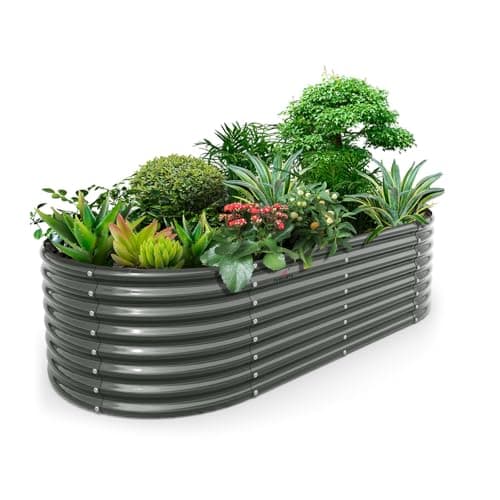 Top pickAnleolife 8 x 4 ft Metal Raised Garden BedUp to 24 in deep, 22-gauge corrugated steel | Deep beds for root crops | 8.8 | $148.85 - View on Amazon |
| 2 | 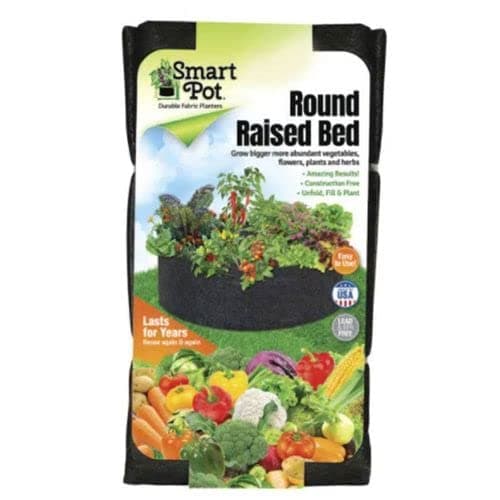 Smart Pot Round Raised Bed, 100 Gallon50 in across, 12 in deep, about 13.5 sq ft | A whole bed's worth | 8.8 | $69.95 - View on Amazon |
| 3 | 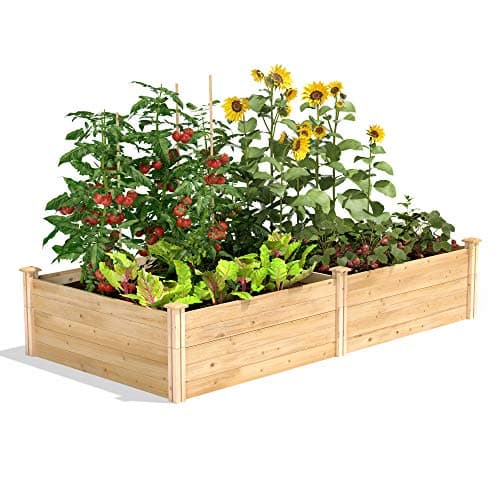 Greenes Fence Cedar Raised Garden Bed KitUntreated North American cedar, dovetail corners | People who want wood | 8.4 | $227.03 - View on Amazon |
| 4 | 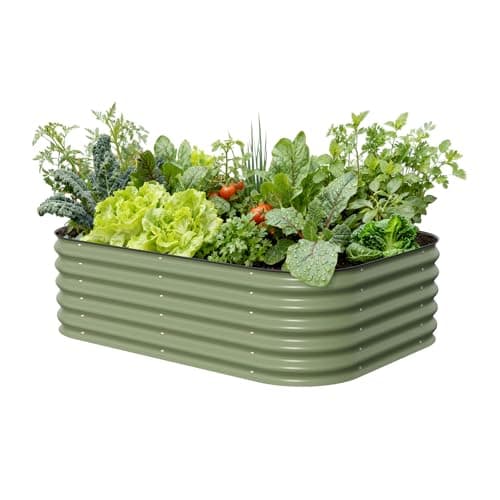 Vego Garden 17" Modular Metal Raised Bed17 in deep, modular Aluzinc steel panels | Most first gardens | 9.2 | $159.95 - View on Amazon |
#ad We may earn a commission - Price as of October 11, 2026
Scores are our own editorial judgment, formed from published specifications and independent sources. They are not aggregated customer ratings, and they are not the result of hands-on testing, which we do not currently do. See how we choose.
Depth, size and how many bushes fit
| Bed footprint | Depth to buy | Bushes | Notes |
|---|---|---|---|
| 4 x 2 ft | At least 18 in | 1 | Workable, but the mix dries fast in summer |
| 4 x 4 ft | 18 to 24 in | 1 to 2 | The smallest size we would call comfortable |
| 8 x 4 ft | 24 in | 2 to 3 | Our default -- room for cross-pollination |
| 50 in round fabric bed | 12 in | 1 | Cheapest isolated acid pocket available |
| Two separate 4 x 4 beds | 18 to 24 in | 2 | Good if you want two varieties apart |
Space bushes about 3 feet apart in a bed. Closer than that and you will be pruning for air movement rather than for fruit within four years. And plant at least two different varieties with overlapping bloom: blueberries will set some fruit alone, but cross-pollinated bushes give bigger berries and heavier crops, which is the actual argument for the 8 x 4 footprint over the 4 x 4.
The acid mix, and the material that fights it
- Build the mix around an acid base. Peat moss or an acidic coir-and-peat blend makes up a large share of a blueberry bed's volume -- this is the one planting on the site where peat is genuinely hard to substitute.
- Add bulk, not richness. Pine bark fines, aged wood chips or composted conifer bark give structure and drainage without pushing nutrients the bush does not want.
- Go light on compost. A little finished compost is fine. A bed built mostly from compost will be too rich and not acid enough, and the bush will grow leaves instead of fruit.
- Never add lime, wood ash or bone meal. All three raise pH, which is the opposite of the job.
- Test, then correct. A cheap soil pH test before planting is worth more than any amendment bought on faith. Elemental sulfur is the standard way down; it works slowly, so apply it the season before if you can.
On material: untreated cedar is the traditional choice and it is a good one, because wood is inert against the mix and the boards insulate the root zone from summer swings. Coated steel is also fine -- the coating is not reactive with soil at a garden scale, and the pH scare stories about steel beds do not survive a soil test. What we would avoid is anything built from or lined with concrete block, poured concrete or mortared brick, because lime leaches out of cementitious material for years and that is exactly the amendment you spent the whole build avoiding.
If you are weighing wood against steel for other reasons too, metal vs wood sets out lifespan, cost and soil temperature side by side, and cedar raised garden beds ranks the wood kits worth buying.
Isolating the bed from the ground
An open-bottomed bed on native soil is the right answer for vegetables and a compromise for blueberries. Over a few seasons, water moving up and down and worms moving material around will blend the acid pocket into whatever is underneath. If your native soil is naturally acid woodland, that does not matter. If it is neutral or alkaline, the bed will drift upward in pH year on year and you will be fighting it with sulfur forever.
Two fixes. The simplest is depth: at 24 inches, the top foot where the roots actually live stays well clear of the boundary, and that alone buys you a decade. The other is a fabric bed -- a 50-inch round fabric raised bed sitting on a hard surface is a genuinely isolated 13 square feet of acid soil for very little money, and it breathes so the mix does not go anaerobic. The trade is that fabric dries faster and needs watering attention in high summer.
Water is the second half of the problem
Blueberries are shallow-rooted and genuinely intolerant of drying out, and most hard tap water is slightly alkaline. Rainwater from a barrel is the ideal irrigation for a blueberry bed for both reasons at once. Mulch the surface with 3 to 4 inches of pine bark, pine needles or wood chips and keep it topped up -- it holds moisture in the shallow root zone, suppresses weeds you would otherwise be digging out among fine roots, and breaks down into the kind of material the bush wants anyway.
What a first four years looks like
Year one you should remove most or all of the flowers so the bush puts its effort into roots. Year two gives you a token handful. By year three you get a real picking, and from year four onward a mature bush in a good bed in full sun will produce steadily for well over a decade. That timeline is the honest reason to buy the bigger, deeper bed now rather than the cheap shallow one -- you are not going to move these plants.
Feed with an acid-forming fertilizer formulated for blueberries, rhododendrons or azaleas, following the label rate, in early spring. Do not reach for a general vegetable fertilizer out of the shed: most carry nitrate nitrogen, and blueberries prefer ammonium forms. Do you need to fertilize raised beds? covers the general case, and blueberries are the clearest exception to it on the whole site.
Buy in this order
- The bed, in the deepest version you will tolerate paying to fill.
- A pH test kit -- before any soil goes in.
- The acid mix components: an acid base, pine bark fines for structure, a modest amount of compost.
- Two varieties with overlapping bloom, bare-root or potted.
- Pine bark or pine needle mulch, and a plan for watering that is not the garden hose in August.
Work out the fill volume before you buy anything with the raised bed soil calculator -- a 24-inch 8 x 4 bed is a serious amount of material, and a blueberry mix is not a bed you can part-fill with the cheap bulk layers that filling a raised bed cheaply relies on.
The picks in full
Top pick
Anleolife 8 x 4 ft Metal Raised Garden Bed
Anleolife
Thicker gauge steel and a deeper box than most kits, which is what stops a long bed bowing outward once it is full of wet soil.
Gauge is the specification nobody reads and everybody should. Steel gauge runs backwards -- a lower number is thicker metal -- and Anleolife's 22-gauge panels are noticeably more rigid than the thin budget beds that bulge in the middle after the first heavy watering.
That rigidity matters most on an 8-foot run, where soil pressure has the most leverage. The center brace on the long sizes is not decoration; leave it out and the sides will slowly bow.
Be realistic about the depth. A 24-inch bed at 8 x 4 ft holds around 64 cubic feet of fill. You do not have to buy 64 cubic feet of bagged mix -- the bottom third can be coarse organic material, which is what the hugelkultur and cheap-fill guides are for -- but you do have to plan it.
What works
- Heavier 22-gauge steel resists bowing on long runs
- 24 in depth suits potatoes, parsnips and long carrots
- Large growing area in one kit
- Center brace included on the long sizes
What does not
- Deep beds need a lot of fill, and fill is the real cost
- Galvanized rather than Aluzinc coating
- Long panels are awkward to handle solo
Skip it if: your budget is tight. The extra depth is real, but it also means roughly twice the soil of a 12-inch bed, and soil is the bigger bill.
| Material | 22-gauge corrugated galvanized steel |
|---|---|
| Depth | Sold in several heights, including 24 in |
| Footprint | 8 x 4 ft and other sizes |
| Assembly | Bolt-together panels with center support |
| Soil needed | About 64 cu ft for 8 x 4 ft at 24 in of fill |
A whole bed's worth
Smart Pot Round Raised Bed, 100 Gallon
Smart Pot
A fabric raised bed rather than a pot: wide enough to plant like a bed, cheap enough to buy two, and it folds flat in October.
This is the grow bag that behaves like a bed -- Smart Pot has also sold it as the Big Bag Bed. At roughly 50 inches across it gives you about 13.5 square feet of planting area -- the same growing area as a 4 x 4 ft frame -- in something that arrives folded in a flat parcel and needs no assembly at all.
Twelve inches of depth is the number that matters. That is enough for lettuce, beans, chard, bush cucumbers, peppers and determinate tomatoes, and it is shallow for carrots, parsnips and a serious potato crop. It is the same depth limit a shallow metal or vinyl bed has.
The cost is the fill. A bed-sized bag needs a bed-sized volume of potting mix, so the bag being inexpensive does not make the project inexpensive. Work out the mix cost first, using the soil calculator on this site, because that number rather than the bag decides whether this is the cheap option for you.
What works
- Gives you bed-scale planting area without a frame to assemble
- Twelve inches of depth is enough for most vegetables, including determinate tomatoes
- Folds flat for winter storage, which no rigid bed does
- Enclosed bottom means you can put it on a patio, gravel or a driveway
What does not
- Needs a full 13.5 sq ft of potting mix, which is the real cost of the format
- Dries out faster than a soil-filled frame of the same depth
- Fabric is a consumable -- plan on replacing it after a few seasons
Skip it if: you want the garden to look built. This is a black fabric circle sitting on the ground, and planting around it does not disguise that.
| Type | Round fabric raised bed |
|---|---|
| Capacity | 100 gal |
| Footprint | About 50 in across |
| Depth | 12 in |
| Growing area | About 13.5 sq ft |
| Base | Enclosed fabric bottom |
| Service life | Manufacturer states 3 to 5 years outdoors |
People who want wood
Greenes Fence Cedar Raised Garden Bed Kit
Greenes Fence
Real untreated cedar with tool-free dovetail corners -- the honest wood option, with the shorter lifespan that comes with wood.
Cedar is chosen for looks and for the fact that it is untreated, which matters if you are uneasy about what a pressure-treated board leaches into a bed you eat from. Cedar's natural oils slow rot without any chemistry at all.
The dovetail corner system is the reason to buy this particular kit rather than cutting boards yourself: the ends slot together, no hardware, and a second kit stacks on top to take a 7-inch tier up to 14 inches. That is worth doing -- one tier is too shallow for much beyond lettuce and herbs.
Set expectations on lifespan. In a wet climate a cedar bed is a multi-year item, not a permanent structure, and the boards touching soil go first.
What works
- Genuinely untreated cedar, no chemical concerns for food crops
- Tool-free dovetail corners go together in minutes
- Stack a second kit to double the depth
- Looks right in an ornamental garden
What does not
- Wood is a consumable -- expect years, not decades
- A single tier is shallow for root crops
- Cedar prices move a lot season to season
Skip it if: you want to buy a bed once. Even cedar is a wearing part in a wet climate, and steel is the better long-run answer.
| Material | Untreated North American cedar |
|---|---|
| Depth | Stackable boards, commonly 7 in per tier |
| Assembly | Dovetail corner joints, no tools required |
| Expandable | Kits stack to add depth |
| Soil needed | About 18 cu ft for 4 x 8 ft at 7 in |
Most first gardens
Vego Garden 17" Modular Metal Raised Bed
Vego Garden
The modular panel system is the reason to pay the premium: you can reshape the same bed into a different footprint next season without buying a second kit.
Vego is the brand most people meet first, and the modular panel system is the actual reason for that rather than the marketing. The kit arrives as flat corrugated panels plus corner pieces; you bolt them into whichever of the listed footprints suits your yard. If the 4 x 8 rectangle turns out to be wrong for your space, the same panels rebuild into a narrower or L-shaped bed next spring.
The steel matters more than the shape. Aluzinc is a zinc-aluminum-magnesium coating rather than plain galvanizing, and it is the finish you want on something that will sit in wet soil for years. That is the part of the price that buys durability rather than convenience.
Depth is the other thing to weigh. At 17 inches you can grow anything a beginner is likely to want, including carrots and potatoes, without hitting the bottom. The 32-inch version exists mainly so you can garden standing up, which is worth the extra soil cost if bending is the problem you are solving.
What works
- Panels unbolt and rebuild into a different shape
- Aluzinc coating is the better of the two steel finishes in this category
- 17 in is deep enough for carrots, potatoes and tomato roots
- Rolled safety edge along the top rail
What does not
- The most expensive metal bed of the ones we looked at
- Modularity is wasted if you build it once and leave it
- Steel warms fast in full afternoon sun in hot climates
Skip it if: you already know the exact shape you want and will never move it. You are paying for flexibility you would not use, and Vegega gives you the same steel for less.
| Material | Aluzinc-coated steel (zinc-aluminum-magnesium) |
|---|---|
| Depth | 17 in (a 32 in extra-tall version is also sold) |
| Shape | Modular panels, reconfigurable into several footprints |
| Assembly | Bolt-together panels, no cutting |
| Soil needed | About 32 cu ft for a 4 x 8 ft bed at 12 in of fill |
Common questions
What size raised bed do blueberries need?
At least 18 inches deep, and 24 inches is better. Footprint matters less than depth and isolation: an 8 x 4 ft bed holds two or three bushes 3 feet apart, which also lets you plant two varieties for cross-pollination. A single bush will live in a 4 x 2 ft bed, but it will need watering attention.
Can blueberries grow in a normal raised bed mix?
Not well. Blueberries want a soil pH of about 4.5 to 5.5, and standard raised bed mixes sit far above that. Plants in ordinary mix typically survive for a season or two with yellowing leaves and almost no fruit, then decline. Build the bed with a separate acid mix instead.
Do blueberries need two plants?
They will set some fruit alone, but two or more varieties with overlapping bloom produce larger berries and heavier crops. Plan the bed footprint around at least two bushes spaced about 3 feet apart.
Is a metal raised bed bad for blueberries?
No. Coated steel is not reactive with garden soil at any meaningful rate, and it holds an acid mix as well as wood does. The material genuinely to avoid is concrete block, poured concrete or mortared brick, because lime leaches out of cementitious material for years and raises pH.
How long before a raised-bed blueberry bush fruits?
Strip most of the flowers in year one so the plant builds roots, expect a handful in year two, a real picking in year three and full production from year four. A healthy bush then crops for fifteen years or more, which is why depth and soil are worth getting right at the start.
Sources
Factual claims on this page are backed by the published sources below, and product specifications are the manufacturers’ own. Where a figure is not published, we say so rather than estimating it.