Step 1 - Raised Beds
Do Raised Beds Need a Liner?
Mostly no -- and the one liner people reach for first, plastic across the base, is the one that does real damage.
Janet H. - the hands-on owner behind Janet Media Group.
Published
This page contains affiliate links. If you buy through them we may earn a commission at no cost to you, and it never decides what we recommend. How this site is funded.
Most raised beds do not need a liner. A bed drains downward into the ground beneath it, and that drainage is the entire reason a raised bed outperforms heavy native soil -- so anything that seals the base is working against the bed. The useful exceptions are narrow: hardware cloth across the bottom if you have gophers or voles, cardboard on the ground if you are building over turf, and a strip of landscape fabric along the inside walls of a wooden bed if you want to slow rot. Plastic sheeting across the base is the one choice to avoid outright.
The four reasons people line a bed
| Reason | Does a liner help? | Better answer |
|---|---|---|
| Stop weeds and grass growing up from below | Partly, and only for the first season | Plain cardboard on the ground before filling; it smothers turf then rots away |
| Stop gophers, voles and moles | No. Fabric will not stop a determined rodent | Half-inch galvanized hardware cloth stapled across the base |
| Make a wooden bed last longer | Yes, modestly, on the side walls only | Landscape fabric against the inside of the boards, base left open |
| Stop fine soil washing out of panel seams | Yes, in the first season | A narrow strip of fabric behind the seams, not a full lining |
| Keep soil in and water out of a patio surface | This is a different product | Use a planter with a built-in base, or a fabric bed with a tray |
Notice that none of those reasons is drainage, and three of the five are better solved with something other than a liner. That is the honest state of it: liners are a solution looking for a problem in most beds.
What to put at the base instead
- Over grass or weeds: a double layer of plain cardboard, tape and labels removed, wetted down before you fill. It kills the turf, then decomposes within a season and lets roots straight through.
- Over gophers or voles: half-inch galvanized hardware cloth across the whole footprint, run a few inches up the inside walls and stapled or bolted in place. Chicken wire is the wrong product -- the mesh is too wide and it rusts out fast.
- Over a patio, deck or concrete: nothing across the base, but make sure water can escape. A bed on a hard surface drains to the edges, so leave a gap and expect staining underneath.
- Over heavy clay: nothing. Loosening the top few inches of clay with a fork before you fill does more good than any barrier, because it lets bed and subsoil connect.
- Over contaminated or suspect soil: a permeable geotextile barrier, and a deeper bed. This is the one case where a full base layer is genuinely indicated, and a soil test should come first.
Wooden beds are the real liner case
A cedar bed fails where wet soil sits permanently against untreated timber. Lining the inside faces of the boards with landscape fabric puts a permeable layer between the soil and the wood, which slows that down without affecting drainage, because the base stays open.
It buys time rather than solving the problem. Even cedar is a wearing part in a wet climate, and if a bed you never have to re-board matters more than the look of timber, coated steel is the better long-run answer -- see metal vs wood raised garden beds for the full comparison.
Steel beds are the opposite case. A liner against the inside wall traps wet soil directly against the coating, which is the one condition that shortens the life of galvanizing. Leave them unlined; the coating is doing its job already, and the safety question is not a reason to add one.
If you only want to grow on a hard surface
The version of this question that really is about a liner is growing on a deck, a balcony or a concrete yard, where a bed with an open base will drain straight onto the surface and stain it. The honest answer there is not to line an ordinary bed but to use a product built for it: a planter with a slatted base and a fitted liner, or a fabric bed on a drip tray.
Fabric beds in particular behave well on hard surfaces -- they drain evenly rather than funneling water to one corner, and they air-prune roots instead of letting them circle. Raised beds for a deck, patio or balcony is the page for that situation.
What to buy
The products that fit the advice above, chosen by the process on our how we choose page. We have not hands-on tested them; specifications are the manufacturers’ own.
Quick picks
| # | Product | Best for | Score | Price |
|---|---|---|---|---|
| 1 | 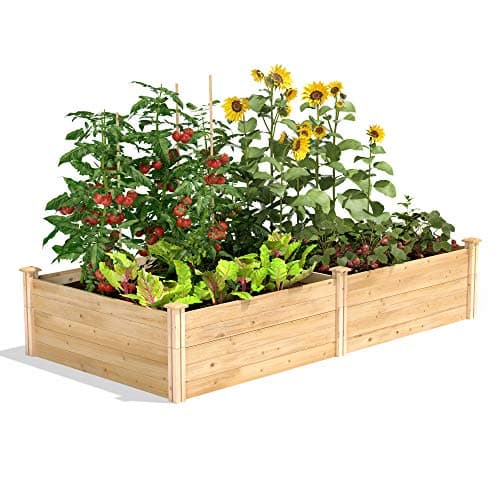 Top pickGreenes Fence Cedar Raised Garden Bed KitUntreated North American cedar, dovetail corners | People who want wood | 8.4 | $227.03 - View on Amazon |
| 2 | 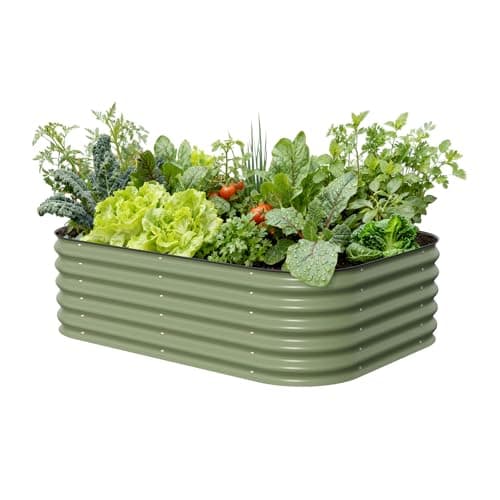 Vego Garden 17" Modular Metal Raised Bed17 in deep, modular Aluzinc steel panels | Most first gardens | 9.2 | $159.95 - View on Amazon |
| 3 | 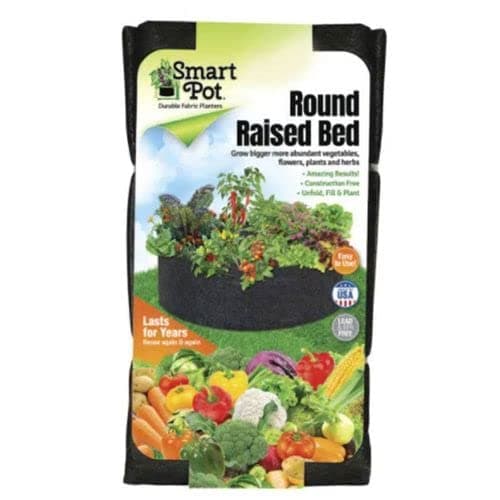 Smart Pot Round Raised Bed, 100 Gallon50 in across, 12 in deep, about 13.5 sq ft | A whole bed's worth | 8.8 | $69.95 - View on Amazon |
#ad We may earn a commission - Price as of October 17, 2026
Scores are our own editorial judgment, formed from published specifications and independent sources. They are not aggregated customer ratings, and they are not the result of hands-on testing, which we do not currently do. See how we choose.
Common questions
Do I need to line a raised garden bed?
Usually not. A raised bed is supposed to drain into the ground beneath it, and a liner across the base interferes with that. The exceptions are hardware cloth against burrowing rodents, cardboard over turf when you first build, and fabric against the inside walls of a wooden bed to slow rot.
Can I put plastic at the bottom of a raised bed?
No. Plastic across the base turns the bed into a container with no drainage hole, so water collects at the bottom, roots sit in it and the soil goes sour. If you need to protect a deck or patio underneath, use a planter designed with its own base and drainage rather than lining an open-bottomed bed.
What should I put at the bottom of a raised bed to stop weeds?
Plain cardboard with the tape removed, laid in a double layer and wetted down before filling. It smothers grass and weeds through the first season and then rots away, which is what you want -- a permanent barrier also blocks the roots and soil life you are trying to encourage.
Will landscape fabric stop gophers?
No. Landscape fabric is a weed barrier and rodents go straight through it. Use half-inch galvanized hardware cloth across the whole footprint, running a few inches up the inside walls so there is no gap at the edge. Chicken wire has too wide a mesh and corrodes quickly in soil.
Should I line a cedar raised bed?
Lining the inside faces of the boards with permeable landscape fabric does slow rot, because it keeps wet soil off the timber while leaving the base open to drain. It extends the bed's life rather than preventing the problem; in a wet climate, coated steel lasts far longer than any lined wooden bed.
Sources
Factual claims on this page are backed by the published sources below, and product specifications are the manufacturers’ own. Where a figure is not published, we say so rather than estimating it.