Step 2 - Soil & Fill
Bulk Soil vs Bagged Soil for Raised Beds
Bags win on quality and convenience. Bulk wins on volume. The crossover is closer than most people expect.
Janet H. - the hands-on owner behind Janet Media Group.
Published
This page contains affiliate links. If you buy through them we may earn a commission at no cost to you, and it never decides what we recommend. How this site is funded.
For one or two standard beds, buy bags: the quality is consistent, the inputs are printed on the sack, and you can carry it through a gate. Past roughly a cubic yard of fill -- about one 4 x 8 ft bed at 12 inches, or two at 6 inches -- bulk delivery becomes dramatically cheaper per cubic foot, and the sensible answer is usually a hybrid: bulk material for the bottom two thirds of a deep bed, and a good bagged mix for the top six to eight inches where the roots and the seeds actually are.
The two products side by side
| Bulk delivered | Bagged bed mix | |
|---|---|---|
| Sold by | The cubic yard (27 cu ft) | The cubic foot, typically 1 to 2 cu ft |
| Cost per cubic foot | Much lower, before delivery | Much higher |
| Delivery | Tipped in your driveway; you move it | Carried, or delivered to the door |
| Consistency | Varies by yard, by season, sometimes by load | Consistent, batch to batch |
| Inputs listed | Rarely, and usually by description only | Printed on the bag |
| Weed seed and pathogens | A real risk in uncomposted or screened topsoil | Low -- material is composted and processed |
| Best for | Filling volume, deep beds, several beds at once | The top layer, small beds, topping up |
| Worst for | A single small bed, or no place to tip it | Filling anything large from empty |
The line that decides it is not really price, it is logistics. A cubic yard is about 27 cubic feet and weighs somewhere around a ton wet. It arrives as a pile on your driveway and it is yours to move, by wheelbarrow, usually in an afternoon. If there is no vehicle access, no place to tip, or no one to shift it, bulk is cheaper on paper and impossible in practice.
What you are buying in a bulk load
The quality question matters more than the price question, because bulk material is sold under loose names that do not mean the same thing at every yard.
- Topsoil is screened native soil. Cheap, heavy, variable, often weed-seeded, and on its own it is a poor raised bed fill -- it compacts.
- Garden soil or vegetable mix is topsoil blended with compost. Usable as a bulk component, quality entirely dependent on the yard.
- Compost sold bulk may be yard-waste compost, biosolids compost, or manure-based. Ask what the feedstock was and whether it was hot-composted.
- Three-way or four-way mix is a regional term, typically topsoil, sand and compost. Fine as bulk fill; ask the proportions.
- Fill dirt is not soil for growing in. It is subsoil for leveling ground. Do not let it end up in a bed.
Where the crossover falls
| Fill needed | Typical bed | Buy |
|---|---|---|
| Under 10 cu ft | One 4 x 4 ft bed at 7 in, or topping up | Bags |
| 10 to 25 cu ft | One 4 x 8 ft bed at 7 to 10 in | Bags, or bulk if a yard is close and access is easy |
| 25 to 50 cu ft | One 4 x 8 ft bed at 12 to 17 in | Hybrid: bulk below, bagged mix on top |
| Over 50 cu ft | Two or more beds, or any tall bed | Bulk, with bagged mix for the top layer |
Work out your own number before you decide anything: bed length times width times depth, all in feet, gives cubic feet, and 27 cubic feet is a cubic yard. The raised bed soil calculator does it and converts to bag counts, which is the comparison that actually tells you what to buy.
The hybrid fill, which is what most deep beds want
A 17-inch or 30-inch bed filled entirely with bagged mix costs more than the bed did, and it is not even the best soil profile. Roots for most vegetables are concentrated in the top 8 to 12 inches. The sensible fill puts the cheap material where nothing much is growing and the good material where everything is.
- Bottom third: bulk material, coarse compost, or decomposing organic matter such as logs and branches if you are going the hugelkultur route.
- Middle third: bulk garden soil or three-way mix, forked to blend slightly with the layer below rather than leaving a hard boundary.
- Top six to eight inches: a good bagged raised bed mix. This is where seeds germinate and where most roots feed.
- Surface: an inch of compost each spring from then on, which maintains the whole thing from the top.
How to fill a raised garden bed cheaply works through the bulk-material options for the lower layers, and hugelkultur covers the wood-filled version, which is free but settles considerably in the first two years.
What a good bagged mix is actually for
Bagged raised bed mix earns its price in the top layer, and the reasons are specific: it is already the right texture, it has listed inputs so you know what the fertility is, it is free of the weed seed that comes with screened topsoil, and it is consistent, so a bed you fill this year behaves like the one you filled last year.
Quick picks
| # | Product | Best for | Score | Price |
|---|---|---|---|---|
| 1 | 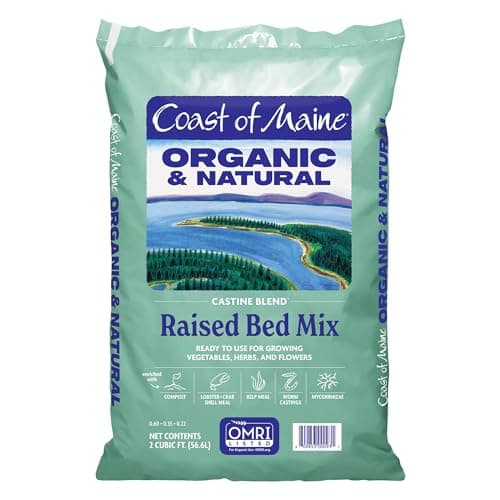 Top pickCoast of Maine Castine Blend Raised Bed MixCompost-rich blend with castings, kelp and biochar | A bed you fill once and feed | 9.0 | $43.69 - View on Amazon |
| 2 | 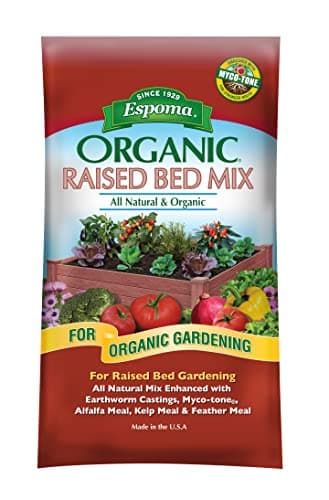 Espoma Organic Raised Bed MixPurpose-made raised bed mix, widely stocked | The simple bagged default | 8.7 | $29.85 - View on Amazon |
| 3 | 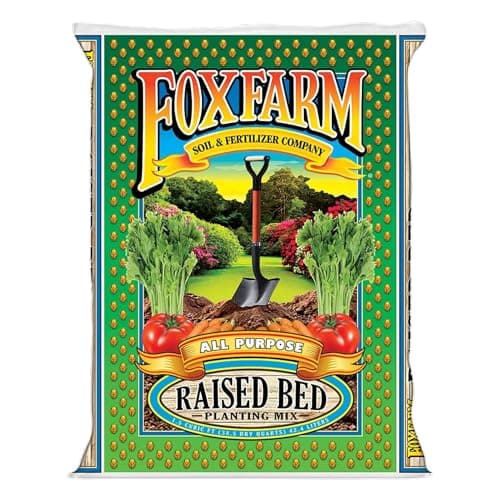 FoxFarm Raised Bed Planting MixHeavier blend formulated for beds, not pots | Bed-scale FoxFarm | 8.6 | $31.92 - View on Amazon |
#ad We may earn a commission - Price as of October 17, 2026
Scores are our own editorial judgment, formed from published specifications and independent sources. They are not aggregated customer ratings, and they are not the result of hands-on testing, which we do not currently do. See how we choose.
The picks in full
Top pick
Coast of Maine Castine Blend Raised Bed Mix
Coast of Maine
The premium bagged mix: a genuinely complex blend rather than peat with a handful of fertilizer, and it shows in the second season.
Bagged raised bed mixes vary enormously, and the ingredient list is how you tell them apart. A cheap mix is mostly peat or bark fines with a starter fertilizer. This one lists compost, worm castings, kelp, biochar and crustacean meal, which is a different product doing a different job.
The practical difference shows up in year two. Simple mixes slump and compact; a compost-rich, biologically active blend keeps its structure and keeps releasing nutrients.
Use it where it counts. Vegetable roots mostly live in the top 10 to 12 inches, so put the good mix there and use cheaper bulk material below. Filling a 17-inch bed entirely with premium bagged mix is how people end up spending more on soil than on the bed.
What works
- Genuinely diverse ingredient list, not a peat-and-fertilizer mix
- Holds structure rather than compacting over a season
- Biologically active, so it keeps improving
- Works straight from the bag with no amending
What does not
- Among the most expensive options per cubic foot
- Regional availability varies
- Overkill as bulk fill for a deep bed
Skip it if: you are filling a large bed from empty. At premium prices per cubic foot, a full fill costs more than the bed did.
| Type | Ready-to-use raised bed mix |
|---|---|
| Listed inputs | Compost, worm castings, kelp, biochar, greensand, crustacean meal |
| Use | Fill the top layer, or top up each spring |
| Bag size | Commonly 1 and 2 cu ft |
The simple bagged default
Espoma Organic Raised Bed Mix
Espoma
The easy recommendation: purpose-built for raised beds, organic inputs, and available almost everywhere.
If you want one bagged mix and no decisions, this is it. It is blended for raised beds specifically, which matters: potting mix is designed to drain fast in a small container, and garden soil is designed to sit in the ground. Neither behaves well as a bed fill on its own.
The input list is straightforward organic material -- castings, alfalfa, kelp, feather meal -- and there are no synthetic feeds in it, which is what most people asking about organic actually want to know.
Availability is a genuine advantage. Mid-season top-ups are a real need, and a mix you can pick up locally beats a better one you have to order.
What works
- Made for raised beds rather than repurposed potting soil
- Organic input list with no synthetic feeds
- Very widely stocked, so easy to top up mid-season
- Good structure straight from the bag
What does not
- Bag sizes are small for a full fill
- Less ingredient complexity than the premium blends
- Still a bagged-mix price, not a bulk price
Skip it if: you need volume. It is a good mix at a normal price, which still adds up fast across 30-plus cubic feet.
| Type | Ready-to-use raised bed mix |
|---|---|
| Listed inputs | Earthworm castings, alfalfa meal, kelp meal, feather meal |
| Fertilizer | No synthetic plant foods listed |
| Bag size | Commonly 1 and 1.5 cu ft |
Bed-scale FoxFarm
FoxFarm Raised Bed Planting Mix
FoxFarm
The bed-appropriate product from the same maker: heavier and more structural than the potting soil, and it behaves properly in a large volume.
This is the product people usually mean when they ask whether Happy Frog is good for raised beds. The raised bed mix is the bed-scale formulation: heavier, more structural, and designed for a volume that does not drain out the bottom of a pot.
Used as the top 10 to 12 inches of a bed it works without further blending, which is the main convenience you are buying.
Check the bag before you buy. The two FoxFarm products look similar on a shelf and are formulated for genuinely different jobs.
What works
- Formulated for bed volumes rather than containers
- Holds structure across a season
- Works as the growing layer without blending
- Larger bags than most potting mixes
What does not
- Less widely stocked than the potting soil
- Still bagged-mix pricing for a full fill
- Too heavy for seed starting or small pots
Skip it if: you are potting up seedlings. This is the wrong texture for a small container.
| Type | Raised bed planting mix |
|---|---|
| Listed inputs | Aged forest products, composted materials, amendments |
| Texture | Heavier and more structural than potting soil |
| Bag size | Commonly 1.5 and 2 cu ft |
Common questions
Is bulk soil cheaper than bagged soil?
Per cubic foot, substantially, once you are buying a cubic yard or more. A cubic yard is 27 cubic feet, which is roughly one 4 x 8 ft bed filled to 12 inches. Below that volume, delivery charges and the work of moving a pile usually erase the saving.
How much is a cubic yard of soil for a raised bed?
A cubic yard is 27 cubic feet of material, not a price. In bed terms it fills a 4 x 8 ft bed to about 10 inches, or two 4 x 4 ft beds to about 20 inches. Work out your bed volume first, then compare the yard's price per cubic yard against bag price per cubic foot.
Can I fill a raised bed with bulk topsoil?
Not with topsoil alone. Screened native topsoil compacts in a bed, drains poorly and usually carries weed seed. If you buy bulk, buy a garden or vegetable blend that already contains compost, and keep a good bagged raised bed mix for the top six to eight inches.
What is the best way to fill a deep raised bed?
A hybrid fill. Cheap bulk material or decomposing organic matter in the bottom third, bulk garden blend in the middle, and a quality bagged raised bed mix in the top six to eight inches where seeds germinate and most roots feed. Filling a tall bed entirely with bagged mix costs more than the bed.
Is bagged garden soil the same as raised bed mix?
No. Garden soil is formulated to be dug into existing ground and is too heavy and dense used alone in a bed. Raised bed mix is a lighter, compost-rich blend built to be used neat in a contained bed. Potting soil is lighter again and belongs in containers.
Sources
Factual claims on this page are backed by the published sources below, and product specifications are the manufacturers’ own. Where a figure is not published, we say so rather than estimating it.