Step 1 - Raised Beds
The Best Raised Garden Beds Under $200
This is the bracket where a bed stops being a frame around some soil and becomes a piece of equipment you keep.
Janet H. - the hands-on owner behind Janet Media Group.
Published
This page contains affiliate links. If you buy through them we may earn a commission at no cost to you, and it never decides what we recommend. How this site is funded.
The short version. The Vego Garden 17 in modular bed is the buy in this bracket for most gardens: seventeen inches of depth, Aluzinc-coated steel that outlasts plain galvanizing, and panels that can be rebuilt into a different shape when your garden changes. If you want more depth than that for root crops, the Anleolife 8 x 4 goes further at a similar price. The budget pick is the Land Guard galvanized 8 x 4 -- half the money for most of the growing area, giving up coating quality and depth rather than size.
Two hundred dollars is the first bracket where a raised bed is a long-term object. Below it you are buying something that works; here you are buying something you expect to still be using when you move house. Every pick below sits under the line at the price our pipeline read from the retailer, with the check date shown on each buy control.
How we chose
- Under the line with a live price. Every pick is confirmed under $200 by the price layer, with the date shown.
- Twelve inches of depth minimum, seventeen preferred. This bracket is where depth stops being a compromise, so we hold it to that.
- Coating quality, not just steel. Aluzinc and similar aluminium-zinc coatings last materially longer than plain galvanizing in wet soil, and that is what the extra money buys.
- Reconfigurable counts. A modular bed you can rebuild into another shape is worth real money over a decade; a fixed rectangle is not wrong, just less flexible.
- No invented testing. Scores are editorial judgment from published specifications, not hands-on trials or rating averages.
Quick picks
| # | Product | Best for | Score | Price |
|---|---|---|---|---|
| 1 | 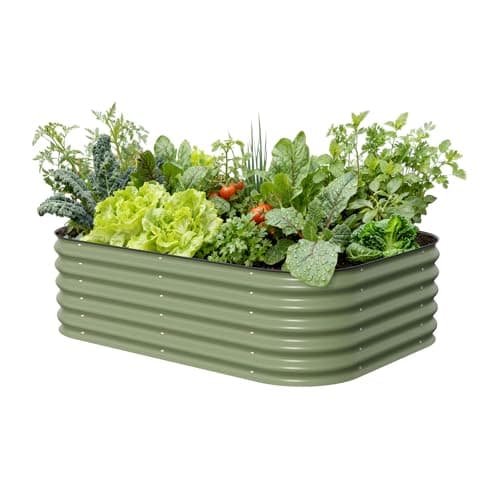 Top pickVego Garden 17" Modular Metal Raised Bed17 in deep, modular Aluzinc steel panels | Most first gardens | 9.2 | $129.15 - View on Amazon |
| 2 | 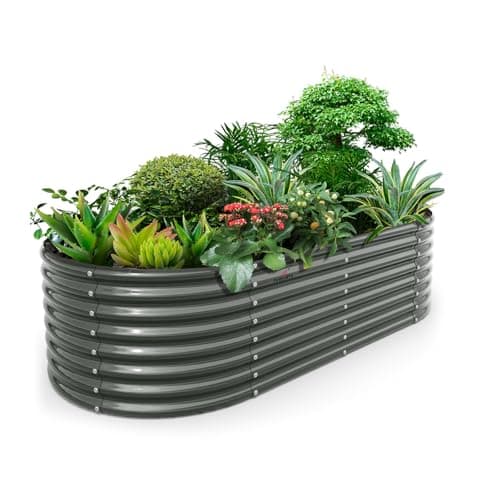 Anleolife 8 x 4 ft Metal Raised Garden BedUp to 24 in deep, 22-gauge corrugated steel | Deep beds for root crops | 8.8 | $148.85 - View on Amazon |
| 3 | 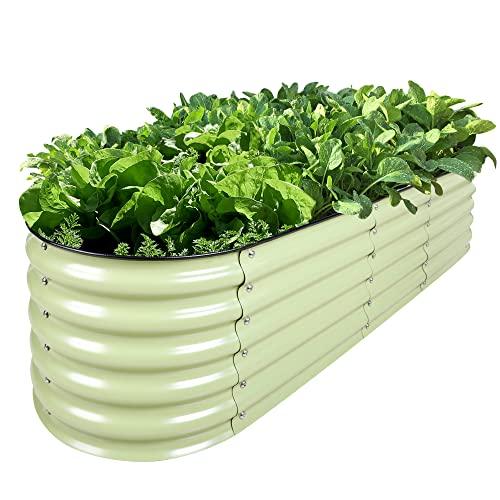 Olle 12-in-1 Galvanized Raised Garden Bed, 17 in Tall17 in tall, 12 configurations from one kit | The closest like-for-like swap | 8.8 | $142.47 - View on Amazon |
| 4 | 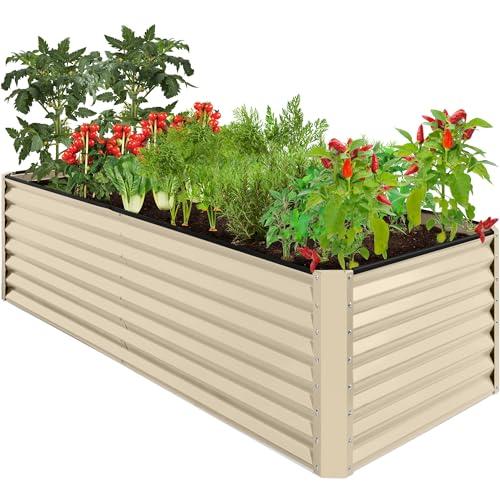 Best Choice Products 8 x 4 ft Galvanized Raised Garden Bed8 x 4 x 2 ft, 478 gallon capacity, open bottom | A plain big rectangle, cheaply | 8.4 | $109.99 - View on Amazon |
| 5 | 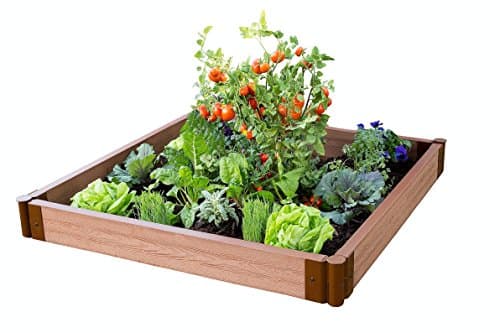 Frame It All Composite Raised BedRecycled composite boards, stackable system | Wood looks without wood rot | 8.3 | $103.47 - View on Amazon |
| 6 | 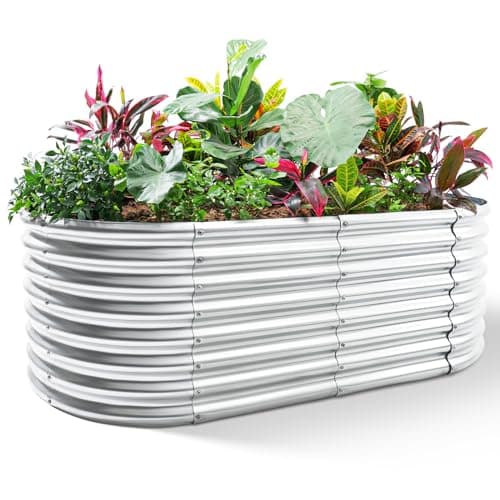 Land Guard Galvanized Raised Garden BedGalvanized steel, large footprints, budget price | Most growing area per dollar | 8.2 | $63.99 - View on Amazon |
#ad We may earn a commission - Price as of November 24, 2026
Scores are our own editorial judgment, formed from published specifications and independent sources. They are not aggregated customer ratings, and they are not the result of hands-on testing, which we do not currently do. See how we choose.
What the extra hundred dollars actually buys
Moving from the hundred-dollar bracket to this one changes three specific things, and it is worth being clear about which of them you care about.
| Under $100 | Under $200 | |
|---|---|---|
| Typical depth | 8 to 12 in | 17 in, sometimes more |
| Coating | Plain galvanized steel, vinyl or fabric | Aluzinc or similar aluminium-zinc |
| Shape | One fixed rectangle | Modular panels, often several configurations |
| Expected life in wet soil | Years | Longer, with the seams the limiting factor |
| Soil required | Around 32 cu ft for an 8 x 4 at 12 in | Closer to 45 cu ft at 17 in |
That last row is the one people miss. A seventeen-inch bed is not a bit deeper than a twelve-inch bed; it needs roughly forty percent more fill, and fill is the dominant cost either way. Run the soil calculator before you commit to the deeper bed, and read how to fill a raised garden bed cheap if the number is uncomfortable.
Depth is worth paying for; configurability is worth it only if you will use it
Seventeen inches is a genuine capability upgrade. It grows carrots, parsnips and long-rooted brassicas that a twelve-inch bed stunts, it dries out more slowly in summer, and it puts the working surface at a height that is easier on your back. If you buy nothing else in this bracket, buy depth.
Modularity is a different proposition. A twelve-configuration kit is genuinely useful if your garden is unfinished and you expect to move things; it is money spent on nothing if you already know you want one eight-by-four rectangle in one spot forever. Be honest about which of those describes you -- there is a cheaper fixed rectangle in this bracket for the second case, and it grows exactly the same vegetables.
What to check before you order
- Measure the site including access. You need to get around the bed to build it and to garden from both sides afterwards.
- Check the panel count against the shape you want. Modular kits list configurations, and the biggest rectangle is usually not the deepest one.
- Plan the fill before the bed arrives. A delivered bulk load is cheaper than bags and takes a day to move; bags are easier and cost more.
- Decide on a cover at the same time. Hoops are much easier to fit to a bed when it is empty. Raised bed covers has the options.
- Put it on level ground. A steel panel bed on a slope bows at the downhill corner, and no amount of soil hides it.
The picks in full
Top pick
Vego Garden 17" Modular Metal Raised Bed
Vego Garden
The modular panel system is the reason to pay the premium: you can reshape the same bed into a different footprint next season without buying a second kit.
Vego is the brand most people meet first, and the modular panel system is the actual reason for that rather than the marketing. The kit arrives as flat corrugated panels plus corner pieces; you bolt them into whichever of the listed footprints suits your yard. If the 4 x 8 rectangle turns out to be wrong for your space, the same panels rebuild into a narrower or L-shaped bed next spring.
The steel matters more than the shape. Aluzinc is a zinc-aluminum-magnesium coating rather than plain galvanizing, and it is the finish you want on something that will sit in wet soil for years. That is the part of the price that buys durability rather than convenience.
Depth is the other thing to weigh. At 17 inches you can grow anything a beginner is likely to want, including carrots and potatoes, without hitting the bottom. The 32-inch version exists mainly so you can garden standing up, which is worth the extra soil cost if bending is the problem you are solving.
What works
- Panels unbolt and rebuild into a different shape
- Aluzinc coating is the better of the two steel finishes in this category
- 17 in is deep enough for carrots, potatoes and tomato roots
- Rolled safety edge along the top rail
What does not
- The most expensive metal bed of the ones we looked at
- Modularity is wasted if you build it once and leave it
- Steel warms fast in full afternoon sun in hot climates
Skip it if: you already know the exact shape you want and will never move it. You are paying for flexibility you would not use, and Vegega gives you the same steel for less.
| Material | Aluzinc-coated steel (zinc-aluminum-magnesium) |
|---|---|
| Depth | 17 in (a 32 in extra-tall version is also sold) |
| Shape | Modular panels, reconfigurable into several footprints |
| Assembly | Bolt-together panels, no cutting |
| Soil needed | About 32 cu ft for a 4 x 8 ft bed at 12 in of fill |
Deep beds for root crops
Anleolife 8 x 4 ft Metal Raised Garden Bed
Anleolife
Thicker gauge steel and a deeper box than most kits, which is what stops a long bed bowing outward once it is full of wet soil.
Gauge is the specification nobody reads and everybody should. Steel gauge runs backwards -- a lower number is thicker metal -- and Anleolife's 22-gauge panels are noticeably more rigid than the thin budget beds that bulge in the middle after the first heavy watering.
That rigidity matters most on an 8-foot run, where soil pressure has the most leverage. The center brace on the long sizes is not decoration; leave it out and the sides will slowly bow.
Be realistic about the depth. A 24-inch bed at 8 x 4 ft holds around 64 cubic feet of fill. You do not have to buy 64 cubic feet of bagged mix -- the bottom third can be coarse organic material, which is what the hugelkultur and cheap-fill guides are for -- but you do have to plan it.
What works
- Heavier 22-gauge steel resists bowing on long runs
- 24 in depth suits potatoes, parsnips and long carrots
- Large growing area in one kit
- Center brace included on the long sizes
What does not
- Deep beds need a lot of fill, and fill is the real cost
- Galvanized rather than Aluzinc coating
- Long panels are awkward to handle solo
Skip it if: your budget is tight. The extra depth is real, but it also means roughly twice the soil of a 12-inch bed, and soil is the bigger bill.
| Material | 22-gauge corrugated galvanized steel |
|---|---|
| Depth | Sold in several heights, including 24 in |
| Footprint | 8 x 4 ft and other sizes |
| Assembly | Bolt-together panels with center support |
| Soil needed | About 64 cu ft for 8 x 4 ft at 24 in of fill |
The closest like-for-like swap
Olle 12-in-1 Galvanized Raised Garden Bed, 17 in Tall
Olle
The nearest thing on Amazon to the modular metal bed everyone pictures: same 17 inch working height, same reconfigurable panel system, a different badge on the box.
If what you liked about the premium modular beds was the idea rather than the brand, this is the same idea. Seventeen inches of height, a panel system that bolts into several shapes, galvanized steel, open bottom.
Be realistic about the modularity. It is genuinely useful on the day you lay the garden out, because you can match the bed to an awkward corner instead of matching the corner to the bed. After it is full of soil it is a fixed object, and the twelve configurations become one.
The height is the part that earns its money every season. A 17 inch bed takes root crops without hitting compacted subsoil, holds enough volume to ride out a hot week, and sits at a height you can weed from a kneeler rather than lying down.
What works
- Seventeen inches is the height that suits carrots, potatoes and a comfortable reach
- Modular panels mean an L, a U or a long rectangle from the same box
- Galvanized steel will outlast any timber bed at the same price
- Open bottom lets roots go past the fill and drain into the ground beneath
What does not
- Modularity is a one-time benefit -- almost nobody reconfigures a filled bed
- Soil volume at 17 inches is substantial; budget for the fill before the bed
- Metal edges need care during assembly, and gloves are not always included
- A tall bed in full sun warms its edges faster than timber does, so edge rows dry first
Skip it if: you want one fixed rectangle and nothing else. You are paying for configurability you will use exactly once.
| Height | 17 in |
|---|---|
| Configurations | 12-in-1 modular panel system |
| Material | Galvanized steel |
| Finish | Sage green (other colors listed separately) |
| Bottom | Open to the ground |
A plain big rectangle, cheaply
Best Choice Products 8 x 4 ft Galvanized Raised Garden Bed
Best Choice Products
No modular cleverness and no color options worth discussing -- just a 478 gallon galvanized box at a price that makes two beds affordable instead of one.
Strip the marketing out of the metal bed category and this is what is left: a galvanized rectangle, two feet deep, open at the bottom. For a lot of gardens that is the correct purchase and everything above it is paying for finish and flexibility.
Two feet is deeper than most of the competition, which matters for potatoes, carrots and parsnips but also doubles down on the real expense. A 478 gallon bed needs an enormous volume of mix, and filling it entirely with bagged raised bed mix is a four-figure mistake. Fill the bottom third with bulk material.
The width is the thing to check against your layout. Four feet is reachable from both sides and not from one, so this bed needs a path on each long side or it becomes a bed you step into.
What works
- Two feet of depth is more than most kits at this price and suits deep-rooted crops
- A published gallon figure makes the soil order easy to calculate
- Plain rectangle assembles faster than any modular system
- Cheap enough that two beds is a realistic first season rather than an upgrade
What does not
- Four feet wide is at the limit of a comfortable reach from one side -- plan both sides access
- A 478 gallon bed is a lot of fill; the soil will cost more than the bed
- No configuration options at all, so measure before ordering
- Thinner steel than the premium brands, and the listing does not state a gauge
Skip it if: you want a shape other than a rectangle. This is one bed in one configuration and that is the whole proposition.
| Footprint | 8 x 4 ft |
|---|---|
| Height | 2 ft |
| Capacity | 478 gallons (manufacturer) |
| Material | Galvanized steel, stated non-toxic |
| Colors | Beige, gray and charcoal listed separately |
| Bottom | Open |
Wood looks without wood rot
Frame It All Composite Raised Bed
Frame It All
Composite boards that look like timber and do not rot, with a stacking system that lets you add depth a tier at a time.
Composite splits the difference between cedar and steel: it reads as timber from a few feet away and it does not rot. If the bed is going somewhere visible and steel looks too industrial for the setting, this is the option that solves that.
The stacking system is genuinely useful. Start with one 6-inch tier for salads and herbs, and add a second when you want to grow something with a deeper root, rather than committing to a full fill on day one.
Price is the real objection. Per square foot of growing area you are near premium steel territory, which makes this a choice about appearance more than value.
What works
- Will not rot, split or need re-staining
- Curved boards allow shapes steel kits cannot make
- Stacks to whatever depth you want
- Made from recycled material
What does not
- Expensive per square foot
- Heavier to move than steel panels
- Fewer color options than it first appears
Skip it if: cost per square foot is your deciding number. Composite is priced closer to premium steel than to cedar.
| Material | Recycled composite boards |
|---|---|
| Depth | Stackable tiers, commonly 6 in each |
| Shapes | Straight and curved boards for custom layouts |
| Assembly | Slot into corner joints |
| Soil needed | About 16 cu ft for 4 x 8 ft at 6 in |
Most growing area per dollar
Land Guard Galvanized Raised Garden Bed
Land Guard
The cheapest honest way to get a large steel bed, as long as you accept plain galvanizing instead of an Aluzinc coating.
If the goal is to grow the most food this year for the least money, area beats coating. A large cheap bed you can actually fill will feed you better than a small premium one, and Land Guard exists for exactly that calculation.
Understand what you are giving up. Plain galvanizing is a zinc coating; Aluzinc adds aluminum and magnesium and holds up considerably better at the soil line, which is where beds fail. Expect good years rather than decades.
The panels are thinner too, so use the supplied braces and do not skip the center support on the long sizes.
What works
- Lowest cost per square foot of growing area
- Large sizes available in one kit
- Simple assembly with basic tools
- Good way to trial a big bed before committing
What does not
- Plain galvanizing, not the longer-lived Aluzinc
- Thinner panels flex more when filled
- Edges deserve a careful check during assembly
Skip it if: you want the bed to outlive the mortgage. Plain galvanized steel is fine for years, not decades, especially where soil stays wet.
| Material | Galvanized steel |
|---|---|
| Depth | Commonly 12 in and 17 in |
| Footprint | Large rectangles including 8 x 4 ft |
| Assembly | Bolt-together panels |
| Soil needed | About 32 cu ft for 8 x 4 ft at 12 in |
Common questions
Is a $200 raised bed worth it over a $70 one?
If you want depth it is. The cheap bracket tops out around twelve inches of plain galvanized steel; this one gives you seventeen inches and an aluminium-zinc coating that lasts materially longer in wet soil. If you only grow salad and bush beans, the cheaper bed grows them identically.
What is the best raised bed under $200?
For most gardens, a seventeen-inch modular Aluzinc steel bed. It has the depth for root crops, the coating for longevity and the option to rebuild into a different shape later. A fixed rectangle at the same depth is a sound cheaper alternative if you know the layout will not change.
How much soil does a 17 inch deep bed need?
An 8 x 4 bed at seventeen inches holds roughly forty-five cubic feet, against about thirty-two at twelve inches. That extra volume is the real cost of going deeper, and it is worth calculating before you choose the bed rather than after.
Are modular raised beds worth the extra money?
Only if you will actually reconfigure them. The panels let one kit become several shapes, which is valuable while a garden is still taking shape. If you already know you want one rectangle in one place, a fixed bed of the same depth costs less and grows the same crops.
Does Aluzinc coating really last longer than galvanized?
Aluminium-zinc coatings are more corrosion-resistant than plain zinc galvanizing, which is why premium beds specify them and budget beds do not. In practice the seams and fixings tend to limit a steel bed's life before the panel faces do, in either coating.
Sources
Factual claims on this page are backed by the published sources below, and product specifications are the manufacturers’ own. Where a figure is not published, we say so rather than estimating it.