Step 4 - Composting
The Best Compost Bin Under $500
This is the bracket where the decision stops being about price and starts being about what you are willing to put in the bin.
Janet H. - the hands-on owner behind Janet Media Group.
Published
This page contains affiliate links. If you buy through them we may earn a commission at no cost to you, and it never decides what we recommend. How this site is funded.
The short version. For most households the Envirocycle is the best single compost bin under $500: a sealed tumbling drum on a base that catches the liquid, tidy enough for a patio, and the only outdoor bin in this bracket that is genuinely pleasant to have near the house. If your problem is cooked food rather than garden waste, the Reencle Prime is the pick -- a sealed microbial unit that takes meat, dairy and leftovers a garden bin never should. The budget pick is the GEOBIN: an expandable ring that costs a tiny fraction of the bracket and composts more material per dollar than anything else on this site.
Worth saying plainly at the top: five hundred dollars is more than home composting needs. The bracket exists because electric countertop units land in it, not because garden bins do. Everything below is sorted by what it does rather than by how close it gets to the ceiling, and every price is read live from our price layer with the date it was checked shown on the buy control.
How we chose
- Under the line with a live price. Every pick is confirmed under $500 by the price layer. Nothing is listed on a remembered number.
- It has to suit a real waste stream. The right bin depends on whether you have a yard, how much you cook, and whether cooked food is in the mix.
- Finished compost has to come out. Bins that fill and then stall are the commonest disappointment in this category.
- Honest about cooked food. Only the sealed microbial and electric units take meat, dairy and leftovers. Every garden bin here gets a clear no.
- No invented testing. Scores are editorial judgment from published specifications and Extension guidance, not trials or customer-rating averages.
Quick picks
| # | Product | Best for | Score | Price |
|---|---|---|---|---|
| 1 |  Top pickEnvirocycle ComposterTumbler drum on a liquid-collecting base | Patios and small yards | 8.0 | $349.99 - View on Amazon |
| 2 | 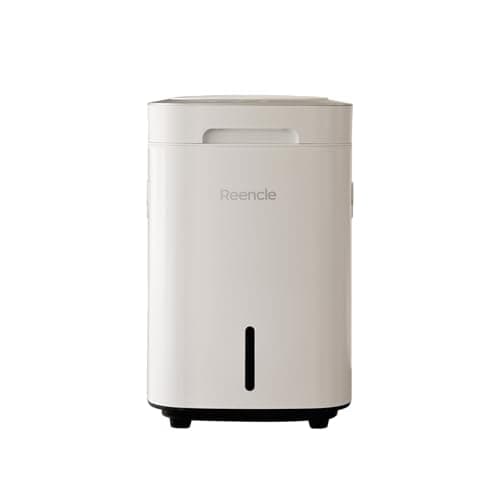 Reencle Prime Electric ComposterMicrobial, about 1.5 lb of scraps a day, 28 dB | An apartment with no outdoor space | 8.0 | $399.00 - View on Amazon |
| 3 | 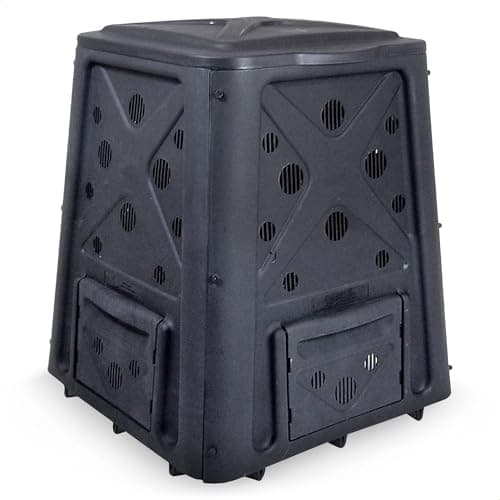 Redmon Green Culture 65-Gallon Compost Bin65 gal enclosed bin with lid and access doors | A lidded static bin | 8.1 | $69.99 - View on Amazon |
| 4 | 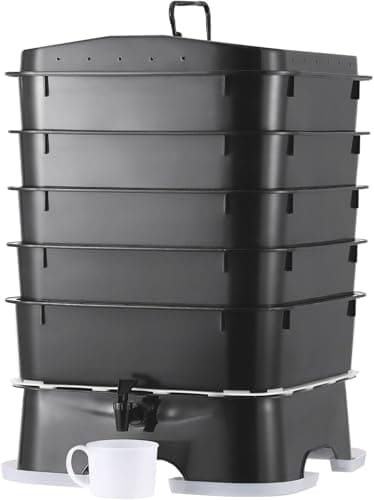 VermiHut Plus 5-Tray Worm Composter5 stacking trays with moisture and odor boards | Indoor composting, no yard | 8.6 | $79.95 - View on Amazon |
| 5 | 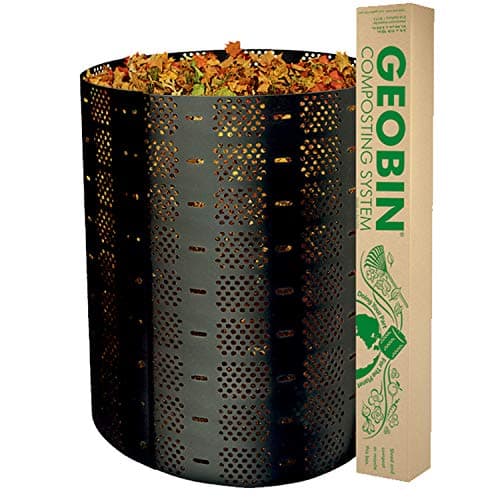 GEOBIN Expandable Compost BinExpands to roughly 216 gal, 36 in tall | Leaves and yard waste | 8.7 | $35.99 - View on Amazon |
#ad We may earn a commission - Price as of November 24, 2026
Scores are our own editorial judgment, formed from published specifications and independent sources. They are not aggregated customer ratings, and they are not the result of hands-on testing, which we do not currently do. See how we choose.
What each step up the bracket buys
| Roughly | What you get | What it will not do |
|---|---|---|
| The low tens | An expandable ring or a big static bin | Look tidy, or take cooked food |
| Under a hundred | A lidded static bin, or a stacking worm tower | Heat quickly, or handle large yard volume |
| Two to four hundred | A sealed tumbling drum with a liquid-catching base | Take meat, dairy or cooked food |
| Four to five hundred | A sealed microbial kitchen unit | Process garden waste or large volume |
The table makes the central point: these are not four grades of the same product. They are four different machines for four different situations, and spending more does not move you up a quality ladder -- it moves you sideways into a different job. A person with a big garden and no cooked-food problem is better served by the cheapest row than by the most expensive one.
Which row are you in?
- A yard, garden waste, no neighbours close by. Buy the cheapest big open bin and spend the difference on a fork and a thermometer. Compost bin vs pile covers whether you need a bin at all.
- A small or overlooked garden. A sealed drum or a lidded static bin. The lid is doing real work here -- see enclosed compost bins.
- Kitchen scraps only, no yard. A stacking worm tower indoors, or a sealed microbial unit if cooked food is in the mix. Apartment composting has the full picture.
- Cooked food, meat and dairy, daily. Only a sealed electric or microbial unit. No garden bin at any price in this bracket does this safely.
Where the money is better spent
If you already have a working bin, almost nothing in this bracket improves your composting as much as three cheap things: a long-stem thermometer so you know whether the pile is actually working, an aerator or a digging fork so you can turn it without emptying it, and a reliable supply of brown material so the balance stays right.
That is the honest answer to the five-hundred-dollar question for a lot of people. Compost accessories covers the tools, and best composting method is the page to read if what you really want is faster compost rather than a different container.
The picks in full
Top pick
Envirocycle Composter
Envirocycle
Small, tidy, and the base collects the liquid that drains out -- which is the part people actually want and most tumblers throw away.
Most compost tumblers look like equipment. This one is designed to be tolerable on a patio, and if the reason you have not started composting is that the bins are ugly, that is not a frivolous objection.
The base is the functional difference. Liquid drains out of any active compost and normally disappears into the ground; here it collects, and diluted heavily it is a perfectly good feed for container plants.
It is a single chamber, so you will still hit the part-finished problem. The workaround is to stop adding for a few weeks and let a batch finish, rather than topping it up forever.
What works
- Looks acceptable on a patio, which matters more than it should
- Collects the liquid runoff instead of losing it
- Very little assembly
- Single unit, easy to roll and turn
What does not
- Single chamber, so the never-finished problem returns
- Small capacity
- Priced high for the volume you get
Skip it if: you want volume. This is a patio-scale machine and it will not keep up with a productive vegetable garden.
| Type | Rotating drum on a collection base |
|---|---|
| Capacity | Around 35 gal on the full-size model |
| Material | Recycled food-grade plastic |
| Liquid | Base collects drainage for dilution |
| Assembly | Drum lifts onto the base, no tools |
An apartment with no outdoor space
Reencle Prime Electric Composter
Reencle
The one machine in this category that works biologically rather than by drying scraps out, which is why its output is closer to compost than to ground breakfast cereal.
Almost every machine sold as an electric composter is a dehydrator: it heats, grinds and dries food scraps, which kills the microbes rather than feeding them. This one is built the other way around, holding a live microbial medium at working temperature and letting it digest what you add.
That changes how you use it. There is no batch cycle to wait out -- you add scraps as they appear and draw material off the bottom periodically, which is much closer to how a worm bin behaves than to how a kitchen appliance behaves.
It is still a machine with a running cost. The manufacturer puts consumption at around 52 watts on average and 1.25 kWh a day, and the carbon filter is a yearly consumable. If you have anywhere outdoors to put a bin, put a bin there instead.
What works
- Runs a live microbial culture continuously, so you add scraps daily rather than in batches
- Quiet enough to live in a kitchen
- No outdoor space, no smell and nothing for rodents to find
- Output has been biologically worked on, not just dried and ground
What does not
- Costs many times what an outdoor bin costs, plus electricity every day it runs
- Needs the microbial medium kept alive -- it is a culture, not an appliance you ignore
- Takes up a substantial piece of floor or counter, at 18 inches tall
- Output still needs to finish in soil before you plant into it
Skip it if: you have a yard, a balcony or a shared garden. An outdoor bin costs a fraction of this and makes better compost with no electricity at all.
| Type | Electric composter with a live microbial medium |
|---|---|
| Daily capacity | Manufacturer states about 1.5 lb recommended, 2.2 lb maximum |
| Size | About 12 in wide, 13 in deep, 18.4 in tall |
| Weight | About 20 lb |
| Noise | Manufacturer states 28 dB average |
| Power | Manufacturer states 52 W average, about 1.25 kWh a day |
| Filter | Carbon filter, replacement every 9 to 12 months |
A lidded static bin
Redmon Green Culture 65-Gallon Compost Bin
Redmon
The middle ground: more volume than a tumbler, a lid and a floor unlike an open bin, and no turning mechanism to go wrong.
A static bin is the traditional answer and it still works. You add material at the top, it breaks down, and finished compost comes out of the doors at the bottom months later.
The lid is the reason to choose this over an open bin. Composting needs the mix damp, not saturated, and an uncovered pile in a wet climate turns into an anaerobic, sour mess.
If you want it faster, fork it over every few weeks. Turning is what a tumbler does mechanically, and doing it by hand gets you most of the same speed for none of the money.
What works
- Lid keeps rain out and heat in
- Base doors let you take finished compost from the bottom
- Good capacity for a mixed kitchen and garden stream
- Nothing mechanical to break
What does not
- Slow unless you turn it with a fork
- Base doors clog if the material is too wet
- Panels can be fiddly to assemble
Skip it if: you want compost quickly. A static bin without regular forking is a year-long process, not a three-week one.
| Type | Static enclosed bin |
|---|---|
| Capacity | 65 gal |
| Access | Lid on top, sliding doors at the base |
| Material | Recycled plastic panels |
| Assembly | Snap-together panels |
Indoor composting, no yard
VermiHut Plus 5-Tray Worm Composter
VermiHut
A worm bin that works indoors year-round, which is the only real option for an apartment -- and worm castings are better than compost anyway.
Vermicomposting is the answer to two problems at once: no outdoor space, and winter. A worm bin lives under a sink or in a garage and keeps working at room temperature when an outdoor pile has gone cold and dormant.
The stacking system does the sorting for you. Worms finish a tray and migrate up toward the fresh food in the tray above, leaving finished castings behind to lift off.
Two habits make the difference between an odor-free bin and a bad experience: feed small amounts, and keep the bedding damp rather than wet. Smell is almost always overfeeding.
What works
- Genuinely odor-free when run correctly
- Works indoors through winter, when outdoor piles stall
- Castings are a stronger soil amendment than ordinary compost
- Worms migrate upward, so harvesting is mostly self-sorting
What does not
- Worms are a separate purchase and a living thing to look after
- Cannot take onion, citrus or large amounts at once
- Small throughput compared with an outdoor bin
Skip it if: the idea of keeping worms in the house is a hard no. It works, it does not smell, and it is still not for everyone.
| Type | Stacking-tray vermicomposter |
|---|---|
| Trays | 5 |
| Features | Airflow board and moisture-control board |
| Liquid | Tap at the base for drainage |
| Worms | Not included -- buy red wigglers separately |
Leaves and yard waste
GEOBIN Expandable Compost Bin
GEOBIN
Barely a product -- a sheet of perforated plastic you roll into a circle -- and by far the most volume per dollar in composting.
If your composting problem is autumn leaves and grass clippings rather than kitchen scraps, this is the answer and a tumbler is not. Volume is what yard waste needs, and 216 gallons of volume costs less here than 40 gallons costs anywhere else.
The adjustable diameter is genuinely useful: start it small so the pile stays deep enough to heat, and expand it as the material accumulates.
Keep cooked food, meat and dairy out. An open bin with no floor is accessible to every rodent in the neighborhood, and the standard advice on that is not squeamishness, it is experience.
What works
- Enormous capacity for the money
- Adjustable diameter -- start small, expand as you fill it
- Perforations give good airflow through the pile
- Unclips and stores flat
What does not
- No lid, so heavy rain waterlogs it
- No rodent protection whatsoever
- Turning it means a fork and some effort
Skip it if: you are composting cooked food or meat. An open bin is an open invitation, and this one has no lid and no floor.
| Type | Open expandable bin |
|---|---|
| Capacity | Up to about 216 gal depending on diameter |
| Height | 36 in |
| Material | Perforated recycled plastic sheet |
| Assembly | Roll and clip, under five minutes |
Common questions
What is the best compost bin under $500?
For a typical garden, a sealed tumbling drum with a liquid-catching base -- tidy enough to stand near a house, enclosed enough to control smell and rodents, and large enough for a household's kitchen and garden waste. If cooked food is the problem instead, a sealed microbial kitchen unit is the only thing in the bracket that handles it.
Do you need to spend $500 on a compost bin?
No. Most home composting is done perfectly well in a bin costing a small fraction of that, and an open heap costs nothing at all. The bracket matters because sealed electric and microbial units sit in it, and those solve a problem -- cooked food indoors -- that no cheap bin solves.
Are expensive compost bins faster?
Generally not. Speed comes from particle size, the carbon-to-nitrogen balance, moisture and turning. A well-managed open heap usually out-composts an expensive enclosed bin on both speed and volume. What the money buys is containment: smell control, rodent resistance and appearance.
What compost bin takes meat and cooked food?
Only sealed electric or microbial units designed for it. Conventional garden bins, tumblers and worm bins should never be fed meat, dairy, oil or cooked food -- it attracts rodents and creates the smells that cause complaints.
Is an electric composter worth it over a tumbler?
They answer different questions. A tumbler composts garden and vegetable waste outdoors, cheaply, in volume. An electric or microbial unit processes kitchen waste including cooked food, indoors, in a day or so, and its output still needs curing before it goes on a bed. Buy whichever matches the waste you actually produce.
Sources
Factual claims on this page are backed by the published sources below, and product specifications are the manufacturers’ own. Where a figure is not published, we say so rather than estimating it.
- Composting at home - US Environmental Protection Agency
- Home composting: a guide for home gardeners - Penn State Extension
- Debunking the myth: food scrap dehydrators are not composters - Illinois Food Scrap and Composting Coalition
- Product specifications: Prime, Gravity and Gravity Pro - Reencle (manufacturer)