Step 4 - Composting
The Best Compost Bin Under $1,000
At this budget the question is no longer which bin. It is how many, and what else should be in the cart.
Janet H. - the hands-on owner behind Janet Media Group.
Published
This page contains affiliate links. If you buy through them we may earn a commission at no cost to you, and it never decides what we recommend. How this site is funded.
The short version. There is no home compost bin that costs a thousand dollars, so the useful answer to this budget is a system rather than a product. The Reencle Prime is the piece to buy first if cooked food is the problem -- a sealed microbial unit that takes meat, dairy and leftovers indoors. Pair it with a sealed Envirocycle drum or a lidded Redmon 65-gallon outdoors for garden waste, add a compost crank and a long-stem thermometer, and you have a complete two-stream setup with change left over. The budget pick is the GEOBIN, which handles the single biggest volume in most gardens -- autumn leaves -- for less than the thermometer costs.
This page exists because the query exists. People search a thousand-dollar bracket for compost bins, and the honest response is to say what the money actually buys rather than to find the most expensive thing in the category and call it the winner. Every price here is read live from our price layer, with the check date on the buy control.
How we chose
- Under the line with a live price. Every pick is confirmed under $1,000 by the price layer, with the date shown. Most sit far under it.
- The setup has to cover two streams. A kitchen stream including cooked food, and a garden stream of leaves, clippings and spent plants. One bin never does both.
- Tools count. The thermometer and the aerator change the timeline more than a more expensive bin would.
- Nothing here is padding. We have not added items to reach the bracket. Several picks cost under fifty dollars and earn their place.
- No invented testing. Scores are editorial judgment from published specifications and Extension guidance.
Quick picks
| # | Product | Best for | Score | Price |
|---|---|---|---|---|
| 1 | 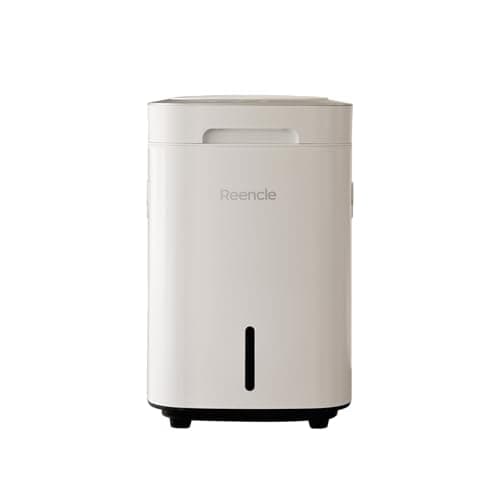 Top pickReencle Prime Electric ComposterMicrobial, about 1.5 lb of scraps a day, 28 dB | An apartment with no outdoor space | 8.0 | $399.00 - View on Amazon |
| 2 |  Envirocycle ComposterTumbler drum on a liquid-collecting base | Patios and small yards | 8.0 | $349.99 - View on Amazon |
| 3 | 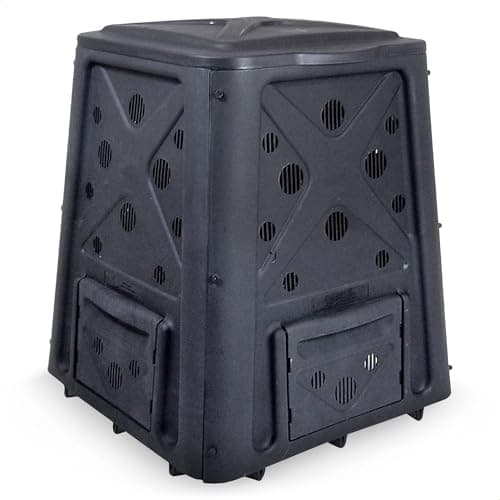 Redmon Green Culture 65-Gallon Compost Bin65 gal enclosed bin with lid and access doors | A lidded static bin | 8.1 | $69.99 - View on Amazon |
| 4 | 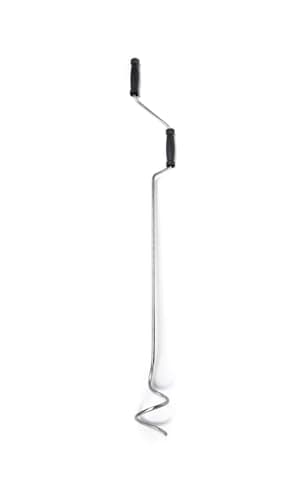 Lotech Products Compost CrankCorkscrew auger head, turned into the pile rather than pushed | Dense bins where a wing aerator gives up | 8.5 | $87.75 - View on Amazon |
| 5 | 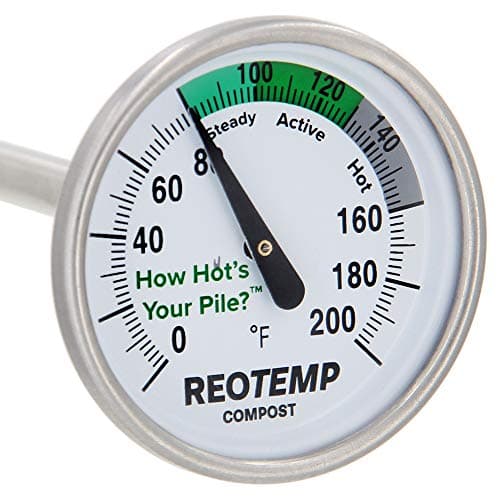 Reotemp 20 in Backyard Compost Thermometer20 in stem, Fahrenheit dial reading to 200°F | Knowing whether the pile is working | 9.1 | $23.99 - View on Amazon |
| 6 | 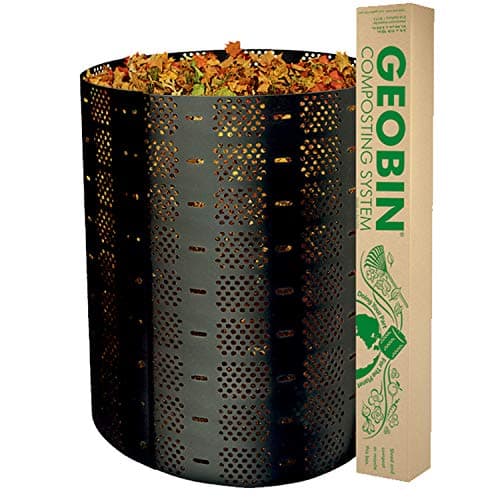 GEOBIN Expandable Compost BinExpands to roughly 216 gal, 36 in tall | Leaves and yard waste | 8.7 | $35.99 - View on Amazon |
#ad We may earn a commission - Price as of November 24, 2026
Scores are our own editorial judgment, formed from published specifications and independent sources. They are not aggregated customer ratings, and they are not the result of hands-on testing, which we do not currently do. See how we choose.
What a complete setup actually costs
| Role | What it handles | Why it is in the system |
|---|---|---|
| Sealed kitchen unit | Cooked food, meat, dairy, daily scraps | The only route for material a heap cannot take |
| Sealed or lidded garden bin | Vegetable trim, clippings, spent plants | The working bin, near the house, kept tidy |
| Bulk ring | Autumn leaves and yard waste | The biggest volume you will ever compost, cheapest per cubic yard |
| Aerator or crank | Turning without emptying | Halves the time an enclosed bin takes |
| Long-stem thermometer | Knowing whether it is working | Replaces guesswork with a number |
Added up, that is a complete, genuinely capable composting setup well inside the bracket -- and for most households it is more capability than they will use. The realistic version for a typical suburban garden is the garden bin, the leaf ring and the thermometer, which together cost a small fraction of a thousand dollars.
The order to buy it in
- 1
Start with the stream you actually produce most of
If you cook daily and have no yard, that is the kitchen unit. If you have trees, it is the leaf ring. Buying the wrong one first is how people end up with an unused bin.
- 2
Add the working garden bin
Lidded if it is near a house or a neighbour, open if it is down the garden. This is the one that runs all year.
- 3
Add the thermometer before anything else
It is the cheapest item in the system and the one that tells you whether everything else is working.
- 4
Add the aerator once the bin is full
Not before. You will know when you need it, and it is a different tool depending on whether the bin is dense or loose.
- 5
Only then consider a second large bin
Two bins in rotation -- one filling, one finishing -- is the upgrade that most changes how much usable compost you get.
What a thousand dollars does not buy
Worth being clear about the limits, because nothing at any price on this site changes them. No home system processes bones in quantity, heavy oil or large volumes of salty liquid. No system removes the need for brown material -- a kitchen unit's output and a bin full of grass clippings both want carbon mixed in before they are useful. And nothing removes the need to wait: even the fastest sealed unit produces material that benefits from curing before you plant into it.
If this budget is really about getting usable compost faster rather than about equipment, best composting method is the better page, and are electric composters worth it? answers the question most people are actually asking when they search a four-figure bracket.
The picks in full
Top pick
Reencle Prime Electric Composter
Reencle
The one machine in this category that works biologically rather than by drying scraps out, which is why its output is closer to compost than to ground breakfast cereal.
Almost every machine sold as an electric composter is a dehydrator: it heats, grinds and dries food scraps, which kills the microbes rather than feeding them. This one is built the other way around, holding a live microbial medium at working temperature and letting it digest what you add.
That changes how you use it. There is no batch cycle to wait out -- you add scraps as they appear and draw material off the bottom periodically, which is much closer to how a worm bin behaves than to how a kitchen appliance behaves.
It is still a machine with a running cost. The manufacturer puts consumption at around 52 watts on average and 1.25 kWh a day, and the carbon filter is a yearly consumable. If you have anywhere outdoors to put a bin, put a bin there instead.
What works
- Runs a live microbial culture continuously, so you add scraps daily rather than in batches
- Quiet enough to live in a kitchen
- No outdoor space, no smell and nothing for rodents to find
- Output has been biologically worked on, not just dried and ground
What does not
- Costs many times what an outdoor bin costs, plus electricity every day it runs
- Needs the microbial medium kept alive -- it is a culture, not an appliance you ignore
- Takes up a substantial piece of floor or counter, at 18 inches tall
- Output still needs to finish in soil before you plant into it
Skip it if: you have a yard, a balcony or a shared garden. An outdoor bin costs a fraction of this and makes better compost with no electricity at all.
| Type | Electric composter with a live microbial medium |
|---|---|
| Daily capacity | Manufacturer states about 1.5 lb recommended, 2.2 lb maximum |
| Size | About 12 in wide, 13 in deep, 18.4 in tall |
| Weight | About 20 lb |
| Noise | Manufacturer states 28 dB average |
| Power | Manufacturer states 52 W average, about 1.25 kWh a day |
| Filter | Carbon filter, replacement every 9 to 12 months |
Patios and small yards
Envirocycle Composter
Envirocycle
Small, tidy, and the base collects the liquid that drains out -- which is the part people actually want and most tumblers throw away.
Most compost tumblers look like equipment. This one is designed to be tolerable on a patio, and if the reason you have not started composting is that the bins are ugly, that is not a frivolous objection.
The base is the functional difference. Liquid drains out of any active compost and normally disappears into the ground; here it collects, and diluted heavily it is a perfectly good feed for container plants.
It is a single chamber, so you will still hit the part-finished problem. The workaround is to stop adding for a few weeks and let a batch finish, rather than topping it up forever.
What works
- Looks acceptable on a patio, which matters more than it should
- Collects the liquid runoff instead of losing it
- Very little assembly
- Single unit, easy to roll and turn
What does not
- Single chamber, so the never-finished problem returns
- Small capacity
- Priced high for the volume you get
Skip it if: you want volume. This is a patio-scale machine and it will not keep up with a productive vegetable garden.
| Type | Rotating drum on a collection base |
|---|---|
| Capacity | Around 35 gal on the full-size model |
| Material | Recycled food-grade plastic |
| Liquid | Base collects drainage for dilution |
| Assembly | Drum lifts onto the base, no tools |
A lidded static bin
Redmon Green Culture 65-Gallon Compost Bin
Redmon
The middle ground: more volume than a tumbler, a lid and a floor unlike an open bin, and no turning mechanism to go wrong.
A static bin is the traditional answer and it still works. You add material at the top, it breaks down, and finished compost comes out of the doors at the bottom months later.
The lid is the reason to choose this over an open bin. Composting needs the mix damp, not saturated, and an uncovered pile in a wet climate turns into an anaerobic, sour mess.
If you want it faster, fork it over every few weeks. Turning is what a tumbler does mechanically, and doing it by hand gets you most of the same speed for none of the money.
What works
- Lid keeps rain out and heat in
- Base doors let you take finished compost from the bottom
- Good capacity for a mixed kitchen and garden stream
- Nothing mechanical to break
What does not
- Slow unless you turn it with a fork
- Base doors clog if the material is too wet
- Panels can be fiddly to assemble
Skip it if: you want compost quickly. A static bin without regular forking is a year-long process, not a three-week one.
| Type | Static enclosed bin |
|---|---|
| Capacity | 65 gal |
| Access | Lid on top, sliding doors at the base |
| Material | Recycled plastic panels |
| Assembly | Snap-together panels |
Dense bins where a wing aerator gives up
Lotech Products Compost Crank
Lotech Products
A corkscrew that winds down into compacted material instead of trying to punch through it -- the aerator to buy when the cheap one keeps jamming.
Wing aerators have one failure mode and it is predictable: dense, wet, matted material. The wings need somewhere to open, and a compacted layer of grass or sodden leaves does not provide it. A corkscrew has no such requirement -- it threads itself in.
That difference shows up most in bins that have been filled faster than they have been managed. Kitchen waste and lawn clippings compact under their own weight, exclude air and go sour, and a tool that can reach into that and open it up is the difference between rescuing the bin and starting again.
It is genuinely harder work than it looks. Winding an auger down into packed compost and hauling it back out again is a whole-body job. That is a fair trade for not emptying the bin, but it is not a gentle one.
Buy it second rather than first. If a basic wing aerator handles your bin, it is the right tool and this is money you do not need to spend. If you have already bent one, this is the upgrade.
What works
- The auger pulls itself into dense material where wings only compress it
- Handles the wet, matted layers that stall every other aerator
- Brings material up from depth, so it genuinely redistributes rather than just poking holes
- Built heavily enough to be a once-only purchase
- Works in a tumbler as well as a static bin
What does not
- Costs several times a basic wing aerator
- Twisting it out of a packed bin is hard work -- this is a tool you feel the next day
- Overkill for a well-managed pile with plenty of brown material in it
- A corkscrew in dense woody debris can bind and need working back out
Skip it if: a basic wing aerator already copes with your bin. This costs several times as much and solves a problem you may not have.
| Head | Corkscrew auger |
|---|---|
| Action | Twisted down into the material, then pulled up |
| Suited to | Compacted bins, tumblers and heavy wet material |
| Construction | Steel, single-piece tool |
Knowing whether the pile is working
Reotemp 20 in Backyard Compost Thermometer
Reotemp
The one composting accessory that tells you something you cannot guess. A 20 inch stem reaches the core of a backyard pile, which is the only place the reading means anything.
Almost everything else on this page speeds up a process you could do by hand. A thermometer does something different: it tells you what is going on in the middle of the pile, which is information you cannot get any other way.
The numbers are worth knowing before you buy one. Colorado State University Extension puts the working range of plant-digesting microbes at 70 to 140°F, notes that a well-managed summer pile quickly reaches 120 to 130°F, and warns that above about 160°F the microbes themselves start dying. It also sets the bar for killing weed seeds and pathogens high: only a pile that heats above 145°F and is turned regularly does that reliably.
Those three thresholds turn a reading into an action. Cold means the pile is short of nitrogen, short of water or too small. Hot and climbing past 160 means turn it now to shed heat. Steady in the 120s to 140s means leave it alone, which is the most useful instruction a thermometer ever gives.
Stem length is the one specification to get right. Twenty inches reaches the core of the 3 x 3 x 3 ft pile Extension describes as the minimum size for heating. If your heap is bigger or deeper than that, the 36 inch version is the one to buy -- a reading taken near the surface tells you about the weather, not the compost.
What works
- Twenty inches reaches the middle of a 3 x 3 ft pile, where the heat actually is
- A zoned dial means you can read it at a glance without memorizing numbers
- Settles the two questions that matter: is it working, and is it too hot
- No batteries, nothing to calibrate, nothing to go flat in a cold shed
- Cheap relative to everything else in a composting setup
What does not
- Only useful if you act on the reading -- it measures, it does not fix
- A 20 inch stem is short for a large or deep heap; the 36 inch version exists for that
- The probe bends if you force it into matted, woody material
- Fahrenheit-only dial, so check the model if you think in Celsius
Skip it if: you compost slowly in a bin and do not intend to manage the process. A thermometer is a tool for people who turn piles, not for people who fill a bin and wait.
| Stem length | 20 in |
|---|---|
| Scale | Fahrenheit |
| Range | Reads to 200°F (manufacturer) |
| Dial | Zoned face for steady, active and hot |
| Included | Digital composting guide (manufacturer) |
| Other sizes | 16 in and 36 in versions are sold separately |
Leaves and yard waste
GEOBIN Expandable Compost Bin
GEOBIN
Barely a product -- a sheet of perforated plastic you roll into a circle -- and by far the most volume per dollar in composting.
If your composting problem is autumn leaves and grass clippings rather than kitchen scraps, this is the answer and a tumbler is not. Volume is what yard waste needs, and 216 gallons of volume costs less here than 40 gallons costs anywhere else.
The adjustable diameter is genuinely useful: start it small so the pile stays deep enough to heat, and expand it as the material accumulates.
Keep cooked food, meat and dairy out. An open bin with no floor is accessible to every rodent in the neighborhood, and the standard advice on that is not squeamishness, it is experience.
What works
- Enormous capacity for the money
- Adjustable diameter -- start small, expand as you fill it
- Perforations give good airflow through the pile
- Unclips and stores flat
What does not
- No lid, so heavy rain waterlogs it
- No rodent protection whatsoever
- Turning it means a fork and some effort
Skip it if: you are composting cooked food or meat. An open bin is an open invitation, and this one has no lid and no floor.
| Type | Open expandable bin |
|---|---|
| Capacity | Up to about 216 gal depending on diameter |
| Height | 36 in |
| Material | Perforated recycled plastic sheet |
| Assembly | Roll and clip, under five minutes |
Common questions
What is the most expensive compost bin worth buying?
In home composting, the ceiling is a sealed microbial or electric kitchen unit. Above that there is nothing to buy -- larger systems are commercial equipment. If you have a four-figure budget, the right move is a complete two-stream setup rather than one expensive bin.
What should a complete composting setup include?
A sealed indoor unit if you need to process cooked food, a lidded or sealed garden bin for day-to-day vegetable and garden waste, a cheap bulk ring for autumn leaves, a long-stem thermometer and an aerator or fork. That covers every stream a household produces.
Is it better to have two compost bins?
Yes, if they do different jobs. Two bins in rotation -- one filling while the other finishes -- is the single biggest change to how much usable compost you actually get. Two bins that solve the same problem is just money spent twice.
Do compost thermometers actually help?
They are the cheapest useful thing in the whole setup. A long-stem thermometer tells you whether the pile is heating, cooling or stalled, which is the difference between turning it at the right time and guessing. Every other decision follows from that number.
Can you compost everything with a thousand-dollar setup?
Almost. Bones in quantity, heavy cooking oil and large volumes of salty liquid are out of reach of any home system. Everything else a household produces can be handled, provided you have both an indoor route for cooked food and an outdoor route for garden waste.
Sources
Factual claims on this page are backed by the published sources below, and product specifications are the manufacturers’ own. Where a figure is not published, we say so rather than estimating it.