Step 4 - Composting
Compost Accessories: What Is Worth Buying
Six tools sold alongside every compost bin. One of them tells you something you cannot guess, one does more work than the rest combined, and one you probably should not buy at all.
Janet H. - the hands-on owner behind Janet Media Group.
Published
This page contains affiliate links. If you buy through them we may earn a commission at no cost to you, and it never decides what we recommend. How this site is funded.
Compost does not need accessories. A heap of mixed garden and kitchen waste will turn into compost if you leave it alone for long enough, and every tool below exists to make that happen faster, more reliably, or with less guessing. That is the correct frame for this page: none of these is a requirement, and some of them are a much better buy than others.
If you buy one thing, buy a compost thermometer. It is the only item here that gives you information instead of labor, and it answers the two questions every composter actually has. If you have an open heap, a garden fork will do more for your compost than everything else on this list combined. If your compost lives in a closed bin, a wing aerator is the workaround, with a corkscrew aerator as the upgrade for material that compacts. A bucket sifter is worth it only if you want fine compost for seed mixes. And a compost starter is the one to think hard about -- Extension says it is not needed.
How we chose
We have not run a composting trial and we are not going to pretend otherwise. What this page does is take the pile-management guidance published by Colorado State University Extension and the EPA, work out which of those instructions actually require a tool, and then check the tools against currently purchasable, in-stock listings.
- Does it do something you cannot do by hand? A thermometer does. A starter mostly does not.
- Does it match where your compost lives? Open heap and closed bin are different problems and take different tools.
- Does it still work when the pile is at its worst? Wet, matted material is where the cheap aerators stop.
- Is it honest about what it is? A compost 'starter' is a nitrogen supplement, and we say so rather than repeating the label.
- Would a free fix work instead? Where the answer is yes -- grass clippings instead of a starter, oversize screenings instead of an inoculant -- we say that too.
- Is it currently in stock? Every pick was confirmed on a live listing before it went on the page. Prices move, so the text uses brackets and the live number sits on the buy button.
Quick picks
| # | Product | Best for | Score | Price |
|---|---|---|---|---|
| 1 | 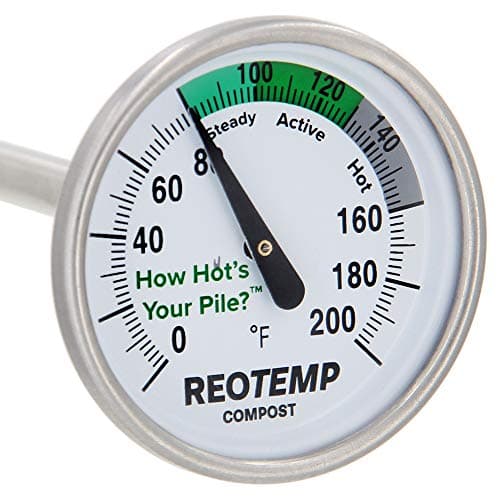 Top pickReotemp 20 in Backyard Compost Thermometer20 in stem, Fahrenheit dial reading to 200°F | Knowing whether the pile is working | 9.1 | $23.99 - View on Amazon |
| 2 | 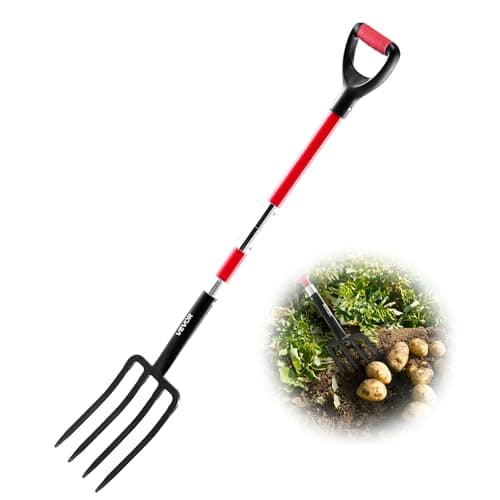 VEVOR 4-Tine Digging Fork, 45 in4 forged steel tines, 45 in fiberglass handle with a Y grip | Actually turning an open heap | 8.7 | $33.90 - View on Amazon |
| 3 | 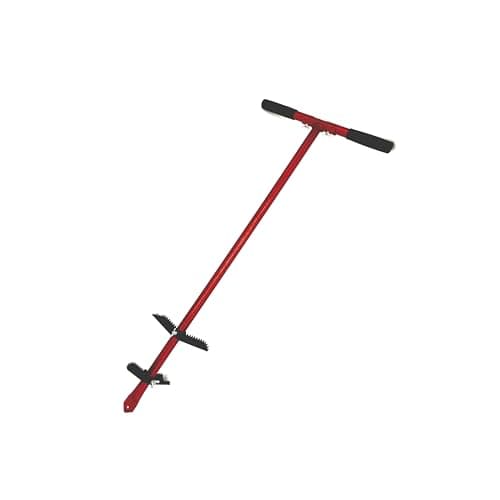 Bosmere 36 in Compost Aerator36 in shaft with folding wings that open on the pull-up | Mixing a bin you cannot get a fork into | 8.3 | $40.00 - View on Amazon |
| 4 | 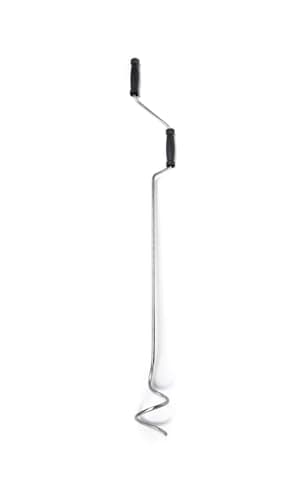 Lotech Products Compost CrankCorkscrew auger head, turned into the pile rather than pushed | Dense bins where a wing aerator gives up | 8.5 | $87.75 - View on Amazon |
| 5 | 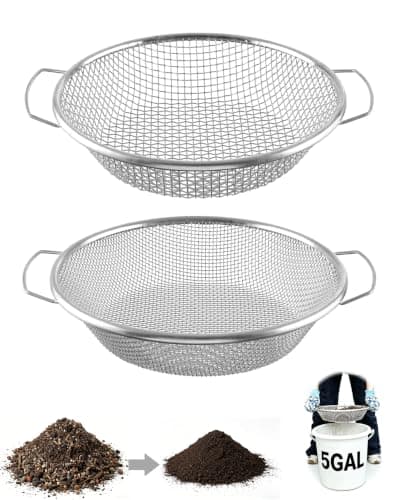 Bucket-Mount Compost Sifter Set1/4 in and 1/8 in stainless mesh screens sized for a 5-gallon bucket | Getting usable compost out of a half-finished pile | 7.8 | $18.99 - View on Amazon |
| 6 |  Jobe's Organics Compost Starter4 lb granular bag, applied in layers as the pile is built | Nitrogen for a pile that is all brown material | 7.0 | $16.48 - View on Amazon |
#ad We may earn a commission - Price as of November 3, 2026
Scores are our own editorial judgment, formed from published specifications and independent sources. They are not aggregated customer ratings, and they are not the result of hands-on testing, which we do not currently do. See how we choose.
The thermometer is the only one that tells you anything
Everything else on this page is labor. A thermometer is information, and composting runs on information you otherwise have to guess at.
The reference numbers come from Colorado State University Extension. Plant-digesting microbes operate between 70°F and 140°F. A well-managed summer pile quickly reaches 120°F to 130°F. Push past roughly 160°F and the microbes start dying, which stalls the process you were trying to accelerate. And weed seeds and pathogens are only reliably killed if the pile heats above 145°F and is turned regularly -- which is the number to check before you put seeding weeds or diseased foliage in.
| Core reading | What it means | What to do |
|---|---|---|
| Ambient, not rising | Nothing is happening | Too dry, too small or all browns -- add water, bulk and greens |
| 90 to 110°F | Slow activity | Working, but under-fed. More green material next time you add |
| 120 to 140°F | Properly active | Leave it. This is what you were aiming for |
| Above 145°F | Hot, and killing weed seed | Good, if it is turned so every part passes through the middle |
| Above 160°F | Too hot | Turn it to shed heat before the microbes are cooked |
| Falling from a peak | The batch is finishing | Turn it to restart, or let it cure |
Stem length matters more than the dial does. Extension gives 3 x 3 x 3 ft as the minimum pile size for heating, and a 20 inch probe reaches the core of a pile that size. Anything larger wants the longer version, because a short probe in a big heap reads the outer layer -- which is to say, it reads the weather.
Turning: a fork beats every gadget, if you can use one
Extension's instruction is to fluff or turn the material with a pitchfork or aerator tool at regular intervals, and it is careful to say that turning is not strictly required -- but that turning speeds decomposition. The question is only which tool, and the answer depends entirely on whether your compost is open or enclosed.
An open heap takes a fork, and a fork does a real turn: the dry outer material goes into the middle, the hot middle goes to the outside, and moisture evens out across the whole batch. Five minutes of that achieves more than an hour of poking holes. If you have a heap and space beside it, this is the purchase that changes your compost.
A closed bin cannot take a fork, which is the entire reason aerator tools exist. A wing aerator pushes down through the material and opens on the way back up, lifting and parting it. It is a partial substitute for turning, and its honest advantage is that it takes two minutes, so it actually gets done. A corkscrew aerator threads itself into compacted material that wing aerators cannot open at all -- buy that one second, when the first has shown you where your bin's problem is.
Moisture and size: the two things no tool fixes
Before buying anything, rule out the two causes of a dead pile that no accessory addresses.
The first is water. Extension's description of the right moisture level is moist or damp but not soggy, with the test being that it is too wet if more than a few drops can be squeezed out of a handful. Dry piles do nothing at all, and a pile under a bin lid in a dry summer is drier than you think.
The second is size. A pile needs mass to insulate its own core, and Extension's minimum for a heap that heats is 3 x 3 x 3 ft. Below that, heat escapes as fast as it is generated. A small bin can still make good compost -- it just makes it slowly and cold, and no amount of turning or starter will change that. How to use a compost bin covers filling and managing a bin at backyard scale.
Sifting: optional, and worth it for one specific job
A screen does not improve compost. It sorts it. What falls through is ready; what stays on the mesh goes back in the bin, where it carries live fungi and bacteria into the next batch -- which is, incidentally, the free version of the starter product below.
Whether you need one comes down to where the compost is going. Spreading it on beds as a mulch or a top dressing? Do not bother -- lumps break down in place and the sticks do no harm. Blending it into a potting or seed-starting mix? Then yes, screen it, because twigs in a seed tray are a genuine nuisance. A fine screen is also what a soil blocking mix needs, which matters if you have read soil blockers vs seed trays and fancy trying it.
Mesh size maps onto that split neatly. A quarter-inch screen produces material for beds and top-dressing. An eighth-inch screen produces something fine enough for seed mixes. Sets that give you both cost very little and sit on a bucket you already own.
Compost starters: the honest answer
This is the category where the marketing and the published guidance disagree most plainly, so here is the guidance. Colorado State University Extension: compost starters or inoculums are not needed to start decomposition. The microbes that break down a pile arrive on the material itself and from the soil underneath it. Nothing has to be added to introduce them.
There is one real use case, and it is seasonal. A pile made entirely of fallen leaves is almost pure carbon, miles away from the roughly 30:1 carbon-to-nitrogen ratio Extension gives as optimum, and it will sit there for a year doing very little. Adding nitrogen gets it moving. That is what a granular 'starter' actually supplies -- nitrogen, conveniently packaged.
If you have grass clippings, kitchen scraps, coffee grounds, or access to manure, you already have that nitrogen for free and the product is a waste of money. If you have a mountain of leaves in October and none of the above, it is a reasonable convenience buy. How to compost leaves covers the alternatives, most of which cost nothing.
What to buy, by what you have
| Your setup | Buy first | Add later | Skip |
|---|---|---|---|
| Open heap with space beside it | Garden fork | Thermometer | Aerators -- the fork does it better |
| Enclosed static bin | Wing aerator | Thermometer, then a corkscrew if it jams | Fork -- it will not fit |
| Tumbler | Thermometer | Corkscrew aerator for compacted loads | Fork, wing aerator |
| Leaf pile in fall | Nitrogen -- clippings if you have them, a starter if you do not | Thermometer | Sifter until it is finished |
| Compost destined for seed mixes | Bucket sifter | Thermometer | Starter |
If you are still choosing the bin itself rather than the tools for it, start at the best compost bins -- the enclosed-versus-open decision made there is what determines which half of this page applies to you. Compost bin vs tumbler is the narrower version of the same question.
The picks in full
Top pick
Reotemp 20 in Backyard Compost Thermometer
Reotemp
The one composting accessory that tells you something you cannot guess. A 20 inch stem reaches the core of a backyard pile, which is the only place the reading means anything.
Almost everything else on this page speeds up a process you could do by hand. A thermometer does something different: it tells you what is going on in the middle of the pile, which is information you cannot get any other way.
The numbers are worth knowing before you buy one. Colorado State University Extension puts the working range of plant-digesting microbes at 70 to 140°F, notes that a well-managed summer pile quickly reaches 120 to 130°F, and warns that above about 160°F the microbes themselves start dying. It also sets the bar for killing weed seeds and pathogens high: only a pile that heats above 145°F and is turned regularly does that reliably.
Those three thresholds turn a reading into an action. Cold means the pile is short of nitrogen, short of water or too small. Hot and climbing past 160 means turn it now to shed heat. Steady in the 120s to 140s means leave it alone, which is the most useful instruction a thermometer ever gives.
Stem length is the one specification to get right. Twenty inches reaches the core of the 3 x 3 x 3 ft pile Extension describes as the minimum size for heating. If your heap is bigger or deeper than that, the 36 inch version is the one to buy -- a reading taken near the surface tells you about the weather, not the compost.
What works
- Twenty inches reaches the middle of a 3 x 3 ft pile, where the heat actually is
- A zoned dial means you can read it at a glance without memorizing numbers
- Settles the two questions that matter: is it working, and is it too hot
- No batteries, nothing to calibrate, nothing to go flat in a cold shed
- Cheap relative to everything else in a composting setup
What does not
- Only useful if you act on the reading -- it measures, it does not fix
- A 20 inch stem is short for a large or deep heap; the 36 inch version exists for that
- The probe bends if you force it into matted, woody material
- Fahrenheit-only dial, so check the model if you think in Celsius
Skip it if: you compost slowly in a bin and do not intend to manage the process. A thermometer is a tool for people who turn piles, not for people who fill a bin and wait.
| Stem length | 20 in |
|---|---|
| Scale | Fahrenheit |
| Range | Reads to 200°F (manufacturer) |
| Dial | Zoned face for steady, active and hot |
| Included | Digital composting guide (manufacturer) |
| Other sizes | 16 in and 36 in versions are sold separately |
Actually turning an open heap
VEVOR 4-Tine Digging Fork, 45 in
VEVOR
Nothing moves a compost heap like a fork. If you have an open pile and room beside it, this is the tool that does the real work -- everything else on this page is a workaround for not owning one.
It feels wrong to put a garden fork in a roundup of composting accessories, and it is also the most honest recommendation on the page. Colorado State University Extension's own instruction is to fluff or turn the material with a pitchfork or aerator tool at regular intervals, and between those two, the fork does far more per minute.
A proper turn means moving the heap sideways into a second bay or a space beside it, so the dry outside material ends up in the middle and the hot middle ends up where the air is. Nothing you push down into a bin achieves that. It is also the fastest way to even out moisture, which is usually the real problem with a stalled pile.
Four forged tines with a fiberglass handle is the sensible specification. Wooden handles are nicer to hold and worse at being left against the bin in February. The Y grip gives you something to twist against when the material is matted.
If your compost is in a closed bin or a tumbler, skip it and buy an aerator instead -- a fork needs an open heap to be any use at all.
What works
- Moves more material in five minutes than an aerator does in an hour
- A real turn -- outside to inside, bottom to top -- which is what speeds decomposition
- Earns its keep outside the compost bay: lifting potatoes, loosening beds, moving mulch
- Fiberglass handle shrugs off being left out in the rain the way a wooden one does not
- Four tines are wide-set enough to let compost fall through rather than clogging
What does not
- Needs an open heap and somewhere to turn it into -- useless for a sealed bin
- Turning a full heap is heavy work and not a small job
- A digging fork is not a manure fork; very loose, strawy material slips between the tines
- One more long-handled tool to store
Skip it if: your compost lives in a sealed bin or a tumbler. A fork needs an open heap and space to throw material into.
| Tines | 4, forged steel |
|---|---|
| Length | 45 in overall (manufacturer) |
| Handle | Fiberglass with a Y grip |
| Also used for | Lifting potatoes, moving hay, loosening soil |
Mixing a bin you cannot get a fork into
Bosmere 36 in Compost Aerator
Bosmere
The sensible tool for an enclosed bin: push it down through the material, and the wings open on the way back up to lift and loosen it.
Enclosed bins pose a problem the manuals gloss over: you are told to turn the contents, and there is no way to get a fork in there. Aerator tools exist to answer that.
The mechanism is simple and it works. The wings fold flat against the shaft as you push down through the material, then open as you pull back, lifting and parting the contents and leaving channels behind. Repeat it across the surface and you have introduced air without dismantling the bin.
Extension's position is that turning is not strictly required -- a pile will decompose without it -- but that turning speeds decomposition. An aerator is the low-effort version of that bargain: less thorough than a real turn, available in two minutes on a weekday evening, and therefore far more likely to actually happen.
Know its limit. A bin of fresh grass clippings compacts into a wet mat, and the wings will not open in it. That is a sign the mix needs more dry brown material rather than a sign the tool is faulty.
What works
- Works inside a closed bin where a fork simply will not fit
- The wings create channels for air, which is the point of turning in the first place
- Light enough to use for a few minutes at a time rather than as a session
- Far less effort than emptying a bin to turn it and refilling it
- Cheap, and nothing on it can fail except the hinge
What does not
- Struggles in dense, wet, matted material -- grass clippings are its worst case
- Lifts and loosens rather than genuinely turning, so it is a partial substitute for turning
- Woody material jams the wings
- Thirty-six inches is short for a tall bin; you work the top two-thirds and not the base
Skip it if: you have an open heap and somewhere to turn it. A garden fork moves far more material in the same time.
| Length | 36 in |
|---|---|
| Action | Hinged wings fold on the push, open on the pull |
| Suited to | Enclosed bins and tumblers |
| Storage | Narrow profile, hangs on a hook |
Dense bins where a wing aerator gives up
Lotech Products Compost Crank
Lotech Products
A corkscrew that winds down into compacted material instead of trying to punch through it -- the aerator to buy when the cheap one keeps jamming.
Wing aerators have one failure mode and it is predictable: dense, wet, matted material. The wings need somewhere to open, and a compacted layer of grass or sodden leaves does not provide it. A corkscrew has no such requirement -- it threads itself in.
That difference shows up most in bins that have been filled faster than they have been managed. Kitchen waste and lawn clippings compact under their own weight, exclude air and go sour, and a tool that can reach into that and open it up is the difference between rescuing the bin and starting again.
It is genuinely harder work than it looks. Winding an auger down into packed compost and hauling it back out again is a whole-body job. That is a fair trade for not emptying the bin, but it is not a gentle one.
Buy it second rather than first. If a basic wing aerator handles your bin, it is the right tool and this is money you do not need to spend. If you have already bent one, this is the upgrade.
What works
- The auger pulls itself into dense material where wings only compress it
- Handles the wet, matted layers that stall every other aerator
- Brings material up from depth, so it genuinely redistributes rather than just poking holes
- Built heavily enough to be a once-only purchase
- Works in a tumbler as well as a static bin
What does not
- Costs several times a basic wing aerator
- Twisting it out of a packed bin is hard work -- this is a tool you feel the next day
- Overkill for a well-managed pile with plenty of brown material in it
- A corkscrew in dense woody debris can bind and need working back out
Skip it if: a basic wing aerator already copes with your bin. This costs several times as much and solves a problem you may not have.
| Head | Corkscrew auger |
|---|---|
| Action | Twisted down into the material, then pulled up |
| Suited to | Compacted bins, tumblers and heavy wet material |
| Construction | Steel, single-piece tool |
Getting usable compost out of a half-finished pile
Bucket-Mount Compost Sifter Set
Various
The cheapest way to make a pile useful before it is finished: screen out the lumps, use what falls through, and throw the rest back in.
Garden compost is never uniformly finished. The middle is dark and crumbly, the edges are still recognizable twigs, and the whole batch sits there looking like it needs another three months. Screening is how you get the finished part out now.
Mesh size decides what the compost is for. A quarter-inch screen gives you material for top-dressing beds and mulching, which is what most of it is used for. An eighth-inch screen gives something fine enough to blend into a potting or seed-starting mix, where lumps and sticks are a nuisance.
The oversize material is not waste. Everything that stays on the screen goes back into the bin, already colonized by the fungi and bacteria doing the work, which gives the next batch a head start. That is the free version of the compost starter two entries up.
Manage expectations on throughput. This is a bucket-scale tool, and screening enough compost to fill a raised bed would be a long weekend. For a few buckets to finish a seed mix or top off beds in spring, it is exactly right.
What works
- Turns a pile that is 'nearly there' into compost you can use this weekend
- The 1/4 in screen is right for bed top-dressing; the 1/8 in is right for seed and potting mixes
- Oversize material goes back in the bin and inoculates the next batch
- Sits on a bucket, so there is nothing to build and nowhere for it to spill
- Stainless mesh does not rust out after a wet winter in a shed
What does not
- Slow and dusty work -- a bucket at a time is genuinely a bucket at a time
- A 5-gallon bucket is a small unit for anyone filling raised beds
- Damp compost clogs fine mesh; it wants to be crumbly before you start
- Entirely unnecessary if you are mulching rather than making a seed mix
Skip it if: you spread compost as a rough mulch on beds. Unsifted compost is perfectly good on a raised bed -- sifting matters for seed mixes and fine top-dressing.
| Screens | 1/4 in and 1/8 in mesh (manufacturer) |
|---|---|
| Material | Stainless steel mesh |
| Fit | Sits on a standard 5-gallon bucket |
| Quantity | Two sieves |
| Also used for | Screening soil, gravel and worm castings |
Nitrogen for a pile that is all brown material
Jobe's Organics Compost Starter
Jobe's
Useful as a nitrogen source for a pile made mostly of leaves -- and genuinely unnecessary for anything else, which is not what the category name implies.
This entry is here with a warning attached, because the honest answer is that most people reading about compost starters do not need one. Colorado State University Extension states it without hedging: compost starters or inoculums are not needed to start decomposition. The microbes arrive on the material and in the soil underneath it.
There is one situation where a product like this genuinely helps, and it is common in October. If your pile is nothing but fallen leaves, it is almost all carbon, and Extension's target ratio of roughly thirty parts carbon to one part nitrogen is nowhere in sight. A pile like that sits there for a year. Adding nitrogen gets it moving.
What it is, then, is a nitrogen supplement in a convenient granular form. That is a reasonable thing to buy if you have no grass clippings, no kitchen waste going to the pile, and no access to manure. It is a waste of money if you have any of those, because they do the same job for nothing.
If a pile is not heating, check the three likelier causes first: too dry, too small, or too much brown material. Extension's minimum size for a pile that heats is 3 x 3 x 3 ft, and the moisture target is damp but not soggy -- no more than a few drops when you squeeze a handful. Fix those before buying anything.
What works
- A convenient nitrogen source when you have a mountain of leaves and nothing green
- Granular, so it goes on in layers without mixing or measuring
- One bag treats a substantial amount of material
- Much easier to store than keeping a bag of fresh manure around
- Harmless to the process -- the risk here is wasting money, not damaging the pile
What does not
- Not needed for a normal mixed pile: Extension states plainly that compost starters are not required to start decomposition
- It is really a nitrogen supplement; the word 'starter' oversells what it does
- Grass clippings, coffee grounds or a handful of garden soil do much the same job for nothing
- Easy to reach for instead of fixing the actual problem, which is usually too dry or too small a pile
Skip it if: your pile already gets kitchen scraps, grass clippings or any other green material. Extension is clear that starters are not needed to begin decomposition.
| Form | Granular |
|---|---|
| Size | 4 lb bag |
| Use | Sprinkled between layers as the pile is built |
| Category | Compost accelerator / starter |
Common questions
Do I need a compost thermometer?
You do not need one, but it is the most useful thing you can buy for a pile you intend to manage. It answers two questions you cannot otherwise answer: whether the core is actually active, and whether it has climbed past the point where it starts killing its own microbes. Colorado State University Extension puts the working microbial range at 70 to 140°F and notes that above roughly 160°F the microbes die.
What temperature should a compost pile be?
A well-managed summer pile quickly reaches 120 to 130°F, according to Colorado State University Extension, and the useful microbial range runs from 70 to 140°F. If you want weed seeds and pathogens killed, the pile has to heat above 145°F and be turned regularly so every part passes through the hot middle. Above about 160°F, turn it to shed heat.
Do compost starters actually work?
They supply nitrogen, which helps a pile made mostly of carbon-rich material. What they do not do is introduce microbes you need -- Colorado State University Extension states that compost starters or inoculums are not needed to start decomposition, because the organisms are already on the material and in the soil below it. If your pile gets kitchen scraps or grass clippings, you are already adding what a starter adds.
Is a compost aerator better than a garden fork?
Only when a fork will not fit. In an enclosed bin or a tumbler, an aerator is the practical way to introduce air and it takes two minutes. On an open heap, a fork does far more: a real turn moves the dry outside into the hot middle and evens out moisture, which an aerator cannot do. Extension's guidance names both tools, noting that turning is not required but does speed decomposition.
How often should you turn compost?
At regular intervals, which in practice means whenever the pile cools from its peak -- that fall in temperature is the signal that the easily available material in the current arrangement has been used up. A pile left entirely alone still composts; Extension's position is that turning is not necessary but speeds the process. Turning after each temperature peak is the usual rhythm for anyone with a thermometer.
Do you need to sift compost?
Only for fine uses. Compost going onto beds as mulch or top dressing does not need screening -- the coarse material finishes breaking down in place. Compost going into a potting or seed-starting mix does, because sticks and lumps interfere with sowing. A quarter-inch screen suits bed use, an eighth-inch screen suits seed mixes, and whatever stays on the mesh goes back in the bin to seed the next batch.
Why is my compost not heating up?
Almost always one of three things, and none of them is cured by an accessory. It is too dry -- Extension's target is damp but not soggy, with no more than a few drops squeezable from a handful. It is too small; 3 x 3 x 3 ft is the minimum size that holds its own heat. Or it is all brown material, far off the roughly 30:1 carbon-to-nitrogen ratio, and needs green matter added.
Sources
Factual claims on this page are backed by the published sources below, and product specifications are the manufacturers’ own. Where a figure is not published, we say so rather than estimating it.