Step 4 - Composting
How to Compost Leaves
Shred them, wet them, and add something green. Whole dry leaves in a pile are a two-year project; shredded leaves with nitrogen are a spring one.
Janet H. - the hands-on owner behind Janet Media Group.
Published
This page contains affiliate links. If you buy through them we may earn a commission at no cost to you, and it never decides what we recommend. How this site is funded.
To compost leaves quickly, shred them first, wet them thoroughly, and mix in a nitrogen source -- grass clippings, kitchen scraps or a handful of a nitrogen fertilizer -- then keep the pile damp and turn it every few weeks. Shredded leaves with green material added break down in four to six months; whole dry leaves left in a pile take one to two years and become leaf mold rather than compost. Both products are useful, and the one you get depends entirely on whether you add nitrogen.
Leaf mold and leaf compost are not the same thing
This is the distinction that explains almost every conflicting piece of advice on the subject. Leaves are almost pure carbon -- a very high carbon-to-nitrogen ratio -- so a pile of leaves alone cannot run a hot composting process. What happens instead is a slow, cool, fungal breakdown producing leaf mold: dark, crumbly, superb at holding water and improving soil structure, but low in nutrients.
Add a nitrogen source and the same leaves become ordinary compost: faster, warmer, more nutrient-rich, bacterially driven. Neither is better. Leaf mold is the best soil conditioner you can make for nothing and is excellent as a mulch or in a potting blend; leaf compost feeds the bed. Decide which you want before you build the pile.
| Leaf mold | Leaf compost | |
|---|---|---|
| Add nitrogen? | No -- leaves only | Yes -- greens or fertilizer |
| Time | 12 to 24 months | 4 to 6 months |
| Process | Cool, fungal | Warm, bacterial |
| Effort | None -- pile it and wait | Turning and moisture checks |
| Nutrients | Low | Moderate |
| Best used as | Mulch, soil conditioner, potting ingredient | Bed top-up, general compost |
Shredding is the step that matters most
Whole leaves mat together into waterproof layers that shed water and exclude air, which is why an untouched leaf pile is wet on the outside and bone dry two inches in. Shredding breaks that up, multiplies the surface area the organisms can work on, and reduces the volume by roughly two thirds -- which also means far less space taken up.
You do not need a dedicated shredder. Running a rotary mower over a layer of dry leaves on the lawn does the job well, and a mower with a bag collects the result in one pass. Leaves in a trash can hit with a string trimmer is the other common method. Either way, shred them dry -- wet leaves clog everything.
The method, step by step
- 1
Collect and shred dry
Rake or mow on a dry day. Shredding dry leaves is quick; shredding wet ones is miserable and the machine will jam.
- 2
Build in layers with a nitrogen source
Roughly four parts shredded leaves to one part green material by volume -- grass clippings, kitchen scraps, coffee grounds, or a sprinkle of nitrogen fertilizer at the label rate if you have no greens in autumn.
- 3
Wet every layer as you go
Thoroughly, to the dampness of a wrung-out sponge. This is the step people skip and it is the main reason leaf piles sit untouched for two years.
- 4
Build enough volume to hold heat
Aim for at least a cubic yard. Below that a pile cannot insulate itself and will not warm up regardless of the ratio.
- 5
Turn every three to four weeks
Bring the outside into the middle. Check moisture each time and water if it has dried. Stop turning once cold weather arrives and resume in spring.
Quick picks
| # | Product | Best for | Score | Price |
|---|---|---|---|---|
| 1 | 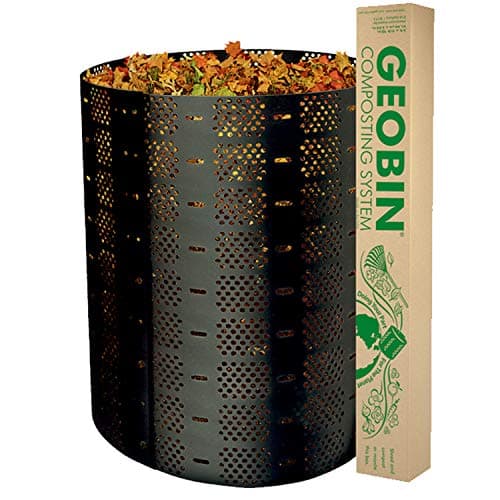 Top pickGEOBIN Expandable Compost BinExpands to roughly 216 gal, 36 in tall | Leaves and yard waste | 8.7 | $35.99 - View on Amazon |
| 2 | 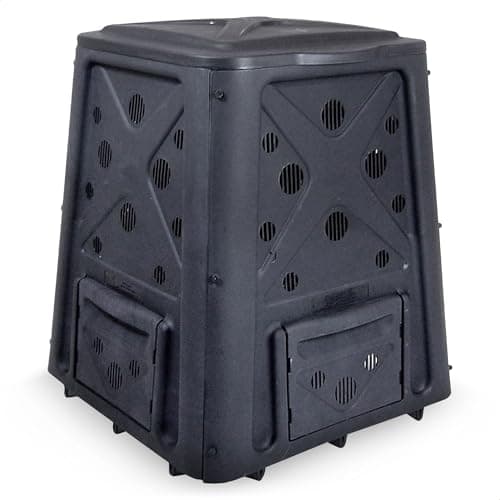 Redmon Green Culture 65-Gallon Compost Bin65 gal enclosed bin with lid and access doors | A lidded static bin | 8.1 | $69.99 - View on Amazon |
| 3 |  FCMP Outdoor IM4000 Tumbling ComposterDual chamber, roughly 37 gal total | Most backyards | 9.1 | Check price on Amazon |
#ad We may earn a commission - Price as of October 11, 2026
Scores are our own editorial judgment, formed from published specifications and independent sources. They are not aggregated customer ratings, and they are not the result of hands-on testing, which we do not currently do. See how we choose.
Bin, bag or heap
- Large expandable open bin: the best answer for leaf volume. Cheap, holds a great deal, air gets in at the sides, and it keeps the pile tidy. This is what we would buy specifically for leaves.
- Lidded static bin: good, but you will fill a 65-gallon bin with one afternoon's raking. Better used for the year-round mixed bin while leaves go elsewhere.
- Tumbler: the wrong tool. A drum holds a fraction of an autumn leaf fall and whole leaves mat inside it. Use it for the kitchen-scrap stream instead.
- Plastic sacks: genuinely effective for leaf mold. Fill with shredded damp leaves, punch a dozen holes, tie loosely, stack out of the way and open them in a year. No space, no effort, no turning.
- Wire or pallet enclosure: a free leaf cage made from four pallets or a circle of fencing wire works as well as anything sold for the purpose.
If you are deciding what bin to own at all rather than how to deal with one season's leaves, the best compost bins ranks the formats, and the expandable open bins in it are the leaf-volume answer.
Which leaves behave badly
Most tree leaves compost without any issue. A few are slower: oak and beech are tough and waxy and take noticeably longer, and large magnolia or holly leaves resist breaking down whole -- all of which shredding largely solves. Walnut leaves contain juglone, a growth inhibitor, which breaks down during composting but makes fresh walnut leaf material a poor choice as direct mulch around sensitive plants.
Do not compost leaves raked off a road verge if you can avoid it, because of road grit and contaminants, and leave diseased foliage out of a cold pile -- a cool leaf pile will not reach temperatures that kill pathogens, so blighted tomato haulm or scabby apple leaves are better bagged for municipal collection.
The alternative: skip composting entirely
You do not have to compost leaves at all. Shredded leaves make an excellent mulch applied straight onto beds in autumn at 2 to 3 inches deep -- they suppress weeds, protect soil over winter, and are worked in by worms by spring. That is the lowest-effort use of a leaf fall and arguably the best one, and it is what we would do with a surplus.
The distinction between using organic matter as mulch and composting it first is a real one with real trade-offs, and it is worth reading compost vs mulch before committing a whole leaf fall to either.
Using the finished product
Leaf mold goes on as a mulch an inch or two deep, into a potting blend in place of some of the peat or coir, or into the top few inches of a bed as a conditioner. It is particularly good for raised beds because its water-holding capacity is exactly what a free-draining bed mix lacks. Leaf compost is used like any other compost: an inch over the surface of a bed each spring. The best compost for raised beds covers where home-made material beats bagged and where it does not.
Common questions
How do you compost leaves quickly?
Shred them, wet them thoroughly, and mix in a nitrogen source at roughly four parts leaves to one part greens by volume. Build at least a cubic yard so the pile can hold heat, and turn it every three or four weeks. That gives usable compost in four to six months instead of one to two years.
Can you compost leaves on their own?
Yes, but you get leaf mold rather than compost. Leaves are almost pure carbon, so without added nitrogen the breakdown is slow, cool and fungal, taking 12 to 24 months. The result is a superb soil conditioner and mulch that is low in nutrients.
Do you need to shred leaves before composting?
Not strictly, but it is the single most effective step. Whole leaves mat into water-shedding layers that exclude air, which is why untouched leaf piles stay dry inside for years. Running a rotary mower over dry leaves shreds them well and cuts the volume by about two thirds.
What is the best bin for composting leaves?
A large expandable open bin. Leaf volume is the problem and that is the cheap solution to volume, with air reaching the pile from the sides. Tumblers are the wrong tool -- they hold a fraction of an autumn leaf fall and whole leaves mat inside the drum.
Can you just put leaves straight on garden beds?
Yes, and shredded leaves make an excellent autumn mulch at 2 to 3 inches deep. They suppress weeds, protect the soil surface over winter and are incorporated by worms by spring. For a large leaf fall it is the lowest-effort and often the best use.
Sources
Factual claims on this page are backed by the published sources below, and product specifications are the manufacturers’ own. Where a figure is not published, we say so rather than estimating it.