Step 4 - Composting
Are Electric Composters Worth It?
For an apartment with no outdoor space, often yes. For anyone with a yard, almost never -- and the reason is what comes out, not what goes in.
Janet H. - the hands-on owner behind Janet Media Group.
Published
This page contains affiliate links. If you buy through them we may earn a commission at no cost to you, and it never decides what we recommend. How this site is funded.
An electric composter is worth it in one situation: you have no yard, no balcony and no municipal food-waste collection, you generate kitchen scraps every day, and you want them dealt with inside the apartment without worms. In that case it genuinely solves the problem. For everyone else it is an expensive appliance that does a job an outdoor bin does for a fraction of the price -- and the honest reason is that most machines in this category do not produce compost. They produce dried, ground food waste, which still has to break down somewhere before it is of any use to a plant.
The two kinds of machine, which are not the same
| Dehydrator / grinder | Microbial composter | |
|---|---|---|
| How it works | Heats, dries and grinds scraps | Keeps a live microbial medium warm and aerated |
| Cycle time | A few hours | Continuous -- add scraps daily |
| Output | Dry ground particles | A soil-like material, closer to real compost |
| Is it compost? | No. It is dried food, not decomposed | Partly -- it still benefits from curing |
| Can you put it straight on plants? | No -- it needs to break down first | In small amounts, and better after curing |
| Running cost | Electricity per cycle, carbon filters | Electricity continuously, plus medium top-ups |
| Noise | Varies; grinding is audible | Generally quiet |
| Capacity | Batch, per cycle | Daily feeding rate, stated by the maker |
This distinction is the whole argument. A dehydrator reduces the volume and the smell of food waste, which is a real service in a small kitchen -- but the output is dried food, and burying a lot of it in a houseplant pot will cause exactly the problems undecomposed food causes anywhere. A microbial machine with a live medium gets considerably closer to compost, and even then the material improves if it is cured for a few weeks before use.
Who it genuinely suits
- Apartment dwellers with no outdoor space at all and no municipal food-waste pickup. This is the case the category was built for and it is a real one.
- Households that cannot keep a worm bin -- a shared space, a landlord rule, or simply a hard no on worms in the house.
- Anyone whose scraps currently go to landfill. Food waste in landfill produces methane; dealing with it at all is an improvement, whatever the output quality.
- People for whom the smell of a kitchen caddy is the blocker. A sealed machine removes the thing that stops the habit forming.
Who it does not suit
- Anyone with a yard, a balcony or a shared garden. An outdoor tumbler or static bin costs a fraction as much, uses no electricity, handles yard waste as well as kitchen scraps, and produces actual finished compost.
- Gardeners who want compost as the goal. No machine produces a better product than a working outdoor bin; they produce a faster, smaller, drier one.
- Anyone with municipal food-waste collection. The bin is already solved; buying an appliance to pre-process it is work for no gain.
- Households generating large volumes. Daily capacity is stated for a reason, and a family that fills a caddy a day will be running a machine constantly.
The three cheaper setups that solve the same problem
- A countertop caddy plus an outdoor bin. The caddy collects, the bin composts. This is the default for anyone with any outdoor space at all, and it is by far the cheapest route to real compost.
- A caddy plus the freezer. Scraps in a container in the freezer do not smell, do not attract fruit flies, and can be emptied weekly. Free, and it removes the exact complaint most electric composters are bought to fix.
- A worm bin indoors. A stacking-tray vermicomposter runs under a sink or on a balcony, is genuinely odorless when run correctly, costs far less than a machine, and produces castings that are a better amendment than anything an appliance makes.
The freezer option deserves more attention than it gets. The reason people abandon composting in an apartment is rarely the composting -- it is the caddy on the counter going sour in three days. Freezing solves that for nothing.
If you are buying one anyway
The specifications that actually matter are daily capacity against what your household produces, noise if the machine lives in an open-plan kitchen, whether the consumables are carbon filters or a microbial medium, and how large the footprint is on a counter that already has a kettle and a toaster on it.
Quick picks
| # | Product | Best for | Score | Price |
|---|---|---|---|---|
| 1 | 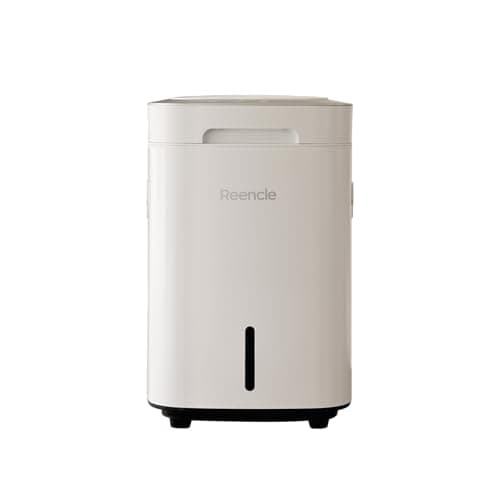 Top pickReencle Prime Electric ComposterMicrobial, about 1.5 lb of scraps a day, 28 dB | An apartment with no outdoor space | 8.0 | $479.00 - View on Amazon |
| 2 |  Vitamix FoodCycler FC-50Compact bucket-style recycler, carbon filtered | A smaller electric option | 7.6 | Check price on Amazon |
| 3 | 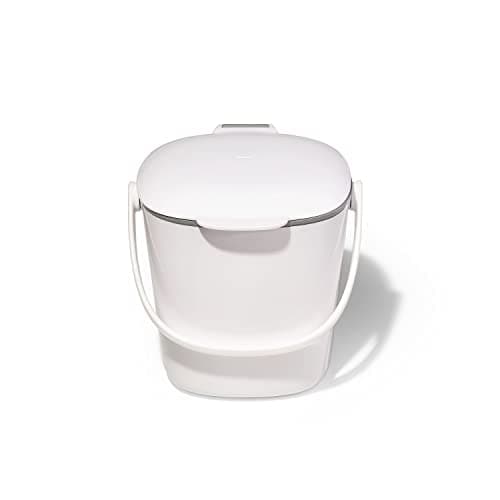 OXO Good Grips Easy-Clean Compost BinSmall lidded pail, smooth-walled for rinsing | The counter caddy | 8.3 | $25.00 - View on Amazon |
#ad We may earn a commission - Price as of October 17, 2026
Scores are our own editorial judgment, formed from published specifications and independent sources. They are not aggregated customer ratings, and they are not the result of hands-on testing, which we do not currently do. See how we choose.
For the full product comparison, electric composters ranks the machines in detail, and electric composter vs compost bin sets a machine against an outdoor bin on cost, speed and output quality. If an apartment is the constraint rather than the appliance, the best compost bin for an apartment covers every route including worms.
The environmental argument, honestly
Keeping food waste out of landfill is worth doing: buried food decomposes without oxygen and produces methane. Any system that diverts it -- machine, bin, worms or municipal collection -- is an improvement on a trash bag.
What a machine adds is electricity, a manufactured appliance, and consumables, in exchange for speed and convenience. Whether that trade is worth it depends entirely on whether you had a realistic alternative. For an apartment with no outdoor space and no collection, the alternative was landfill, and the machine wins. For a house with a yard, the alternative was a bin in the corner that costs nothing to run, and the machine does not.
Common questions
Are electric composters worth the money?
In an apartment with no outdoor space and no municipal food-waste collection, often yes -- they deal with daily scraps indoors without worms. For anyone with a yard or balcony they are hard to justify, because an outdoor bin costs far less, uses no electricity and produces genuinely finished compost.
Do electric composters actually make compost?
Most do not. Dehydrator-style machines heat, dry and grind scraps, which reduces volume and smell but leaves dried food rather than decomposed material. Microbial machines with a live medium get much closer to real compost, and even that output benefits from curing before it goes near a plant.
Can I put electric composter output straight on my plants?
Treat it as material that still needs to break down. Mix it in small amounts into an outdoor bin, a worm bin, or bare soil that is not currently planted. Applied like finished compost around a living plant, undecomposed food waste ties up nitrogen and can go sour.
What is a cheaper alternative to an electric composter?
A countertop caddy emptied into an outdoor bin, if you have any outdoor space. If you do not, keep scraps in a sealed container in the freezer -- it costs nothing and removes the smell entirely -- or run a stacking-tray worm bin indoors, which is cheaper than any machine and makes a better amendment.
How much electricity does an electric composter use?
It varies by machine and by how it works: dehydrators draw power in multi-hour batch cycles, while microbial composters run continuously at lower power. Check the manufacturer's stated figures for the specific model, because the two types are not comparable on a single number.
Sources
Factual claims on this page are backed by the published sources below, and product specifications are the manufacturers’ own. Where a figure is not published, we say so rather than estimating it.
- Composting at home - US Environmental Protection Agency
- Debunking the myth: food scrap dehydrators are not composters - Illinois Food Scrap and Composting Coalition
- Product specifications: Prime, Gravity and Gravity Pro - Reencle (manufacturer)
- Home composting: a guide for home gardeners - Penn State Extension