Step 4 - Composting
The Best Compost Bin for an Apartment
With no outdoor space the question changes. It is no longer which bin composts fastest, it is which one you can live in a room with.
Janet H. - the hands-on owner behind Janet Media Group.
Published
This page contains affiliate links. If you buy through them we may earn a commission at no cost to you, and it never decides what we recommend. How this site is funded.
In an apartment the best option is a stacking worm bin like the VermiHut Plus: it genuinely produces finished compost indoors, it does not smell when it is running properly, and worm castings outperform ordinary compost as a soil amendment. If worms are a hard no, a microbial electric unit is the alternative -- quiet, fast and odour-controlled -- but be clear that what comes out of it is pre-compost that still has to finish in soil, not compost.
The three apartment options, honestly
| System | What it produces | What it asks of you |
|---|---|---|
| Stacking worm bin | Real finished castings, continuously | Feeding, moisture management, living with worms |
| Microbial electric unit | A soil-like output that still needs to finish in soil | Power, counter space, filter replacement |
| Grinder-dehydrator electric unit | Dried, ground scraps -- pre-compost | Power, counter space, a cycle per batch |
| Caddy plus a collection scheme | Nothing at home -- the facility composts it | Freezer space and a weekly drop-off |
That last row is the option people forget and it is often the right one. Many cities run food-scrap collection or have drop-off points at farmers markets, and a lidded caddy in the freezer plus a weekly trip diverts the same waste with no appliance and no worms. If that exists where you live, it is hard to beat.
Quick picks
| # | Product | Best for | Score | Price |
|---|---|---|---|---|
| 1 | 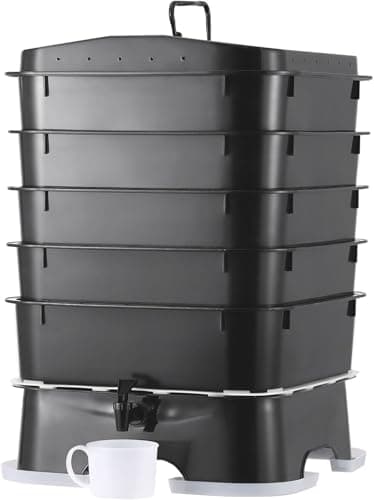 Top pickVermiHut Plus 5-Tray Worm Composter5 stacking trays with moisture and odor boards | Indoor composting, no yard | 8.6 | $79.95 - View on Amazon |
| 2 | 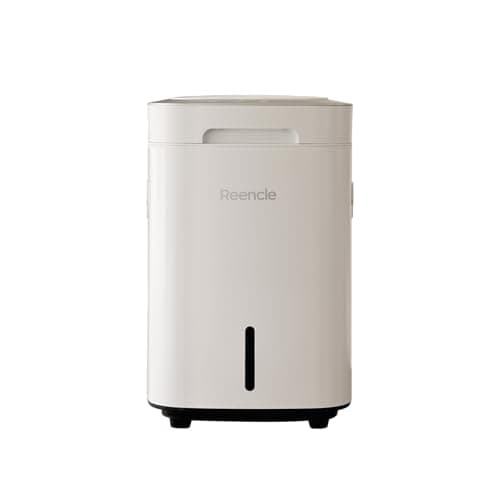 Reencle Prime Electric ComposterMicrobial, about 1.5 lb of scraps a day, 28 dB | An apartment with no outdoor space | 8.0 | $479.00 - View on Amazon |
| 3 |  Lomi Electric Kitchen ComposterCountertop grinder-dehydrator, cycle in hours | Apartments with no outdoor option | 7.4 | Check price on Amazon |
| 4 | 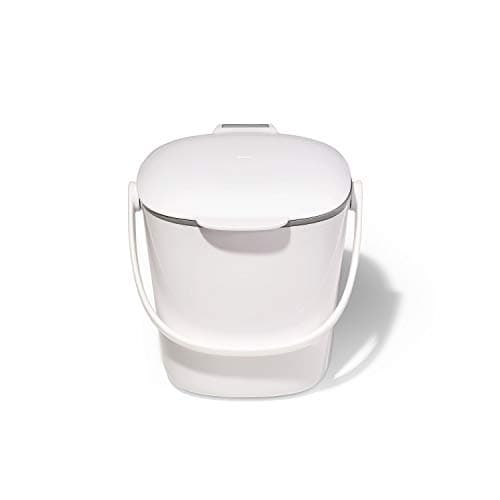 OXO Good Grips Easy-Clean Compost BinSmall lidded pail, smooth-walled for rinsing | The counter caddy | 8.3 | $25.89 - View on Amazon |
#ad We may earn a commission - Price as of October 10, 2026
Scores are our own editorial judgment, formed from published specifications and independent sources. They are not aggregated customer ratings, and they are not the result of hands-on testing, which we do not currently do. See how we choose.
Worm bins indoors: what it is actually like
Better than people expect. A correctly run worm bin smells of soil, not of rubbish -- a stacking bin with moisture and odour boards sits under a sink or in a utility space and is unremarkable. The worms stay in it; they have no reason to leave a dark, damp, well-fed environment.
What goes wrong is overfeeding and overwatering. Add more than the worms can process and the surplus rots instead of being eaten, which is when a bin smells and when fruit flies arrive. The fix is to feed less, bury each addition under bedding, and keep the contents damp rather than wet.
Our composting worms guide covers which species to use and how many to start with, and the best worm composting bins compares the stacking systems.
Electric units: what they do and do not do
There are two different appliances sold under the same name. Grinder-dehydrators heat, grind and dry scraps in a few hours. The output is dry, ground food waste -- a useful, odour-free, volume-reduced material that still has to decompose in soil. It is not compost, and the Illinois Food Scrap and Composting Coalition has published specifically on that distinction.
Microbial units keep a live microbial culture in a warm chamber and add scraps continuously. They are slower, quieter, and the output is closer to a soil amendment -- but it still benefits from finishing in soil. They are the better choice for an apartment because they run continuously and quietly rather than in loud batches.
Both need counter space and power. Electric composters covers the models and electric composter vs compost bin explains why a bin wins whenever you have anywhere outdoors to put one.
The question nobody asks first: where does it go?
This is the thing to settle before buying anything. A worm bin produces a steady supply of castings, and an apartment has limited capacity to absorb it. Have a plan:
- Houseplants and balcony containers. Castings are used at low rates -- a thin top-dressing -- so a surprising amount goes a long way.
- A balcony growing setup. If you are growing anything in containers, this is the obvious home for it. See raised beds for a deck or balcony.
- Friends, family or a community garden. Finished castings are a genuinely welcome gift and community plots almost always want them.
- A municipal scheme for the surplus. If you are producing more than you can use, there is no shame in diverting the excess.
If none of those apply -- no plants, no balcony, no garden, no community plot -- then a collection scheme is the honest answer and an appliance is a purchase in search of a use.
Odour and pests, which is the real worry
- Use a lidded counter caddy and empty it every couple of days. A smooth-walled pail rinses out; a charcoal filter buys longer intervals.
- Freeze the awkward things. Anything you are not ready to process goes in the freezer. It stops odour and it kills fruit fly eggs.
- Bury every addition to a worm bin under bedding. Exposed food on the surface is what attracts flies.
- Keep meat, fish, dairy and oils out of a worm bin entirely. They are the odour sources and the worms will not deal with them.
- Do not overfeed. The single most common cause of a worm bin smelling is more food going in than the population can process.
What about bokashi
Bokashi is a bran-inoculated fermentation in a sealed bucket. It handles meat and dairy, which the other indoor systems do not, and it is compact and genuinely odour-controlled while sealed. The catch is the same as with the electric units: what comes out is fermented, pickled food waste, not compost. It has to be buried in soil or added to a compost system to finish.
We do not stock a bokashi recommendation because the registry does not include one, and we are not going to invent a pick to fill the gap. If you have somewhere to bury the output, it is a reasonable system worth reading about elsewhere.
New to all of this? Composting for beginners covers the greens-and-browns ratio, which applies to a worm bin just as much as to a heap.
The picks in full
Top pick
VermiHut Plus 5-Tray Worm Composter
VermiHut
A worm bin that works indoors year-round, which is the only real option for an apartment -- and worm castings are better than compost anyway.
Vermicomposting is the answer to two problems at once: no outdoor space, and winter. A worm bin lives under a sink or in a garage and keeps working at room temperature when an outdoor pile has gone cold and dormant.
The stacking system does the sorting for you. Worms finish a tray and migrate up toward the fresh food in the tray above, leaving finished castings behind to lift off.
Two habits make the difference between an odor-free bin and a bad experience: feed small amounts, and keep the bedding damp rather than wet. Smell is almost always overfeeding.
What works
- Genuinely odor-free when run correctly
- Works indoors through winter, when outdoor piles stall
- Castings are a stronger soil amendment than ordinary compost
- Worms migrate upward, so harvesting is mostly self-sorting
What does not
- Worms are a separate purchase and a living thing to look after
- Cannot take onion, citrus or large amounts at once
- Small throughput compared with an outdoor bin
Skip it if: the idea of keeping worms in the house is a hard no. It works, it does not smell, and it is still not for everyone.
| Type | Stacking-tray vermicomposter |
|---|---|
| Trays | 5 |
| Features | Airflow board and moisture-control board |
| Liquid | Tap at the base for drainage |
| Worms | Not included -- buy red wigglers separately |
An apartment with no outdoor space
Reencle Prime Electric Composter
Reencle
The one machine in this category that works biologically rather than by drying scraps out, which is why its output is closer to compost than to ground breakfast cereal.
Almost every machine sold as an electric composter is a dehydrator: it heats, grinds and dries food scraps, which kills the microbes rather than feeding them. This one is built the other way around, holding a live microbial medium at working temperature and letting it digest what you add.
That changes how you use it. There is no batch cycle to wait out -- you add scraps as they appear and draw material off the bottom periodically, which is much closer to how a worm bin behaves than to how a kitchen appliance behaves.
It is still a machine with a running cost. The manufacturer puts consumption at around 52 watts on average and 1.25 kWh a day, and the carbon filter is a yearly consumable. If you have anywhere outdoors to put a bin, put a bin there instead.
What works
- Runs a live microbial culture continuously, so you add scraps daily rather than in batches
- Quiet enough to live in a kitchen
- No outdoor space, no smell and nothing for rodents to find
- Output has been biologically worked on, not just dried and ground
What does not
- Costs many times what an outdoor bin costs, plus electricity every day it runs
- Needs the microbial medium kept alive -- it is a culture, not an appliance you ignore
- Takes up a substantial piece of floor or counter, at 18 inches tall
- Output still needs to finish in soil before you plant into it
Skip it if: you have a yard, a balcony or a shared garden. An outdoor bin costs a fraction of this and makes better compost with no electricity at all.
| Type | Electric composter with a live microbial medium |
|---|---|
| Daily capacity | Manufacturer states about 1.5 lb recommended, 2.2 lb maximum |
| Size | About 12 in wide, 13 in deep, 18.4 in tall |
| Weight | About 20 lb |
| Noise | Manufacturer states 28 dB average |
| Power | Manufacturer states 52 W average, about 1.25 kWh a day |
| Filter | Carbon filter, replacement every 9 to 12 months |
Apartments with no outdoor option
Lomi Electric Kitchen Composter
Pela
#ad We may earn a commission - prices are shown by Amazon, not by us
It is a grinder and dehydrator, not a composter -- but if the alternative is food waste going in the trash, the output still improves your soil.
Be clear about what this machine does, because the marketing is not. It grinds and dries food waste. Composting is a biological process that takes weeks; this is a mechanical one that takes hours. The output is pre-compost -- a soil amendment that still needs to finish breaking down in soil or a bin.
That does not make it useless. Food waste in landfill breaks down without oxygen and produces methane; the same scraps dried, ground and dug into a bed do not. For an apartment with no balcony, that is a real improvement over the trash.
It is the most expensive way to process a kitchen's worth of scraps, both to buy and to run. If you have a yard, put the money into a tumbler and a bag of worms instead.
What works
- Turns food scraps into something usable overnight
- No smell, no worms, no outdoor space needed
- Reduces waste volume dramatically
- Quiet enough to run at night
What does not
- Expensive to buy and it uses electricity every cycle
- Output is dried ground food, not finished compost -- it still needs to break down
- Filters are an ongoing cost
Skip it if: you have any outdoor space at all. A $30 bin outdoors makes better compost than a several-hundred-dollar appliance makes on a counter.
| Type | Electric food-waste recycler |
|---|---|
| Cycle | Several hours depending on mode |
| Output | Dried, ground material -- pre-compost, not finished compost |
| Consumables | Carbon filters need periodic replacement |
| Power | Standard outlet |
The counter caddy
OXO Good Grips Easy-Clean Compost Bin
OXO
The unglamorous item that determines whether you compost at all: if scraps are inconvenient to collect, they go in the trash.
Compost systems fail at the kitchen end far more often than at the bin end. If collecting scraps means opening a cupboard, finding a container and then washing it out, the scraps go in the trash instead.
What makes a caddy work is mundane: a lid you can flip open with one hand while the other holds a chopping board, and an interior with no corners so a rinse actually cleans it.
Empty it every two or three days regardless of how full it is. Nearly every complaint about a smelly kitchen caddy is a caddy that sat for a week.
What works
- Lid opens one-handed and stays open
- No corners for food to lodge in
- Small enough to leave on a counter
- No filter to buy
What does not
- Needs emptying every couple of days
- No carbon filter, so it relies on being emptied
- Plastic rather than steel
Skip it if: you would rather keep scraps in the freezer, which is free, smell-free and works perfectly well.
| Type | Countertop collection pail |
|---|---|
| Capacity | Around 0.75 gal |
| Lid | Flips up and stays open while you scrape |
| Cleaning | Smooth interior, dishwasher safe |
Common questions
What is the best compost bin for an apartment?
A stacking worm bin, if you are willing to keep worms. It is the only indoor system that produces genuinely finished compost, the castings outperform ordinary compost as a soil amendment, and a correctly run bin smells of soil rather than rubbish. A quiet microbial electric unit is the alternative if worms are not an option.
Can you compost indoors without worms?
Yes, with an electric unit or with bokashi fermentation. Be clear about the output: a grinder-dehydrator produces dried ground scraps and bokashi produces fermented waste, and both still have to break down in soil. Neither is finished compost in the way a worm bin or an outdoor pile produces it.
Does an indoor compost bin smell?
Not when it is running properly. A worm bin that smells is being overfed or kept too wet -- feed less, bury each addition under bedding, and keep the contents damp rather than soaked. Keeping meat, fish, dairy and oils out entirely removes the main odour sources.
What do you do with compost if you have no garden?
Top-dress houseplants and balcony containers, which absorb more than people expect because castings are used at low rates. Beyond that, community gardens and friends with plots are almost always glad of it. Settle this before buying an appliance -- producing compost with nowhere to put it is the commonest apartment regret.
Are electric composters worth it in an apartment?
They are worth it if you have no outdoor space, no collection scheme and a use for the output, because they reduce food waste volume quickly and without odour. They are not worth it if you have anywhere outdoors to put a bin, and they do not replace a composting system -- their output still has to finish in soil.
Sources
Factual claims on this page are backed by the published sources below, and product specifications are the manufacturers’ own. Where a figure is not published, we say so rather than estimating it.