Step 4 - Composting
What Is the Best Composting Method?
There is no best method, there is a best match. The six real options, and the one question that picks between them.
Janet H. - the hands-on owner behind Janet Media Group.
Published
This page contains affiliate links. If you buy through them we may earn a commission at no cost to you, and it never decides what we recommend. How this site is funded.
For most home gardeners with outdoor space, a tumbler is the best composting method: it is fast enough to be satisfying, enclosed so rodents and odor are not a concern, and turning it is a handle rather than a fork. If your waste is mostly leaves and grass rather than kitchen scraps, cold composting in a large open bin is objectively better -- it costs almost nothing and handles the volume. And if you have no outdoor space at all, a worm bin produces the highest-quality output of any method on this list. The method is chosen by what you throw away and how much space you have, not by which one finishes fastest.
The six methods, side by side
| Method | Time to finish | Effort | Space | Best for |
|---|---|---|---|---|
| Hot pile (turned) | 4 to 8 weeks | High -- turning weekly | Large | Volume gardeners who want speed |
| Cold pile or open bin | 6 to 12 months | Almost none | Medium to large | Leaves, grass, patient people |
| Tumbler | 6 to 12 weeks | Low -- turn the handle | Small | Most backyards and small yards |
| Worm bin | 2 to 4 months | Low but regular | Very small, indoors | No yard, best-quality output |
| Bokashi | 2 weeks ferment, then bury | Low, needs bran | Tiny | Meat and dairy, apartments |
| Electric unit | Hours | None | Countertop | No outdoor space, convenience |
The one question that decides it
What does your waste stream actually look like? Everything follows from that answer, and it is the question most comparisons skip in favor of ranking methods by speed.
- Mostly leaves, grass and prunings: cold composting in a large open bin. The problem is volume, and this is the cheap solution to volume. A hot pile is faster but you have to build it all at once.
- Mostly kitchen scraps, some yard waste: a tumbler. Enclosed, fast enough, and a dual chamber solves the never-finished problem that stalls continuous-feed bins.
- Kitchen scraps only, no yard: a worm bin. Castings outperform ordinary compost, and the footprint is a stack of trays under a sink.
- Including meat, fish and dairy: bokashi, which ferments rather than composts and so can take them. The fermented product still has to be buried or added to a bin.
- Enormous autumn leaf fall: a dedicated leaf pile or sacks, separate from the main bin. Leaves alone make leaf mold, which is a different and very useful product.
- No outdoor anything: an electric unit, with the caveat that its output is pre-compost rather than compost.
Quick picks
| # | Product | Best for | Score | Price |
|---|---|---|---|---|
| 1 |  Top pickFCMP Outdoor IM4000 Tumbling ComposterDual chamber, roughly 37 gal total | Most backyards | 9.1 | Check price on Amazon |
| 2 | 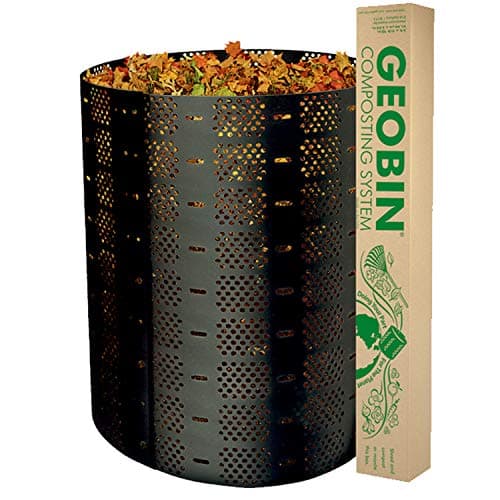 GEOBIN Expandable Compost BinExpands to roughly 216 gal, 36 in tall | Leaves and yard waste | 8.7 | $35.99 - View on Amazon |
| 3 | 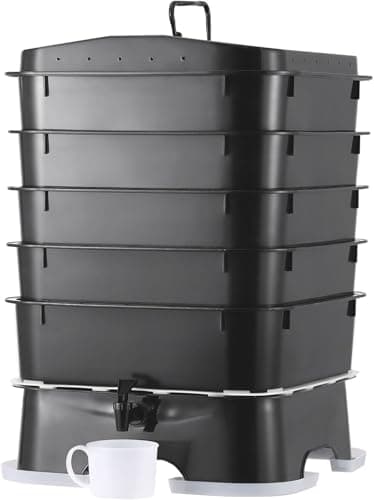 VermiHut Plus 5-Tray Worm Composter5 stacking trays with moisture and odor boards | Indoor composting, no yard | 8.6 | $79.95 - View on Amazon |
| 4 | 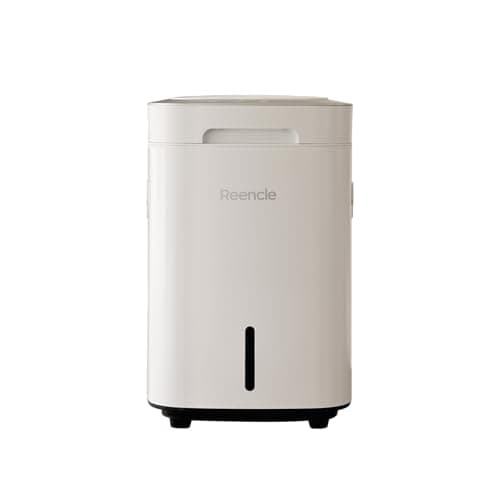 Reencle Prime Electric ComposterMicrobial, about 1.5 lb of scraps a day, 28 dB | An apartment with no outdoor space | 8.0 | $479.00 - View on Amazon |
#ad We may earn a commission - Price as of October 11, 2026
Scores are our own editorial judgment, formed from published specifications and independent sources. They are not aggregated customer ratings, and they are not the result of hands-on testing, which we do not currently do. See how we choose.
Hot versus cold, which is the real fork in the road
Hot composting means building a pile of roughly a cubic yard all at once with a good brown-to-green balance, then turning it every few days to keep oxygen in it. Done properly it reaches 130 to 160 degrees, kills most weed seeds and pathogens, and finishes in a month or two. It is genuinely the fastest method and it is real work -- and critically, you need the material available simultaneously, which most households do not have.
Cold composting means adding material as it arrives and waiting. It is the method almost everyone actually uses, it needs no turning, and it takes six months to a year. It does not get hot enough to kill weed seeds, so do not add seeding weeds. Both methods produce the same end product; the difference is time against effort, and for a home gardener with a trickle of input rather than a heap, cold is usually the honest choice.
If the choice you are really weighing is a bin against an open heap, compost bin vs compost pile goes through it properly, including the three situations that settle it.
Why a tumbler suits most people
A tumbler is a compromise that happens to land in the right place for a typical household. It does not reach sustained hot-pile temperatures -- the drum is too small to insulate itself properly -- but turning is effortless, so it gets aerated regularly, which is what actually drives the speed. It is sealed against rodents, it keeps rain out so the moisture level stays controllable, and it looks like equipment rather than a heap.
Its weaknesses are real and worth knowing. Capacity is limited, so a big leaf fall overwhelms it. A single-chamber tumbler that you keep adding to is never finished, which is why dual chambers matter. And in cold weather a small insulated-by-nothing drum stops working entirely. Compost bin vs tumbler puts the two formats directly against each other.
Worms, and what makes them different
Vermicomposting is not a faster version of ordinary composting, it is a different process with a different product. Red wigglers work through kitchen scraps and bedding at moderate temperatures and produce castings, which are more concentrated and biologically richer than ordinary compost and are used at much lower rates. It runs indoors, in a stack of trays, with no smell when managed properly.
The catch is that worms are livestock. They can be overfed, chilled, cooked or drowned, and they will not accept meat, dairy, oils or large amounts of citrus and onion. For someone with no outdoor space it is the best option available; for someone with a yard it is a second-year project rather than a first bin. Compost bin vs worm bin compares them head to head.
Electric units: what they are and are not
Countertop electric units grind and dehydrate food scraps in a few hours. The output is dry, ground, volume-reduced food waste -- useful material, but it is not finished compost and still has to decompose in soil. Microbial units are a step closer to real composting and run quietly, but the same caveat applies to the output.
That makes them an excellent waste-reduction appliance and a poor substitute for a bin if you have anywhere outdoors to put one. The honest use case is an apartment. Electric composters reviews the category and apartment composting covers the no-yard options together.
The method we would start with
If you have a yard and you are starting from nothing, start cold in a cheap expandable open bin and spend the money on soil instead. You will learn the ratio by looking at it, you will find out how much material you actually produce, and nothing is wasted if you later decide you want something faster or tidier. Best compost bin for beginners makes that case in full, and how to use a compost bin covers the routine once something is in the yard.
Common questions
What is the best composting method for a home gardener?
A tumbler for most backyards: fast enough, enclosed against rodents, and turned with a handle rather than a fork. If your waste is mostly leaves and grass, cold composting in a large open bin is better and cheaper. With no outdoor space, a worm bin gives the highest-quality output.
What is the fastest composting method?
A properly managed hot pile -- around a cubic yard built all at once with a good brown-to-green balance and turned every few days, finishing in four to eight weeks. It is also the most work, and it requires having all the material available at the same time, which most households do not.
Is hot or cold composting better?
They produce the same end product. Hot is faster and kills weed seeds and pathogens, but needs a large volume built at once and regular turning. Cold needs no effort and takes six months to a year. For a household adding material as it arrives, cold is usually the realistic choice.
Which composting method can take meat and dairy?
Bokashi, because it ferments the waste in a sealed bucket with inoculated bran rather than composting it aerobically. The fermented product still has to be buried in soil or added to a compost bin to finish. No ordinary home pile, bin, tumbler or worm bin should take meat, fish, dairy or oils.
Are electric composters a real composting method?
They are a waste-reduction appliance rather than a composting method. They grind and dry food scraps in hours, producing a useful volume-reduced material that still has to decompose in soil to become compost. They make sense where there is no outdoor space and little sense where there is.
Sources
Factual claims on this page are backed by the published sources below, and product specifications are the manufacturers’ own. Where a figure is not published, we say so rather than estimating it.