Step 1 - Raised Beds
The Best Raised Beds for Lettuce and Salad Greens
Lettuce does not need depth. It needs row length, even moisture and something between the leaves and everything that wants to eat them.
Janet H. - the hands-on owner behind Janet Media Group.
Published
This page contains affiliate links. If you buy through them we may earn a commission at no cost to you, and it never decides what we recommend. How this site is funded.
The short version. The Quictent galvanized bed with cover is the right buy for salad: it arrives with hoops and mesh already matched to the frame, which is the single thing that decides whether your lettuce is eaten by you or by something else. If you want a tidy bed that outlasts everything around it and you already own netting, the Vita Classic 4 x 4 in food-grade vinyl is the one. The budget pick is the VIVOSUN 5-pack of 10-gallon grow bags -- five separate sowings for the price of a few bagged salads, and the simplest way to run succession without a bed at all.
Salad is the crop that makes a raised bed look like a good investment fastest, because the alternative has a price tag on it every week. It also has the least demanding root system on this site, which changes what you should buy: depth stops mattering at about eight inches, and everything you would have spent on depth is better spent on cutting length, a cover and a reliable way to water.
How we chose
The criteria come from what actually ends a salad crop in a home garden -- bolting, slugs, cabbage-family pests and uneven watering -- rather than from a specification sheet. The pest and row-cover guidance is University of Maryland Extension's; the bed and watering guidance is University of Minnesota Extension's.
- Row length over depth. Eight inches of fill grows excellent lettuce. A bed that gives more linear feet of cutting row for the same money is the better salad bed.
- It takes a cover without a project. Insect mesh over hoops is the difference between leaves and lace. A bed sold with a matched cover removes the fiddliest part.
- Even moisture. Lettuce bolts and turns bitter after a dry spell followed by a soaking. Beds that dry fast need a plan; fabric is fastest of all.
- Reachable without standing in it. Cut-and-come-again means visiting the bed with scissors several times a week.
- A live price, now. Every pick carries a current price from our price layer.
Quick picks
| # | Product | Best for | Score | Price |
|---|---|---|---|---|
| 1 | 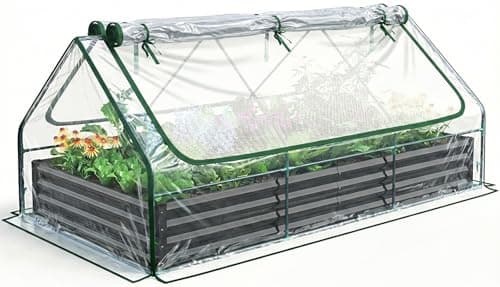 Top pickQuictent Galvanized Raised Bed with CoverMetal bed with hooped mesh and cover | Pest and frost protection | 8.0 | $99.99 - View on Amazon |
| 2 | 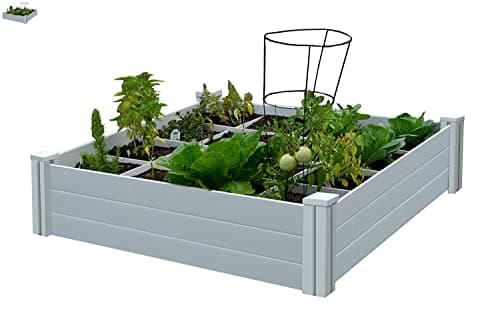 Vita Classic 4 x 4 ft Vinyl Raised Garden Bed11 in deep food-grade vinyl, tool-free posts | A tidy bed with no upkeep | 8.1 | $80.00 - View on Amazon |
| 3 | 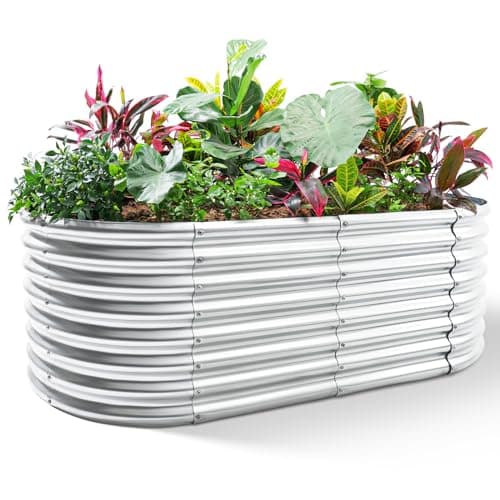 Land Guard Galvanized Raised Garden BedGalvanized steel, large footprints, budget price | Most growing area per dollar | 8.2 | $63.99 - View on Amazon |
| 4 | 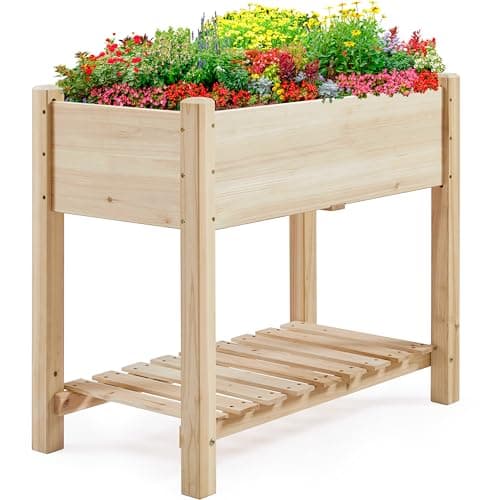 Yaheetech Elevated Wooden Planter BoxWaist-height fir planter with drainage liner | Balconies and bad backs | 8.0 | $47.99 - View on Amazon |
| 5 | 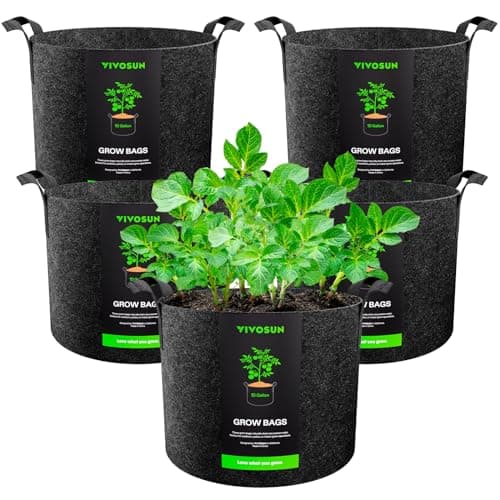 VIVOSUN 5-Pack 10 Gallon Grow BagsFive 10 gal bags with stitched handles | A first set of bags | 8.4 | $17.84 - View on Amazon |
#ad We may earn a commission - Price as of November 24, 2026
Scores are our own editorial judgment, formed from published specifications and independent sources. They are not aggregated customer ratings, and they are not the result of hands-on testing, which we do not currently do. See how we choose.
Why depth is the wrong thing to pay for here
Lettuce, spinach, rocket, mizuna and the loose-leaf mixes are all shallow feeders. Their working roots sit in the top six to eight inches and most of the fine root mass is nearer the surface than that. A seventeen-inch bed grows them no better than an eleven-inch bed; it just costs considerably more to fill.
| Requirement | What matters | What does not |
|---|---|---|
| Root depth | 6 to 8 in of good fill | Anything past about 12 in |
| Moisture | Even and frequent, never drought then flood | Reservoir volume |
| Light | Full sun early and late; afternoon shade in summer | All-day exposure in July |
| Protection | Fine mesh for leaf miner, flea beetle and cabbage moth | Heavy-duty structure |
| Access | Every row within arm's reach for cutting | Walk-in width |
That table is also the argument for the elevated planter in the list. A waist-height box is shallow by design, which rules it out for carrots and makes it close to ideal for salad -- you cut standing up, slugs face a long climb, and the box warms early in spring.
Succession is the technique that pays for the bed
One sowing of lettuce gives you a glut and then nothing. The entire value of a salad bed comes from sowing a short row every two to three weeks from early spring until about six weeks before your first frost, so something is always at cutting size.
- 1
Divide the bed into sowing blocks
Four or five blocks along the length, or one grow bag per sowing. The point is that each block is at a different age.
- 2
Sow a block every two to three weeks
Thinly. Loose-leaf types can be cut at any size; hearting types need the spacing on the packet.
- 3
Cut, do not pull, the loose-leaf types
Take the outer leaves or shear the block an inch above the crown and it will regrow two or three times before it tires.
- 4
Give it afternoon shade in midsummer
Heat is what makes lettuce bolt and turn bitter. Shade cloth, a taller neighbouring crop, or simply pausing sowings through the hottest weeks all work.
- 5
Restart for autumn in late summer
The autumn crop is usually the best of the year, and under a cover it runs well past the first frosts.
Watering: the real reason salad fails
Bitter, bolted lettuce is usually a watering story rather than a heat story. Shallow roots in a free-draining bed dry out within a day in summer, and the plant responds to the stress by running to seed. Little and often is right for salad in a way it is wrong for tomatoes.
Fabric beds and bags dry quickest and want checking daily in hot weather; a vinyl or steel bed holds on longer. Either way a soaker hose or a simple drip line on a tap timer removes the one variable that most often ends the crop -- see how often to water raised beds for timing and drip irrigation for raised beds for the hardware.
The picks in full
Top pick
Quictent Galvanized Raised Bed with Cover
Quictent
A bed and a crop cover in one box, which is the cheapest way to stop cabbage moths, birds and a light frost at the same time.
The cover is the product here. Cabbage white caterpillars can strip a row of kale in days, birds will take strawberries the moment they blush, and a late frost can end a first tomato planting. A hooped mesh over the bed handles all three.
Fitting the hoops to the bed from the start avoids the usual improvised arrangement of sticks and clothes pegs, and they fold back rather than having to come off entirely.
Remember to open or remove the cover once fruiting crops flower. Netting that keeps moths out also keeps pollinators out, and an unpollinated squash plant is a lot of leaf for no dinner.
What works
- Cover keeps cabbage moths and birds off brassicas and greens
- The clear cover buys a few weeks at each end of the season
- Hoops fold back for access
- Cheaper than buying a bed and a cover separately
What does not
- The bed itself is ordinary galvanized steel
- Covers need removing when crops flower and need pollinating
- Mesh is a wearing part in a windy yard
Skip it if: you already own a bed. A separate hoop-and-net kit over what you have costs far less than buying the whole thing again.
| Material | Galvanized steel bed with steel hoops |
|---|---|
| Cover | Mesh net plus a clear cover on most versions |
| Depth | Commonly 12 in |
| Assembly | Bolt-together bed, push-fit hoops |
| Soil needed | About 32 cu ft for 8 x 4 ft at 12 in |
A tidy bed with no upkeep
Vita Classic 4 x 4 ft Vinyl Raised Garden Bed
Vita
Board-and-post vinyl that goes together in about twenty minutes and never needs staining -- the lowest-maintenance of the kits sold on a store shelf.
Vinyl is the family most people overlook, and it earns its place on one argument: there is no maintenance at all. Cedar weathers and eventually rots, steel can scuff at the cut edges, and this does neither. The boards slide down into corner posts with no fasteners, so assembly is genuinely a twenty-minute job for one person.
The trade is depth. Eleven inches is enough for salad, bush beans, chard, herbs, strawberries and determinate tomatoes, and it is not enough for carrots, parsnips or a decent potato crop. Buy it knowing which half of the seed catalog it serves rather than discovering that in July.
Volume is modest too -- a 4 x 4 ft frame takes roughly 13.5 cubic feet of mix, which is one of the cheapest fills on this page and a real part of the appeal if the soil bill is what has been putting you off.
What works
- Tool-free assembly -- boards drop into the posts
- Nothing to stain, seal or re-treat, ever
- A white frame reflects more sun than dark steel in a hot yard
- The Grow Grid version marks out square-foot spacing for you
What does not
- Eleven inches is shallow for anything with a long root
- It reads as white vinyl fencing, which will not suit every garden
- A narrower range of sizes than the steel and cedar lines
Skip it if: you want carrots or potatoes. Eleven inches is the whole depth of the classic frame, and it does not stack the way a cedar or composite kit does.
| Material | Food-grade vinyl, BPA and phthalate free (manufacturer's figures) |
|---|---|
| Size | About 48 x 48 in, 11 in high |
| Assembly | Boards slide into corner posts, no tools |
| Warranty | 20-year limited, per the manufacturer |
| Soil needed | About 13.5 cu ft to fill |
Most growing area per dollar
Land Guard Galvanized Raised Garden Bed
Land Guard
The cheapest honest way to get a large steel bed, as long as you accept plain galvanizing instead of an Aluzinc coating.
If the goal is to grow the most food this year for the least money, area beats coating. A large cheap bed you can actually fill will feed you better than a small premium one, and Land Guard exists for exactly that calculation.
Understand what you are giving up. Plain galvanizing is a zinc coating; Aluzinc adds aluminum and magnesium and holds up considerably better at the soil line, which is where beds fail. Expect good years rather than decades.
The panels are thinner too, so use the supplied braces and do not skip the center support on the long sizes.
What works
- Lowest cost per square foot of growing area
- Large sizes available in one kit
- Simple assembly with basic tools
- Good way to trial a big bed before committing
What does not
- Plain galvanizing, not the longer-lived Aluzinc
- Thinner panels flex more when filled
- Edges deserve a careful check during assembly
Skip it if: you want the bed to outlive the mortgage. Plain galvanized steel is fine for years, not decades, especially where soil stays wet.
| Material | Galvanized steel |
|---|---|
| Depth | Commonly 12 in and 17 in |
| Footprint | Large rectangles including 8 x 4 ft |
| Assembly | Bolt-together panels |
| Soil needed | About 32 cu ft for 8 x 4 ft at 12 in |
Balconies and bad backs
Yaheetech Elevated Wooden Planter Box
Yaheetech
A standing-height planter on legs for patios and balconies, where the point is reach rather than growing volume.
An elevated planter is a different product from a raised bed, even though the categories get mixed together. You are buying reach: a box at waist height that you can work at standing up, on a surface where digging is not an option.
The trade is depth. Eight to ten inches of soil is plenty for salad leaves, bush beans, herbs, chard and dwarf tomatoes, and not enough for anything that makes a long root. Plan the planting list around that instead of fighting it.
Small soil volumes dry fast, so this is the one bed type where a mulch layer and a watering habit really are the difference between a crop and a disappointment.
What works
- No bending at all -- true standing height
- Fits a balcony, deck or patio where a ground bed cannot go
- Small soil volume keeps the fill cost low
- Easy one-person assembly
What does not
- Shallow box rules out carrots, parsnips and potatoes
- Dries out quickly in summer and needs frequent watering
- Softwood frame will weather faster than cedar
Skip it if: you want to grow root crops. The growing box on an elevated planter is shallow by design -- it has to be, or the legs could not hold it.
| Material | Fir wood frame with liner |
|---|---|
| Working height | About 30 in to the rim |
| Soil depth | Typically 8 to 10 in in the box |
| Drainage | Slatted base with liner |
| Soil needed | Usually under 6 cu ft |
A first set of bags
VIVOSUN 5-Pack 10 Gallon Grow Bags
VIVOSUN
Five bags for about what one rigid planter costs, and 10 gallons is the size that actually grows a tomato rather than keeping one alive.
Ten gallons is the useful number here. University of Maryland Extension puts the minimum container size for a standard tomato, a pepper, an eggplant or a cucumber at 5 gallons, so a 10 gallon bag is comfortably above the floor rather than at it -- which in practice means fewer collapses on a hot afternoon.
The fabric is mid-weight: thicker than the throwaway bags sold ten to a pack, thinner than the bonded-fabric pots that last a decade. For a first season, while you are deciding whether you like growing this way, that is the right place on the scale.
Fill them with potting mix, not garden soil or raised bed mix. Soil in a container compacts and drains badly, which is the single most common reason a bag of tomatoes underperforms the same plant in the ground.
What works
- Ten gallons is the right size for one tomato, pepper or eggplant
- Handles are stitched rather than glued, so a full bag can be moved
- Five bags let you chase the sun around a patio
- Folds away flat at the end of the season
What does not
- Thinner fabric than the premium bags, so expect a shorter life
- Needs watering far more often than a bed of the same volume
- Dark fabric gets genuinely hot in full afternoon sun
Skip it if: you are growing root crops. Ten gallons is 11 or 12 inches of depth once settled, which is short for carrots and parsnips.
| Type | Nonwoven fabric pot with handles |
|---|---|
| Capacity | 10 gal each |
| Size | Roughly 16 in across and 12 in tall at 10 gal |
| Fabric | Mid-weight nonwoven polypropylene |
| Handles | Reinforced, stitched to the body |
| Pack | 5 bags |
Common questions
How deep should a raised bed be for lettuce?
Six to eight inches of good fill is enough for every loose-leaf and hearting type. Deeper beds grow lettuce no better; they just cost more to fill. Depth only becomes the deciding factor if you want to grow root crops in the same bed later.
What is the best size raised bed for salad greens?
Long and narrow, two to four feet across so every row is within reach for cutting. Length matters more than width because succession sowing wants several separate blocks at different ages along the bed.
How do I stop slugs and insects eating my lettuce?
Fine insect mesh over hoops, fitted before the seedlings emerge rather than after the damage starts. It excludes flea beetle, leaf miner and cabbage moth, and it keeps most slug traffic off a raised bed's surface. The same hoops take fleece for frost later in the year.
Why does my lettuce bolt and taste bitter?
Heat and uneven watering, usually together. Shallow roots dry out fast in a free-draining raised bed and the plant responds by running to seed. Water little and often in hot weather, give the bed afternoon shade in midsummer, and pause sowings through the hottest weeks.
Can I grow lettuce in grow bags instead of a bed?
Yes, and for succession sowing it is arguably easier -- one bag per sowing keeps the ages separate and lets you move a bag into shade when the weather turns. Bags dry out faster than a bed, so they need checking daily in summer.
Sources
Factual claims on this page are backed by the published sources below, and product specifications are the manufacturers’ own. Where a figure is not published, we say so rather than estimating it.