Step 1 - Raised Beds
How Often to Water Raised Beds
Deep and infrequent beats little and often -- but the interval depends on the bed, not the calendar.
Janet H. - the hands-on owner behind Janet Media Group.
Published
This page contains affiliate links. If you buy through them we may earn a commission at no cost to you, and it never decides what we recommend. How this site is funded.
An established raised bed in mild spring or fall weather usually needs a deep soak two or three times a week. In midsummer heat that goes to daily or every other day for a standard 12-inch bed, and genuinely daily for a shallow planter on legs. New seedlings need lighter water more often until they root. The important part is that these are starting points, not a schedule: a raised bed drains faster than ground soil, so you check the soil and water when it is dry two inches down, rather than watering on a fixed day.
A realistic starting interval
| Situation | Typical interval | Water volume |
|---|---|---|
| Spring and fall, established plants, 12 in bed | Every 2 to 3 days | A deep soak |
| Midsummer heat, established plants, 12 in bed | Daily to every other day | A deep soak |
| Deep bed, 17 in or more | Roughly a third less often | A deep soak |
| Elevated planter, 8 to 10 in of soil | Daily in summer | Until it runs from the base |
| Grow bags and fabric pots | Daily, sometimes twice in heat | Until it runs through |
| Newly sown seed | Light water once or twice a day | Enough to keep the surface damp |
| Newly transplanted seedlings | Daily for the first week | A thorough but gentle soak |
| Cool, overcast, after real rain | Skip, and check again tomorrow | None |
Two things shift those numbers more than anything else: depth and mulch. A 17-inch bed holds far more water than a 12-inch one and buys you roughly a third more time between waterings. An inch of mulch on the surface cuts evaporation noticeably, and it is the cheapest watering improvement available.
Check the soil, not the forecast
- 1
Push a finger in to the second knuckle
That is about two inches. If the soil is dry at that depth, water. If it is damp, wait -- the surface drying out means very little.
- 2
Check in the morning
Plants wilt in afternoon heat even in wet soil, simply because they lose water faster than roots can supply it. Afternoon wilt is not a reliable signal; morning wilt is.
- 3
Water the soil, not the leaves
Wet foliage overnight invites fungal disease, and overhead spray loses a lot to evaporation before it lands.
- 4
Soak deeply, then stop
A long slow soak pulls roots downward. Frequent light sprinkles train roots to stay in the top inch, where they are the first thing to suffer in a hot spell.
- 5
Water early in the day
Early morning gives the lowest evaporation loss and leaves foliage dry by nightfall. Evening watering is second best; midday is the most wasteful.
- 6
Re-check after a rain shower
A light shower often wets only the top half inch of a bed. Rain is not a reason to skip the finger test.
Why a deep soak beats a daily sprinkle
Roots grow toward water. A bed watered lightly every morning keeps the top inch damp and the rest dry, so the plant builds a shallow root system that has no reserve at all -- miss one day in a heat wave and it collapses. A bed soaked thoroughly every second or third day keeps moisture through the whole profile, and roots follow it down.
In practice, 'a deep soak' means running water long enough that it is damp six inches down. With a watering can that is more water than most people expect. With drip or a soaker hose it is usually 30 to 60 minutes at low pressure, and the only way to know for your bed is to run it once and then dig a small hole to see how far it got.
Signals you are getting it wrong
| What you see | Usually means | Do this |
|---|---|---|
| Wilting in the morning | Genuinely dry | Soak deeply now, and shorten the interval |
| Wilting only in afternoon heat, recovering by evening | Normal transpiration, not drought | Nothing. Check again in the morning |
| Yellowing lower leaves, soil constantly damp | Overwatering, or poor drainage | Water less often; check the bed is not sealed at the base |
| Blossom-end rot on tomatoes and peppers | Inconsistent moisture interrupting calcium uptake | Water on a steadier interval and mulch. More calcium rarely helps |
| Split tomatoes or carrots | A drought then a flood | Even out the interval rather than increasing the volume |
| Water running straight off the surface | The mix has dried hydrophobic | Water in two or three passes a few minutes apart to let it rewet |
Blossom-end rot is the one worth repeating, because it is misdiagnosed constantly. It is a calcium-transport problem caused by uneven watering far more often than by a calcium shortage in the soil, and a steadier interval fixes it where a calcium spray does not.
Making it automatic
Everything above assumes someone is checking the bed. The reason drip irrigation is worth the afternoon it takes to install is that it removes the failure mode entirely: water goes to the soil, at a known rate, whether or not you are home.
A single 4 x 8 bed is well served by a pre-built kit with pressure-compensating emitter tubing. A soaker hose is the cheapest step up from a watering can and still a real improvement, with the caveat that it delivers more water at the tap end than at the far end. Add a tap timer to either and the interval stops depending on your memory. The best drip irrigation for raised beds compares the kits in detail.
What to buy
The products that fit the advice above, chosen by the process on our how we choose page. We have not hands-on tested them; specifications are the manufacturers’ own.
Quick picks
| # | Product | Best for | Score | Price |
|---|---|---|---|---|
| 1 | 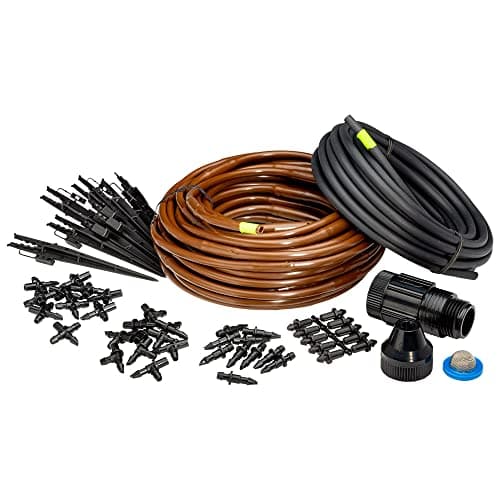 Top pickRain Bird GARDENKIT Drip Irrigation Kit35 ft of emitter tubing, emitters every 6 in at 0.8 gph | One 4 x 8 ft bed, done properly | 9.0 | $51.29 - View on Amazon |
| 2 | 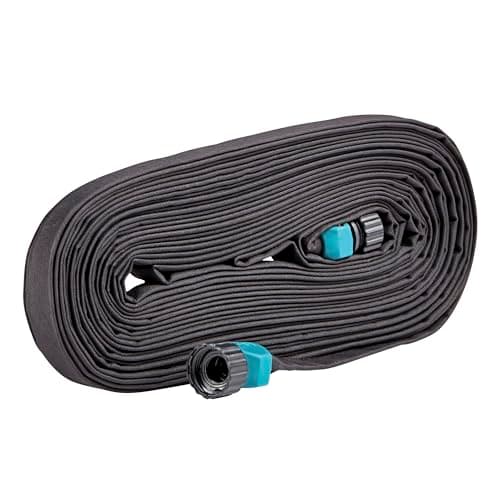 Gilmour Flat Weeper Soaker Hose, 50 ft50 ft flat hose that seeps along its whole length | The cheapest watering that is still an upgrade | 7.6 | $16.99 - View on Amazon |
| 3 | 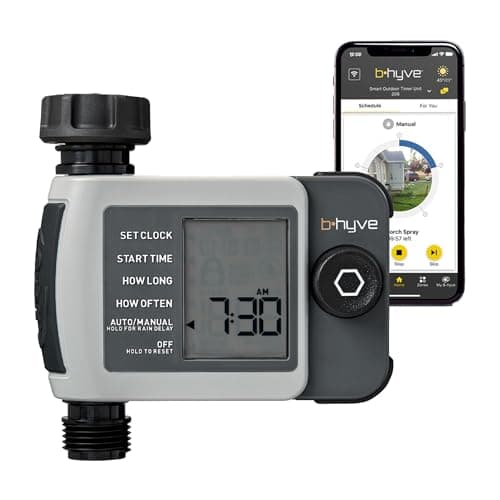 Orbit B-hyve XD 1-Port Smart Hose TimerSingle-outlet tap timer, programmable on the unit or by app | Making any of the above automatic | 8.7 | $36.10 - View on Amazon |
#ad We may earn a commission - Price as of October 17, 2026
Scores are our own editorial judgment, formed from published specifications and independent sources. They are not aggregated customer ratings, and they are not the result of hands-on testing, which we do not currently do. See how we choose.
Common questions
How often should I water a raised garden bed?
Two or three deep soaks a week in mild spring and fall weather, and daily or every other day in midsummer heat for a standard 12-inch bed. Shallow elevated planters and grow bags need water daily in summer. Treat those as starting points and check the soil two inches down before watering.
Should I water raised beds every day?
Only in real heat, or if the bed is shallow. Daily light watering on a normal 12-inch bed trains roots to stay in the top inch, which makes the plants far more fragile. A long soak every second or third day moves water through the whole profile and pulls roots down after it.
What time of day is best to water raised beds?
Early morning. Evaporation loss is lowest, the plants have water available through the heat of the day, and foliage dries before nightfall, which reduces fungal disease. Evening is the second-best option, and midday is the most wasteful.
How do I know if my raised bed needs water?
Push a finger into the soil to the second knuckle, about two inches. Dry at that depth means water now; damp means wait. A dry surface on its own tells you almost nothing, and plants that wilt in afternoon heat but recover by evening are not short of water.
Do raised beds need more water than in-ground gardens?
Yes. The free drainage that makes a raised bed warm up early and never waterlog is the same property that dries it out quickly in summer. A bed behaves more like a large container than like ground soil, and the deeper the bed, the longer it holds moisture between waterings.
How long should I run drip irrigation on a raised bed?
Usually 30 to 60 minutes at low pressure for a deep soak, but it depends on emitter flow and your soil mix. Run it once for a set time, then dig a small hole at the edge of the bed to see how far down the water reached, and adjust from there.
Sources
Factual claims on this page are backed by the published sources below, and product specifications are the manufacturers’ own. Where a figure is not published, we say so rather than estimating it.