Step 1 - Raised Beds
The Best Raised Beds for Cucumbers
Cucumbers need warm soil, an inch of water a week and something to climb. The bed you choose decides how hard each of those is to deliver.
Janet H. - the hands-on owner behind Janet Media Group.
Published
This page contains affiliate links. If you buy through them we may earn a commission at no cost to you, and it never decides what we recommend. How this site is funded.
The short version. For most gardens the Anleolife 8 x 4 ft metal bed is the right bed for cucumbers: eight feet of length is a trellis run rather than a trellis corner, the depth holds enough moisture to get a heavy-drinking vine through a hot week, and the long sides give you something solid to bolt a frame to. If you would rather build a narrow two-sided row, the Vego Garden 17 in modular bed makes that shape from the same panels. The budget pick is the Land Guard 8 x 4 -- the same eight-foot footprint for a fraction of the money, in a lighter gauge of steel and at a shallower standard depth, which means watering matters more. And if you only want two plants on a patio, the Smart Pot 100-gallon round bed is the cheapest honest way to do it.
Cucumbers are the crop that punishes an underspecified bed. University of Minnesota Extension is blunt about what they want: warm soil -- at least 70 degrees Fahrenheit an inch down before the seed goes in -- a moisture-retentive but well-drained root zone, and about an inch of water every week of the growing season, because vine crops are heavy water feeders. A shallow bed on a hot deck fails the second and third of those by the first week of July.
That is also why Extension's own raised bed guidance reads like a cucumber recommendation. Forming raised beds, the same material notes, ensures the good drainage these crops need. A bed that drains and still holds water is a soil problem as much as a frame problem, which is why half of this page is about fill and watering rather than about brands.
How we chose
We have not grown a trial row of cucumbers in each of these beds and are not going to imply we have. What this page does is take the published Extension guidance on cucumbers and on raised beds, work out what it means for the frame you buy, and check currently purchasable beds against it.
- Length, not just area. Cucumbers are trained along a trellis in a row. An eight-foot side takes a useful row; a four-foot square takes a token one.
- Depth that buffers water. Twelve inches of fill is the floor for a crop that wants an inch of water a week. Deeper fill dries out more slowly between waterings, which is the whole game in August.
- A side you can anchor a trellis to. A mature vine in full leaf catches wind like a sail. Rigid sides give a frame something to bolt to; fabric sides give it nothing.
- Reach from both sides. Cucumbers are picked every day or two at peak. A bed you cannot reach across is a bed with hidden, oversized, bitter fruit in it.
- A live price, now. Every pick carries a current price read from our price layer. Nothing here is listed on a number we remember.
- No invented testing. Scores are editorial judgment from published specifications and Extension guidance, not hands-on trials or rating averages.
Quick picks
| # | Product | Best for | Score | Price |
|---|---|---|---|---|
| 1 | 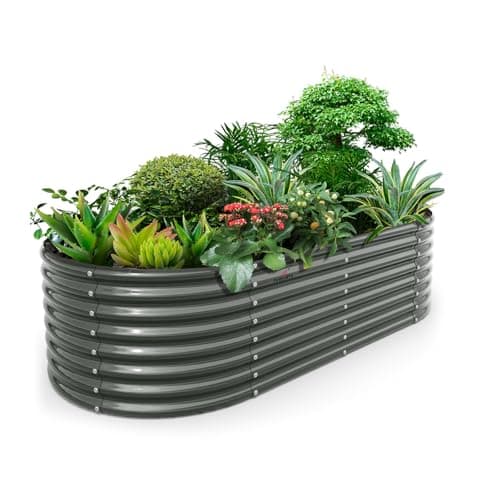 Top pickAnleolife 8 x 4 ft Metal Raised Garden BedUp to 24 in deep, 22-gauge corrugated steel | Deep beds for root crops | 8.8 | $148.85 - View on Amazon |
| 2 | 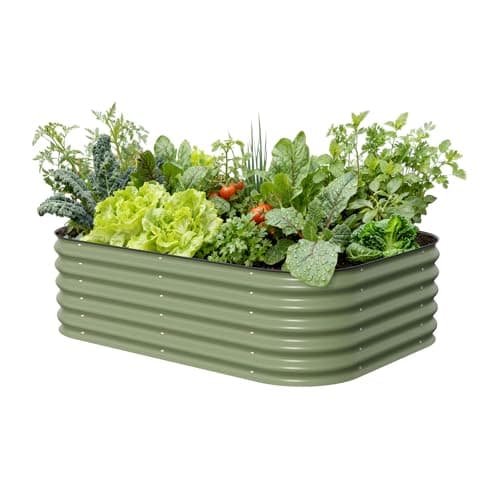 Vego Garden 17" Modular Metal Raised Bed17 in deep, modular Aluzinc steel panels | Most first gardens | 9.2 | $129.15 - View on Amazon |
| 3 | 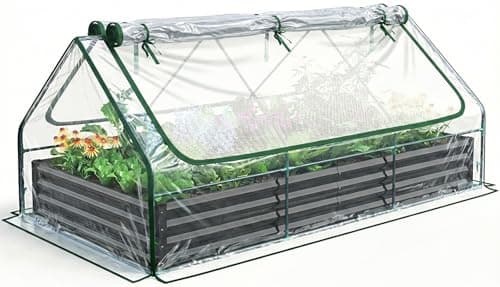 Quictent Galvanized Raised Bed with CoverMetal bed with hooped mesh and cover | Pest and frost protection | 8.0 | $99.99 - View on Amazon |
| 4 | 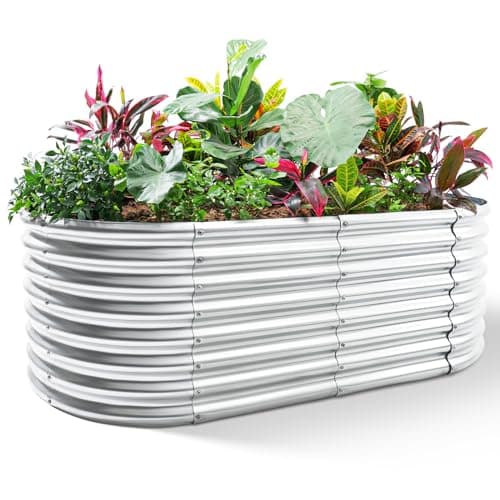 Land Guard Galvanized Raised Garden BedGalvanized steel, large footprints, budget price | Most growing area per dollar | 8.2 | $63.99 - View on Amazon |
| 5 | 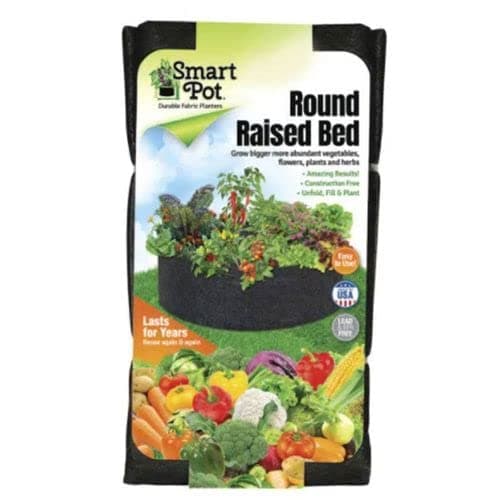 Smart Pot Round Raised Bed, 100 Gallon50 in across, 12 in deep, about 13.5 sq ft | A whole bed's worth | 8.8 | $69.95 - View on Amazon |
#ad We may earn a commission - Price as of November 24, 2026
Scores are our own editorial judgment, formed from published specifications and independent sources. They are not aggregated customer ratings, and they are not the result of hands-on testing, which we do not currently do. See how we choose.
Soil temperature is the first decision, and it is free
Cucumber seed will not germinate in cold soil, and plants started indoors and set into cold soil do not grow well either. Extension's number is 70 degrees Fahrenheit at one inch deep before you direct-sow, which in much of the country is late May rather than the early-May date people assume.
A raised bed is already ahead here: the fill is above grade, exposed on all sides, and warms weeks before open ground. The frame material changes that a little -- a dark metal side warms its edges faster than a thick cedar board -- but the bigger levers cost nothing:
- Do not mulch early. Straw or compost mulch on cold soil keeps it cold. Extension's guidance is to wait until the soil is above 75 degrees before mulching a vine crop.
- Black plastic mulch pulls planting forward. Laid over prepared soil in spring it raises soil temperature; you cut slits and sow through it.
- Row covers raise air temperature around young plants and keep early pests off -- but they have to come off at flowering. More on that below, because it is the mistake that costs people a crop.
- Measure, do not guess. A soil thermometer is a few dollars and settles the argument. Our soil test kit roundup covers the cheap analyzers that read temperature along with pH.
Water is the reason depth matters
Cucumbers have a long taproot and branching surface roots, which lets them find moisture in dry weather -- but Extension still classes vine crops as heavy water feeders needing roughly an inch a week, and notes that plants trained vertically up a trellis may need water more often than sprawling ones. Vertical growing is a yield decision that comes with a watering obligation.
| Usable depth after settling | How it behaves in a hot week | Verdict |
|---|---|---|
| 8 to 10 in | Dries to the bottom in two hot days; wilting by afternoon | Workable only with drip and daily attention |
| 12 in | A day and a half of buffer in summer heat | The practical floor |
| 17 in | Several days of buffer; forgiving of a weekend away | The comfortable choice |
| 24 in | Very forgiving, but you are buying a lot of fill | Good if you were filling deep anyway |
Two watering details from the same Extension guidance are worth more than any frame upgrade. Soak the soil thoroughly rather than sprinkling, and water the soil rather than the plant -- a drip line, a soaker hose or a careful hand watering at the base, so the leaves stay dry. Wet cucumber foliage is how the fungal problems start. Drip irrigation for raised beds covers the kit, and how often to water raised beds covers the schedule.
Spacing: what a cucumber row actually needs
This is where bed size turns into plant count, and where most first gardens overplant by a factor of three. The published spacing is not a suggestion; sprawling vines want two to three feet of floor on either side of the row, and a hill of three or four seeds wants five to six feet to its neighbor.
- Sow half an inch deep, vining types about two inches apart in the row.
- Thin to 8 to 12 inches apart once the seedlings are up. This is the step people skip, and crowded cucumbers are small cucumbers.
- Vining types sprawl two to three feet each side of the row unless you grow them up.
- Bush types are the small-bed answer -- very short vines, which can go in rows or hills only two to three feet apart.
- A three- to four-foot trellis lets you space rows more closely and produces straighter fruit, which is the strongest argument for growing cucumbers vertically in a raised bed.
Run those numbers against an 8 x 4 ft bed and you get a realistic plan: one row of vining cucumbers along the back, trained up a trellis on the long side, thinned to a foot apart -- about eight plants, which is more cucumbers than most households can eat -- with the front half of the bed free for something low that does not mind the afternoon shade the vines will throw. Try to fit two sprawling rows in the same bed and you get mildew.
The trellis changes which bed you want
Growing up rather than out roughly doubles what a small bed produces, and cucumbers are among the easiest crops to train because they grip with tendrils and need no tying. The catch is structural: a vine in full leaf is a sail, and a trellis pushed into loose bed fill leans and then falls, usually with the crop attached.
| Bed type | How a trellis attaches | Verdict |
|---|---|---|
| Rigid metal, long sides | Bolt or clamp uprights to the steel side | Best -- the side does the work |
| Modular metal panels | Clamp to a panel seam or set posts in the ground below | Good, with a little planning |
| Cedar or composite boards | Screw uprights straight to the board | Best for DIY -- easiest of all to fix to |
| Bed with integrated hoops | Use the hoop frame; it is already anchored | Good for low tunnels, limited height for vines |
| Fabric bed | Nothing to attach to; posts must go in the ground | Weakest option for a tall trellis |
If you would rather buy a bed with the frame already built in than bolt one on, raised beds with a trellis is the roundup for that, and it is the page to read next if vertical growing is the main reason you are buying a bed at all.
What to fill a cucumber bed with
Cucumbers want a soil pH between 6.0 and 6.5, moisture-retentive but well-drained, improved with well-rotted manure or compost in spring or fall. Two cautions come with that from the same guidance: never fresh manure, which can carry harmful bacteria and bring weed seed, and never a weed-and-feed type fertilizer, which contains herbicide that will kill the crop.
In practice that means the standard bed mix this site recommends everywhere works here without modification -- roughly half bulk topsoil or a bagged bed mix, a third to a half compost, and enough coarse material to keep it open. Best raised bed soil covers the bagged options and how to fill a raised garden bed covers the proportions and what a bed of each size costs to fill.
- 1
Fill deep and let it settle before sowing
Fill in early spring, water it in, top it up. A bed filled flush the day you sow is an inch or two down by June.
- 2
Work compost into the top eight inches
That is where the surface roots run. Finished compost, not fresh manure -- and if your own bin is lumpy, screen it first rather than burying half-rotted material under a seed row.
- 3
Check the soil temperature, not the calendar
Seventy degrees Fahrenheit at one inch deep. Earlier than that, you are feeding seed to the soil.
- 4
Lay the watering before the plants are big
A soaker or drip line down the row is five minutes' work in May and impossible in July without treading on roots.
- 5
Mulch when the soil is above 75 degrees
Straw or compost then holds the moisture an inch-a-week crop needs. Earlier, it holds the cold.
What goes wrong, and which of it the bed can fix
Worth separating, because people blame beds for things a bed cannot cause.
- First flowers drop and no fruit sets. Normal. The first blossoms on a vine are male; the female flowers, with a small swelling at the base, open later.
- Poor fruit set later on is usually a pollination shortfall -- cold, rain or cloudy weather suppresses bee activity. A cover left on through flowering does the same thing on purpose.
- Bitter fruit comes from the variety and growing stress, concentrated near the skin and at the blossom end. Some varieties are bred non-bitter, and bitter ones also attract more cucumber beetles.
- Mildew on the leaves follows wet foliage and crowded planting. Both are fixable with spacing, vertical growing and watering at the soil rather than overhead.
- Afternoon wilting in a shallow bed is the one problem the bed caused. Deeper fill and a drip line solve it; nothing else will.
If you are only buying one bed this year
Buy the longest bed you can reach across, not the biggest square you can afford. Cucumbers, pole beans, peas and indeterminate tomatoes all want a row with a trellis behind it, and a long narrow bed serves all four. A 4 x 4 square serves none of them well, and it is the shape most first-time buyers choose.
If you are still deciding on the bed itself rather than the crop, best raised bed kits is the general roundup, raised bed size guide works through dimensions, and best raised beds for tomatoes covers the other heavy feeder you will almost certainly plant beside them.
The picks in full
Top pick
Anleolife 8 x 4 ft Metal Raised Garden Bed
Anleolife
Thicker gauge steel and a deeper box than most kits, which is what stops a long bed bowing outward once it is full of wet soil.
Gauge is the specification nobody reads and everybody should. Steel gauge runs backwards -- a lower number is thicker metal -- and Anleolife's 22-gauge panels are noticeably more rigid than the thin budget beds that bulge in the middle after the first heavy watering.
That rigidity matters most on an 8-foot run, where soil pressure has the most leverage. The center brace on the long sizes is not decoration; leave it out and the sides will slowly bow.
Be realistic about the depth. A 24-inch bed at 8 x 4 ft holds around 64 cubic feet of fill. You do not have to buy 64 cubic feet of bagged mix -- the bottom third can be coarse organic material, which is what the hugelkultur and cheap-fill guides are for -- but you do have to plan it.
What works
- Heavier 22-gauge steel resists bowing on long runs
- 24 in depth suits potatoes, parsnips and long carrots
- Large growing area in one kit
- Center brace included on the long sizes
What does not
- Deep beds need a lot of fill, and fill is the real cost
- Galvanized rather than Aluzinc coating
- Long panels are awkward to handle solo
Skip it if: your budget is tight. The extra depth is real, but it also means roughly twice the soil of a 12-inch bed, and soil is the bigger bill.
| Material | 22-gauge corrugated galvanized steel |
|---|---|
| Depth | Sold in several heights, including 24 in |
| Footprint | 8 x 4 ft and other sizes |
| Assembly | Bolt-together panels with center support |
| Soil needed | About 64 cu ft for 8 x 4 ft at 24 in of fill |
Most first gardens
Vego Garden 17" Modular Metal Raised Bed
Vego Garden
The modular panel system is the reason to pay the premium: you can reshape the same bed into a different footprint next season without buying a second kit.
Vego is the brand most people meet first, and the modular panel system is the actual reason for that rather than the marketing. The kit arrives as flat corrugated panels plus corner pieces; you bolt them into whichever of the listed footprints suits your yard. If the 4 x 8 rectangle turns out to be wrong for your space, the same panels rebuild into a narrower or L-shaped bed next spring.
The steel matters more than the shape. Aluzinc is a zinc-aluminum-magnesium coating rather than plain galvanizing, and it is the finish you want on something that will sit in wet soil for years. That is the part of the price that buys durability rather than convenience.
Depth is the other thing to weigh. At 17 inches you can grow anything a beginner is likely to want, including carrots and potatoes, without hitting the bottom. The 32-inch version exists mainly so you can garden standing up, which is worth the extra soil cost if bending is the problem you are solving.
What works
- Panels unbolt and rebuild into a different shape
- Aluzinc coating is the better of the two steel finishes in this category
- 17 in is deep enough for carrots, potatoes and tomato roots
- Rolled safety edge along the top rail
What does not
- The most expensive metal bed of the ones we looked at
- Modularity is wasted if you build it once and leave it
- Steel warms fast in full afternoon sun in hot climates
Skip it if: you already know the exact shape you want and will never move it. You are paying for flexibility you would not use, and Vegega gives you the same steel for less.
| Material | Aluzinc-coated steel (zinc-aluminum-magnesium) |
|---|---|
| Depth | 17 in (a 32 in extra-tall version is also sold) |
| Shape | Modular panels, reconfigurable into several footprints |
| Assembly | Bolt-together panels, no cutting |
| Soil needed | About 32 cu ft for a 4 x 8 ft bed at 12 in of fill |
Pest and frost protection
Quictent Galvanized Raised Bed with Cover
Quictent
A bed and a crop cover in one box, which is the cheapest way to stop cabbage moths, birds and a light frost at the same time.
The cover is the product here. Cabbage white caterpillars can strip a row of kale in days, birds will take strawberries the moment they blush, and a late frost can end a first tomato planting. A hooped mesh over the bed handles all three.
Fitting the hoops to the bed from the start avoids the usual improvised arrangement of sticks and clothes pegs, and they fold back rather than having to come off entirely.
Remember to open or remove the cover once fruiting crops flower. Netting that keeps moths out also keeps pollinators out, and an unpollinated squash plant is a lot of leaf for no dinner.
What works
- Cover keeps cabbage moths and birds off brassicas and greens
- The clear cover buys a few weeks at each end of the season
- Hoops fold back for access
- Cheaper than buying a bed and a cover separately
What does not
- The bed itself is ordinary galvanized steel
- Covers need removing when crops flower and need pollinating
- Mesh is a wearing part in a windy yard
Skip it if: you already own a bed. A separate hoop-and-net kit over what you have costs far less than buying the whole thing again.
| Material | Galvanized steel bed with steel hoops |
|---|---|
| Cover | Mesh net plus a clear cover on most versions |
| Depth | Commonly 12 in |
| Assembly | Bolt-together bed, push-fit hoops |
| Soil needed | About 32 cu ft for 8 x 4 ft at 12 in |
Most growing area per dollar
Land Guard Galvanized Raised Garden Bed
Land Guard
The cheapest honest way to get a large steel bed, as long as you accept plain galvanizing instead of an Aluzinc coating.
If the goal is to grow the most food this year for the least money, area beats coating. A large cheap bed you can actually fill will feed you better than a small premium one, and Land Guard exists for exactly that calculation.
Understand what you are giving up. Plain galvanizing is a zinc coating; Aluzinc adds aluminum and magnesium and holds up considerably better at the soil line, which is where beds fail. Expect good years rather than decades.
The panels are thinner too, so use the supplied braces and do not skip the center support on the long sizes.
What works
- Lowest cost per square foot of growing area
- Large sizes available in one kit
- Simple assembly with basic tools
- Good way to trial a big bed before committing
What does not
- Plain galvanizing, not the longer-lived Aluzinc
- Thinner panels flex more when filled
- Edges deserve a careful check during assembly
Skip it if: you want the bed to outlive the mortgage. Plain galvanized steel is fine for years, not decades, especially where soil stays wet.
| Material | Galvanized steel |
|---|---|
| Depth | Commonly 12 in and 17 in |
| Footprint | Large rectangles including 8 x 4 ft |
| Assembly | Bolt-together panels |
| Soil needed | About 32 cu ft for 8 x 4 ft at 12 in |
A whole bed's worth
Smart Pot Round Raised Bed, 100 Gallon
Smart Pot
A fabric raised bed rather than a pot: wide enough to plant like a bed, cheap enough to buy two, and it folds flat in October.
This is the grow bag that behaves like a bed -- Smart Pot has also sold it as the Big Bag Bed. At roughly 50 inches across it gives you about 13.5 square feet of planting area -- the same growing area as a 4 x 4 ft frame -- in something that arrives folded in a flat parcel and needs no assembly at all.
Twelve inches of depth is the number that matters. That is enough for lettuce, beans, chard, bush cucumbers, peppers and determinate tomatoes, and it is shallow for carrots, parsnips and a serious potato crop. It is the same depth limit a shallow metal or vinyl bed has.
The cost is the fill. A bed-sized bag needs a bed-sized volume of potting mix, so the bag being inexpensive does not make the project inexpensive. Work out the mix cost first, using the soil calculator on this site, because that number rather than the bag decides whether this is the cheap option for you.
What works
- Gives you bed-scale planting area without a frame to assemble
- Twelve inches of depth is enough for most vegetables, including determinate tomatoes
- Folds flat for winter storage, which no rigid bed does
- Enclosed bottom means you can put it on a patio, gravel or a driveway
What does not
- Needs a full 13.5 sq ft of potting mix, which is the real cost of the format
- Dries out faster than a soil-filled frame of the same depth
- Fabric is a consumable -- plan on replacing it after a few seasons
Skip it if: you want the garden to look built. This is a black fabric circle sitting on the ground, and planting around it does not disguise that.
| Type | Round fabric raised bed |
|---|---|
| Capacity | 100 gal |
| Footprint | About 50 in across |
| Depth | 12 in |
| Growing area | About 13.5 sq ft |
| Base | Enclosed fabric bottom |
| Service life | Manufacturer states 3 to 5 years outdoors |
Common questions
How deep should a raised bed be for cucumbers?
Twelve inches of fill after settling is the practical floor, and seventeen is comfortable. Depth matters less for root room than for water: cucumbers need around an inch of water a week and a shallow bed runs dry between waterings in summer heat, which shows up as afternoon wilting and small fruit.
How many cucumber plants fit in a 4 x 8 raised bed?
About eight, as a single row along one long side thinned to 8 to 12 inches apart and trained up a trellis. Sprawling vines want two to three feet of floor either side of the row, so two un-trellised rows in a 4 ft wide bed will crowd and mildew.
Do cucumbers need a trellis in a raised bed?
Not strictly, but it is the single best upgrade. Training vines up a three- to four-foot trellis lets you space rows more closely, keeps fruit straight and off the soil, and roughly doubles what a small bed yields. Trellised plants do need watering more often, and the frame must be anchored to the bed or set in the ground rather than pushed into loose fill.
When can I sow cucumbers in a raised bed?
Once the soil reaches at least 70 degrees Fahrenheit at one inch deep, which is usually several weeks after your last frost date. Cucumber seed will not germinate in cold soil and transplants set into cold soil sulk. A raised bed warms earlier than open ground, and black plastic mulch brings the date forward further.
Can I grow cucumbers in a fabric bed or grow bag?
Yes, and a 100-gallon fabric bed will carry two or three plants. The trade-offs are real: fabric dries out faster than a deep framed bed, which fights the inch-a-week water requirement, and there is nothing to bolt a trellis to, so posts have to go into the ground beneath it.
Why are my cucumbers bitter?
Mostly variety and growing stress. The bitter compound concentrates near the skin and at the blossom end, and some varieties are bred to be non-bitter. Steady water helps; bitter varieties also attract more cucumber beetles, which is a second reason to choose a non-bitter one.
Sources
Factual claims on this page are backed by the published sources below, and product specifications are the manufacturers’ own. Where a figure is not published, we say so rather than estimating it.
- Growing cucumbers in home gardens - University of Minnesota Extension
- Raised bed gardens - University of Minnesota Extension
- Raised bed gardening, FS 270 - Oregon State University Extension
- Raised garden bed dimensions, C1027-4 - University of Georgia Extension
- Soil health in raised beds - Penn State Extension
- Drip irrigation - University of Maryland Extension