Step 3 - Seed Starting
The Best Seed Starting Setup Under $100
This is the budget at which seed starting stops being a windowsill gamble and becomes something that works every year.
Janet H. - the hands-on owner behind Janet Media Group.
Published
This page contains affiliate links. If you buy through them we may earn a commission at no cost to you, and it never decides what we recommend. How this site is funded.
The short version. If you buy one thing under a hundred dollars, buy light: Barrina T5 linkable LED strips fix the problem that ruins most home seedlings and nothing else on this list substitutes for them. Add a VIVOSUN heat mat if you want to grow peppers or tomatoes from seed, a bag of Espoma Organic seed starter mix, and a set of Bootstrap Farmer 50-cell inserts, and the whole setup still comes in under the line with change. The budget pick is the Burpee self-watering kit -- tray, dome and watering mat in one box, which is the cheapest complete starting point for someone who has never sown a seed indoors.
Every pick here is confirmed under $100 individually by our price layer, and the four-item core setup above comes in under $100 together at the prices our pipeline last read, with the check date shown under each buy control. If a listing loses its offer the number disappears rather than going stale.
How we chose
- Light first, always. Weak light is the cause of leggy seedlings, and no tray, dome or mix compensates for it.
- Reusable beats disposable at this budget. A hundred dollars spent on things that last five seasons is a different purchase from a hundred dollars of peat pellets.
- Bottom heat only where it helps. Warm-season crops need it; cool-season crops are indifferent or worse for it. We say which.
- It has to fit a standard flat. Everything here works with a 1020 tray, which keeps every future purchase compatible.
- A live price, now. Each pick is under $100 at the price read from our price layer, with the date shown.
Quick picks
| # | Product | Best for | Score | Price |
|---|---|---|---|---|
| 1 | 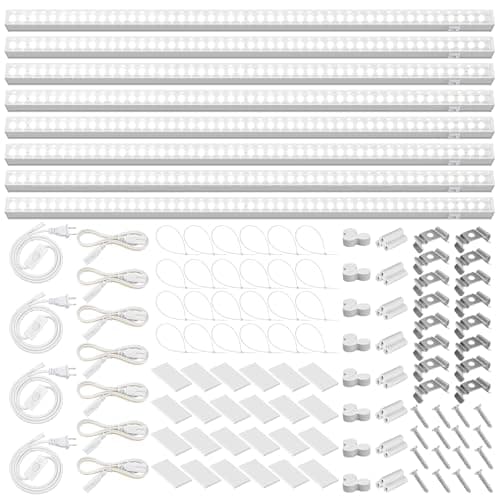 Top pickBarrina T5 Full-Spectrum LED Grow LightsLinkable LED strips, full spectrum | Stopping leggy seedlings | 9.0 | $60.99 - View on Amazon |
| 2 | 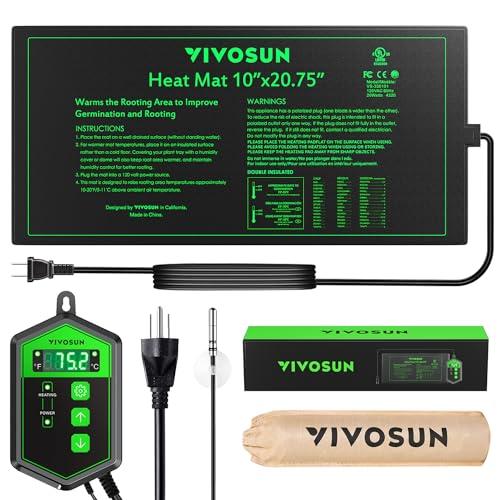 VIVOSUN Seedling Heat MatWaterproof mat sized for 1020 trays | Peppers, tomatoes and slow germinators | 8.8 | $25.01 - View on Amazon |
| 3 | 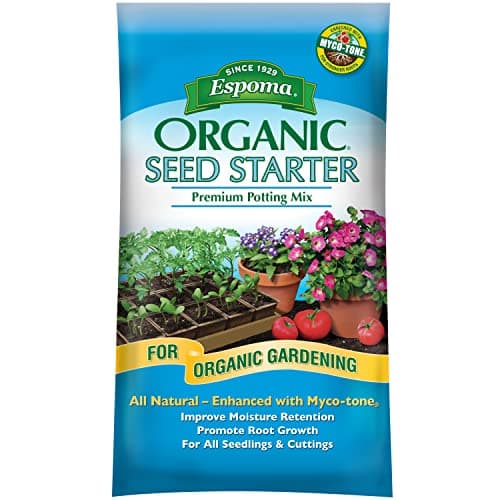 Espoma Organic Seed Starter MixFine, low-nutrient starting medium | Most seed trays | 8.9 | $20.99 - View on Amazon |
| 4 | 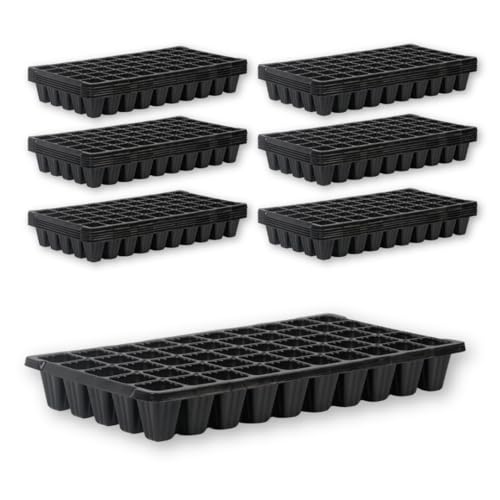 Bootstrap Farmer 50-Cell Seed Starting Trays, 5 Pack50 cells per 1020 insert, 5 inserts per order | The default insert for a home sowing | 9.0 | $37.99 - View on Amazon |
| 5 | 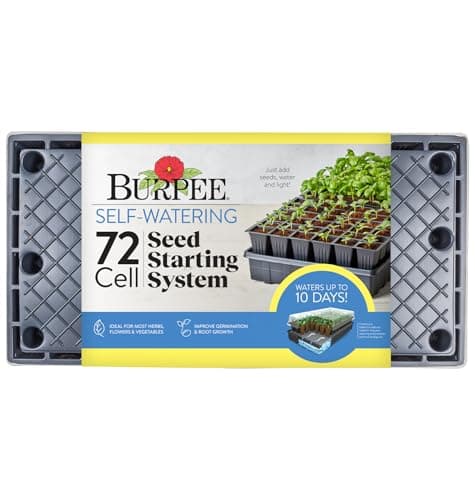 Burpee Self-Watering Seed Starting KitCell tray, dome and watering mat in one box | First-time seed starting | 8.4 | $19.97 - View on Amazon |
| 6 | 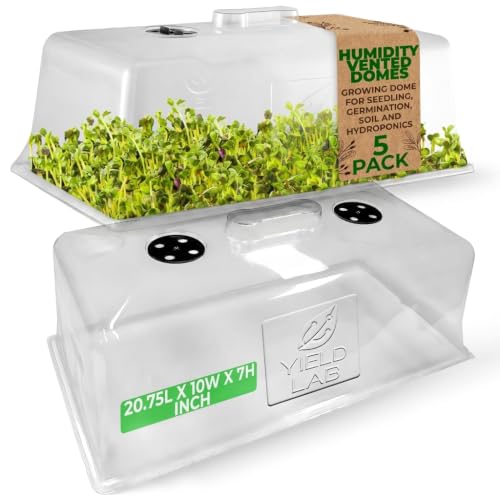 Yield Lab 7 in Vented Humidity Domes, 5 Pack7 in tall, adjustable vents, fits 1020 flats | Germination on a cold windowsill | 8.2 | $39.95 - View on Amazon |
#ad We may earn a commission - Price as of November 24, 2026
Scores are our own editorial judgment, formed from published specifications and independent sources. They are not aggregated customer ratings, and they are not the result of hands-on testing, which we do not currently do. See how we choose.
Where a hundred dollars should go
| Priority | What it fixes | Skip it if |
|---|---|---|
| Lights | Leggy, pale, floppy seedlings -- the number one failure | You have a genuinely bright greenhouse and sow in season |
| Mix | Poor germination and damping off from garden soil | Never -- do not sow into garden soil or potting compost |
| Cell inserts and a flat | Root disturbance at transplanting | You only ever sow direct outdoors |
| Heat mat | Slow or failed germination of warm-season crops | You only grow lettuce, brassicas, peas and onions |
| Humidity dome | Drying out before emergence on a dry windowsill | You water carefully and sow under lights with a fan |
The order in that table is deliberate. People commonly buy the dome and the kit first because they are cheap and look like the answer, then wonder why the seedlings stretch. Light is the expensive item and it is the one that changes the result.
What the budget does not need to cover
Two things get bought at this budget that are not necessary, and skipping them is what makes the rest fit under a hundred dollars.
- A heated propagator. A plain flat on a heat mat does the same thing for less, and the mat is reusable with any tray you buy later.
- Peat pellets, year after year. They work, and they are convenient, but they are a recurring cost. Reusable cell inserts plus a bag of mix is cheaper from the second season onwards -- and avoids the peat question. Peat vs coco coir covers the medium choice.
- A dedicated shelf unit, at first. Any table under a window with the strips hung above it works for a first year. Seed starting racks is the upgrade for when you outgrow it.
- Fertiliser, before the true leaves. Seed starting mix is deliberately low in nutrients and seedlings do not need feeding until they have their first true leaves.
The routine the setup supports
- 1
Sow into moist mix, in cells, labelled
Fill, tap down, sow at the packet depth, and water from below by standing the flat in water for a few minutes.
- 2
Dome and heat only until emergence
Warm-season crops on the mat under the dome. The moment the first seedlings break the surface, the dome comes off.
- 3
Lights down close, timer on
A few inches above the leaves, around fourteen to sixteen hours a day. Raise the light as they grow.
- 4
Off the heat, into cooler air
After germination, warm-season seedlings grow sturdier a little cooler. Heat plus weak light is what makes them stretch.
- 5
Feed weakly once the true leaves appear
Not before. A dilute feed every week or two is enough until they go out.
- 6
Harden off before planting
A week or so of increasing exposure. How to harden off seedlings has the schedule.
The picks in full
Top pick
Barrina T5 Full-Spectrum LED Grow Lights
Barrina
The fix for the most common seed-starting failure. A windowsill grows pale, stretched seedlings; a strip light 3 inches above them does not.
A seedling stretches toward light. On a windowsill in February the light comes from one side and there is not enough of it, so the stem elongates, the plant gets pale and floppy, and it never fully recovers. That is the single most common seed-starting failure and it is entirely a light problem.
LED strips fix it because they can sit 2 to 4 inches above the leaves without cooking them. Distance is what matters more than wattage: the same light at 18 inches does very little.
Run them about 14 to 16 hours a day on a timer and raise them as the seedlings grow. Linkable strips mean a whole shelving rack runs from one outlet.
What works
- Directly fixes stretched, leggy seedlings
- Linkable, so one outlet runs a whole shelf
- Very low heat, so it can sit close to the leaves
- Cheap to run
What does not
- Needs to be within a few inches of the seedlings to work
- Height must be adjusted as plants grow
- White light is unflattering in a living space
Skip it if: you have a genuinely bright greenhouse and are sowing in season. Then you are buying light you already have.
| Type | Linkable LED strip lights |
|---|---|
| Spectrum | Full spectrum, commonly 5000K white |
| Lengths | 1 ft, 2 ft and 4 ft strips |
| Mounting | Clips, hanging kit or double-sided tape |
| Linking | Strips daisy-chain from one outlet |
Peppers, tomatoes and slow germinators
VIVOSUN Seedling Heat Mat
VIVOSUN
Germination is driven by soil temperature, not air temperature -- and a heat mat is the difference between peppers in ten days and peppers in four weeks.
Seeds respond to the temperature of the medium they are in, not the room. Peppers and eggplants want soil in the 80s Fahrenheit to germinate briskly, and a 68-degree house gives them soil in the low 60s -- which is why they sit there for weeks.
A mat under the tray fixes that. Pair it with a thermostat probe if you can: without one the mat simply runs at its own output, which can be too warm for some seeds and is impossible to tune.
Take the tray off the mat once germination is done. Bottom heat after that encourages soft, stretched growth, and it dries the tray faster than you will remember to water it.
What works
- Dramatically faster germination for warm-season crops
- Waterproof, so spills are not a hazard
- Sized to standard trays
- Cheap to run
What does not
- Without a thermostat it just runs warm, with no target
- Dries trays out faster -- watering needs watching
- Should come off once seedlings are up
Skip it if: you only start cool-season crops. Lettuce, brassicas and peas germinate fine at room temperature and can actually be inhibited by heat.
| Type | Seedling heat mat |
|---|---|
| Sizing | Made to fit one or two standard 1020 trays |
| Construction | Waterproof |
| Thermostat | Sold separately on most models |
Most seed trays
Espoma Organic Seed Starter Mix
Espoma
A proper seed-starting medium: fine, light and deliberately low in nutrients, which is what germinating seeds need.
A seed carries its own food supply. That is why seed starting mix is low in nutrients on purpose -- the seedling does not need feeding until its first true leaves, and a rich mix at that stage encourages soft growth and fungal problems rather than roots.
Texture is the other half. A fine, uniform medium makes contact with small seeds all the way around, which is what triggers reliable germination. Chunky potting soil leaves air gaps and gives patchy results.
Plan the handover. Once true leaves appear, either start a weak liquid feed or pot on into something richer, or growth stalls.
What works
- Fine texture makes good contact with small seeds
- Low nutrients, which is correct for germination
- Drains freely, reducing damping-off
- Widely available
What does not
- Seedlings need feeding or potting on within weeks
- Small bags for the volume trays consume
- Light enough to dry out fast
Skip it if: you are potting on. Seedlings past their first true leaves want a richer mix than this.
| Type | Seed starting mix |
|---|---|
| Texture | Fine, uniform, low density |
| Nutrients | Deliberately low |
| Bag size | Commonly 8 and 16 qt |
The default insert for a home sowing
Bootstrap Farmer 50-Cell Seed Starting Trays, 5 Pack
Bootstrap Farmer
The cell count that suits a home garden: big enough cells to hold a tomato until potting on, few enough trays that you are not committing to a market garden.
Cell count is the decision people get wrong first. A 72 or 128 cell insert looks efficient and produces seedlings that need potting on almost immediately, because each cell holds a thimble of mix. A 50 cell insert holds roughly half as much again per cell, which buys a week or two of growing before the roots hit the wall.
For a home garden that is usually the right trade. You are not running a transplant business, you have limited light, and every extra day a seedling can sit in its first container is a day you do not have to find shelf space for a bigger pot.
The extra-strength plastic matters more than it sounds. The common failure of a cheap insert is that it flexes when you lift it full, which tears roots and cracks the mix away from the cell wall. These hold their shape.
What works
- Fifty cells is the sweet spot for a home garden -- a full flat is still a sensible number of plants
- Extra-strength plastic survives being carried full and wet, which thin inserts do not
- Drops straight into any standard 1020 flat, including the ones you already own
- Cells are deep enough that a tomato is not root-bound in a week
What does not
- Costs several times what a disposable insert costs, and only pays back if you reuse it
- Fifty identical cells push you toward sowing a whole variety at once
- Still needs a flat underneath -- inserts are not watertight on their own
- Rigid plastic means the cells do not squeeze to pop a seedling out; you push from below
Skip it if: you sow a handful of each crop. Fifty cells of one variety is a lot of lettuce.
| Cells per insert | 50 |
|---|---|
| Pack size | 5 inserts |
| Fits | Standard 1020 flat |
| Material | Extra-strength injection-molded plastic |
| Reuse | Sold as a multi-season tray rather than disposable |
First-time seed starting
Burpee Self-Watering Seed Starting Kit
Burpee
Everything in one box with a capillary mat underneath, which removes the single most common beginner failure: uneven watering.
Seeds fail for two reasons in a beginner's first tray: they dried out, or they were drowned. A capillary mat drawing water from a reservoir underneath removes both, because the medium takes what it needs and no more.
The dome is the other useful piece. It holds humidity during germination, which matters most for small seeds sown shallowly.
Take the dome off as soon as the first seedlings are up. Left on, it holds the still, damp air that damping-off fungus needs, and a tray can collapse overnight.
What works
- Capillary watering keeps moisture even without daily attention
- Humidity dome improves germination rates
- Nothing else to buy to get started
- Reusable for several seasons
What does not
- Cells are small, so seedlings need potting on quickly
- Kit price is high relative to buying components
- Dome must come off promptly once seeds germinate
Skip it if: you already have trays. Refill pellets and a dome cost a fraction of a new kit.
| Type | Self-watering seed starting kit |
|---|---|
| Cells | Sold in several counts, commonly 36 and 72 |
| Watering | Capillary mat and reservoir |
| Included | Tray, cells, dome, growing medium |
Germination on a cold windowsill
Yield Lab 7 in Vented Humidity Domes, 5 Pack
Yield Lab
Tall enough that seedlings do not touch the lid before you remove it, with vents that let you wean them off the humidity instead of yanking it away.
A dome does one job: it keeps the surface of the mix from drying out between the day you sow and the day the seedlings appear. That is the window where a dry quarter-inch of mix kills a germinating seed, and it is why domes exist.
Everything after that window is a risk. Extension guidance on seedling disease is consistent that still, saturated air is what damping off needs, so the dome comes off -- or at least the vents come open -- as soon as the majority of the tray is up.
Height is the specification worth paying attention to. A two-inch dome is touching the first true leaves within a week, which both damages them and traps moisture against the foliage. Seven inches gives you time to get the lid off on your schedule rather than the seedlings'.
What works
- Seven inches of headroom, so seedlings do not press against the lid within days
- Adjustable vents let you reduce the humidity gradually rather than all at once
- Clear plastic means you can see germination without lifting the lid and losing the humidity
- Five per order covers a full shelf of trays
What does not
- A dome left on too long is the single most common cause of damping off
- Thin plastic cracks if you stand it on a corner or stack it badly
- Vents are crude sliders, not a calibrated control
- Taller domes do not stack well for storage out of season
Skip it if: you already bottom water and your house is humid. A dome solves a drying-out problem you may not have.
| Height | 7 in |
|---|---|
| Quantity | 5 domes |
| Vents | Adjustable, on the lid |
| Fits | Standard 10 x 20 in flats |
| Material | Clear plastic |
Common questions
What do you need to start seeds indoors?
Light, a fine low-nutrient seed starting mix, cells or a tray with drainage, and bottom heat for warm-season crops. A humidity dome helps until emergence. Everything else -- heated propagators, specialist feeds, dedicated furniture -- is optional at the start.
Can you start seeds under $100?
Comfortably. Linkable LED strips, a heat mat, a bag of seed starting mix and a set of reusable cell inserts come in under a hundred dollars together, and all of it lasts several seasons. The single-biggest share of that budget should go on the lights.
Do I need grow lights, or will a windowsill do?
A bright south-facing windowsill will raise cool-season seedlings in late spring. It will not raise sturdy tomatoes or peppers sown in February, because early-spring window light is weak and one-directional -- that is the cause of the stretched, leaning seedlings people blame on temperature.
Is a heat mat necessary for starting seeds?
Only for warm-season crops. Peppers, aubergines, tomatoes and basil germinate slowly or unevenly in cold mix. Lettuce, brassicas, peas and onions germinate fine at room temperature, and some are actually inhibited by bottom heat.
Are peat pellet kits worth buying?
They are convenient and they work, but they are a recurring cost -- you buy them again every year. Reusable cell inserts plus a bag of mix cost about the same the first season and far less afterwards, and they avoid the peat sustainability question entirely.
Sources
Factual claims on this page are backed by the published sources below, and product specifications are the manufacturers’ own. Where a figure is not published, we say so rather than estimating it.