Step 3 - Seed Starting
Seed Starting Mix vs Potting Soil
Two products that look identical in the bag and behave completely differently in a seed cell. Texture and fertility are the whole difference.
Janet H. - the hands-on owner behind Janet Media Group.
Published
This page contains affiliate links. If you buy through them we may earn a commission at no cost to you, and it never decides what we recommend. How this site is funded.
Use seed starting mix in seed trays and cells, and potting soil once seedlings are transplanted into larger pots. Seed starting mix is a fine, sieved, deliberately low-nutrient medium built for consistent moisture around a small seed; potting soil is coarser and carries fertilizer that a germinating seed does not need and can be harmed by. If you only want to buy one bag, buy a good potting mix and sieve it -- but never use bagged garden soil or raised bed mix for either job.
The difference, in one table
| Seed starting mix | Potting soil / potting mix | |
|---|---|---|
| Texture | Fine and sieved -- no lumps or bark | Coarser, often visible bark and perlite |
| Fertility | Little or none, by design | Fertilized, often with a slow-release charge |
| Water behavior | Holds even moisture around a tiny seed | Drains faster, dries unevenly in small cells |
| Main ingredients | Peat or coir, fine vermiculite, perlite | Peat or coir, bark, perlite, compost, fertilizer |
| Right for | Seed trays, cells, plug trays | Pots from about 3 in upward, transplants, containers |
| Cost per volume | Higher | Lower |
Why fine texture matters so much in a cell
A seed needs continuous contact with moist material on all sides. In a one-inch cell, a lump of bark or a coarse chunk of perlite is a large void -- the root tip hits an air pocket, dries, and the seedling stalls or dies. Fine, uniform mix gives even capillary action throughout the cell, which is why professional plug mixes are sieved finer than anything sold as potting soil.
The same texture point explains why seed mix behaves badly in a big pot. Fine material in volume compacts and holds too much water, which is exactly what you do not want around an established root system. The two products are not better and worse; they are matched to different container sizes.
Why low fertility is a feature, not a shortcut
A seed carries its own food. Until the first true leaves appear, it needs water, warmth and air -- not nutrients. Fertilizer salts in the mix at that stage can scorch the emerging root and, more commonly, push soft, fast, leggy top growth before the root system is ready to support it. Starting mix is unfed on purpose so the seedling builds roots first.
That is also the point at which you have to do something about it. Once the first true leaves are open, a seedling in an unfed mix is running out, and the fix is either a dilute liquid feed -- quarter to half the label rate, weekly -- or potting on into a fertilized potting mix. Forgetting that step is a far more common cause of stalled seedlings than the mix choice ever is.
Quick picks
| # | Product | Best for | Score | Price |
|---|---|---|---|---|
| 1 | 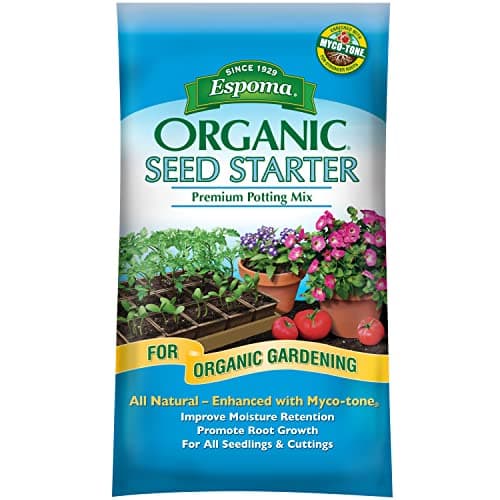 Top pickEspoma Organic Seed Starter MixFine, low-nutrient starting medium | Most seed trays | 8.9 | $20.84 - View on Amazon |
| 2 | 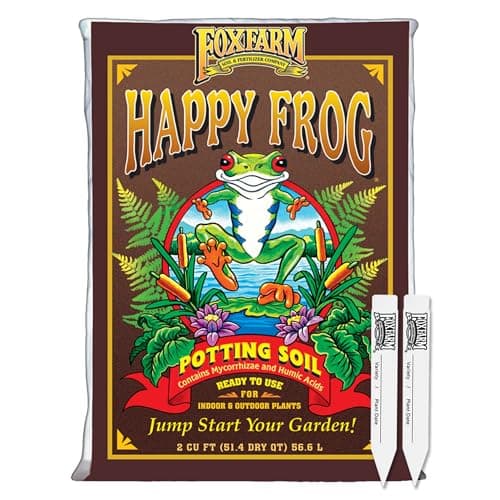 FoxFarm Happy Frog Potting SoilLight, biologically inoculated potting soil | Containers and intensive plantings | 8.5 | $38.94 - View on Amazon |
| 3 | 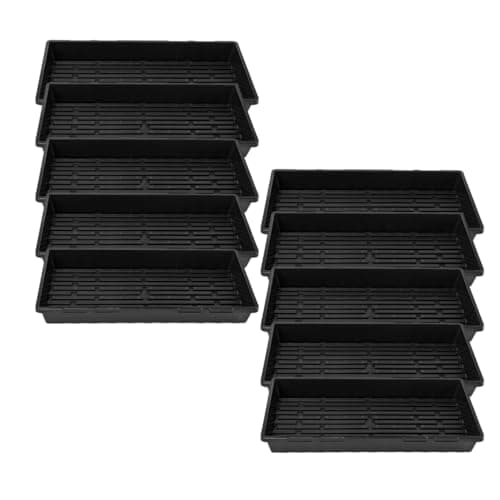 Bootstrap Farmer 1020 Seed TraysHeavy-gauge 1020 trays, reusable for years | Trays that last more than one season | 8.5 | $66.49 - View on Amazon |
#ad We may earn a commission - Price as of October 11, 2026
Scores are our own editorial judgment, formed from published specifications and independent sources. They are not aggregated customer ratings, and they are not the result of hands-on testing, which we do not currently do. See how we choose.
When potting mix is genuinely fine for seeds
- Large seeds in large cells. Beans, peas, squash, sunflowers and corn are big enough that texture voids do not matter and vigorous enough that a little fertilizer is harmless.
- Sieved potting mix. Push a bag of good potting mix through a half-inch garden sieve, discard the lumps, and you have something close to a starting mix for less money.
- A light, fine potting mix. Some biologically inoculated potting mixes are fine-textured enough to sow into directly, which is why one appears in our picks above.
- Potting on. Once seedlings are moved to 3-inch pots or bigger, potting mix is the correct product and seed mix is the wrong one.
- Never the reverse. Do not use bagged garden soil or raised bed mix in a tray. Both are too heavy, too coarse, not sterile and will crust over the surface.
The sterility question
Bagged seed starting mix is normally produced to be essentially free of weed seeds and the pathogens that cause damping off -- the fungal collapse that takes a tray of healthy seedlings overnight. Potting soil containing compost is biologically active, which is beneficial for established plants and a modest added risk for germinating seeds in a humid covered tray.
In practice damping off is driven more by conditions than by the bag: too wet, too warm, too still, too crowded. Good airflow, bottom watering, and taking the dome off as soon as germination is underway matter more than which mix you bought. Why are my seedlings leggy? covers the related failures and how to tell them apart.
What about coir, and what about peat
Both products are built on the same two possible bases, and the choice is the same either way: peat is the traditional base and is predictable, coir is the renewable alternative and behaves slightly differently on water and on feeding. It is a real decision with real trade-offs, and we give it its own page in peat vs coco coir rather than compressing it here.
Choose seed starting mix if
- You are sowing into cells, plug trays or anything smaller than about 3 inches.
- The seeds are small -- lettuce, brassicas, tomatoes, peppers, most flowers.
- You have lost a tray to damping off before.
- You want germination rates you can judge the seed by, not the medium.
Choose potting soil if
- You are potting on seedlings that already have true leaves.
- You are sowing large, vigorous seeds directly into 3-inch pots or bigger.
- You are filling containers, window boxes or elevated planters.
- You are willing to sieve it and want to buy one bag rather than two.
Either way the tray matters more than people expect. Thin single-use trays warp, hold water unevenly and crack, and uneven watering across a tray is the thing that makes mix choice look like the culprit. The best seed starting kits covers trays, domes and the light, which between them decide more of the outcome than the bag does.
The picks in full
Top pick
Espoma Organic Seed Starter Mix
Espoma
A proper seed-starting medium: fine, light and deliberately low in nutrients, which is what germinating seeds need.
A seed carries its own food supply. That is why seed starting mix is low in nutrients on purpose -- the seedling does not need feeding until its first true leaves, and a rich mix at that stage encourages soft growth and fungal problems rather than roots.
Texture is the other half. A fine, uniform medium makes contact with small seeds all the way around, which is what triggers reliable germination. Chunky potting soil leaves air gaps and gives patchy results.
Plan the handover. Once true leaves appear, either start a weak liquid feed or pot on into something richer, or growth stalls.
What works
- Fine texture makes good contact with small seeds
- Low nutrients, which is correct for germination
- Drains freely, reducing damping-off
- Widely available
What does not
- Seedlings need feeding or potting on within weeks
- Small bags for the volume trays consume
- Light enough to dry out fast
Skip it if: you are potting on. Seedlings past their first true leaves want a richer mix than this.
| Type | Seed starting mix |
|---|---|
| Texture | Fine, uniform, low density |
| Nutrients | Deliberately low |
| Bag size | Commonly 8 and 16 qt |
Containers and intensive plantings
FoxFarm Happy Frog Potting Soil
FoxFarm
Excellent in containers and as the top layer of an intensively planted bed -- but it is potting soil, so blend it rather than filling with it.
Happy Frog earns its reputation in containers, where a light, fast-draining, biologically active mix is exactly right. In a raised bed it needs a job description.
The sensible use is blending: mix it with compost and a heavier component for the top layer of an intensively planted bed, particularly where you are growing a lot in a small area. Used neat across a whole bed it is both costly and too light to hold structure.
Anything labeled potting soil is designed for the physics of a pot -- limited volume, frequent watering, free drainage from the base. A bed is a different environment, and the mix should match it.
What works
- Strong early growth and quick root establishment
- Stays loose rather than compacting in containers
- Inoculated with beneficial microbes
- Reliable, consistent product
What does not
- It is potting soil, not bed fill
- Expensive per cubic foot at bed scale
- Needs blending with compost or topsoil in a bed
Skip it if: you are filling a bed. Used neat in a large bed it is both expensive and too light, and it will slump.
| Type | Potting soil |
|---|---|
| Listed inputs | Aged forest products, bat guano, earthworm castings, beneficial microbes |
| Texture | Light and fast-draining |
| Bag size | Commonly 1 and 2 cu ft |
Trays that last more than one season
Bootstrap Farmer 1020 Seed Trays
Bootstrap Farmer
Thick enough to pick up full without folding, which is the entire complaint about cheap trays and the reason these cost more.
Anyone who has carried a cheap 1020 tray full of wet compost knows the failure mode: it folds in the middle and the seedlings go on the floor. Heavy-gauge trays do not do that.
The 1020 name is a standard footprint, roughly 10 by 20 inches, and it is worth sticking to. Every humidity dome, heat mat, cell insert and shelf is built around it.
Buy a couple of solid, undrained trays alongside the drained ones. A solid tray underneath lets you water from below, which is gentler on small seedlings than watering from above and keeps the leaves dry.
What works
- Can be lifted full of wet medium without collapsing
- Lasts many seasons rather than one
- Standard 1020 footprint fits every dome and mat
- Solid trays double as reservoirs for bottom watering
What does not
- Several times the price of disposable trays
- Only worth it if you actually reuse them
- Heavier to store in quantity
Skip it if: you start one tray a year. The economics only work once you are reusing them season after season.
| Type | 1020 standard seedling trays |
|---|---|
| Gauge | Heavy-duty, substantially thicker than standard |
| Drainage | Drain-hole and solid versions sold |
| Compatibility | Fits standard domes, mats and inserts |
Common questions
Can you use potting soil instead of seed starting mix?
For large seeds in large cells, yes. For small seeds in small cells it works poorly, because the coarse texture leaves air voids around the seed and the fertilizer in it pushes soft, leggy growth before roots are established. Sieving a good potting mix through a garden sieve gets you most of the way there.
What is the difference between seed starting mix and potting mix?
Texture and fertility. Seed starting mix is finely sieved and deliberately has little or no fertilizer, so it holds even moisture around a tiny seed and lets it build roots first. Potting mix is coarser and fed, which suits established roots in a pot of 3 inches or more.
Do seedlings need fertilizer in the mix?
Not to germinate -- the seed carries its own food. But once the first true leaves open, a seedling in an unfed starting mix is running out. Give a dilute liquid feed at a quarter to half the label rate weekly, or pot on into a fertilized potting mix.
Can I use raised bed soil or garden soil to start seeds?
No. Both are too heavy and too coarse for a cell, they crust over at the surface so fine seedlings cannot break through, and neither is produced to be free of weed seeds or damping-off pathogens. This is the one place where buying the right bag genuinely matters.
Is seed starting mix worth the extra cost?
For small seeds, yes -- a single bag starts hundreds of seedlings and the difference in germination and early vigor is visible. For beans, peas, squash and other large seeds you can skip it and sow straight into potting mix without any real penalty.
Sources
Factual claims on this page are backed by the published sources below, and product specifications are the manufacturers’ own. Where a figure is not published, we say so rather than estimating it.