Step 3 - Seed Starting
Why Are My Seedlings Leggy?
Almost always because the light is too far away or too weak. Everything else on the internet about this is secondary.
Janet H. - the hands-on owner behind Janet Media Group.
Published
This page contains affiliate links. If you buy through them we may earn a commission at no cost to you, and it never decides what we recommend. How this site is funded.
Seedlings get leggy because they are not getting enough light, and they stretch toward what light there is. The fix is to move the light much closer -- a few inches above the leaves for an LED strip, raised as the plants grow -- or to add a light if you are relying on a windowsill. Warmth without enough light makes it worse, so if your seedlings are on a heat mat under a dim window, that combination is the cause.
What "leggy" actually means
A leggy seedling has a long, thin, pale stem between the soil and the first leaves, and it often leans or falls over. It is not a disease and it is not a nutrient problem. It is a plant spending its limited stored energy on reaching upward instead of thickening up, which is a sensible response to being in the dark and a disastrous one in a seed tray.
The stem that stretched will never thicken to what it should have been. That is why this is worth fixing immediately rather than hoping -- a week of stretching produces a plant that is permanently weaker at the base.
The causes, in order of how often they are the answer
| Cause | What you see | Fix |
|---|---|---|
| Light too far from the leaves | Even stretching across the whole tray | Lower the light to a few inches above the foliage; raise it as they grow |
| Windowsill only | Stretching, and all the seedlings leaning one way | Add a grow light. A bright window is a fraction of what a seedling wants |
| Light on too few hours | Slow, pale, stretched growth | Run 14 to 16 hours a day on a timer, with a dark period |
| Too warm for the light available | Fast, soft, floppy growth | Take them off the heat mat once germinated; cool and bright beats warm and dim |
| Sown too early | Tall plants weeks before they can go out | Sow later next year -- see our timing guide |
| Overcrowding | Only the inner seedlings stretch | Thin to one per cell early, however unpleasant it feels |
How close does the light need to be
Much closer than most people start with. An LED strip or bar of the kind sold for seed starting runs cool enough to sit a few inches above the leaf canopy, and that is where it belongs -- then it gets raised every few days as the seedlings grow. If the light is hanging a foot or two above the tray, the seedlings are effectively in shade.
Linkable strips are useful here precisely because you can run several close together across a tray rather than one point source high above it. University of Minnesota Extension's guidance on lighting for seed starting is worth reading on intensity and duration; the short version is that intensity falls away fast with distance.
On duration: 14 to 16 hours a day on a timer is the standard, with a genuine dark period. Running lights 24 hours does not help and plants do need the night.
The heat mat trap
Heat mats are excellent for germination and they are the wrong thing to leave running afterwards. Warmth drives growth; light supports it. Heat with inadequate light produces exactly the fast, soft, stretched growth you are trying to avoid.
So: mat on until the seeds are up, then off. After germination, seedlings do better slightly cool and very bright than warm and dim. Our seedling heat mats page covers which crops genuinely need bottom heat -- peppers and tomatoes do, lettuce and brassicas do not.
Can a leggy seedling be saved?
Sometimes, and it depends entirely on the crop. Tomatoes and anything else that roots from the stem can be rescued: pot them on deeper, burying the stretched stem up to just below the first leaves, and they will root along the buried section and end up stronger than before. This genuinely works and is the standard remedy.
Peppers, brassicas, cucumbers, squash and most other things cannot be buried that way -- burying their stems causes rot rather than roots. The best you can do is fix the light, pot them on into a deeper cell so more of the stem is supported, and accept a weaker plant. If they are badly stretched and it is still early, resowing is faster than nursing them.
Preventing it next time
- Buy the light before the seeds. It is the cheapest piece of seed starting equipment to under-spend on and the one that decides the outcome.
- Set the light a few inches above the trays from day one and put it on a timer. Raise it as the plants grow.
- Take the heat mat away once they germinate. Cool and bright, not warm and dim.
- Sow one seed per cell, or thin ruthlessly as soon as the first true leaves show.
- Sow on time rather than early. Enthusiasm in February produces leggy plants in March. When to start seeds indoors works back from your own frost date.
If you are deciding whether to buy a light at all, grow lights vs a windowsill is the direct comparison, and the best grow lights for seedlings covers the specific options.
The other seedling failures, briefly
Legginess is the most common complaint but not the only one. Seedlings collapsing at soil level with a pinched, dark stem is damping-off, a fungal problem driven by overwatering and poor air movement -- water less, from below where possible, and get some air across them. Pale yellowing leaves on seedlings that have been in the same tray for weeks is usually nutrient exhaustion, because a seed starting mix is deliberately low in nutrients; pot them on.
White fuzz on the surface of the mix is usually harmless saprophytic mould indicating the surface is staying too wet. Green algae on the mix means the same thing. Neither kills seedlings directly, but both are a warning that damping-off conditions are present.
Reusable heavy-gauge trays are worth mentioning here for a practical reason: flimsy trays flex, which means uneven watering and uneven drainage, and uneven moisture is behind most of the problems above.
What to buy
The products that fit the advice above, chosen by the process on our how we choose page. We have not hands-on tested them; specifications are the manufacturers’ own.
Quick picks
| # | Product | Best for | Score | Price |
|---|---|---|---|---|
| 1 | 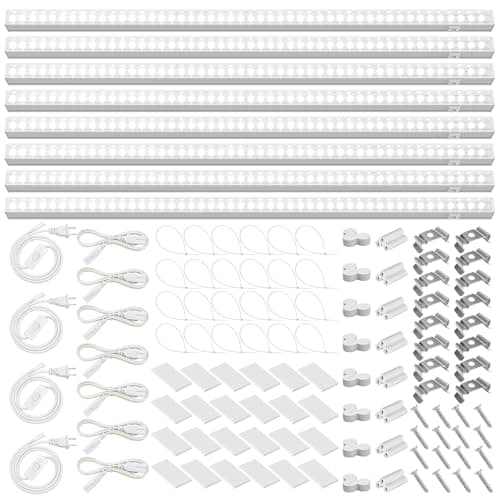 Top pickBarrina T5 Full-Spectrum LED Grow LightsLinkable LED strips, full spectrum | Stopping leggy seedlings | 9.0 | $54.89 - View on Amazon |
| 2 | 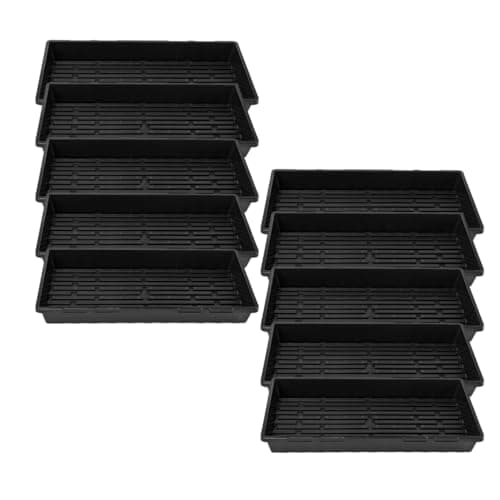 Bootstrap Farmer 1020 Seed TraysHeavy-gauge 1020 trays, reusable for years | Trays that last more than one season | 8.5 | $66.49 - View on Amazon |
| 3 | 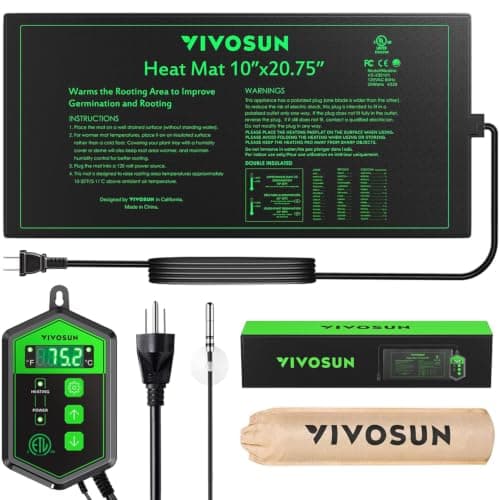 VIVOSUN Seedling Heat MatWaterproof mat sized for 1020 trays | Peppers, tomatoes and slow germinators | 8.8 | $30.99 - View on Amazon |
#ad We may earn a commission - Price as of October 10, 2026
Scores are our own editorial judgment, formed from published specifications and independent sources. They are not aggregated customer ratings, and they are not the result of hands-on testing, which we do not currently do. See how we choose.
Common questions
Why are my seedlings tall and thin?
They are not getting enough light and are stretching toward what there is. Move the grow light to a few inches above the leaves, or add a light if you are relying on a windowsill. Warmth without adequate light makes it worse, so take them off any heat mat once they have germinated.
Can leggy seedlings be saved?
Tomatoes and other crops that root from the stem can: pot them on deeper, burying the stretched stem up to just below the first leaves, and they will root along it. Peppers, brassicas, cucumbers and squash cannot be buried that way -- fix the light, pot them into a deeper cell for support, and resow if it is still early.
How close should a grow light be to seedlings?
A few inches above the leaf canopy for the LED strips and bars sold for seed starting, raised every few days as the plants grow. Light intensity falls away quickly with distance, so a fixture hanging a foot or more above the tray leaves the seedlings effectively in shade.
How many hours of light do seedlings need?
Fourteen to sixteen hours a day, on a timer, with a genuine dark period. Running lights around the clock does not help. Short light hours produce the same pale stretched growth as a light that is too far away.
Does a fan stop seedlings getting leggy?
A fan on a low setting thickens stems and helps prevent damping-off by keeping the surface drier, so it is a worthwhile supporting measure. It does not replace light. A fan on under-lit seedlings produces thin plants that wobble rather than sturdy ones.
Sources
Factual claims on this page are backed by the published sources below, and product specifications are the manufacturers’ own. Where a figure is not published, we say so rather than estimating it.