Step 5 - Greenhouses
The Best All-Season Greenhouse Kits
No kit is all-season out of the box. These are the ones worth building the rest of the system around, and the parts that finish the job.
Janet H. - the hands-on owner behind Janet Media Group.
Published
This page contains affiliate links. If you buy through them we may earn a commission at no cost to you, and it never decides what we recommend. How this site is funded.
For genuine year-round use the best kit here is the Grandio Ascent, because it is the only one in this group that publishes both numbers a four-season structure is judged on -- winds to 76 mph and a snow load of 25 lb per square foot -- and backs its frame for life. If what you want is the warmest shell per dollar, the Palram Canopia Glory carries 10 mm twin-wall polycarbonate, the thickest glazing of any kit on this site. If you would rather the ventilation arrived solved, the Backyard Discovery Poppy ships with a temperature-activated exhaust fan, opening windows and hose hookups already fitted.
Before the list, the thing most all-season roundups will not say: there is no such thing as an all-season greenhouse kit. There are kits that can be made all-season, and the parts that do it cost a small fraction of the structure. Buy the shell for the glazing and the structural rating; budget separately for venting, heat and anchoring.
What all-season actually has to mean
Year-round is two opposite problems and most shoppers only think about one of them. Winter is the problem people buy for. Summer is the problem that kills the crop.
| The cold half | The warm half | |
|---|---|---|
| What goes wrong | Heat leaks out overnight; a hard freeze reaches the plants | A closed house runs far hotter than the outside air by midday |
| What fixes it | Thicker glazing, thermal mass, a thermostat-controlled heater | Roof and side vents that open themselves, shade in high summer |
| The spec to look at | Glazing thickness and wall count, snow load rating | Vent area and whether vents are automatic |
| Typical cost to add later | A heater plus a thermostat: a modest accessory spend | An automatic vent opener: the cheapest part on this page |
| What people get wrong | Assuming an unheated greenhouse stays frost-free | Assuming they will be home at midday to open the vent |
On the winter side, the honest figure is this: an unheated kit holds only a few degrees over the outside air overnight. Extension guidance on hobby greenhouses is consistent about it. A greenhouse extends the season at both ends and keeps a hard frost off the glass; it does not create a frost-free room unless you heat it. Is a greenhouse worth it is the page to read if that changes your mind about the whole project.
On the summer side the arithmetic is more dramatic. A closed 6 x 8 kit in April sun can sit tens of degrees above the air outside, and the plants that die in a hobby greenhouse are far more often cooked than frozen. That is why an automatic vent opener appears in this list alongside structures costing a hundred times more.
How these were chosen
- Ranked on the two-season job, not on price. Each kit was judged on glazing build and published structural rating for the cold half, and on vent area and vent automation for the warm half.
- Published figures only. Every wind speed, snow load and panel thickness below is the manufacturer's or retailer's own published number. Where a maker publishes nothing, this page says so rather than filling the gap with an estimate.
- Currently sold, checked on publication day. Every listing was confirmed live by this site's price run on 2026-10-19. Where Amazon returned a current price the price layer shows it; where it did not, the buy link goes to the live listing rather than quoting a stale figure.
- Walk-in structures you anchor and keep. Pop-up tunnels and tiered shelf covers are not in this list. They are seasonal covers, and a seasonal cover cannot be the answer to a year-round question -- small greenhouse kits covers that end instead.
- An honest downside on every pick, including the one ranked first. In this bracket the differences between kits are specific and worth knowing before the pallet arrives.
Quick picks
| # | Product | Best for | Score | Price |
|---|---|---|---|---|
| 1 | 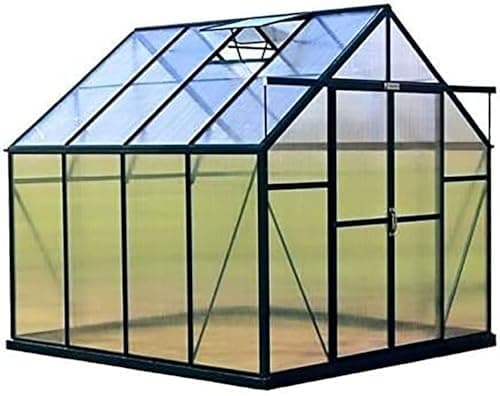 Top pickGrandio Ascent GreenhouseRated to 76 mph wind and 25 lb per sq ft snow, lifetime frame warranty | The best-engineered kit in the bracket | 9.1 | $2,199.00 - View on Amazon |
| 2 | 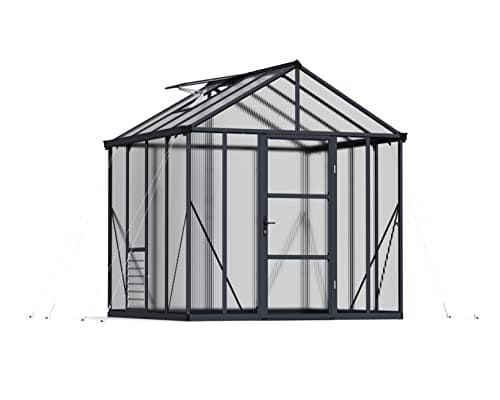 Palram Canopia Glory Greenhouse10 mm twin-wall polycarbonate throughout | Cold climates and winter growing | 8.9 | Check price on Amazon |
| 3 | 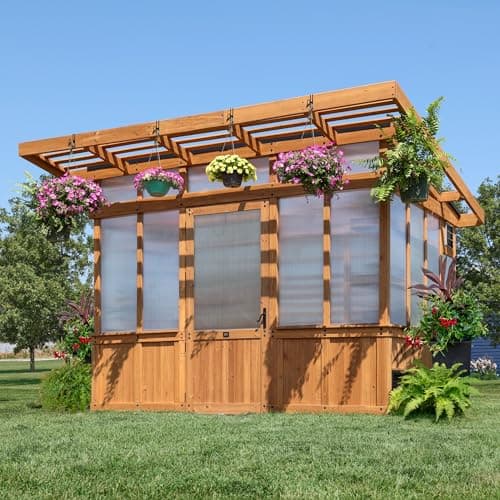 Backyard Discovery Poppy Cedar Greenhouse 11 x 7Cedar frame, 4-wall polycarbonate, fan and staging included | Looks, and an interior that arrives finished | 8.8 | $2,999.00 - View on Amazon |
| 4 | 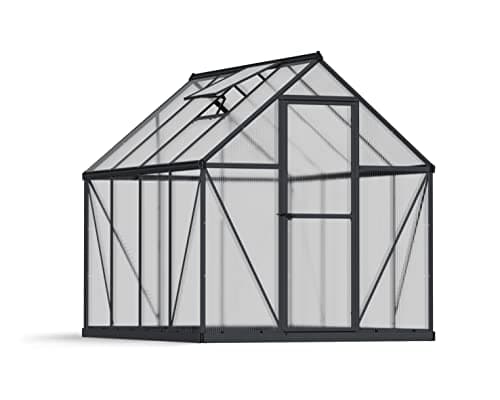 Palram Canopia Mythos GreenhouseAluminum frame, 4 mm twin-wall polycarbonate | A first real greenhouse | 9.0 | Check price on Amazon |
| 5 | 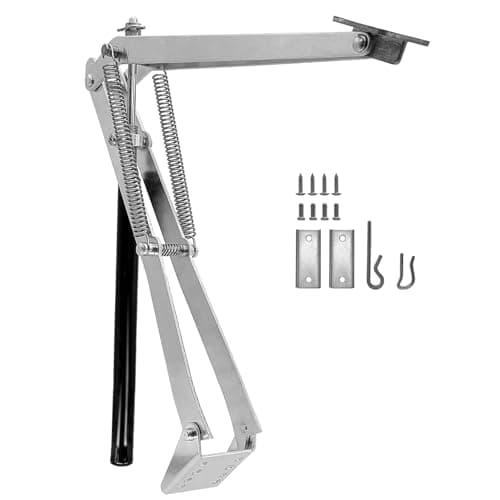 Automatic Greenhouse Vent OpenerNon-electric heat-driven cylinder, dual spring, lifts up to about 15 lb | Venting on a weekday when nobody is home | 8.3 | $27.99 - View on Amazon |
#ad We may earn a commission - Price as of October 19, 2026
Scores are our own editorial judgment, formed from published specifications and independent sources. They are not aggregated customer ratings, and they are not the result of hands-on testing, which we do not currently do. See how we choose.
The published figures, side by side
| Kit | Glazing | Ventilation as supplied | Wind rating | Snow load |
|---|---|---|---|---|
| Grandio Ascent | 6 mm twin-wall | Roof vents, manual | 76 mph | 25 lb/sq ft |
| Palram Canopia Glory | 10 mm twin-wall | Roof vents, side vent on some models | Not published as a figure | Not published as a figure |
| Backyard Discovery Poppy | 4-wall polycarbonate | Temperature-activated exhaust fan plus windows | 100 mph | About 30 in / 4,200 lb |
| Palram Canopia Mythos | 4 mm twin-wall | One roof vent, manual | Not published as a figure | Not published as a figure |
Two readings worth taking from that table. First, glazing thickness does not rise with price: the Glory out-insulates the more expensive Ascent panel for panel, and the Ascent earns its position on structure instead. Second, only one kit here arrives able to vent itself, and it is the most expensive one. For every other kit on the list, automatic venting is a part you add -- which is why it is in the picks.
The three parts that finish the job
Budget for these at the same time as the structure, not two seasons later. Together they usually cost a fraction of the kit and they are the difference between a greenhouse you use in April and one you use in January.
- 1
An automatic vent opener, first
A wax cylinder that lifts a hinged roof vent as the air warms and lets it shut as it cools, with no power and nothing to program. It is in the picks above because it is the cheapest item on this page and the one that changes the most. One opener handles one vent, so a larger house wants two.
- 2
A thermostat and a heater, sized to the gap you need
Decide what the greenhouse is for in winter before buying either. Keeping it frost-free for overwintering is a modest job; growing tender crops in January is a far larger one. Do I need a greenhouse heater sets out when heat is justified, and the best greenhouse heaters covers the hardware.
- 3
A real anchor and a prepared base
A year-round structure sits through every storm of the year, and the common failure is not a broken panel but a whole greenhouse moving. How to anchor a greenhouse is the detail; the short version is that pegs into lawn are not an anchor.
All-weather is a different claim from all-season
The two phrases get used as though they mean the same thing, and they do not. All-weather is about the shell surviving what the sky does: hail, gales, snow load, UV on the panels. All-season is about whether you can grow in it for twelve months, which is a question about heat, light and ventilation rather than about toughness.
A kit can be genuinely all-weather and still be a poor all-season house -- a tough structure with one small roof vent and thin single-wall glazing will survive a winter happily while being unusable in both January and July. That is the trap in this category, and it is why the picks above are ranked on glazing and venting rather than on how heavy the frame feels.
The other limit that no kit can fix is daylight. In the northern half of the country, December light is the constraint rather than temperature: there simply are not enough hours for most crops to put on growth, whatever the thermometer says. Plan winter around hardy leaves, roots and overwintering rather than around summer vegetables -- what to grow in a greenhouse breaks that down by season.
Humidity, the year-round problem nobody mentions
A greenhouse used only from March to October rarely has a humidity problem, because the vents are open most of the time it is in use. A greenhouse used in December does, and it catches people out in their first winter. Shut the house up against the cold and the air inside stays saturated: water evaporates off the soil, condenses on the cold inner face of the glazing overnight, and drips back onto the leaves.
Wet air sitting on cool foliage is the exact condition gray mold and the other winter fungal problems want, and it is the usual reason overwintered plants rot rather than freeze. Extension guidance on greenhouse ventilation treats air exchange as a year-round requirement rather than a summer one, and that is the practical point: you vent in winter too, just differently.
- Crack a vent on mild days, even cold ones, for an hour around midday. A short air exchange costs very little heat and carries a surprising amount of moisture out with it.
- Water in the morning, not the evening, so the surface has the day to dry before the temperature drops.
- Space plants further apart than feels necessary. Air movement between pots does more for winter plant health than any spray.
- Keep the floor from staying wet. A gravel floor that drains is better over winter than bare soil that holds standing water under the staging.
- Watch the glazing. Persistent condensation running down the inside on a mild morning is the signal that the house needs more air, not more heat.
Sizing a year-round house
Year-round use argues for a slightly larger structure than seasonal use does, for two unglamorous reasons. A bigger air volume swings less violently in temperature, so a cold night and a hot noon are both less extreme inside. And a house you are in twelve months a year accumulates things -- staging, pots, a heater, bags of mix, the watering can -- in a way a spring-only house does not.
The common regret in this category is buying the 6 x 6 and wanting the 8 x 10 by the second winter. What size greenhouse do I need works through it properly, and where to put a greenhouse matters more in winter than in summer, because the low December sun is blocked by things that cast no shadow in June.
If the budget will not stretch to a year-round structure this year, the honest alternative is to extend the season at both ends with far less money: the best cold frames will carry hardy salad through most winters, and the best greenhouse for the money covers the kits that do three seasons well without pretending to do four.
The picks in full
Top pick
Grandio Ascent Greenhouse
Grandio
The one to buy if you want a premium greenhouse for what it withstands rather than what it looks like: published ratings, heavy frame section, lifetime frame warranty.
Grandio publishes the two numbers that decide whether a greenhouse survives where you live -- 76 mph of wind and 25 lb per square foot of snow -- and backs the frame for life. Very little else in this bracket does both, and a kit that quotes no rating at all is telling you something by omission.
The glazing is 6 mm twin-wall, which is where expectations need managing: at this money you might assume 10 mm. What the price buys is frame section, fastener quality, truss reinforcement and the warranty behind them. If overnight heat retention matters to you more than structure, a thicker-glazed kit for less money is the better buy -- and that trade is the whole argument of the roundup this sits in.
Budget for the anchor kit and for ground preparation. Concrete slab, wooden deck and soil anchor kits are each sold separately, and the rating only applies to a structure that is properly fixed down.
What works
- Published wind and snow ratings, which much of this bracket does not give you
- 1.6 mm aluminum profile and stainless fasteners rather than thin extrusion and plated screws
- Lifetime frame warranty with 10 years on the glazing
- Integrated rain gutters and cross-roof trusses as standard
- Scales to 24 ft of length on the same 8 ft width
What does not
- 6 mm glazing, not the 10 mm the price might suggest -- this is a rated structure, not a maximally insulated one
- The anchor kit is a separate purchase, and a structure this size genuinely needs one
- Plain, functional looks
- A full weekend of assembly, and not a one-person job
Skip it if: you want a decorative garden building. This is an honest piece of engineering in powder-coated aluminum, not a feature of the yard.
| Glazing | 6 mm twin-wall UV-protected polycarbonate |
|---|---|
| Frame | Heavy-duty aluminum, 1.6 mm profile, stainless fasteners |
| Sizes | 8 ft wide, in 8, 12, 16, 20 and 24 ft lengths |
| Rated for | Winds to 76 mph, snow load to 25 lb per sq ft |
| Ventilation | Two to six roof vents by length, manual openers |
| Door | Sliding double door, 42 in wide by 72 in tall |
| Warranty | Lifetime frame, 10 years on the panels |
Cold climates and winter growing
Palram Canopia Glory Greenhouse
Palram Canopia
#ad We may earn a commission - prices are shown by Amazon, not by us
The heavy-glazed model in the range, and the one to buy if the plan is to keep growing through a real winter.
Glazing thickness is the whole argument for this kit. A 10 mm twin-wall panel holds substantially more heat overnight than a 4 mm one, and overnight is when a winter greenhouse either works or does not.
It is also the model to look at if you get real snow. Thin panels and light frames are a three-season specification; if you are in the Cascades or anywhere with a genuine snow load, buy the heavier structure rather than hoping.
None of that makes it heated. A greenhouse without a heat source holds a few degrees over outside, which is the difference between hardy greens surviving and not -- it is not a tropical house in January.
What works
- 10 mm glazing holds heat far better than 4 mm
- Rated for harder weather than the lighter kits
- Wider footprint gives room for benches down both sides
- Better vent provision as standard
What does not
- Substantially more expensive
- Thicker panels cut light transmission a little
- Heavy enough that assembly is a two-person, whole-day job
Skip it if: you only want a spring seed-starting space. You are paying a large premium for insulation you will use for three months of the year.
| Frame | Heavy-gauge aluminum |
|---|---|
| Glazing | 10 mm twin-wall polycarbonate |
| Sizes | 8 ft wide, several lengths |
| Ventilation | Roof vents, and a screened side vent on some models |
| Base | Integrated base, anchoring required |
Looks, and an interior that arrives finished
Backyard Discovery Poppy Cedar Greenhouse 11 x 7
Backyard Discovery
The pick when the greenhouse has to look like part of the garden: cedar frame, thick glazing, and the bench, shelving, fan and hose hookups already in the box.
This is the kit that answers the aesthetic half of the premium question. A cedar frame reads as garden architecture rather than equipment, and it is the one structure here that people put in the middle of a lawn on purpose.
The specification is not merely decorative. Four-wall polycarbonate is thicker than the twin-wall used on most hobby kits, the manufacturer states a 30% improvement in heat retention over standard double-wall, and the published 100 mph wind and 30 in snow figures are the strongest quoted for anything on this page. A temperature-activated exhaust fan is included, which is the accessory most owners end up buying in year two anyway.
What you give up is floor area -- 78 square feet against 144 for a similar outlay -- and you take on wood maintenance. Treat that as the price of the look and the fitted interior, and decide honestly whether you want both.
What works
- Cedar frame and 4-wall glazing: the warmest-looking and best-insulated combination here
- Manufacturer-stated 100 mph wind and 30 in snow ratings, the strongest on the page
- Fan, staging, shelves, hooks, hose hookups and power ports included rather than extra
- Heat retention stated at 30% better than standard double-wall polycarbonate
What does not
- 78 sq ft is the smallest footprint of the premium picks, at a comparable price
- Wood needs sealing or staining on a cycle; aluminum needs nothing
- 5-year warranty, against a lifetime frame warranty elsewhere
- The fan and outlets only earn their keep if power reaches the site
Skip it if: you want maximum growing area per dollar. Cedar and a fitted-out interior cost more than aluminum and a bare floor.
| Footprint | 11 ft L x 7 ft W x 8 ft H, about 78 sq ft inside |
|---|---|
| Frame | Cedar wood |
| Glazing | Commercial-grade 4-wall polycarbonate panels |
| Ventilation | Temperature-activated exhaust fan plus opening windows |
| Fitted out with | About 45 linear ft of staging, a 4-tier rack, 4 plant hooks |
| Services | Interior and exterior hose hookups, power outlets and USB ports |
| Rated for | Snow load to 4,200 lb (about 30 in), winds to 100 mph |
| Warranty | 5 years |
A first real greenhouse
Palram Canopia Mythos Greenhouse
Palram Canopia
#ad We may earn a commission - prices are shown by Amazon, not by us
The sensible first greenhouse: an aluminum frame with twin-wall panels, sized to fit a normal backyard rather than a nursery.
Twin-wall polycarbonate is the thing that separates a greenhouse from a plastic tent. Two skins with an air gap between them insulate, and the panel diffuses light rather than throwing hard shadows, which suits seedlings better than clear glass does.
The Mythos sits at the point in the range where you get a proper aluminum frame, a roof vent and a lockable door without paying for the heavy-duty glazing. For starting seeds, hardening off, and stretching the tomato season at both ends, that is the right specification.
Two warnings from the manual that people ignore. Anchor it -- every lightweight greenhouse that ends up in a neighbor's yard was not anchored. And build it with a second person; the panels flex and the frame is not square until the last bolt.
What works
- Twin-wall panels diffuse light and insulate better than single-skin plastic
- Aluminum frame will not rust or need painting
- Lengths let you match the run to the space you have
- Roof vent included rather than sold as an extra
What does not
- 4 mm glazing is thin for real winter use
- Assembly is a long afternoon and genuinely needs two people
- Must be anchored -- an unanchored kit is a sail
Skip it if: you live somewhere with heavy snow load. 4 mm panels are a three-season specification; the thicker-glazed models exist for a reason.
| Frame | Rust-resistant aluminum |
|---|---|
| Glazing | 4 mm twin-wall polycarbonate |
| Sizes | 6 ft wide, several lengths including 6 x 8 and 6 x 10 |
| Ventilation | Roof vent, lockable door handle |
| Base | Integrated base rail, anchoring required |
Venting on a weekday when nobody is home
Automatic Greenhouse Vent Opener
Various
The accessory that turns a greenhouse from a weekend structure into a year-round one: a wax cylinder that pushes the roof vent open as the air warms and closes it as it cools, with no power and no attention.
Overheating kills more greenhouse crops than cold does, and it happens on ordinary spring afternoons rather than in a heatwave: a closed 6 x 8 kit in April sun can run 30 degrees F above the outside air. The fix is the roof vent, and the problem with the roof vent is that it needs opening at about 11am and shutting at about 5pm, every day, by somebody who is there.
A wax-cylinder opener does both. The cylinder contains a wax that expands as it warms, pushing a piston that lifts the vent; as the air cools the wax contracts and the vent falls shut. There is no power, no thermostat and nothing to program -- you set the opening point on a threaded collar and leave it.
Two honest limitations. It is slow, because wax takes time to change volume, so a sharp spike in temperature is vented late rather than immediately. And its lift is modest: one opener manages one hinged vent, so a larger structure that needs real air exchange still wants a thermostat and an exhaust fan. For a hobby kit with one or two roof vents, it is the single accessory that most changes what the greenhouse can do.
What works
- Vents the greenhouse at midday whether or not anyone is there
- No power, so it works in a greenhouse with no electricity run to it
- Closes again as the air cools, which is the half people forget
- Cheap relative to a thermostat and exhaust fan doing the same job
What does not
- Slow to react -- the wax takes time to expand, so it lags a sudden temperature spike
- Limited lift, so it opens a vent rather than ventilating a big structure on its own
- Fits hinged vents only; check your kit before buying
- A cheap unit can seize after a season or two outdoors
Skip it if: you are home all day and happy to open and shut vents by hand, or your kit's roof vent is a sliding panel rather than a hinged one -- these fit hinged vents.
| Type | Non-electric wax-cylinder (thermal) actuator |
|---|---|
| Power | None -- no wiring, no battery |
| Lift | Up to about 15 lb on the dual-spring kits (listing figure) |
| Fits | Hinged greenhouse roof and side vents |
| Installation | Two brackets, screwdriver, no cutting |
Common questions
What makes a greenhouse all-season?
Four things, and only one of them is the kit: glazing that holds heat (thicker twin-wall or 4-wall polycarbonate), ventilation that opens itself when you are not there, a thermostat-controlled heat source for the coldest nights, and an anchor that holds through winter storms. A structure with all four works year-round. A structure with none of them is a spring and fall greenhouse whatever the listing calls it.
Can you use a greenhouse in winter without heat?
You can use it, but not for everything. Unheated, a kit holds only a few degrees over the outside air overnight, so it will carry hardy salad, spinach, alliums and overwintering plants through most winters and will not keep tender crops alive through a hard freeze. Adding a layer of row-cover fabric over the crop inside buys a few more degrees for very little money.
Is a 4 mm or 10 mm polycarbonate greenhouse better for year-round use?
Thicker is warmer, and for year-round use that matters: 10 mm twin-wall holds meaningfully more heat overnight than 4 mm and diffuses light more. The trade is light transmission and price. If the greenhouse has to work in January, pay for the thicker panel before you pay for extra floor area.
How hot does a greenhouse get in summer?
Far hotter than most people expect. A closed hobby greenhouse in direct sun can run tens of degrees above the outside air by the middle of the day, which is enough to stop fruit setting and to kill seedlings outright. Roof vents, side vents and shade cloth are the answer, and an automatic opener is what makes them work on a weekday.
Do I need an automatic vent opener?
If anyone is home all day to open the vent at mid-morning and close it at dusk, no. If not, it is the single most useful accessory you can buy, because the alternative is a greenhouse that overheats every sunny day you are at work. They are non-electric, fit hinged vents, and one opener handles one vent.
What is the difference between an all-weather and an all-season greenhouse?
All-weather describes the shell surviving wind, hail, UV and snow load. All-season describes whether you can grow in it twelve months a year, which depends on glazing, ventilation, heat and daylight. A kit can be one without being the other, and the marketing rarely distinguishes between them.
Does an all-season greenhouse need a concrete base?
Not concrete specifically, but it does need a prepared, level base and a real anchor kit. A timber perimeter filled with compacted gravel drains better than a slab and is adequate for every kit on this page. What is not adequate is standing the structure on uneven lawn and relying on the pegs in the box.
Sources
Factual claims on this page are backed by the published sources below, and product specifications are the manufacturers’ own. Where a figure is not published, we say so rather than estimating it.