Step 5 - Greenhouses
The Best Greenhouse Heaters
A heater keeps frost off tender plants. It does not buy you a winter tomato, and knowing the difference is most of this decision.
Janet H. - the hands-on owner behind Janet Media Group.
Published
This page contains affiliate links. If you buy through them we may earn a commission at no cost to you, and it never decides what we recommend. How this site is funded.
For a hobby greenhouse, buy a 1500 W electric fan heater with a splash-proof rating and a thermostat you can set to an actual number, and run it on a frost setting rather than a comfort setting. If your heater's control is a knob, add a plug-in thermostat controller rated for 1500 W -- that single part cuts the running cost more than any heater upgrade. And before you buy either, try a layer of row-cover fabric over the crop, because a few degrees is often the entire gap between a loss and a harvest.
Decide what you are heating for
Almost every bad greenhouse-heating decision comes from skipping this question. The equipment for keeping frost off a bench of overwintering pelargoniums is not the equipment for raising peppers from seed in February, and neither of them will grow a tomato in a December that has eight hours of weak daylight.
| Your goal | What to buy | Why |
|---|---|---|
| Keep frost off tender plants you are overwintering | 1500 W splash-proof heater on a frost setpoint | You need a floor under the overnight low, not a warm room |
| Germinate and grow seedlings earlier | A heat mat, and a thermostat for it | Seeds respond to root-zone temperature; heating the whole airspace to do it is waste |
| Harvest hardy winter greens | Nothing -- and a row cover on the coldest nights | Spinach, mache, kale and winter lettuce survive unheated; they stop growing because of light, not cold |
| Grow warm-season crops through winter | Reconsider the plan | Extension guidance treats this as cost-effective only with an efficient structure and solar collection, not a plug-in heater |
| Protect a few containers through one cold snap | Row-cover fabric, or move them inside | A few degrees for almost no money, with nothing to wire and nothing to run |
Quick picks
| # | Product | Best for | Score | Price |
|---|---|---|---|---|
| 1 |  Top pickBio Green Palma Greenhouse Heater1500 W, IPX4 splash-proof, digital thermostat | Frost protection you can set and leave | 9.0 | Check price on Amazon |
| 2 |  VEVOR Greenhouse Heater, 1500 W IPX41500 W, IPX4-rated steel body | The cheapest heater that belongs in a greenhouse | 8.0 | Check price on Amazon |
| 3 |  BN-LINK Digital Thermostat Controller Plug15 A / 1875 W, two-stage heat and cool outlets | Making a cheap heater behave | 8.8 | Check price on Amazon |
| 4 | 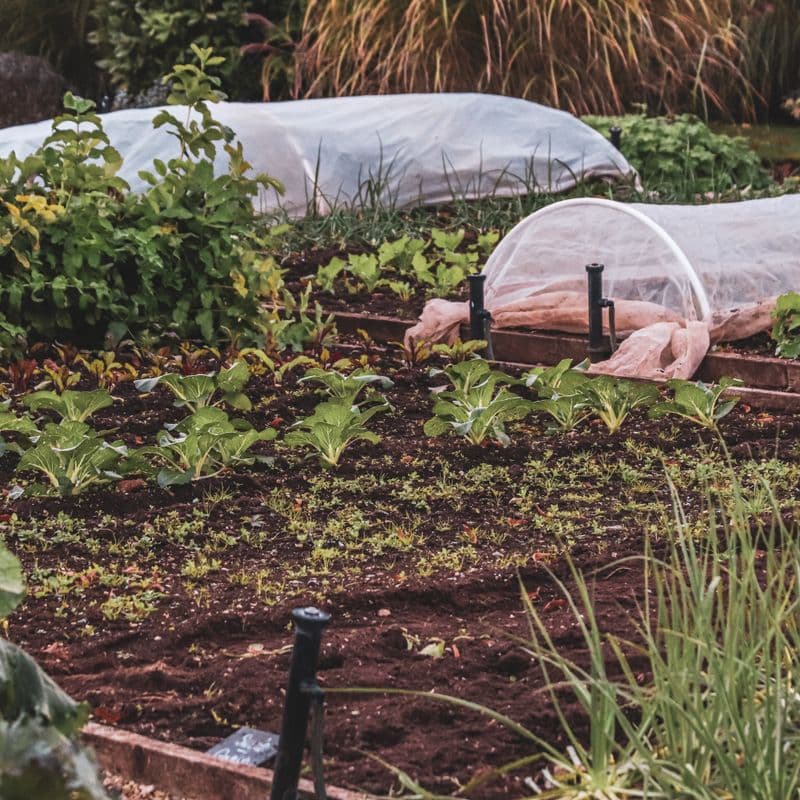 Agribon AG-19 Floating Row Cover0.55 oz/sq yd fabric, about 85% light transmission | A few degrees for almost no money | 8.4 | Check price on Amazon |
| 5 |  VIVOSUN Seedling Heat MatWaterproof mat sized for 1020 trays | Peppers, tomatoes and slow germinators | 8.8 | Check price on Amazon |
| 6 |  Min/Max Greenhouse ThermometerRecords the high and low since last reset | Knowing what actually happened overnight | 8.6 | Check price on Amazon |
#ad We may earn a commission - prices are shown by Amazon, not by us
Scores are our own editorial judgment, formed from published specifications and independent sources. They are not aggregated customer ratings, and they are not the result of hands-on testing, which we do not currently do. See how we choose.
In winter, light is the limit before heat is
This is the thing most first-time owners have backwards. A greenhouse in January is not failing because it is cold. It is failing because there is not enough daylight to drive growth, and warming the air does not add any. Colorado State University Extension puts the constraint plainly: winter vegetables have a slower growth rate due to low light intensity, and artificial lighting for vegetable production -- as opposed to raising transplants -- is generally not cost effective.
The same guidance is blunt about the economics of the whole exercise: winter vegetable production in a greenhouse is only cost effective with an energy-efficient structure, a well-designed solar collector and optimum management. A 1500 W fan heater in a 6 x 8 polycarbonate kit is none of those things.
Which is why the realistic winter model is harvesting rather than growing. Crops established in autumn sit through the dark months and get picked from; a heater's job is to stop the night from killing them, not to make them grow. Once you accept that, the heater you need gets smaller, cheaper and much cheaper to run. What to grow in a greenhouse sorts the crops that accept those conditions from the ones that will not.
How we chose
We do not lab-test heaters. These picks come from published manufacturer specifications, extension guidance on greenhouse heating, and one hard filter: would this thing be safe and controllable in a wet, unattended building? That knocks out most of the category, which is dry-room appliances with greenhouse keywords in the listing.
- A real splash rating. Greenhouses are wet by design. An IPX4-rated housing is the entry specification; an IP20 grow-tent heater is not the same product, whatever the listing title says.
- A thermostat with a setpoint, not a dial. The difference between asking for 36 degrees F and asking for 'low' is most of the annual running cost.
- 1500 W or less. A 120 V outlet caps you at about 1500 W, roughly 5,100 BTU/hr. Anything claiming to heat a large structure from a standard plug is claiming the impossible.
- Tip-over and overheat protection. The heater will run unattended, at night, next to trays and plastic.
- A fan. Moving air mixes the warm layer down off the roof, which is why extension guidance recommends circulating fans that can run continuously in cold weather even when the heater is off.
- No unvented combustion. Every fuel-burning option on the market is a ventilation problem first and a heater second -- see below.
Sizing: start from the night, not the floor area
Heater sizing is a heat-loss problem, not a square-footage problem. A greenhouse loses heat through every pane, so the number that matters is glazed surface area, the insulating value of that glazing, and the temperature gap you are asking the heater to hold. The University of Georgia's greenhouse heating and ventilation bulletin sets the design temperature this way: take the average daily minimum January temperature for your area and subtract 15 degrees F. That is the night your heater has to cope with, and it is colder than the one people plan for.
Then decide the setpoint, which is where most of the money is won or lost. UGA's hobby greenhouse bulletin notes that most greenhouse plants are adequately served by a night temperature of 55 to 65 degrees F, with 40 degrees F as the practical minimum in most situations. Those are two very different heating bills, and for overwintering dormant or semi-dormant plants the lower one is usually the correct answer. The same bulletin's rule of thumb for electric heat in a hotbed -- 10 to 15 watts per square foot of growing area -- is a useful sanity check, with the caveat that a walk-in greenhouse loses far more per square foot of floor than an insulated frame does, because its glazed area is several times its footprint.
The practical version of all this: a 1500 W heater on a frost setpoint is a sensible match for a sealed 6 x 8 or 8 x 10 twin-wall kit. It is not a match for a single-skin tunnel, a bigger structure, or a target of 60 degrees F in January. If you are choosing glazing with winter in mind, polycarbonate vs glass is the decision that determines how much heater you will ever need, and the best greenhouse kits for winter covers the structures built for it.
Propane, kerosene and paraffin: read this before you buy one
Fuel-burning heaters are popular in this category because they are cheap to buy and do not need a circuit run to the end of the garden. They also burn fuel inside a sealed building full of plants and, periodically, you. Extension guidance is unambiguous: all greenhouse heaters should be ventilated for both plant and human health, and if you use a gas, oil or coal heater you need a fresh air supply and an unobstructed chimney so carbon monoxide will not build up.
Plants are affected too, and earlier than people are. Incomplete combustion produces carbon monoxide and ethylene, and sulfur-bearing fuels can cause sulfur dioxide damage -- which shows up as leaf injury on the crop you were trying to protect. UGA's heating bulletin frames the requirement simply: any heating system that provides uniform temperature control without releasing material harmful to the plants is acceptable. An unvented propane heater in a closed hobby greenhouse does not clear that bar.
What it actually costs to run
The arithmetic is simple and worth doing before you buy. A 1500 W heater running flat out uses 1.5 kWh for every hour it runs; multiply that by your own utility rate to get a number that means something where you live. A heater that runs all night, every night, through a cold month is a genuine bill -- which is why UGA's hobby greenhouse bulletin says plainly that electric heat can be very costly and is usually used only in very small greenhouses.
Everything that reduces that bill is about run time rather than wattage. A thermostat set to just above freezing instead of a comfortable room temperature cuts hours of running. A probe at plant height instead of next to the heater stops short-cycling. Fleece over the crop on the coldest nights means the heater cuts in later and less often. Water barrels in the sun flatten the day-night swing for nothing. Sealing the gaps around the door and base does more than another 500 W would.
Four cheaper things to do first
- Cover the crop. A light row-cover fabric laid over plants slows the radiant loss that causes frost damage on clear nights, for a tiny fraction of a heater's price and nothing to run.
- Add thermal mass. Black-painted water barrels or jugs along the sunny wall absorb heat all day and release it overnight. Free, silent, and it works whether or not anyone is home.
- Heat the root zone, not the air. For germination and propagation, a thermostatically controlled heat mat under the trays does what a 1500 W heater cannot do economically -- see seedling heat mats.
- Build a frame inside the frame. A cold frame or a low tunnel inside the greenhouse doubles the protection on your most tender plants without heating the whole volume. Extension guidance names cold frames and tunnel gardening as the less expensive way to extend the season.
Wiring, placement and the boring safety rules
- A proper outdoor circuit. A 1500 W heater draws 12.5 A at 120 V, which is most of a 15 A circuit. It should not share that circuit with anything else, and the supply should be GFCI-protected outdoor-rated cable, not a domestic extension lead run through a gap in the door.
- Off the floor, out of the wet. Stand the heater on a dry block or shelf, not on a floor you hose down.
- Clear space around it. Keep trays, bubble wrap, fleece and bags of compost well clear of the outlet and the intake.
- Probe at plant height, shaded. Not in the heater's air stream, not in direct sun, and not on the floor.
- Aim along the structure, not at plants. Direct hot air scorches leaves; the heater should stir the whole volume. Circulating fans can run continuously in cold weather even when the heater is off.
- Keep venting. A heated greenhouse still overheats on a sunny day. An automatic vent opener keeps working while the heater sleeps -- greenhouse accessories covers the rest of that kit.
If you are still choosing a structure, start with the best greenhouse kits and read the winter section carefully -- glazing thickness decides your heating bill for the life of the greenhouse. If you already have one and want it working harder, greenhouse gardening tips covers the running of it through the year.
The picks in full
Top pick
Bio Green Palma Greenhouse Heater
Bio Green
#ad We may earn a commission - prices are shown by Amazon, not by us
The one heater here built for a damp greenhouse rather than a dry utility room: stainless housing, a splash-proof rating, and a thermostat precise enough to hold a frost setting instead of cycling on a guess.
Greenhouses are wet. Water on the floor, condensation on the glazing, a hose running most evenings. That is why the splash-proof rating and the stainless housing here are not marketing -- they are the reason this heater belongs in the structure at all, and the reason a milkhouse heater from the hardware aisle does not.
The second thing you are paying for is thermostat resolution. A dial marked low-medium-high cannot hold a frost setting; it overshoots, then undershoots, and the overnight low you were trying to protect against happens anyway. A digital setpoint lets you ask for just above freezing and get it, which is the cheapest way there is to cut the running cost of heating.
The honest limit is the circuit. 1500 W is about 5,120 BTU/hr, which is what one standard household outlet will give you, and no heater on a 120 V plug does better. In a sealed 6 x 8 kit with twin-wall glazing that is enough to keep frost off tender plants on a cold night. It is not enough to hold a leaky structure at tomato-growing temperatures in January, and nothing you can run from a garden extension cord is.
Start it on the 750 W element and let a min/max thermometer tell you whether you need the second one. Most people find they do not.
What works
- Splash-proof IPX4 rating and a stainless body, which is the specification a greenhouse actually needs
- Digital thermostat holds a frost setting rather than swinging around a dial mark
- 750 W setting covers mild nights without drawing the full load
- Doubles as a circulation fan in summer, which is the other half of greenhouse temperature control
- Carry handle and a sealed cable entry rather than a bare domestic appliance cord
What does not
- Several times the price of a bare utility heater, and the gap is the thermostat and the housing
- 1500 W is the ceiling on a standard 120 V circuit -- it will not hold growing temperatures in a big or leaky structure
- The fan is audible, which matters if the greenhouse sits under a bedroom window
- Still an electric heater: the running cost is real, and extension guidance is blunt about it
Skip it if: all you need is warm roots under one tray of seedlings. A heat mat does that job for a fraction of the purchase price and a fraction of the running cost.
| Output | Two elements, 750 W or 1500 W |
|---|---|
| Heat output | 5,120 BTU/hr (manufacturer) |
| Voltage | 110 V |
| Air circulation | 163 cubic m/hr, about 5,800 cubic ft/hr |
| Protection | IPX4 splash-proof, stainless steel housing |
| Thermostat | Digital, summer and winter modes |
| Stated coverage | Up to 130 sq ft at about 6.6 ft ceiling height |
| Weight | 4.5 lb, 2-year warranty |
The cheapest heater that belongs in a greenhouse
VEVOR Greenhouse Heater, 1500 W IPX4
VEVOR
#ad We may earn a commission - prices are shown by Amazon, not by us
A plain 1500 W fan heater in a steel IPX4 body for a fraction of the premium kit -- the right buy if you add a proper thermostat plug and accept that the controlling is on you.
VEVOR sells a family of 1500 W greenhouse heaters that look almost identical in listings and differ in the details that matter: whether the housing is IPX4-rated, and whether a separate thermostat is in the box. The one worth buying is the IPX4 steel-bodied model. The ones to be careful with are the IP20 versions, which are grow-tent heaters wearing a greenhouse name.
What you get for the money is honest: a heating element, a fan, overheat protection and a tilting outlet. What you do not get is a controller you can trust to hold a few degrees above freezing overnight. So treat this as a two-part purchase -- heater plus thermostat plug -- which still lands well under the premium option.
Stock is the other caveat. Models in this category rotate through the catalog, so check the listing is live before you plan a winter around it, and check the rating on the model actually in stock rather than the one in the review you read.
What works
- An IPX4 steel body at roughly a third of the price of the premium option
- Overheat protection and a tilting outlet, so you can aim heat along a bench rather than at one plant
- Light enough to move between greenhouse and cold frame as the season shifts
- Cheap enough that buying it plus a separate thermostat plug still costs less than one premium heater
What does not
- Knob control, not a calibrated thermostat -- it needs a plug-in controller to be economic
- No manufacturer coverage figure or BTU rating published, so the sizing work is yours
- Model availability moves around: several near-identical VEVOR greenhouse heaters are listed and individual ones go out of stock
- A steel fan heater in a damp building is a consumable, not a ten-year purchase
Skip it if: you want to set a temperature and stop thinking about it. The control here is a knob, not a setpoint, and the gap between those two things is a crop.
| Model | BG-E2A-15 |
|---|---|
| Output | 1500 W rated, fan and high heat modes |
| Voltage | AC 120 V, 60 Hz |
| Protection | IPX4 rating, cold-rolled steel housing |
| Air volume | 152 CFM, about 259 cubic m/hr |
| Adjustment | 25-degree tilt, overheat protection |
| Size | 8.35 x 9.8 x 12.8 in, 6.4 lb |
Making a cheap heater behave
BN-LINK Digital Thermostat Controller Plug
BN-LINK
#ad We may earn a commission - prices are shown by Amazon, not by us
The part that turns a dumb heater into a frost-protection system: a waterproof probe at plant height, a setpoint you choose, and enough switching capacity that a 1500 W heater is inside its rating.
Most of what people call the cost of heating a greenhouse is the cost of heating it when it did not need heating. A heater on a dial runs on the weather it had an hour ago. A heater on a thermostat probe runs on the temperature at the plants, right now, and stops the moment the setpoint is met.
Watch the wattage rating when you shop this category, because it is where the cheap options fail. Heat-mat controllers are commonly rated 8.3 A / 1000 W, which is fine for a propagation mat and not fine for a 1500 W heater. The two-stage controllers rated 15 A / 1875 W have the headroom.
Put the probe at plant height, shaded, and well away from the heater outlet. A probe sitting in the warm air stream satisfies itself in seconds and leaves the rest of the structure at outside temperature -- which is the most common way a correctly sized heater still fails to protect anything.
What works
- The 1875 W rating covers a 1500 W heater, which the common 1000 W heat-mat controllers do not
- Waterproof probe can sit at plant height, where the temperature actually matters
- Heating and cooling outlets mean one unit can run a heater in January and a vent fan in June
- Cuts running cost more than anything else here, because the heater only runs when the probe says so
What does not
- It switches power, it does not produce heat -- on its own it changes nothing
- Probe placement decides everything, and a probe in the heater's own air stream short-cycles and leaves the far end cold
- One heater per unit: you cannot gang two 1500 W heaters onto a single controller
- Small display, and the buttons are awkward in gloves
Skip it if: your heater already has a digital thermostat. You would be stacking two controllers, and the coarser one would win the argument.
| Function | Two outlets, one heating and one cooling |
|---|---|
| Max load | 15 A / 1875 W at 125 V AC |
| Control range | -40 to 176 degrees F at the controller |
| Probe range | -58 to 230 degrees F, waterproof probe |
| Cords | 71 in power cord, 71 in probe cord |
| Listing | ETL listed |
A few degrees for almost no money
Agribon AG-19 Floating Row Cover
Agribon
#ad We may earn a commission - prices are shown by Amazon, not by us
The cheapest frost protection there is, and the thing to try before buying any heater: a light spun fabric laid over the crop that buys a few degrees and costs nothing to run.
Before heating anything, try covering it. A layer of light spun fabric over the crop slows radiant heat loss on a clear night, which is when frost damage happens, and the manufacturer's figure for AG-19 is up to about 4 degrees F of protection. Inside a greenhouse, that stacks with the few degrees the structure already holds.
The weight grade is the decision. AG-19 at 0.55 oz per square yard transmits about 85% of light, which is the right compromise for season extension. Heavier frost grades hold more warmth and cut more light, and in December light is the resource you cannot spare.
Practical notes: weight the edges with soil, boards or sandbags, because it is lighter than it looks. It can stay on through rain, since it is porous. And inside a greenhouse, lay it over the plants on cold nights and pull it back on bright days so the crop gets the light it came for.
What works
- Costs a tiny fraction of a heater and nothing at all to run
- Porous to water and air, so it can stay on through rain rather than being lifted daily
- Works outdoors over a raised bed as well as inside a greenhouse
- Light enough to lay straight on the crop without hoops
What does not
- A few degrees is the whole effect -- it will not save tender plants in a hard freeze
- Cuts roughly 15% of the light, which matters in midwinter when light is already the limit
- Tears on anything sharp and degrades in UV over a couple of seasons
- Needs weighting at the edges, or the first real wind takes it across the garden
Skip it if: you are carrying tender container plants through a hard freeze. Fabric slows heat loss; it does not add heat, and a few degrees is all it is.
| Material | Spun-bonded polypropylene, UV stabilized |
|---|---|
| Weight | 0.55 oz per sq yd |
| Light transmission | About 85% (manufacturer) |
| Frost protection | Up to about 4 degrees F (manufacturer) |
| Water and air | Porous -- rain and air pass through |
| Life | 2 to 3 seasons with care |
| Sizes | From 83 in x 50 ft up to field rolls |
Peppers, tomatoes and slow germinators
VIVOSUN Seedling Heat Mat
VIVOSUN
#ad We may earn a commission - prices are shown by Amazon, not by us
Germination is driven by soil temperature, not air temperature -- and a heat mat is the difference between peppers in ten days and peppers in four weeks.
Seeds respond to the temperature of the medium they are in, not the room. Peppers and eggplants want soil in the 80s Fahrenheit to germinate briskly, and a 68-degree house gives them soil in the low 60s -- which is why they sit there for weeks.
A mat under the tray fixes that. Pair it with a thermostat probe if you can: without one the mat simply runs at its own output, which can be too warm for some seeds and is impossible to tune.
Take the tray off the mat once germination is done. Bottom heat after that encourages soft, stretched growth, and it dries the tray faster than you will remember to water it.
What works
- Dramatically faster germination for warm-season crops
- Waterproof, so spills are not a hazard
- Sized to standard trays
- Cheap to run
What does not
- Without a thermostat it just runs warm, with no target
- Dries trays out faster -- watering needs watching
- Should come off once seedlings are up
Skip it if: you only start cool-season crops. Lettuce, brassicas and peas germinate fine at room temperature and can actually be inhibited by heat.
| Type | Seedling heat mat |
|---|---|
| Sizing | Made to fit one or two standard 1020 trays |
| Construction | Waterproof |
| Thermostat | Sold separately on most models |
Knowing what actually happened overnight
Min/Max Greenhouse Thermometer
Various
#ad We may earn a commission - prices are shown by Amazon, not by us
The cheapest accessory that changes decisions: it tells you the overnight low and the midday high, not the temperature at the moment you happened to look.
Every greenhouse decision -- when to sow, when to vent, whether you need a heater, whether the frost cloth is doing anything -- depends on a number most owners never measure: the overnight low inside the structure.
A min/max thermometer records the high and low since you last reset it, so a morning glance tells you what happened while you slept. That turns guessing into knowing, for the price of a bag of compost.
Hang it at plant height and out of direct sun. A thermometer in a sunbeam reports the sunbeam, not the greenhouse.
What works
- Shows the overnight low, which is the number that kills plants
- Cheap enough to put one in the greenhouse and one in the cold frame
- Tells you whether venting is working
- No installation
What does not
- Reads wrong if hung in direct sun
- Digital versions need a battery
- It measures, it does not fix anything
Skip it if: nothing. If you own a greenhouse and not one of these, you are guessing about the only variable that matters.
| Type | Min/max recording thermometer |
|---|---|
| Reading | Current, plus high and low since reset |
| Mounting | Hangs at plant height, out of direct sun |
| Power | Digital models take a single cell |
Common questions
Do I really need a heater in my greenhouse?
Usually not. Hardy winter crops -- spinach, mache, kale, chard, winter lettuce -- survive in an unheated greenhouse because the structure holds a few degrees above outside and keeps wind and rain off. A heater earns its place when you are overwintering tender plants that would die at freezing, or starting heat-loving seedlings earlier than your climate allows.
What size greenhouse heater do I need?
Size it from heat loss, not floor area. UGA Extension suggests using your area's average daily minimum January temperature minus 15 degrees F as the design night, then deciding the setpoint you actually need -- 40 degrees F is the practical minimum for most situations, while 55 to 65 degrees F suits active growing. A standard 120 V outlet caps you at about 1500 W, or roughly 5,100 BTU/hr, which suits a sealed 6 x 8 to 8 x 10 twin-wall kit on a frost setting.
Can I use a propane or kerosene heater in a greenhouse?
Only with proper venting. Extension guidance states that all greenhouse heaters should be ventilated for both plant and human health, and that gas, oil or coal heaters need a fresh air supply and an unobstructed chimney so carbon monoxide does not build up. Incomplete combustion also produces ethylene, and sulfur-bearing fuels can cause sulfur dioxide damage to the crop. For a hobby greenhouse, a thermostatically controlled electric heater is the simpler and safer answer.
What temperature should I keep a greenhouse in winter?
For overwintering dormant and tender plants, just above freezing is enough and is far cheaper to hold. For cool-season crops, Colorado State University Extension gives 50 to 70 degrees F by day and 45 to 55 degrees F at night. For most actively growing greenhouse plants, UGA Extension gives 55 to 65 degrees F at night, with 40 degrees F as the usual minimum and 85 degrees F as the maximum.
Is a thermostat plug worth it if my heater has a dial?
Yes, and it is the highest-value purchase in this category. A dial cannot hold a setpoint, so the heater overshoots and runs longer than it needs to. A plug-in controller with a waterproof probe runs the heater only when the air at the plants falls below the number you set. Check the rating: common heat-mat controllers top out at 1000 W, so a 1500 W heater needs a controller rated 15 A / 1875 W.
Will a greenhouse heater let me grow tomatoes through winter?
No, and this is the most expensive misunderstanding in the category. Warm-season crops need both warmth and light, and midwinter does not supply the light at any heater setting. Extension guidance treats winter vegetable production as cost effective only with an energy-efficient structure, solar collection and careful management -- not with a plug-in heater in a hobby kit. Use the heater to protect what is already established, and sow in late winter instead.
Sources
Factual claims on this page are backed by the published sources below, and product specifications are the manufacturers’ own. Where a figure is not published, we say so rather than estimating it.