Step 5 - Greenhouses
The Best Greenhouse for the Money
Value is not the cheapest kit. It is the cheapest kit that does the job you are buying it for, which is usually a different one.
Janet H. - the hands-on owner behind Janet Media Group.
Published
This page contains affiliate links. If you buy through them we may earn a commission at no cost to you, and it never decides what we recommend. How this site is funded.
The best greenhouse for the money for most people is the Palram Canopia Mythos. It is the point in the range where you stop paying for a plastic tent and start paying for a building -- aluminum frame, twin-wall panels, a roof vent and a lockable door -- without paying the premium for winter-grade 10 mm glazing you would use for three months of the year. If your budget is well below that, the honest value answer is a cold frame now rather than a bad greenhouse now.
Where the money goes
| Step up | What changes | Worth it when |
|---|---|---|
| PE cover to twin-wall polycarbonate | Insulation, light diffusion, a glazing that is not a consumable | Almost always -- this is the biggest single jump in usefulness |
| Steel tube to aluminum frame | No rust, no painting, squares up properly, takes glazing clips | Any permanent installation |
| 4 mm to 10 mm twin-wall | Holds overnight heat; rated for harder weather | You intend to grow through a real winter, or you get snow |
| 6 ft wide to 8 ft wide | Benches down both sides instead of one, room to turn around | You will use it weekly rather than seasonally |
| Diffused panels to clear walls | You can see in; more light from the sides | A cloudy or northern garden -- not a hot exposed one |
Quick picks
| # | Product | Best for | Score | Price |
|---|---|---|---|---|
| 1 | 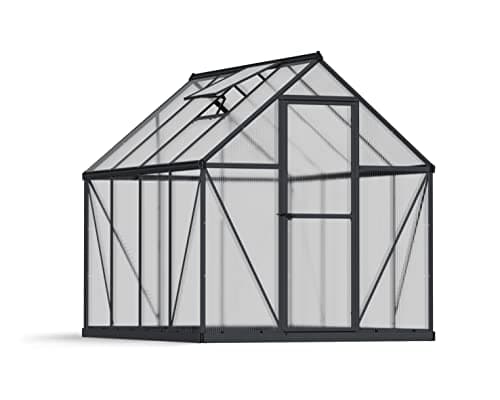 Top pickPalram Canopia Mythos GreenhouseAluminum frame, 4 mm twin-wall polycarbonate | A first real greenhouse | 9.0 | Check price on Amazon |
| 2 |  Quictent Portable Walk-In GreenhouseSteel tube frame with reinforced PE cover | The cheapest usable start | 7.8 | Check price on Amazon |
| 3 | 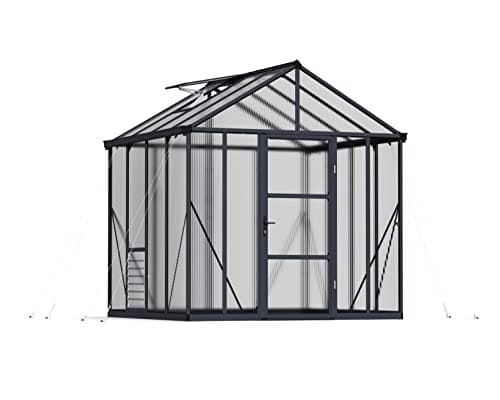 Palram Canopia Glory Greenhouse10 mm twin-wall polycarbonate throughout | Cold climates and winter growing | 8.9 | Check price on Amazon |
| 4 | 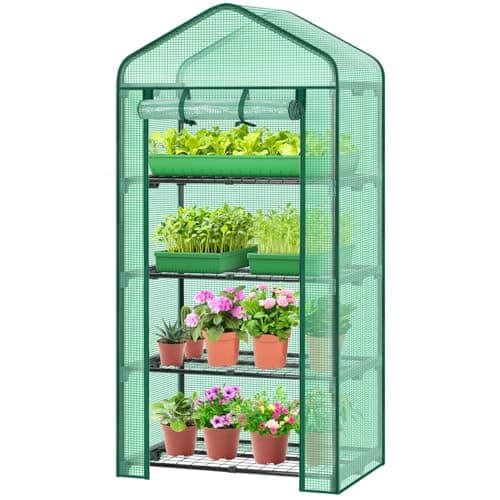 Ohuhu Mini Greenhouse with Shelves4-tier shelf frame with zip cover | Balconies and seedling trays | 7.5 | $49.99 - View on Amazon |
| 5 |  VIVOSUN Cold Frame Mini GreenhouseLow-profile frame with hinged clear lid | Extending the season over a bed | 8.0 | Check price on Amazon |
#ad We may earn a commission - Price as of October 10, 2026
Scores are our own editorial judgment, formed from published specifications and independent sources. They are not aggregated customer ratings, and they are not the result of hands-on testing, which we do not currently do. See how we choose.
The three honest budget levels
Lowest: a cold frame, not a greenhouse
At the bottom of the market the choice is not between a good greenhouse and a cheap greenhouse. It is between a cheap greenhouse and a cold frame, and the cold frame wins on value by a wide margin. It does the two jobs a first season needs -- hardening off and a few weeks of extra season at each end -- for a fraction of the cost, it stores flat, and there is nothing on it to fail.
The mini shelved frame is the balcony version of the same logic: it holds several seed trays in almost no floor space and buys a few protected degrees. Neither grows a plant to maturity, and neither pretends to.
Middle: the tunnel, if you are still deciding
A walk-in tunnel is the cheapest way to find out whether you will actually use a greenhouse. Plenty of people buy one and discover they do not have the habit, and learning that for a fraction of the price of a rigid kit is worth real money.
Price it honestly, though. The cover degrades in UV and is a replaceable part, so a tunnel kept for five years costs the kit plus a cover or two. That arithmetic is what moves most people up to a rigid kit on the second purchase.
Best value overall: the mid-range rigid kit
This is where the curve flattens. You are buying an aluminum frame that will not rust, twin-wall panels that insulate and diffuse, a roof vent included rather than sold as an extra, and lengths you can match to your space. Everything above it on the price list is buying winter performance or width, both of which are real but neither of which the average first greenhouse needs.
False economies
- Buying bigger instead of better. A 6 x 8 that is level, anchored and shelved outgrows a larger kit standing crooked on turf with nothing in it.
- Skipping the anchors. The cheapest way to lose the entire purchase. Every greenhouse in a neighbor's garden was unanchored.
- Single-skin clear plastic on a rigid frame. You pay frame money and get tent glazing. Twin-wall is the point of a rigid kit.
- No vent, or one vent on a long run. Ventilation is not an upgrade. A sealed greenhouse cooks in April.
- Buying a heater before a thermometer. You cannot size heat you have never measured.
Secondhand and end-of-season
The genuine bargains in greenhouses are not new kits. They are aluminum-framed structures being dismantled because somebody is moving, and they are often close to free if you take them apart yourself. Aluminum does not rot or rust, so a frame that is fifteen years old is structurally much the same as a new one. Label every section as you dismantle it, keep every clip, and photograph each joint before you undo it.
What you are inspecting is the glazing, not the frame. Polycarbonate clouds and goes brittle with long UV exposure, and twin-wall panels that have taken on water between the skins never dry out. Budget for a full set of replacement panels and treat anything you can reuse as a bonus; that is still usually cheaper than a new kit of the same size.
New-kit clearance is the other route. Greenhouse pricing is seasonal, and the quiet months are when the previous season's models are discounted. Buying in autumn for a spring build also gives you the winter to get a level base and proper anchors in place, which is where most of the value in the whole purchase actually sits.
Value over ten years, not over one receipt
An aluminum frame with polycarbonate panels is a decade-plus structure with replaceable parts: individual panels and clips are cheap, and nothing on it rusts. A covered frame is a two-to-four-year structure with a consumable skin. Divide the price by the years and the mid-range rigid kit usually comes out cheapest per season, which is the number that actually matters.
If you want the full argument for and against spending anything at all, is a greenhouse worth it works through what the structure returns in food and season length.
The picks in full
Top pick
Palram Canopia Mythos Greenhouse
Palram Canopia
#ad We may earn a commission - prices are shown by Amazon, not by us
The sensible first greenhouse: an aluminum frame with twin-wall panels, sized to fit a normal backyard rather than a nursery.
Twin-wall polycarbonate is the thing that separates a greenhouse from a plastic tent. Two skins with an air gap between them insulate, and the panel diffuses light rather than throwing hard shadows, which suits seedlings better than clear glass does.
The Mythos sits at the point in the range where you get a proper aluminum frame, a roof vent and a lockable door without paying for the heavy-duty glazing. For starting seeds, hardening off, and stretching the tomato season at both ends, that is the right specification.
Two warnings from the manual that people ignore. Anchor it -- every lightweight greenhouse that ends up in a neighbor's yard was not anchored. And build it with a second person; the panels flex and the frame is not square until the last bolt.
What works
- Twin-wall panels diffuse light and insulate better than single-skin plastic
- Aluminum frame will not rust or need painting
- Lengths let you match the run to the space you have
- Roof vent included rather than sold as an extra
What does not
- 4 mm glazing is thin for real winter use
- Assembly is a long afternoon and genuinely needs two people
- Must be anchored -- an unanchored kit is a sail
Skip it if: you live somewhere with heavy snow load. 4 mm panels are a three-season specification; the thicker-glazed models exist for a reason.
| Frame | Rust-resistant aluminum |
|---|---|
| Glazing | 4 mm twin-wall polycarbonate |
| Sizes | 6 ft wide, several lengths including 6 x 8 and 6 x 10 |
| Ventilation | Roof vent, lockable door handle |
| Base | Integrated base rail, anchoring required |
The cheapest usable start
Quictent Portable Walk-In Greenhouse
Quictent
#ad We may earn a commission - prices are shown by Amazon, not by us
A tunnel, not a building -- but the cheapest way to find out whether you will actually use a greenhouse before spending real money.
This is the honest entry point. A lot of people buy a greenhouse and discover they do not have the habit to use one, and finding that out cheaply is worth something.
It does real work in spring: hardening off seedlings, protecting young plants from a late frost, and giving you somewhere dry to pot up. Those are the jobs a first greenhouse actually does.
Treat the cover as a consumable and stake it properly. Every bad review of a tunnel greenhouse is a wind story, and almost all of them start with skipped guy ropes.
What works
- A fraction of the cost of a rigid kit
- Goes up in an hour with no special tools
- Packs away out of season
- Mesh windows give usable ventilation
What does not
- The cover degrades in UV and is a replaceable part
- Poor in wind unless properly staked and guyed
- Not a snow-load structure
Skip it if: you are in a windy or snowy spot. A covered frame is not a structure, and covers are a consumable.
| Frame | Powder-coated steel tube |
|---|---|
| Cover | Reinforced PE with mesh windows |
| Sizes | Several walk-in footprints |
| Ventilation | Roll-up door and mesh side windows |
| Anchoring | Ground stakes and guy ropes supplied |
Cold climates and winter growing
Palram Canopia Glory Greenhouse
Palram Canopia
#ad We may earn a commission - prices are shown by Amazon, not by us
The heavy-glazed model in the range, and the one to buy if the plan is to keep growing through a real winter.
Glazing thickness is the whole argument for this kit. A 10 mm twin-wall panel holds substantially more heat overnight than a 4 mm one, and overnight is when a winter greenhouse either works or does not.
It is also the model to look at if you get real snow. Thin panels and light frames are a three-season specification; if you are in the Cascades or anywhere with a genuine snow load, buy the heavier structure rather than hoping.
None of that makes it heated. A greenhouse without a heat source holds a few degrees over outside, which is the difference between hardy greens surviving and not -- it is not a tropical house in January.
What works
- 10 mm glazing holds heat far better than 4 mm
- Rated for harder weather than the lighter kits
- Wider footprint gives room for benches down both sides
- Better vent provision as standard
What does not
- Substantially more expensive
- Thicker panels cut light transmission a little
- Heavy enough that assembly is a two-person, whole-day job
Skip it if: you only want a spring seed-starting space. You are paying a large premium for insulation you will use for three months of the year.
| Frame | Heavy-gauge aluminum |
|---|---|
| Glazing | 10 mm twin-wall polycarbonate |
| Sizes | 8 ft wide, several lengths |
| Ventilation | Roof vents, and a screened side vent on some models |
| Base | Integrated base, anchoring required |
Balconies and seedling trays
Ohuhu Mini Greenhouse with Shelves
Ohuhu
A shelved cover for seed trays rather than a greenhouse you walk into, and the right answer where there is no room for anything larger.
Calling this a greenhouse oversells it, which is why it disappoints people who expected one. What it actually is: a shelf unit with a cover, sized for standard seed trays, that fits on a balcony or against a wall.
For that job it is good. Seedlings started indoors need somewhere sheltered to harden off, and this gives them a few protected degrees and shelter from wind and heavy rain.
Tie it to something. An empty covered shelf unit is remarkably light and catches wind like a sail.
What works
- Holds several seed trays in almost no floor space
- Cheap enough to be a seasonal purchase
- Zip front rolls up for ventilation
- Folds flat for storage
What does not
- Blows over easily unless tied to something solid
- Very little thermal mass -- it buys a few degrees, not many
- Cover is the first thing to fail
Skip it if: you want to grow plants to maturity. This is a propagation space and a frost blanket, not a growing house.
| Frame | Steel tube shelving |
|---|---|
| Cover | Zip-front PE cover |
| Shelves | Typically 4 tiers |
| Footprint | Fits against a wall or balcony rail |
| Anchoring | Tie to a wall or rail -- essential |
Extending the season over a bed
VIVOSUN Cold Frame Mini Greenhouse
VIVOSUN
#ad We may earn a commission - prices are shown by Amazon, not by us
A lid for a corner of a raised bed: no assembly worth the name, and the cheapest few weeks of extra season you can buy.
A cold frame is the least glamorous and most cost-effective piece of season-extending equipment in the garden. It is a box with a transparent lid: sunlight in, wind off, a few degrees of overnight protection.
Used over the corner of a raised bed it will carry spinach, mache, and hardy lettuces through a cold spell, harden off seedlings before they go out, and start spring sowings a couple of weeks early.
The one discipline it demands is venting. A closed frame on a sunny March day can cook its contents by lunchtime. Prop the lid in the morning, close it in the late afternoon.
What works
- Cheapest real season extension there is
- Works over an existing raised bed with no site prep
- Good for hardening off and for overwintering hardy greens
- Stores flat out of season
What does not
- Overheats fast on a sunny day if you forget to vent it
- Small growing area
- No standing room at all
Skip it if: you need headroom. A cold frame is worked from above, kneeling, with the lid propped open.
| Type | Low cold frame with hinged lid |
|---|---|
| Glazing | Clear panel lid |
| Ventilation | Lid props open -- manual, and it matters |
| Footprint | Sits on a bed or on the ground |
| Assembly | Minimal |
Common questions
What is the best value greenhouse kit?
A mid-range rigid kit with an aluminum frame and 4 mm twin-wall polycarbonate panels, such as the Palram Canopia Mythos. It is where the price curve flattens: you get a non-rusting frame, insulating and diffusing glazing and an included roof vent, without paying the winter-grade premium for 10 mm panels.
Is a cheap greenhouse worth buying?
A cheap covered tunnel is worth buying if you are not yet sure you will use a greenhouse, because it answers that question cheaply and does real spring work. A cheap rigid-looking kit with single-skin clear plastic is not -- you pay frame money for tent glazing. On the smallest budgets a cold frame returns more than either.
How much should I spend on a greenhouse?
Enough to reach an aluminum frame with twin-wall polycarbonate, and then stop unless you specifically want winter growing or a wider footprint. Set aside a meaningful share of the total for a level base, anchors, staging and a thermometer, because none of those are in any kit.
Is a bigger greenhouse better value?
Only once the smaller one is properly set up. Width is the dimension worth paying for -- 8 ft gives benches down both sides and room to turn around with a tray, where 6 ft gives one bench and a standing strip. Extra length with no staging in it is empty volume.
Are polycarbonate greenhouses cheaper than glass?
Usually to buy and considerably cheaper to own, because twin-wall panels insulate better, diffuse light, do not shatter, and replace individually for very little. Glass transmits more light and looks better. Our polycarbonate versus glass comparison sets out both sides.
Sources
Factual claims on this page are backed by the published sources below, and product specifications are the manufacturers’ own. Where a figure is not published, we say so rather than estimating it.