Step 5 - Greenhouses
Complete Greenhouse Kits
No kit is complete in the way the word suggests. Here is what each one actually includes, and the short list of parts you will be buying either way.
Janet H. - the hands-on owner behind Janet Media Group.
Published
This page contains affiliate links. If you buy through them we may earn a commission at no cost to you, and it never decides what we recommend. How this site is funded.
The most complete kit for most backyards is the Palram Canopia Mythos: aluminum frame, 4 mm twin-wall panels, an integrated base rail, a roof vent and a lockable door, all in the box. What it does not include -- and what no greenhouse kit includes -- is a level foundation, ground anchors, shelving and a thermometer. Budget for those four before you buy, because every disappointed review of a "complete" kit is really a review of one of them.
What "complete" means on a greenhouse listing
A complete greenhouse kit means the structure arrives whole: frame sections, glazing panels, fixings, door, vent and instructions, with nothing to source separately to stand it up. That is a real distinction, because plenty of listings sell a frame and price the panels as a second line item, and plenty of cheap tunnels arrive with a cover and no anchors.
It does not mean ready to grow in. A greenhouse with nothing in it is an empty shed with a transparent roof. The parts that turn it into a growing space -- staging, a min/max thermometer, shade cloth in a hot garden, a heater if you want winter -- are separate purchases on every kit at every price.
Quick picks
| # | Product | Best for | Score | Price |
|---|---|---|---|---|
| 1 | 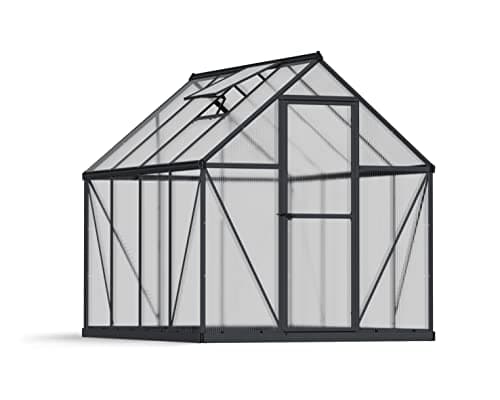 Top pickPalram Canopia Mythos GreenhouseAluminum frame, 4 mm twin-wall polycarbonate | A first real greenhouse | 9.0 | Check price on Amazon |
| 2 | 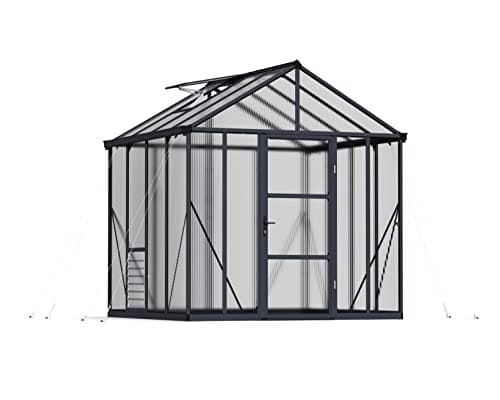 Palram Canopia Glory Greenhouse10 mm twin-wall polycarbonate throughout | Cold climates and winter growing | 8.9 | Check price on Amazon |
| 3 | 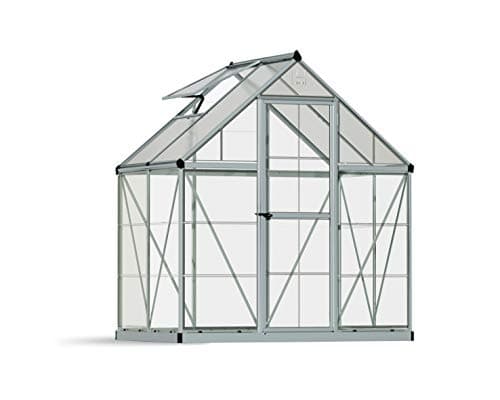 Palram Canopia Hybrid GreenhouseClear side panels, twin-wall roof | Seeing in, and light diffusion | 8.8 | Check price on Amazon |
| 4 |  Quictent Portable Walk-In GreenhouseSteel tube frame with reinforced PE cover | The cheapest usable start | 7.8 | Check price on Amazon |
#ad We may earn a commission - prices are shown by Amazon, not by us
Scores are our own editorial judgment, formed from published specifications and independent sources. They are not aggregated customer ratings, and they are not the result of hands-on testing, which we do not currently do. See how we choose.
What each kit includes
| Kit | Frame | Glazing | Ventilation | Base |
|---|---|---|---|---|
| Palram Canopia Mythos | Rust-resistant aluminum | 4 mm twin-wall polycarbonate | Roof vent, lockable door handle | Integrated base rail, anchoring required |
| Palram Canopia Glory | Heavy-gauge aluminum | 10 mm twin-wall polycarbonate | Roof vents, screened side vent on some models | Integrated base, anchoring required |
| Palram Canopia Hybrid | Rust-resistant aluminum | Clear walls, twin-wall roof | Roof vent plus hinged door | Integrated base, anchoring required |
| Quictent Portable Walk-In | Powder-coated steel tube | Reinforced PE cover with mesh windows | Roll-up door, mesh side windows | Ground stakes and guy ropes supplied |
Read that ventilation column carefully. A single roof vent is the standard provision on a 6 ft wide kit and it is the bare minimum; a greenhouse with one vent and a closed door on a sunny April afternoon will run far hotter than the garden outside. The wider Glory models provide more vent area because they need it.
The base column matters more than it looks. An integrated base rail is what lets you bolt the structure to something; the tunnel ships stakes and guy ropes instead, which is a different and much weaker approach. Neither is a foundation.
The four things no kit supplies
- A level, solid base. Paving slabs, a timber frame on gravel, or a poured pad. A rigid aluminum frame will not square up on uneven ground, and panels that are forced into an out-of-square frame crack at the clips.
- Anchors suited to that base. Masonry bolts into slabs, ground screws into soil, or the auger anchors sold for sheds. The manual tells you to anchor; the box does not contain the hardware for your ground.
- Staging or shelving. Floor space is the least useful space in a greenhouse. Tiered staging roughly doubles what a 6 x 8 will hold, and nothing is sized for seed trays until you add it.
- A min/max thermometer. You cannot manage overnight lows or midday highs you never measured. This is the cheapest item on the list and the one that changes decisions.
Our greenhouse accessories page covers the staging and the thermometer specifically, including which sizes fit standard 1020 trays.
Why kits get returned
Assembly, almost always. A twin-wall kit is a long afternoon for two people and a genuinely bad day for one -- the frame is not square until the final bolt, and the panels flex while you are trying to hold them. Nothing in the box is defective; the frame simply does not become rigid until it is finished.
The second reason is wind. An unanchored lightweight greenhouse is a sail, and that applies to the rigid kits as much as the tunnels. If your garden is exposed, read the best greenhouse for high winds before choosing, because the answer changes.
Siting it, which the box cannot help with
A complete kit still has to land somewhere sensible, and the site decides more about the result than the specification does. You want the longest possible run of unshaded sun -- six hours is the working minimum, and more is better in spring when the sun is low and every nearby fence throws a long shadow. Orientation matters less than people expect at hobby scale; shade matters enormously.
Then check three practical things before the base goes down. Can you get a hose or a watering can to it without crossing the lawn twice a day, because a greenhouse needs water almost daily in summer. Is there room to open the door fully and walk in with a tray in both hands. And is the ground genuinely free-draining, because a greenhouse standing in a winter puddle rots whatever is on the floor and makes the structure cold.
None of that is in any manual, and all of it is harder to change than the kit you chose.
If the complete kit is the whole budget
Then buy a smaller complete kit rather than a larger incomplete one. A 6 x 6 that is level, anchored, vented and shelved outgrows a 8 x 12 standing crooked on turf with nothing in it, every single season.
And if you are not yet sure you will use one, the tunnel is the honest answer. It is a fraction of the cost, it goes up in an hour, and it does the three jobs a first greenhouse actually does: hardening off, late-frost cover, and somewhere dry to pot up. Treat the cover as a consumable. More on that trade-off in greenhouse kit vs DIY.
The picks in full
Top pick
Palram Canopia Mythos Greenhouse
Palram Canopia
#ad We may earn a commission - prices are shown by Amazon, not by us
The sensible first greenhouse: an aluminum frame with twin-wall panels, sized to fit a normal backyard rather than a nursery.
Twin-wall polycarbonate is the thing that separates a greenhouse from a plastic tent. Two skins with an air gap between them insulate, and the panel diffuses light rather than throwing hard shadows, which suits seedlings better than clear glass does.
The Mythos sits at the point in the range where you get a proper aluminum frame, a roof vent and a lockable door without paying for the heavy-duty glazing. For starting seeds, hardening off, and stretching the tomato season at both ends, that is the right specification.
Two warnings from the manual that people ignore. Anchor it -- every lightweight greenhouse that ends up in a neighbor's yard was not anchored. And build it with a second person; the panels flex and the frame is not square until the last bolt.
What works
- Twin-wall panels diffuse light and insulate better than single-skin plastic
- Aluminum frame will not rust or need painting
- Lengths let you match the run to the space you have
- Roof vent included rather than sold as an extra
What does not
- 4 mm glazing is thin for real winter use
- Assembly is a long afternoon and genuinely needs two people
- Must be anchored -- an unanchored kit is a sail
Skip it if: you live somewhere with heavy snow load. 4 mm panels are a three-season specification; the thicker-glazed models exist for a reason.
| Frame | Rust-resistant aluminum |
|---|---|
| Glazing | 4 mm twin-wall polycarbonate |
| Sizes | 6 ft wide, several lengths including 6 x 8 and 6 x 10 |
| Ventilation | Roof vent, lockable door handle |
| Base | Integrated base rail, anchoring required |
Cold climates and winter growing
Palram Canopia Glory Greenhouse
Palram Canopia
#ad We may earn a commission - prices are shown by Amazon, not by us
The heavy-glazed model in the range, and the one to buy if the plan is to keep growing through a real winter.
Glazing thickness is the whole argument for this kit. A 10 mm twin-wall panel holds substantially more heat overnight than a 4 mm one, and overnight is when a winter greenhouse either works or does not.
It is also the model to look at if you get real snow. Thin panels and light frames are a three-season specification; if you are in the Cascades or anywhere with a genuine snow load, buy the heavier structure rather than hoping.
None of that makes it heated. A greenhouse without a heat source holds a few degrees over outside, which is the difference between hardy greens surviving and not -- it is not a tropical house in January.
What works
- 10 mm glazing holds heat far better than 4 mm
- Rated for harder weather than the lighter kits
- Wider footprint gives room for benches down both sides
- Better vent provision as standard
What does not
- Substantially more expensive
- Thicker panels cut light transmission a little
- Heavy enough that assembly is a two-person, whole-day job
Skip it if: you only want a spring seed-starting space. You are paying a large premium for insulation you will use for three months of the year.
| Frame | Heavy-gauge aluminum |
|---|---|
| Glazing | 10 mm twin-wall polycarbonate |
| Sizes | 8 ft wide, several lengths |
| Ventilation | Roof vents, and a screened side vent on some models |
| Base | Integrated base, anchoring required |
Seeing in, and light diffusion
Palram Canopia Hybrid Greenhouse
Palram Canopia
#ad We may earn a commission - prices are shown by Amazon, not by us
Clear walls so you can see what is happening inside, with a diffusing twin-wall roof over the plants that need protection from hard overhead sun.
The Hybrid name refers to two glazing types in one kit: crystal-clear panels on the walls, twin-wall on the roof. In practice that means high light levels from the sides and diffused light from above, which is a good compromise in a northern or cloudy garden.
It also means you can see in. That sounds trivial until you have walked out in the rain three times a week to check whether anything needs water.
In a hot, south-facing, unshaded spot the clear walls become a liability. If that is your site, choose the fully diffused model or plan on shade cloth from midsummer.
What works
- You can see the plants without opening the door
- High light transmission through the clear walls
- Twin-wall roof still protects from midday sun
- Same aluminum frame as the rest of the range
What does not
- Clear walls run hotter than fully diffused glazing
- Shows dirt and algae sooner
- Needs shading in a hot, exposed spot
Skip it if: your site bakes in afternoon sun. Clear walls transmit far more light, and heat follows light.
| Frame | Rust-resistant aluminum |
|---|---|
| Glazing | Clear polycarbonate walls, twin-wall roof |
| Sizes | 6 ft wide, multiple lengths |
| Ventilation | Roof vent plus hinged door |
| Base | Integrated base, anchoring required |
The cheapest usable start
Quictent Portable Walk-In Greenhouse
Quictent
#ad We may earn a commission - prices are shown by Amazon, not by us
A tunnel, not a building -- but the cheapest way to find out whether you will actually use a greenhouse before spending real money.
This is the honest entry point. A lot of people buy a greenhouse and discover they do not have the habit to use one, and finding that out cheaply is worth something.
It does real work in spring: hardening off seedlings, protecting young plants from a late frost, and giving you somewhere dry to pot up. Those are the jobs a first greenhouse actually does.
Treat the cover as a consumable and stake it properly. Every bad review of a tunnel greenhouse is a wind story, and almost all of them start with skipped guy ropes.
What works
- A fraction of the cost of a rigid kit
- Goes up in an hour with no special tools
- Packs away out of season
- Mesh windows give usable ventilation
What does not
- The cover degrades in UV and is a replaceable part
- Poor in wind unless properly staked and guyed
- Not a snow-load structure
Skip it if: you are in a windy or snowy spot. A covered frame is not a structure, and covers are a consumable.
| Frame | Powder-coated steel tube |
|---|---|
| Cover | Reinforced PE with mesh windows |
| Sizes | Several walk-in footprints |
| Ventilation | Roll-up door and mesh side windows |
| Anchoring | Ground stakes and guy ropes supplied |
Common questions
What is included in a complete greenhouse kit?
The frame, the glazing panels, all fixings, the door, at least one roof vent and the instructions -- everything needed to stand the structure up. It does not include a foundation, ground anchors, shelving, a thermometer or a heater. Those are separate purchases on every kit regardless of price.
Do greenhouse kits come with a base?
The Palram Canopia kits include an integrated base rail, which is the part the frame bolts to -- not a foundation. You still need something level and solid underneath it, such as paving slabs or a timber frame on gravel, plus anchors suited to that surface.
Do you need a foundation for a greenhouse kit?
You need a level, solid, square base. A rigid aluminum frame will not square up on uneven ground, and panels forced into an out-of-square frame crack at the clips. Paving slabs or a timber perimeter on compacted gravel are the usual answers; a full concrete pad is more than most hobby kits require.
Can one person assemble a greenhouse kit?
It is possible and it is unpleasant. The frame is not rigid until the last bolt goes in, and the glazing panels flex while you are positioning them. Both manufacturers and nearly every owner recommend two people and a whole afternoon.
Is a complete greenhouse kit cheaper than building one?
Usually, once you count glazing. Polycarbonate panels and the clips that hold them are the expensive part of any greenhouse, and kit manufacturers buy them at a scale you cannot. A DIY build wins on custom sizing and on using reclaimed materials, not on price.
Sources
Factual claims on this page are backed by the published sources below, and product specifications are the manufacturers’ own. Where a figure is not published, we say so rather than estimating it.