Step 5 - Greenhouses
The Best Greenhouse Shade Cloth
Shade cloth is one decision -- what percentage -- wearing a lot of brand names. Get the number right for your climate and almost any decent mesh will do.
Janet H. - the hands-on owner behind Janet Media Group.
Published
This page contains affiliate links. If you buy through them we may earn a commission at no cost to you, and it never decides what we recommend. How this site is funded.
The short version. For most hobby greenhouses the Agfabric 50% panel with grommets is the one to buy: fifty percent is the standard working rating for a structure growing vegetables through a hot summer, and the grommets let you lace it to the frame properly. If you want the cheapest shade per square foot and have a whole kit to cover, the Agfabric 40% 50-foot roll is the value buy. The budget pick is the Mklsit 40% panel -- grommeted, the right fabric, and the least money here. In a short or cloudy summer step down to the Agfabric 30%, and in a genuinely punishing one the 70% reflective aluminet is the format that works where black mesh does not.
Here is the number that explains why this product exists. University of Georgia Extension puts the heat absorbed on a dark surface held perpendicular to the sun's rays as high as 300 BTU per hour per square foot -- meaning a greenhouse could theoretically take on 300 BTU per hour for every square foot of floor area. That is the energy that makes a sealed 6 x 8 kit unusable by eleven in the morning in July, and it is the reason plants in it wilt.
Shading is the cheapest intervention against it. The same bulletin notes that roll-up shade screens work well in hobby houses and can reduce radiation by about 50%, which should reduce the temperature rise proportionally as long as the ventilation rate stays constant. The catch is in the next sentence of that guidance, and it is the honest center of this page: shading also reduces the light reaching the plants, which may limit their growth, since light is what drives photosynthesis. Shade cloth is a trade, not an upgrade.
How we chose
We have not measured light transmission through these fabrics and are not going to imply we have. Every percentage quoted below is the manufacturer's own figure from its listing. What this page contributes is the decision framework -- which percentage suits which climate, what the fabric type changes, and how the panel attaches -- applied to currently purchasable cloth.
- Knitted mesh, not woven tarp. Knitted HDPE does not fray when you cut it and lets hot air move through. A solid or woven tarp traps air against the glazing and is the wrong product.
- A stated shade percentage. If a listing does not say what it blocks, it cannot be matched to a climate, and there is no reason to buy it over one that does.
- An attachment you can trust in wind. Grommets that take cord beat supplied clips on any exposed site. We say which each one has.
- A size that covers a hobby kit. Panels sized for a pergola are usually the right size for a 6 x 8 or 8 x 12 greenhouse too, but the length has to reach over the ridge.
- A live price, now. Every pick carries a current price read from our price layer. Nothing here is listed on a number we remember.
- No invented testing. Scores are editorial judgment from published specifications and Extension guidance, not hands-on trials or rating averages.
Quick picks
| # | Product | Best for | Score | Price |
|---|---|---|---|---|
| 1 | 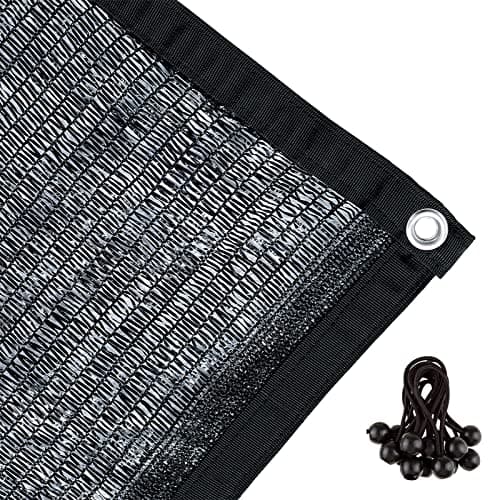 Top pickAgfabric 50% Shade Cloth with Grommets50% shade factor, grommeted edge, common sizes from 6 x 20 ft | Cutting the heat before it gets in | 8.2 | $29.63 - View on Amazon |
| 2 | 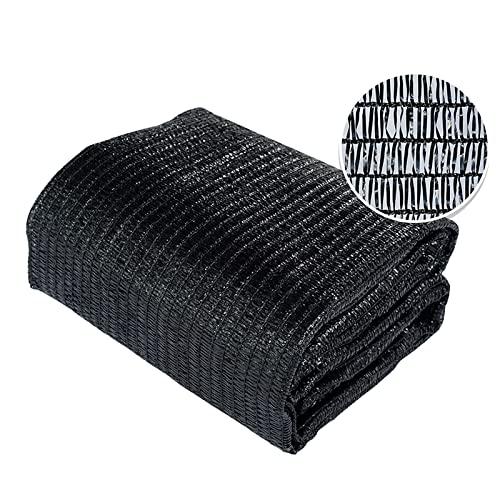 Agfabric 40% Shade Cloth with Clips, 10 x 50 ft40% shade rating, 10 x 50 ft roll, clips included | Covering a whole kit, with fabric left over | 8.7 | $57.99 - View on Amazon |
| 3 | 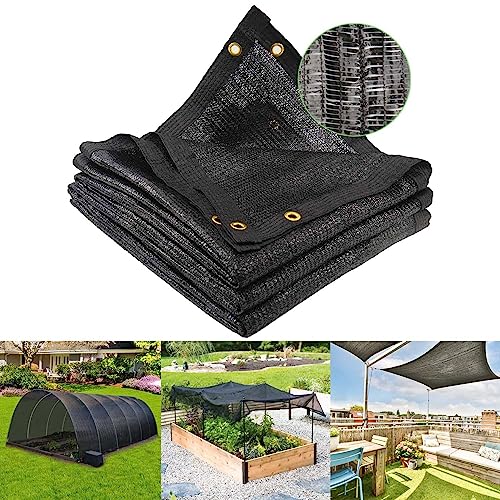 Mklsit 40% Shade Cloth with Grommets, 10 x 20 ft40% shade rating, 10 x 20 ft panel, grommets along the edges | The cheapest shade cloth that is still the right fabric | 8.2 | $15.98 - View on Amazon |
| 4 | 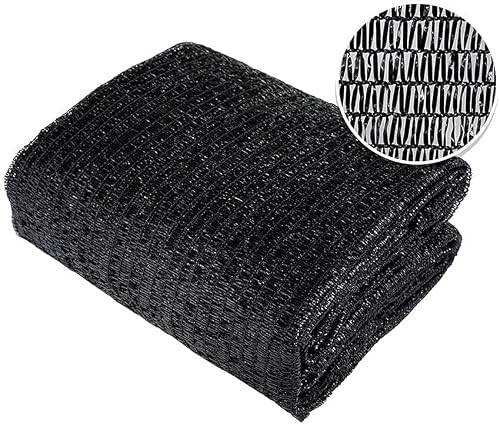 Agfabric 30% Shade Cloth with Clips, 10 x 30 ft30% shade rating, 10 x 30 ft panel, clips included | Short northern summers and seedling benches | 8.4 | $34.99 - View on Amazon |
| 5 | 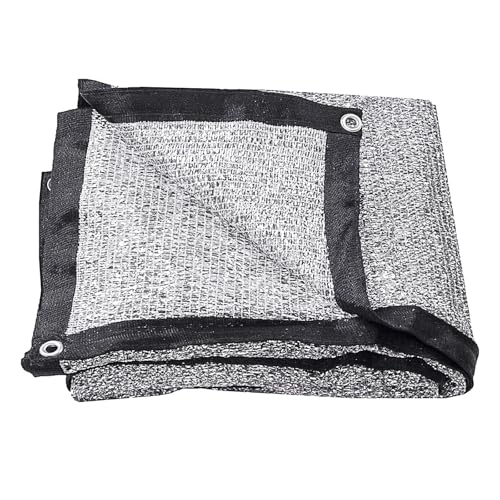 mychoiii 70% Aluminet Reflective Shade Cloth, 10 x 14 ft70% shade rating, aluminized reflective mesh, grommets fitted | Hot, bright climates where black fabric is not enough | 8.0 | $29.99 - View on Amazon |
#ad We may earn a commission - Price as of November 24, 2026
Scores are our own editorial judgment, formed from published specifications and independent sources. They are not aggregated customer ratings, and they are not the result of hands-on testing, which we do not currently do. See how we choose.
Pick the percentage first, the product second
Shade cloth is rated by the share of light it blocks. That single number decides whether the cloth helps or hurts, and it is set by your climate and your crop rather than by the greenhouse.
| Rating | Where it fits | What it suits |
|---|---|---|
| 30% | Short, cool or cloudy summers -- upper Midwest, New England, Pacific Northwest | Fruiting crops that need all the light they can get |
| 40% | Most of the country; the single safest choice | Tomatoes, peppers, cucumbers through a normal hot spell |
| 50% | Hot, bright summers with a long season | Mixed growing where midday is the problem |
| 60 to 70% | Desert Southwest, Gulf Coast, high-elevation intense sun | Leafy greens, seedlings, cuttings, summer propagation |
| Over 70% | Specialist use only | Shade-loving ornamentals, not a food greenhouse |
The common mistake is buying too much shade. People pick 70% because the greenhouse feels unbearable in there, and the greenhouse does get cooler -- but a tomato under 70% shade in a cloudy August grows tall, soft and fruitless. If you are unsure, buy 40%. It is the rating that is wrong in the fewest places.
Black or reflective: two different mechanisms
Almost all cheap shade cloth is black knitted HDPE. It works by interception: the fabric absorbs light so the plants do not get it. That means the cloth itself gets hot, which is fine outside the structure with air moving around it and much less useful taped flat to the glazing.
Aluminized cloth -- usually sold as aluminet -- works by reflection instead. A large share of the energy bounces off before it becomes heat at all. In a climate where the problem is three months of extreme radiation rather than a hot fortnight, that distinction is worth paying for.
| Black knitted HDPE | Reflective aluminet | |
|---|---|---|
| Mechanism | Absorbs light | Reflects light away |
| Fabric temperature | Gets hot itself | Stays cooler |
| Cost | Lowest in the category | Noticeably more per square foot |
| Durability | Several seasons outdoors | Coating scuffs with handling |
| Best for | Most US summers | Desert, Gulf-coast and high-elevation sun |
| Appearance | Visually heavy, dark | Silver, much lighter over a kit |
Either way, fit the cloth OUTSIDE the glazing with an air gap if you can. Radiation stopped before it enters the structure never becomes heat you have to vent; the same fabric hung inside has already let the energy through the panels. An outside fit also lets the warmed air under the cloth drift away instead of sitting against the polycarbonate.
Attachment is what fails, not fabric
Shade cloth does not usually wear out. It blows off, tears at a fixing point, or gets left up all winter and shreds. The fixing method is therefore worth more attention than the brand name.
- Grommets plus cord is the strong option: lace the panel to the frame every two or three feet and the load spreads along the hem.
- Supplied clips are quick and fine in a sheltered yard. On an exposed site they are the first thing to let go.
- Never screw through the mesh without a grommet or washer. The hole becomes a tear on the first windy night.
- Leave the ridge loose, tie the bottom edge. A panel that can lift slightly sheds a gust; one stretched drum-tight transmits the whole load to its fixings.
- Take it down in September. UV and winter weather do far more damage than a summer of use, and a dark panel on a greenhouse in November costs you light you want.
Sizing a panel to a hobby kit
Measure over the structure rather than along the ground. A 6 x 8 ft kit with a pitched roof needs roughly ten to twelve feet of cloth to run up one side, over the ridge and part-way down the other -- which is why 10 ft wide panels are the common size and why they fit greenhouses despite being sold for patios.
- 1
Measure the span you actually want covered
Up the sunny wall, over the ridge, and as far down the far side as you want shaded. Add a foot each end for fixing.
- 2
Decide roof-only or roof-and-wall
Roof-only is enough for midday heat. A west wall also needs covering if the kit bakes in the late afternoon.
- 3
Buy the length, not the area
Panels are usually 10 ft wide. The length is the number that determines whether it reaches.
- 4
Cut knitted mesh to fit, and hem the cut
Knitted cloth will not run, but a taped or folded hem gives grommets something to bite.
- 5
Keep the offcut
It goes over a lettuce bed in August or a cold frame in spring. Nothing here is wasted.
When shade cloth is not the answer
Two situations where buying cloth will disappoint you. The first is a ventilation problem wearing a heat costume: a kit with a single roof vent, no opener and no fan is short of air exchange, and shading it only makes a dim hot greenhouse out of a bright one. The second is genuinely extreme heat. Extension's position is clear -- if summer temperatures cannot be brought into an acceptable range with reasonable ventilation and shading, the remaining option is evaporative cooling, which is a fan-and-pad system rather than a fabric.
For a hobby house there is a third, cheaper answer worth considering before any of them: stop asking the greenhouse to work in July. Many home growers use the structure hard from February to June and again from September to November, and let it coast through the hottest weeks with the door open and the tomatoes outside. What to grow in a greenhouse sets out which crops actually justify the summer fight.
The picks in full
Top pick
Agfabric 50% Shade Cloth with Grommets
Agfabric
The cheapest cooling in the greenhouse, because it stops solar gain at the glazing instead of asking a fan to remove it afterward.
Heat gets into a greenhouse as light. Extension figures put the theoretical solar gain at up to 300 BTU per hour for every square foot of floor area, and a fan can only remove that heat after it has arrived. Shade cloth stops a share of it at the roof, which is why it is the first cooling measure rather than the last.
The percentage is the decision, and higher is not better. Fifty percent suits a summer greenhouse full of leafy crops in a hot, bright climate. In the Pacific Northwest, or over tomatoes and peppers that want all the light they can get, 30% to 40% is the sensible grade -- shading reduces the light striking the plants, and light is what the crop is made of.
Fit it on the outside of the glazing where possible. Cloth hung inside still lets the solar energy through the roof and then absorbs it in the house; outside, the heat never gets in. Either way, take it down in September rather than leaving it up out of inertia.
What works
- Removes heat at the source, which no fan can do as cheaply
- Takes minutes to put up and come down seasonally
- Doubles as summer shade over a raised bed of lettuce or spinach
- Knitted fabric does not fray when cut, so odd sizes are easy
- Nothing to power, nothing to break
What does not
- Shading cuts light and therefore growth -- it is a summer-only measure
- 50% is too much for some crops; 30% or 40% is the gentler choice
- Needs secure fixing or wind will have it off the roof
- Does nothing for humidity, so it does not replace a fan
Skip it if: you are growing in a cold or cloudy climate where light is already the limiting factor -- shading always costs growth.
| Shade factor | 50% (40% and 30% versions also sold) |
|---|---|
| Material | Knitted UV-stabilized polyethylene, frayless edge |
| Sizes | Sold in several sizes, including 10 x 16 ft |
| Fixing | Grommets along the edge; clips sold with some sizes |
| Life | Several seasons outdoors |
| Also used for | Shading a low tunnel or a bed of summer salad |
Covering a whole kit, with fabric left over
Agfabric 40% Shade Cloth with Clips, 10 x 50 ft
Agfabric
Fifty feet of the percentage that suits most of the country, which makes it the cheapest shade per square foot here.
Forty percent is the percentage to buy if you are only going to own one piece of shade cloth. It is enough to pull the peak temperature of a small greenhouse down meaningfully in a Zone 6 or 7 summer, and it is still light enough that tomatoes, cucumbers and peppers underneath it keep setting fruit. Most of the country sits in the band where it is the right answer.
The reason this listing earns its place over the shorter Agfabric panels is arithmetic rather than performance: it is the same fabric in a 50 ft length, and that length brings the cost per square foot down below everything else here. You will have fabric left over, which is less of a problem than it sounds -- the offcut goes over a lettuce bed in August, or over a cold frame in late spring to stop seedlings scorching.
Like the 30% panel it ships with clips and no grommets. If the greenhouse is in a windy spot, run a cord through the mesh along the lower edge and tie it off rather than trusting clips alone.
What works
- 40% is the percentage that suits the widest range of US summers
- Fifty feet covers a 6 x 8 or 8 x 12 kit and leaves fabric for a bed or a cold frame
- Lowest cost per square foot of any panel on this page
- Same knitted mesh as the 30%, so it cuts and hems the same way
What does not
- A 50 ft roll is a lot of fabric to store over winter
- Clip attachment again, so exposed sites need extra ties
- Still too light for a desert summer, where 50% and up is the working range
Skip it if: You only need to shade one small roof. You will be storing most of a 50 ft roll for a year.
| Shade rating | 40% (manufacturer figure) |
|---|---|
| Panel size | 10 x 50 ft |
| Material | Knitted HDPE mesh, black |
| Attachment | Clips supplied; no grommets |
| Typical use | Whole-structure shading plus spare |
The cheapest shade cloth that is still the right fabric
Mklsit 40% Shade Cloth with Grommets, 10 x 20 ft
Mklsit
Grommeted, knitted, the right percentage, and the least money of anything here -- the sensible first purchase.
This is the budget pick, and the thing worth saying about it is that being cheap has not made it the wrong product. It is knitted mesh at 40% shade with grommets around the edge -- the same specification as panels costing two or three times as much, in a smaller size and without a brand you have heard of.
Grommets matter more than people expect. A clipped panel is held by friction at a handful of points; a grommeted panel can be laced to the frame with cord every couple of feet, which is the difference between a cover that survives a summer storm and one you find in the neighbor's hedge. If you are shading a kit on an exposed site, the grommets here are a genuine advantage over the longer Agfabric rolls.
What you give up is area. Ten by twenty feet will cover the roof and the south wall of a small walk-in kit and that is about the end of it. If you have a bigger structure, or you want to shade a bed as well, the 50 ft roll works out cheaper per square foot even though it costs more up front.
What works
- Grommets rather than clips, which is the stronger way to tie a panel down
- 40% shade, so it is useful across most of the country
- Cheapest entry on this page by a clear margin
- Breathable mesh rather than solid tarp, so heat vents through it
What does not
- Twenty feet is one roof's worth; no spare for a second structure
- Grommet spacing is not stated, so plan to add ties between them on a long edge
- A general-purpose garden panel rather than a greenhouse-specific product
Skip it if: You need to cover more than a small kit. Twenty feet does one roof and not much else.
| Shade rating | 40% (manufacturer figure) |
|---|---|
| Panel size | 10 x 20 ft |
| Material | Breathable knitted mesh, black |
| Attachment | Grommets along the edges |
| Also sold for | Patios, kennels, chicken runs |
Short northern summers and seedling benches
Agfabric 30% Shade Cloth with Clips, 10 x 30 ft
Agfabric
The lightest shade worth buying: takes the edge off midday without costing you the light a fruiting crop needs.
Shade cloth is sold by the percentage of light it blocks, and 30% is the bottom of the useful range for a greenhouse growing food. It is the right number where summer heat is a few weeks of discomfort rather than a season-long problem -- the upper Midwest, New England, the Pacific Northwest, anywhere a 6 x 8 kit hits the high 90s inside for a fortnight in July and is otherwise fine.
The practical reason to start here rather than higher: every percentage point of shade you add is light the crop does not get. Fruiting vegetables are the greedy ones. Cutting 30% of the light off a tomato in a greenhouse in Minnesota costs almost nothing in yield because the plant was light-saturated at midday anyway. Cutting 50% off the same plant in a cloudy August does.
This is a 10 x 30 ft piece, which is long rather than wide -- enough to run over the ridge of a small kit and down the sunny side, or to cover a bank of seedling benches twice over. Agfabric supplies clips rather than fitting grommets, which is quicker to put up and less secure in a blow; if your site is exposed, plan on adding ties through the mesh at the corners.
What works
- Long enough to cover the roof and one wall of a 6 x 8 kit in a single piece
- Knitted mesh, so cutting it to length does not start a run
- Lets through enough light that tomatoes and peppers keep fruiting under it
- Clips mean you can fit it without punching holes in a frame
What does not
- 30% is the wrong choice south of about the 35th parallel
- Clips are a weaker attachment than grommets and ties in wind
- Black fabric absorbs heat itself, so it wants an air gap above the glazing
Skip it if: You garden in a hot summer climate. In Texas, Arizona or the Central Valley 30% is not enough to stop a greenhouse cooking.
| Shade rating | 30% (manufacturer figure) |
|---|---|
| Panel size | 10 x 30 ft |
| Material | Knitted HDPE mesh, black |
| Attachment | Clips supplied; no grommets |
| Edges | Taped, knitted mesh does not fray when cut |
Hot, bright climates where black fabric is not enough
mychoiii 70% Aluminet Reflective Shade Cloth, 10 x 14 ft
mychoiii
Aluminized mesh reflects heat away instead of absorbing it, which is the format for a genuinely hot summer.
Aluminet is a different answer to the same problem. Instead of a black mesh that intercepts light and gets hot doing it, the fabric is aluminized so that a large share of the energy is reflected back off the structure before it ever becomes heat inside. In a climate where a greenhouse is unusable from June to September, that distinction stops being academic.
The trade is light, and it is a big one at this rating. Seventy percent shade over a tomato in a cloudy climate will give you a tall green plant and very little fruit. Buy this only if your problem is genuinely extreme heat -- and then take it off in September rather than leaving it up out of habit.
A practical note on fitting: reflective cloth works best with an air gap between it and the glazing, because then the air warmed under the fabric can move away instead of sitting against the panels. Running it over the ridge on a cord, proud of the roof, does more than taping it flat to the polycarbonate.
What works
- Reflects light rather than absorbing it, so the fabric itself stays cooler
- Silver mesh is far less visually heavy over a greenhouse than black
- Grommets fitted as standard
- The right tool for a desert or Gulf-coast summer, where 40% is cosmetic
What does not
- 70% is far too much shade for a cool-summer climate
- A 10 x 14 ft panel covers a small kit only
- Aluminized coatings scuff; this is not a ten-season fabric
Skip it if: You garden anywhere with a short or cloudy summer. Seventy percent shade will cost you your fruit set.
| Shade rating | 70% (manufacturer figure) |
|---|---|
| Panel size | 10 x 14 ft |
| Material | Aluminized knitted mesh, silver |
| Attachment | Grommets fitted |
| Also sold for | Patios, kennels, vehicle covers |
Common questions
What percentage shade cloth is best for a greenhouse?
Forty percent suits the widest range of US summers for a greenhouse growing vegetables, and 50% is the common choice where the season is long and bright. Step down to 30% in a short or cloudy summer, and only go to 60 or 70% in a desert or Gulf-coast climate or for leafy greens and propagation, because heavy shade costs you fruit set.
Should shade cloth go inside or outside the greenhouse?
Outside, with an air gap, whenever it is practical. Radiation stopped before it reaches the glazing never becomes heat you have to vent, and an external fit lets the air warmed under the fabric drift away instead of sitting against the panels.
Is black or reflective shade cloth better?
Black knitted mesh is cheaper and right for most climates; it works by absorbing light, which means the fabric itself gets hot. Reflective aluminized cloth bounces energy away before it becomes heat and is the better answer in extreme sun, at a higher price and with a coating that scuffs over time.
Does shade cloth reduce greenhouse temperature?
Yes. University of Georgia Extension puts the radiation reduction from roll-up shade screens at about 50%, which should cut the temperature rise proportionally provided the ventilation rate stays the same. Shade does not replace ventilation -- it works alongside it.
Can I leave shade cloth on all year?
You should not. Winter UV and weather do more damage to the fabric than a summer of use, and a dark panel over the glazing in November blocks light you want at the shortest time of year. Take it down in autumn and store it dry.
What else cools a greenhouse if shade cloth is not enough?
More air exchange first -- a bigger roof vent, an automatic opener or an exhaust fan. If reasonable ventilation and shading together still leave the house too hot, Extension's guidance is that evaporative cooling with a fan and pad system is the remaining option.
Sources
Factual claims on this page are backed by the published sources below, and product specifications are the manufacturers’ own. Where a figure is not published, we say so rather than estimating it.