Step 4 - Composting
Mill Composter Alternatives
Mill turns a week of kitchen waste into a bucket of dry grounds. Three other things get you to roughly the same place by different routes.
Janet H. - the hands-on owner behind Janet Media Group.
Published
This page contains affiliate links. If you buy through them we may earn a commission at no cost to you, and it never decides what we recommend. How this site is funded.
The short version. The Reencle Prime is the closest alternative for most households: a sealed microbial kitchen unit that takes cooked food, runs continuously and is bought outright with no service attached. If you want the same dry, milled output in a smaller countertop box, the Vitamix FoodCycler is the format match. If you have outdoor space and the waste is mostly vegetable, the Envirocycle sealed drum handles far more material for much less money. And the budget pick is the EPICA stainless caddy -- a transfer container rather than a composter, but the cheapest thing that fixes the smell most people are actually trying to fix.
Mill describes itself as an odorless food recycler that works overnight without pressing a button. Its own documentation says it takes almost anything from avocado pits to turkey bones, reduces the volume of your food by eighty percent, and turns scraps into nutrient-rich "food grounds" that can go on your garden, feed backyard chickens, or be sent on to the company's small-farm partners. That is a well-defined product with a clear benefit, and any alternative has to be judged against those specific claims rather than against a vague idea of a kitchen composter.
What Mill does well, claim by claim
| Mill's claim | What it means in practice | What else does this |
|---|---|---|
| Works overnight, no button | A scheduled drying and grinding cycle | Countertop grinder-dehydrators, on a manual cycle |
| Takes almost anything, including bones | Broader input range than any garden bin | Nothing on this page matches it on bones |
| Reduces food volume by 80% | Drying removes the water, which is most of the bulk | Any grinder-dehydrator; microbial units reduce too |
| Produces food grounds for garden or chickens | A dry, storable, nutrient-rich output | Grinder-dehydrator output, after curing |
| Grounds can go to small-farm partners | A disposal route if you have no garden | No product alternative -- this is a service |
Two rows there have no product equivalent, and it is only fair to say so. Nothing in this site's registry processes bones, and no appliance comes with a farm-partner collection programme. If either of those is the reason you are interested in Mill, an alternative appliance will not replace it.
How we chose the alternatives
- It has to match on a stated strength, or cost clearly less. Each pick either does a comparable job or does a usefully similar job for less.
- No disparagement. Mill is a capable, well-documented product. These are different routes, not corrections.
- Bought outright. Every pick here is a one-off purchase, which is the main reason people search for an alternative in this category.
- Cooked food is the dividing line. Where a pick cannot take cooked food, that is stated rather than glossed.
- A live price, now. Each pick carries a current price from our price layer with the date shown; where a listing has no live offer the page shows a check-price link instead of a number.
Quick picks
| # | Product | Best for | Score | Price |
|---|---|---|---|---|
| 1 | 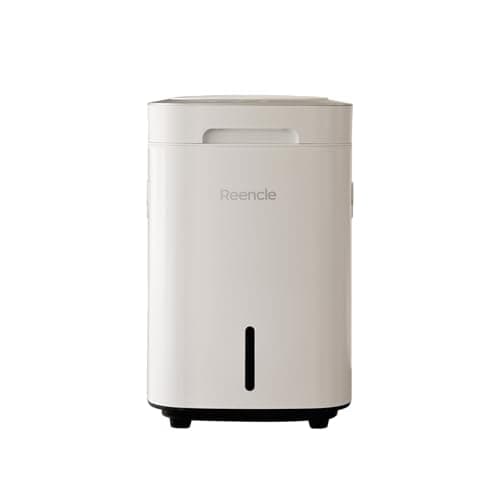 Top pickReencle Prime Electric ComposterMicrobial, about 1.5 lb of scraps a day, 28 dB | An apartment with no outdoor space | 8.0 | $399.00 - View on Amazon |
| 2 |  Vitamix FoodCycler FC-50Compact bucket-style recycler, carbon filtered | A smaller electric option | 7.6 | Check price on Amazon |
| 3 |  Envirocycle ComposterTumbler drum on a liquid-collecting base | Patios and small yards | 8.0 | $349.99 - View on Amazon |
| 4 | 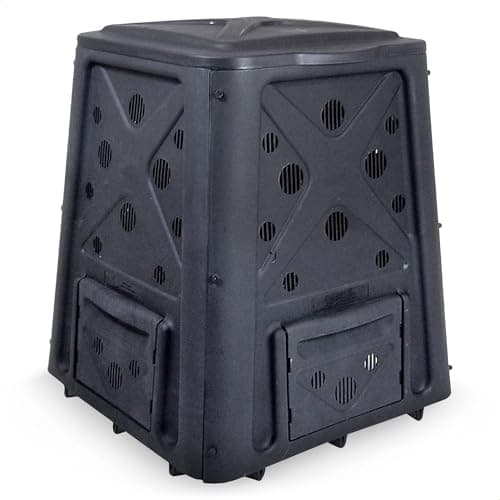 Redmon Green Culture 65-Gallon Compost Bin65 gal enclosed bin with lid and access doors | A lidded static bin | 8.1 | $69.99 - View on Amazon |
| 5 | 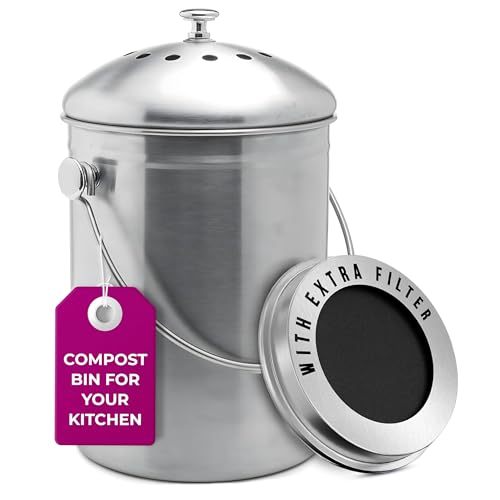 EPICA Stainless Steel Compost BinSteel pail with replaceable charcoal filter | Filtered, longer intervals | 8.2 | $23.98 - View on Amazon |
#ad We may earn a commission - Price as of November 24, 2026
Scores are our own editorial judgment, formed from published specifications and independent sources. They are not aggregated customer ratings, and they are not the result of hands-on testing, which we do not currently do. See how we choose.
Three different routes, three different trades
- Sealed microbial unit. Closest overall match: indoors, sealed, takes cooked food, no cycle to wait for. Trade: it holds a living culture that needs occasional topping up, and it does not produce a dry storable meal.
- Countertop grinder-dehydrator. Format match: timed cycle, dry milled output you can store. Trade: smaller capacity than a built-in bin, and a filter to replace.
- Sealed outdoor drum. Volume match and then some, with no power and no consumables. Trade: you need outdoor space, and it must never be fed meat, dairy or cooked food.
- Large lidded static bin. The cheapest way to process real garden-scale volume. Same cooked-food limit, slower, but it will take an entire year of garden waste.
If you are weighing the appliance route against the garden route in general rather than against Mill specifically, electric composter vs compost bin is the page that compares them head to head, and are electric composters worth it? runs the cost arithmetic.
What to do with the output, whichever route you take
Dried, milled food waste is a genuinely useful material, and the main mistake people make is treating it as finished compost. It is concentrated and dry, which means it wants mixing with moisture and bulk before plant roots meet it.
- 1
Cure it before it goes near a plant
A few weeks in a garden bin, or buried in an empty corner of a bed, lets it rehydrate and break down properly.
- 2
Mix it, do not layer it
A thick layer of dry milled material sheds water. Worked through compost or soil it behaves well.
- 3
Use it at low rates
Treat it like a concentrated amendment rather than a bulk fill. A little through the top few inches of a bed goes a long way.
- 4
Keep it dry until you use it
That is the one real advantage of the dried format -- it stores. Damp output in a sealed tub will go anaerobic and smell.
The picks in full
Top pick
Reencle Prime Electric Composter
Reencle
The one machine in this category that works biologically rather than by drying scraps out, which is why its output is closer to compost than to ground breakfast cereal.
Almost every machine sold as an electric composter is a dehydrator: it heats, grinds and dries food scraps, which kills the microbes rather than feeding them. This one is built the other way around, holding a live microbial medium at working temperature and letting it digest what you add.
That changes how you use it. There is no batch cycle to wait out -- you add scraps as they appear and draw material off the bottom periodically, which is much closer to how a worm bin behaves than to how a kitchen appliance behaves.
It is still a machine with a running cost. The manufacturer puts consumption at around 52 watts on average and 1.25 kWh a day, and the carbon filter is a yearly consumable. If you have anywhere outdoors to put a bin, put a bin there instead.
What works
- Runs a live microbial culture continuously, so you add scraps daily rather than in batches
- Quiet enough to live in a kitchen
- No outdoor space, no smell and nothing for rodents to find
- Output has been biologically worked on, not just dried and ground
What does not
- Costs many times what an outdoor bin costs, plus electricity every day it runs
- Needs the microbial medium kept alive -- it is a culture, not an appliance you ignore
- Takes up a substantial piece of floor or counter, at 18 inches tall
- Output still needs to finish in soil before you plant into it
Skip it if: you have a yard, a balcony or a shared garden. An outdoor bin costs a fraction of this and makes better compost with no electricity at all.
| Type | Electric composter with a live microbial medium |
|---|---|
| Daily capacity | Manufacturer states about 1.5 lb recommended, 2.2 lb maximum |
| Size | About 12 in wide, 13 in deep, 18.4 in tall |
| Weight | About 20 lb |
| Noise | Manufacturer states 28 dB average |
| Power | Manufacturer states 52 W average, about 1.25 kWh a day |
| Filter | Carbon filter, replacement every 9 to 12 months |
A smaller electric option
Vitamix FoodCycler FC-50
Vitamix
#ad We may earn a commission - prices are shown by Amazon, not by us
The same grind-and-dry idea in a smaller, cheaper package, with a removable bucket that makes the emptying step less unpleasant.
If you have decided an electric recycler is the right answer for your situation, the practical questions are batch size, noise and how annoying the emptying step is. A removable bucket wins on the last one.
Batch size is the trade. A smaller chamber means more cycles for the same volume of scraps, and each cycle is hours of electricity.
Mix the output into a bed or a compost bin rather than using it neat around plants. It is a concentrated, partly broken-down material and it finishes in soil, not on the surface.
What works
- Smaller footprint than the larger recyclers
- Removable bucket is easy to carry and rinse
- Carbon filtration keeps a kitchen smell-free
- Usually cheaper than the headline brand
What does not
- Small batch size means frequent cycles
- Filters are an ongoing cost
- Output still needs to finish in soil
Skip it if: you want finished compost. Like every machine in this category, it produces dried ground scraps that still have to break down.
| Type | Electric food-waste recycler |
|---|---|
| Cycle | Several hours |
| Bucket | Removable, with a carry handle |
| Consumables | Carbon filter refills |
| Power | Standard outlet |
Patios and small yards
Envirocycle Composter
Envirocycle
Small, tidy, and the base collects the liquid that drains out -- which is the part people actually want and most tumblers throw away.
Most compost tumblers look like equipment. This one is designed to be tolerable on a patio, and if the reason you have not started composting is that the bins are ugly, that is not a frivolous objection.
The base is the functional difference. Liquid drains out of any active compost and normally disappears into the ground; here it collects, and diluted heavily it is a perfectly good feed for container plants.
It is a single chamber, so you will still hit the part-finished problem. The workaround is to stop adding for a few weeks and let a batch finish, rather than topping it up forever.
What works
- Looks acceptable on a patio, which matters more than it should
- Collects the liquid runoff instead of losing it
- Very little assembly
- Single unit, easy to roll and turn
What does not
- Single chamber, so the never-finished problem returns
- Small capacity
- Priced high for the volume you get
Skip it if: you want volume. This is a patio-scale machine and it will not keep up with a productive vegetable garden.
| Type | Rotating drum on a collection base |
|---|---|
| Capacity | Around 35 gal on the full-size model |
| Material | Recycled food-grade plastic |
| Liquid | Base collects drainage for dilution |
| Assembly | Drum lifts onto the base, no tools |
A lidded static bin
Redmon Green Culture 65-Gallon Compost Bin
Redmon
The middle ground: more volume than a tumbler, a lid and a floor unlike an open bin, and no turning mechanism to go wrong.
A static bin is the traditional answer and it still works. You add material at the top, it breaks down, and finished compost comes out of the doors at the bottom months later.
The lid is the reason to choose this over an open bin. Composting needs the mix damp, not saturated, and an uncovered pile in a wet climate turns into an anaerobic, sour mess.
If you want it faster, fork it over every few weeks. Turning is what a tumbler does mechanically, and doing it by hand gets you most of the same speed for none of the money.
What works
- Lid keeps rain out and heat in
- Base doors let you take finished compost from the bottom
- Good capacity for a mixed kitchen and garden stream
- Nothing mechanical to break
What does not
- Slow unless you turn it with a fork
- Base doors clog if the material is too wet
- Panels can be fiddly to assemble
Skip it if: you want compost quickly. A static bin without regular forking is a year-long process, not a three-week one.
| Type | Static enclosed bin |
|---|---|
| Capacity | 65 gal |
| Access | Lid on top, sliding doors at the base |
| Material | Recycled plastic panels |
| Assembly | Snap-together panels |
Filtered, longer intervals
EPICA Stainless Steel Compost Bin
EPICA
Steel and a charcoal filter buy you a few more days between emptyings, which is the difference that makes composting stick in a busy kitchen.
The filter is what you are paying for. Activated charcoal in the lid adsorbs the volatile compounds that make a scrap bucket unpleasant, which realistically extends the interval from two days to four or five.
Steel helps too: it does not absorb odor or stain the way plastic does after a season of coffee grounds and onion skins.
Replace the filter when the smell starts getting through, not on a schedule. How long a filter lasts depends entirely on what you cook.
What works
- Charcoal filter controls odor between emptyings
- Steel does not stain or retain smells
- Larger capacity than most counter caddies
- Looks like a kitchen object rather than a bin
What does not
- Filters are a recurring cost
- Heavier than plastic when full
- Steel shows fingerprints
Skip it if: you empty daily anyway. Then you are buying filters you do not need.
| Type | Countertop collection pail |
|---|---|
| Capacity | Around 1.3 gal |
| Material | Stainless steel |
| Filter | Replaceable activated charcoal in the lid |
Common questions
What is the best alternative to a Mill composter?
For most households, a sealed microbial kitchen unit bought outright: it works indoors, takes cooked food and runs continuously. If you specifically want the dried, storable milled output, a countertop grinder-dehydrator is the closer format match. With outdoor space, a sealed drum handles much more material for much less money.
Can any home composter handle bones?
Mill states its unit takes almost anything from avocado pits to turkey bones. Nothing in this site's registry matches that -- garden bins, tumblers, worm bins and the countertop units we cover all exclude bones. If bones are the reason you are shopping, that is a genuine point of difference.
Is dried food waste the same as compost?
No. It is a concentrated, dry, milled material that still needs to break down before it behaves like compost. Cure it in a garden bin or bury it in a bed for a few weeks, mix it rather than layering it, and use it at low rates.
Why do people look for Mill alternatives?
Usually to buy a unit outright rather than take on a service, to avoid ongoing consumable costs, or because they have outdoor space and realise a sealed drum does most of the same work for a fraction of the price. The cooked-food limit is what keeps many of them in the appliance category anyway.
Can you feed food grounds to chickens?
Mill promotes its grounds for backyard chickens and runs a farm-partner route for people without a garden. Output from a generic countertop dehydrator is not the same product and is not marketed for feed, so treat it as a soil amendment rather than a feed unless the manufacturer says otherwise.
Sources
Factual claims on this page are backed by the published sources below, and product specifications are the manufacturers’ own. Where a figure is not published, we say so rather than estimating it.
- How Mill works: food grounds, overnight cycle - Mill (manufacturer)
- Debunking the myth: food scrap dehydrators are not composters - Illinois Food Scrap and Composting Coalition
- Product specifications: Prime, Gravity and Gravity Pro - Reencle (manufacturer)
- Composting at home - US Environmental Protection Agency