Step 5 - Greenhouses
Luxury Greenhouse Kits Under $5,000
Five kits in the bracket where price starts buying engineering instead of marketing, and an honest account of when it is not worth spending it.
Janet H. - the hands-on owner behind Janet Media Group.
Published
This page contains affiliate links. If you buy through them we may earn a commission at no cost to you, and it never decides what we recommend. How this site is funded.
In the bracket between roughly $1,500 and $5,000, the best all-round premium greenhouse kit is the Grandio Ascent, because it is the only one here that publishes both of the numbers that matter -- winds to 76 mph and a snow load of 25 lb per square foot -- and backs the frame for life. If the greenhouse also has to look like part of the garden, the Backyard Discovery Poppy is the pick: a cedar frame, thicker 4-wall glazing, and the fan, staging and hose hookups already in the box. If you simply want the most room to work in, the Palram Canopia Americana gives you 144 square feet with double doors, as long as you accept its thin side panels and modest snow rating.
Before any of that: most first greenhouses should not cost this much. The honest case for the premium bracket is narrow, and the last section of this page sets out when a kit at a quarter of the price is the better buy.
What more money actually buys
Greenhouse listings at every price use the same words -- heavy duty, premium, UV protected, walk-in -- so the vocabulary is useless for telling the brackets apart. Four things genuinely change as the price rises, and only four.
- Published structural ratings. A budget kit almost never quotes a wind speed or a snow load, because quoting one creates an obligation. The premium kits here quote both, and a stated 76 mph or 100 mph rating is a specification you can check your own site against.
- Frame section and fasteners. Aluminum extrusion gets thicker -- 1.6 mm on the Ascent rather than the thin sections on a $400 kit -- fasteners become stainless rather than plated, and roof trusses appear. This is where most of the extra cost physically goes.
- Glazing build. Twin-wall gets thicker, or becomes 4-wall, or the structure moves to glass. This changes heat retention overnight and resistance to a dropped tool.
- What arrives in the box. At the top of the bracket, staging, an exhaust fan, hose hookups and power ports are included rather than being the accessories you buy over the next two seasons.
Two things the money does not buy, despite the marketing: a greenhouse that stays warm in winter without heat, and a structure you can put up alone in an afternoon. Every kit here is a two-person weekend, and an unheated greenhouse of any price holds only a few degrees over the outside air overnight.
How these were chosen
- Currently sold, and in stock. Several of the famous premium names -- Janssens, Rion glass models, the big English glasshouse brands -- either are not available in this bracket or are not reliably in stock at all. A greenhouse you cannot buy is not a recommendation, so none of them is here.
- Published specifications only. Every figure in the tables below comes from the manufacturer or a retailer spec sheet. Where a maker does not publish a rating, this page says so instead of filling the gap.
- Walk-in, permanent structures. Everything here is something you anchor down and keep, not a seasonal cover.
- An honest downside on every pick. Each entry names who should not buy it. In this bracket that matters more than usual, because the differences between kits are real and specific.
Quick picks
| # | Product | Best for | Score | Price |
|---|---|---|---|---|
| 1 | 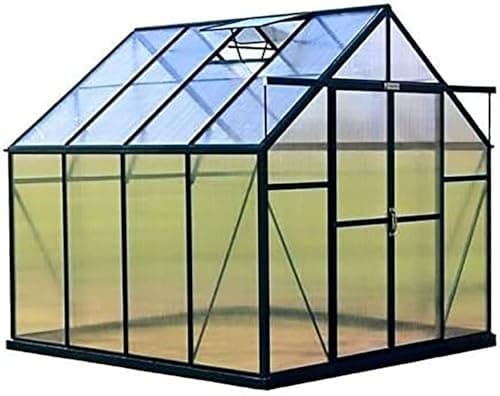 Top pickGrandio Ascent GreenhouseRated to 76 mph wind and 25 lb per sq ft snow, lifetime frame warranty | The best-engineered kit in the bracket | 9.1 | $2,199.00 - View on Amazon |
| 2 | 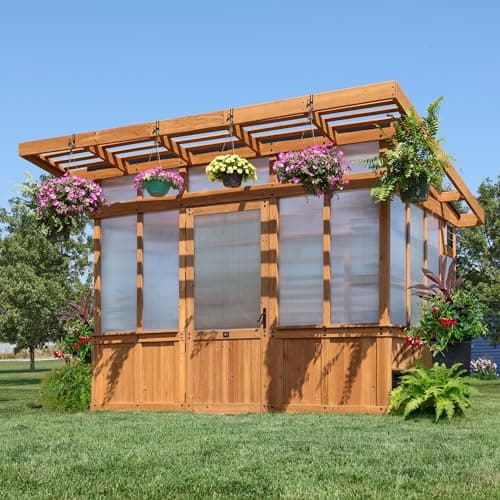 Backyard Discovery Poppy Cedar Greenhouse 11 x 7Cedar frame, 4-wall polycarbonate, fan and staging included | Looks, and an interior that arrives finished | 8.8 | $2,999.00 - View on Amazon |
| 3 | 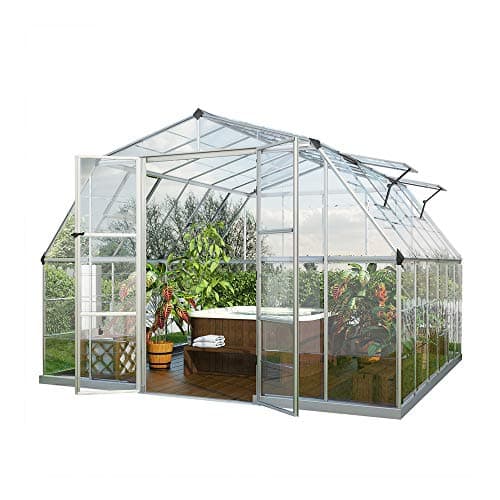 Palram Canopia Americana 12 x 12 Greenhouse12 x 12 ft footprint, 103.5 in peak, double swinging doors | The most interior space for the money | 8.4 | $2,791.00 - View on Amazon |
| 4 | 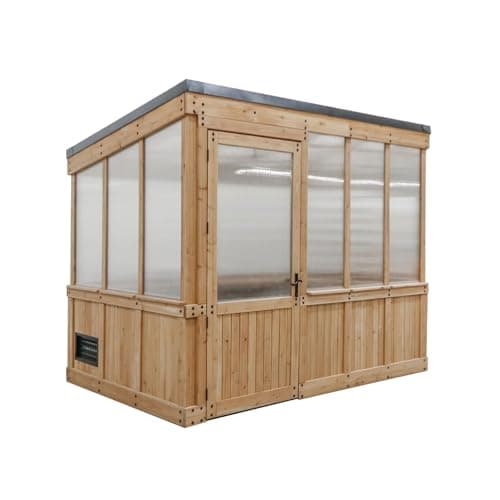 Backyard Discovery Willow Cedar Greenhouse 9 x 69 x 6 ft cedar walk-in with fan and staging included | The cheapest way into a cedar-framed house | 8.3 | $1,799.00 - View on Amazon |
| 5 | 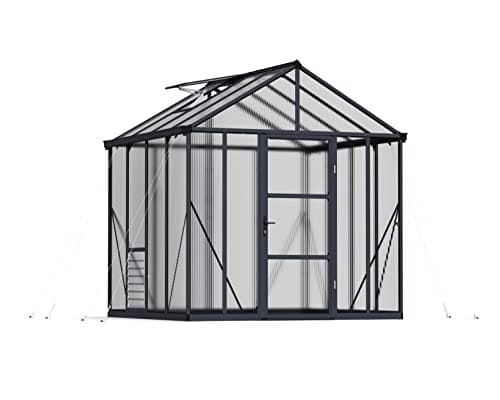 Palram Canopia Glory Greenhouse10 mm twin-wall polycarbonate throughout | Cold climates and winter growing | 8.9 | Check price on Amazon |
#ad We may earn a commission - Price as of October 12, 2026
Scores are our own editorial judgment, formed from published specifications and independent sources. They are not aggregated customer ratings, and they are not the result of hands-on testing, which we do not currently do. See how we choose.
The published ratings, side by side
| Kit | Glazing | Wind rating | Snow load | Warranty |
|---|---|---|---|---|
| Grandio Ascent | 6 mm twin-wall | 76 mph | 25 lb/sq ft | Lifetime frame, 10 yr panels |
| Backyard Discovery Poppy | 4-wall polycarbonate | 100 mph | About 30 in / 4,200 lb | 5 years |
| Palram Canopia Americana | 4 mm twin-wall roof, 0.7 mm sides | 56 mph | 15.4 lb/sq ft | 5-10 yr on parts |
| Backyard Discovery Willow | Polycarbonate | Not published for this model | Not published for this model | 5 years |
| Palram Canopia Glory | 10 mm twin-wall | Not published as a figure | Not published as a figure | Manufacturer warranty on parts |
Read that table before the prices. A 15.4 lb per square foot snow load is roughly a few inches of wet snow, and a 56 mph wind rating is an ordinary winter storm in a lot of the country. The Americana is a beautiful, roomy, three-season structure; it is not a Cascades winter structure, and no amount of money spent on the same model changes that.
Glazing: the spec that decides your winter
Glazing thickness is the single most consequential line on a greenhouse spec sheet, and the premium bracket does not reliably give you more of it. The Ascent uses 6 mm twin-wall. The Palram Glory, which costs considerably less, uses 10 mm. The Poppy uses 4-wall panels its maker rates at about 30% better heat retention than standard double-wall. Price and glazing are only loosely related.
Decide which of two jobs the greenhouse has. If the job is season extension -- starting in February, finishing in November, overwintering a few tender plants -- thicker glazing is the thing to buy, and the best greenhouse kits for winter is the page you want rather than this one. If the job is a durable, good-looking structure for spring and summer growing that will survive weather you can name, frame and ratings matter more and 6 mm is plenty.
Clear single-skin panels, like the 0.7 mm sides on the Americana, are a window rather than insulation. They look good, they let you see out at bench height, and they transmit more light than twin-wall. They also give up heat quickly. That is the right trade for a summer house and the wrong one for March. Polycarbonate vs glass covers the glazing argument in detail.
Cedar or aluminum: the aesthetics decision
This is the real fork in the premium bracket, and it is not a specification question. An aluminum kit is lighter, needs no maintenance ever, and looks like equipment. A cedar-framed house looks like garden architecture, insulates slightly better at the frame, and asks for a coat of sealant or stain on a cycle for the rest of its life.
The Search Console query that prompted this page asks for "premium features and aesthetics", and it is worth separating those two things, because they trade against each other at a fixed budget. For a similar outlay you can have 144 square feet of aluminum and clear panels, or 78 square feet of cedar with a fitted-out interior. Neither is wrong. What is wrong is paying the cedar premium and then being surprised by the footprint.
| Cedar frame | Aluminum frame | |
|---|---|---|
| Floor area per dollar | Lower | Higher |
| Maintenance | Seal or stain on a cycle | None |
| Appearance | Reads as a garden building | Reads as equipment |
| Included fittings | Often staging, fan, hookups | Usually bare |
| Frame insulation | Slightly better; wood conducts less heat | Aluminum is a conductor |
| Lifespan if neglected | Shorter -- untreated wood weathers | Very long |
Size: what these footprints feel like
Floor area is the specification people most often get wrong, in both directions. A few reference points from the kits here, all with benches at a normal 24 in depth:
- 9 x 6 ft (about 54 sq ft). A bench down one side and a path. Enough for seed starting at scale and a dozen pots of tomatoes. Two adults cannot comfortably work in it at once.
- 11 x 7 ft (about 78 sq ft). Benching down both sides with a path between, or one deep bench and room to pot up. This is the size most hobby growers settle at.
- 8 x 12 ft (about 96 sq ft). The same two-bench layout with real length, so you can run early crops at one end and tomatoes at the other.
- 12 x 12 ft (144 sq ft). Benches both sides, a central path wide enough for a barrow, and spare floor for in-ground beds. This is where a greenhouse stops being a seedling station and becomes a growing space.
Buy one size up from the one you are picturing. Nobody in the history of the hobby has complained that their greenhouse is too big, and what size greenhouse do I need works through the arithmetic properly. In this bracket the step up is a smaller fraction of the total than it is at the budget end.
The costs the sticker price hides
- 1
A prepared base
Level ground at minimum; a slab, a timber frame filled with compacted gravel, or a paved base for the larger kits. This is real money and real work, and it is the one cost most buyers of a premium kit have not budgeted for.
- 2
An anchor kit
Sold separately on the aluminum kits, and specific to whether you are fixing to concrete, decking or soil. Non-negotiable: the structural ratings assume it.
- 3
Assembly help
Two people and a weekend for the smaller kits, longer for a 12 x 12. If you are paying for installation, get the quote before you choose the model.
- 4
Staging and a thermometer
Included on the cedar kits here, extra on the aluminum ones. A min/max thermometer is the cheapest useful thing you will ever buy for a greenhouse -- see greenhouse accessories worth buying.
- 5
Heat, if you want winter
A premium greenhouse is not a heated one. Decide before you buy whether you are heating it, because that decision changes which glazing you want -- do I need a greenhouse heater? sets out when it is justified.
When not to spend this much
This is the section most roundups in this bracket leave out. Spending $2,000 to $5,000 on a greenhouse makes sense in three situations, and not many others.
- Your site is genuinely hostile. Exposed, windy, or under real snow. Published ratings and heavy frame section are worth paying for because the alternative is replacing a cheap structure. The best greenhouse for high winds is the companion page here.
- The greenhouse is visible from the house and has to look right. Appearance is a legitimate reason to spend money. Cedar costs what it costs.
- You have already outgrown a small kit. Someone who has filled a 6 x 8 for two seasons knows what they want and will use 100-plus square feet. This is the best reason of the three.
If none of those applies, buy the cheaper structure. A 6 x 8 ft kit at a fraction of the price will tell you within one season whether you actually use a greenhouse, where the sun falls in your yard in February, and how big the next one needs to be -- and that information is worth more than the specification difference. The best greenhouse for the money is the right starting point, and is a greenhouse worth it? is the question to settle before either.
Glass, and why none is recommended here
People shopping this bracket often start out wanting glass, and the reasons are good ones: it transmits more light than any polycarbonate, it does not yellow, and it looks the part. Horticultural glass in a hobby kit under $5,000 is possible, but almost nothing in that range is reliably in stock in the US at the moment, and the glass kits that are tend to be European ranges with long lead times and freight charges that move them out of the bracket.
There are also two practical arguments against glass for a first large greenhouse. It breaks -- a stray ball or a falling branch is a pane and a cleanup, not a scuff -- and it offers poor insulation per pane compared with twin-wall or 4-wall polycarbonate. Most people who have owned both end up preferring polycarbonate for a working vegetable greenhouse and glass for a display house.
The picks in full
Top pick
Grandio Ascent Greenhouse
Grandio
The one to buy if you want a premium greenhouse for what it withstands rather than what it looks like: published ratings, heavy frame section, lifetime frame warranty.
Grandio publishes the two numbers that decide whether a greenhouse survives where you live -- 76 mph of wind and 25 lb per square foot of snow -- and backs the frame for life. Very little else in this bracket does both, and a kit that quotes no rating at all is telling you something by omission.
The glazing is 6 mm twin-wall, which is where expectations need managing: at this money you might assume 10 mm. What the price buys is frame section, fastener quality, truss reinforcement and the warranty behind them. If overnight heat retention matters to you more than structure, a thicker-glazed kit for less money is the better buy -- and that trade is the whole argument of the roundup this sits in.
Budget for the anchor kit and for ground preparation. Concrete slab, wooden deck and soil anchor kits are each sold separately, and the rating only applies to a structure that is properly fixed down.
What works
- Published wind and snow ratings, which much of this bracket does not give you
- 1.6 mm aluminum profile and stainless fasteners rather than thin extrusion and plated screws
- Lifetime frame warranty with 10 years on the glazing
- Integrated rain gutters and cross-roof trusses as standard
- Scales to 24 ft of length on the same 8 ft width
What does not
- 6 mm glazing, not the 10 mm the price might suggest -- this is a rated structure, not a maximally insulated one
- The anchor kit is a separate purchase, and a structure this size genuinely needs one
- Plain, functional looks
- A full weekend of assembly, and not a one-person job
Skip it if: you want a decorative garden building. This is an honest piece of engineering in powder-coated aluminum, not a feature of the yard.
| Glazing | 6 mm twin-wall UV-protected polycarbonate |
|---|---|
| Frame | Heavy-duty aluminum, 1.6 mm profile, stainless fasteners |
| Sizes | 8 ft wide, in 8, 12, 16, 20 and 24 ft lengths |
| Rated for | Winds to 76 mph, snow load to 25 lb per sq ft |
| Ventilation | Two to six roof vents by length, manual openers |
| Door | Sliding double door, 42 in wide by 72 in tall |
| Warranty | Lifetime frame, 10 years on the panels |
Looks, and an interior that arrives finished
Backyard Discovery Poppy Cedar Greenhouse 11 x 7
Backyard Discovery
The pick when the greenhouse has to look like part of the garden: cedar frame, thick glazing, and the bench, shelving, fan and hose hookups already in the box.
This is the kit that answers the aesthetic half of the premium question. A cedar frame reads as garden architecture rather than equipment, and it is the one structure here that people put in the middle of a lawn on purpose.
The specification is not merely decorative. Four-wall polycarbonate is thicker than the twin-wall used on most hobby kits, the manufacturer states a 30% improvement in heat retention over standard double-wall, and the published 100 mph wind and 30 in snow figures are the strongest quoted for anything on this page. A temperature-activated exhaust fan is included, which is the accessory most owners end up buying in year two anyway.
What you give up is floor area -- 78 square feet against 144 for a similar outlay -- and you take on wood maintenance. Treat that as the price of the look and the fitted interior, and decide honestly whether you want both.
What works
- Cedar frame and 4-wall glazing: the warmest-looking and best-insulated combination here
- Manufacturer-stated 100 mph wind and 30 in snow ratings, the strongest on the page
- Fan, staging, shelves, hooks, hose hookups and power ports included rather than extra
- Heat retention stated at 30% better than standard double-wall polycarbonate
What does not
- 78 sq ft is the smallest footprint of the premium picks, at a comparable price
- Wood needs sealing or staining on a cycle; aluminum needs nothing
- 5-year warranty, against a lifetime frame warranty elsewhere
- The fan and outlets only earn their keep if power reaches the site
Skip it if: you want maximum growing area per dollar. Cedar and a fitted-out interior cost more than aluminum and a bare floor.
| Footprint | 11 ft L x 7 ft W x 8 ft H, about 78 sq ft inside |
|---|---|
| Frame | Cedar wood |
| Glazing | Commercial-grade 4-wall polycarbonate panels |
| Ventilation | Temperature-activated exhaust fan plus opening windows |
| Fitted out with | About 45 linear ft of staging, a 4-tier rack, 4 plant hooks |
| Services | Interior and exterior hose hookups, power outlets and USB ports |
| Rated for | Snow load to 4,200 lb (about 30 in), winds to 100 mph |
| Warranty | 5 years |
The most interior space for the money
Palram Canopia Americana 12 x 12 Greenhouse
Palram Canopia
A barn-style hobby house that buys room to walk, stand and bench down both sides -- as long as you read the glazing spec before you commit.
Floor area is what this kit sells, and 144 square feet changes what a greenhouse is for. You can bench both long sides, keep a path down the middle, stand upright under the ridge anywhere, and get a barrow in through the double doors. Most hobby kits make you pick two of those.
The glazing mix is the thing to understand before buying. The roof is 4 mm twin-wall, which diffuses light and holds a little heat; the sides are 0.7 mm clear panels, which are a window rather than insulation. That is deliberate -- light in, view out -- and it is a poor match for winter growing.
The published ratings follow from the build: 56 mph of wind and 15.4 lb per square foot of snow. In a mild, sheltered yard that is fine. In the Cascades, or anywhere a foot of wet snow is normal, buy the structure that is rated for it instead.
What works
- 144 sq ft of floor, with headroom to stand anywhere in it
- Double doors wide enough to push a wheelbarrow through
- Barn profile looks deliberate rather than utilitarian
- Twin-wall roof with clear sides: diffused light overhead, a view out at bench height
What does not
- 0.7 mm side panels are single-skin, with almost no insulation value
- The 15.4 lb per sq ft snow rating is the lowest of the premium picks
- Large enough that siting, leveling and anchoring are real projects
- Assembly runs to many hours with two people
Skip it if: you are buying for winter growing or live under real snow. A 15.4 lb per sq ft snow rating and 0.7 mm side panels are a three-season specification.
| Footprint | 12 x 12 ft, 103.5 in exterior peak height |
|---|---|
| Roof glazing | 4 mm twin-wall polycarbonate |
| Side glazing | 0.7 mm clear polycarbonate |
| Frame | Aluminum |
| Rated for | Winds to 56 mph, snow load to 15.4 lb per sq ft |
| Ventilation | Two roof vents plus two vent windows |
| Doors | Double swinging doors, 87.2 in high by 45.8 in wide |
The cheapest way into a cedar-framed house
Backyard Discovery Willow Cedar Greenhouse 9 x 6
Backyard Discovery
The small sibling: the same cedar-and-polycarbonate build and included fittings, in a footprint that suits a normal suburban yard.
Most people shopping this bracket are not short of money so much as short of yard. A 9 by 6 ft cedar house gives you the material and the look without a structure that takes over the garden.
Inside, it is the same proposition as the larger model -- staging, hooks, hose hookups and a fan already fitted -- so the real setup cost sits closer to the sticker than it does on an aluminum kit, where benches and a vent opener are extras.
Be realistic about the space. Six feet of width means a bench on one side and a path, or two narrow benches and no path. Measure what you intend to put in it before you buy.
What works
- Cedar looks at a materially lower price than the larger models
- Fits yards where an 11 or 12 ft structure would dominate
- Fan and staging included, as on the bigger model
- Walk-in height rather than a reach-in cabinet
What does not
- About 54 sq ft, which is tight once both sides are benched
- Same wood maintenance commitment as any cedar structure
- Costs more per square foot than an aluminum kit of the same size
- Backyard Discovery does not publish a separate rating for this model
Skip it if: you plan to grow in the ground inside it. Six feet of width leaves you a bench and a path, not two beds.
| Footprint | 9 x 6 ft walk-in |
|---|---|
| Frame | Cedar wood |
| Glazing | Polycarbonate panels |
| Ventilation | Exhaust fan plus opening windows |
| Included | Staging, plant hooks, hose hookups, power ports |
Cold climates and winter growing
Palram Canopia Glory Greenhouse
Palram Canopia
#ad We may earn a commission - prices are shown by Amazon, not by us
The heavy-glazed model in the range, and the one to buy if the plan is to keep growing through a real winter.
Glazing thickness is the whole argument for this kit. A 10 mm twin-wall panel holds substantially more heat overnight than a 4 mm one, and overnight is when a winter greenhouse either works or does not.
It is also the model to look at if you get real snow. Thin panels and light frames are a three-season specification; if you are in the Cascades or anywhere with a genuine snow load, buy the heavier structure rather than hoping.
None of that makes it heated. A greenhouse without a heat source holds a few degrees over outside, which is the difference between hardy greens surviving and not -- it is not a tropical house in January.
What works
- 10 mm glazing holds heat far better than 4 mm
- Rated for harder weather than the lighter kits
- Wider footprint gives room for benches down both sides
- Better vent provision as standard
What does not
- Substantially more expensive
- Thicker panels cut light transmission a little
- Heavy enough that assembly is a two-person, whole-day job
Skip it if: you only want a spring seed-starting space. You are paying a large premium for insulation you will use for three months of the year.
| Frame | Heavy-gauge aluminum |
|---|---|
| Glazing | 10 mm twin-wall polycarbonate |
| Sizes | 8 ft wide, several lengths |
| Ventilation | Roof vents, and a screened side vent on some models |
| Base | Integrated base, anchoring required |
Common questions
What makes a greenhouse kit worth over $2,000?
Four things, and only four: published wind and snow ratings, heavier frame section with stainless fasteners, better glazing build, and fittings such as staging and a vent fan included rather than extra. If a listing in this bracket offers none of those over a budget kit, it is expensive rather than premium.
Is a cedar greenhouse better than an aluminum one?
Better looking and marginally better insulated at the frame, but smaller per dollar and needing sealing or staining for life. Aluminum gives you more floor area for the same money and no maintenance at all. Choose on which of those you care about, not on which is objectively better.
How much snow load does a greenhouse need?
Match it to your location rather than to a rule of thumb. A rating of 15 lb per square foot copes with a few inches of wet snow; 25 lb per square foot is a serious winter specification. If you get heavy snow routinely, the structural rating matters more than any other spec on the page, and you should also plan to clear the roof rather than trust the number.
Are expensive greenhouses warmer in winter?
Only if they have thicker glazing, and price does not guarantee that. An unheated greenhouse of any price holds a few degrees over the outside air overnight. Thicker twin-wall or 4-wall panels extend that margin; they do not create a frost-free space on their own.
Can I buy a glass greenhouse kit for under $5,000?
Occasionally, but availability in the US is poor and the ranges that do appear often carry long lead times and freight costs that push past the budget. For a working vegetable greenhouse, thick twin-wall or 4-wall polycarbonate is also the more practical glazing: it insulates better per panel and it does not break.
Do I need a concrete base for a premium greenhouse?
Not necessarily concrete, but you do need a prepared, level base and a proper anchor kit. A timber perimeter filled with compacted gravel is adequate for most of these kits and drains better than a slab. What is not adequate is setting a 12 ft structure on uneven lawn and relying on pegs.
Sources
Factual claims on this page are backed by the published sources below, and product specifications are the manufacturers’ own. Where a figure is not published, we say so rather than estimating it.