Step 5 - Greenhouses
The Best Polycarbonate Greenhouse Kits
Panel thickness is the specification that decides everything. Four millimeters is a three-season greenhouse; ten is a winter one.
Janet H. - the hands-on owner behind Janet Media Group.
Published
This page contains affiliate links. If you buy through them we may earn a commission at no cost to you, and it never decides what we recommend. How this site is funded.
For most backyards the Palram Canopia Mythos is the right polycarbonate kit: an aluminum frame with 4 mm twin-wall panels, widely stocked, and enough greenhouse for a three-season growing year. If you want the best-engineered structure in the bracket, the Grandio Ascent uses 6 mm twin-wall in a heavy 1.6 mm aluminum profile and is rated to 76 mph wind and 25 lb per square foot of snow. For genuine winter growing, the Palram Canopia Glory steps up to 10 mm twin-wall throughout. The Hybrid trades insulation for clear side panels you can see through, and the Americana buys the largest interior in the range at a three-season glazing spec.
Everything on this page is polycarbonate, so the choice is not material -- it is thickness, frame gauge and what your winter does. Those three decide far more than brand.
What twin-wall thickness actually means
Twin-wall polycarbonate is two sheets separated by ribs, with air trapped between them. The air is the insulation, and the thicker the panel, the deeper the air gap and the better it holds heat. Thickness also governs stiffness, which is what resists a snow load, and light transmission, which falls slightly as panels get thicker and more diffuse.
| Thickness | Light | Insulation | Use it for |
|---|---|---|---|
| 4 mm | High, diffused | Modest | Spring to fall growing, seed starting, frost protection. The standard spec |
| 6 mm | High, diffused | Noticeably better than 4 mm | A longer shoulder season and real snow country, without heating costs |
| 8 to 10 mm | Slightly lower, strongly diffused | Best in the kit bracket | Overwintering plants and heated winter growing |
| 0.7 mm clear single sheet | Highest, undiffused | Minimal | Side panels where seeing in matters more than heat retention |
Diffusion is worth understanding rather than treating as a downside. Twin-wall scatters light, so it reaches leaves lower down the plant and through the whole structure rather than casting hard shadows. For growing, diffuse light is generally better than direct; it is only worse if you want to look through the wall.
How these were chosen
- Glazing spec stated, not implied. Every kit here publishes its panel thickness, and the pages below say what that thickness is for.
- Frame gauge taken seriously. Polycarbonate panels are only as strong as the aluminum holding them. The heavier profiles cost more and are the reason some kits survive storms.
- Published wind and snow ratings where the manufacturer provides them. Where no rating is published, that is stated rather than guessed at.
- No kit recommended outside its climate. A 4 mm greenhouse is a good greenhouse in the wrong place only.
- Currently stocked. Each listing was confirmed live and currently sold before it was written in.
Quick picks
| # | Product | Best for | Score | Price |
|---|---|---|---|---|
| 1 | 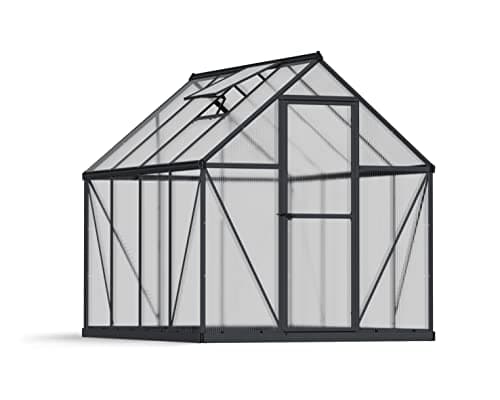 Top pickPalram Canopia Mythos GreenhouseAluminum frame, 4 mm twin-wall polycarbonate | A first real greenhouse | 9.0 | Check price on Amazon |
| 2 | 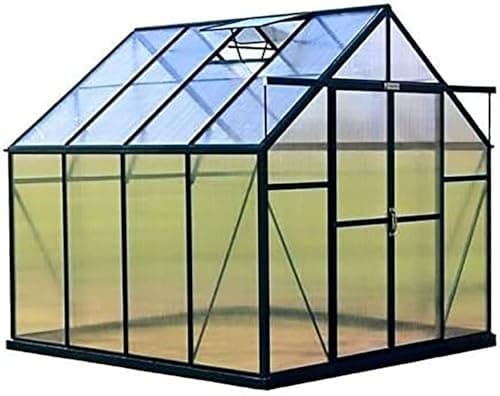 Grandio Ascent GreenhouseRated to 76 mph wind and 25 lb per sq ft snow, lifetime frame warranty | The best-engineered kit in the bracket | 9.1 | $2,199.00 - View on Amazon |
| 3 | 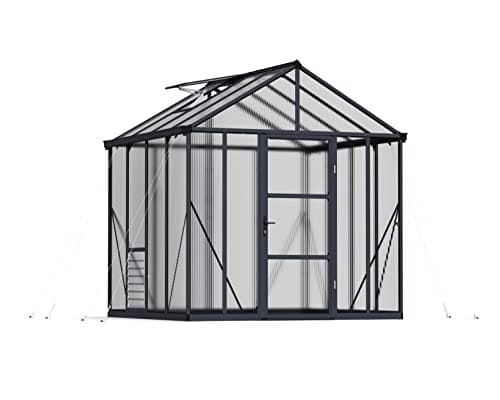 Palram Canopia Glory Greenhouse10 mm twin-wall polycarbonate throughout | Cold climates and winter growing | 8.9 | Check price on Amazon |
| 4 | 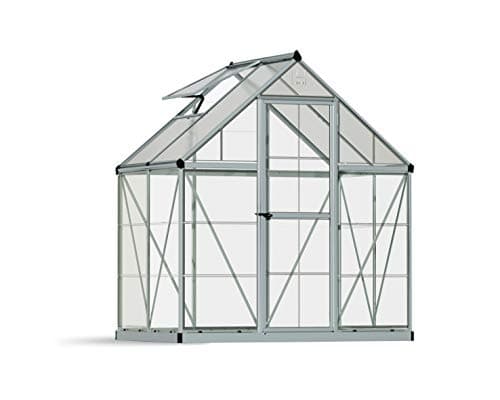 Palram Canopia Hybrid GreenhouseClear side panels, twin-wall roof | Seeing in, and light diffusion | 8.8 | Check price on Amazon |
| 5 | 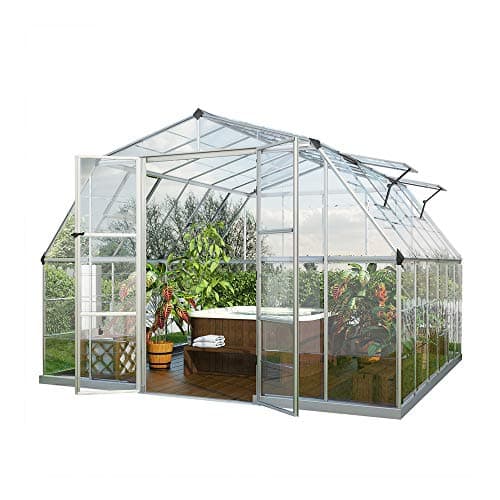 Palram Canopia Americana 12 x 12 Greenhouse12 x 12 ft footprint, 103.5 in peak, double swinging doors | The most interior space for the money | 8.4 | $2,791.25 - View on Amazon |
#ad We may earn a commission - Price as of October 17, 2026
Scores are our own editorial judgment, formed from published specifications and independent sources. They are not aggregated customer ratings, and they are not the result of hands-on testing, which we do not currently do. See how we choose.
Matching the spec to your winter
| Your situation | Panel spec | Why |
|---|---|---|
| Mild winters, season extension only | 4 mm twin-wall | Enough to hold frost off and start seeds weeks earlier |
| Real snow load, no heating planned | 6 mm twin-wall with a heavy frame | Stiffness and a published snow rating matter more than insulation here |
| Overwintering tender plants | 8 to 10 mm twin-wall | Heat retention is the whole job; thinner panels mean a bigger heating bill |
| Hot summers, afternoon sun | Twin-wall rather than clear, plus shading | Clear panels transmit more light, and heat follows light |
| You want to see your plants from the house | Clear side panels, twin-wall roof | A deliberate trade of insulation for visibility |
Published ratings are worth more than impressions. A manufacturer that states 76 mph and 25 lb per square foot has tested to something; one that says 'sturdy construction' has not. Where you are choosing between two kits that look similar, the one with numbers on the spec sheet is the safer buy.
What polycarbonate does and does not do
- It does not shatter. This is the practical reason most home greenhouses use it rather than glass, especially anywhere with children, hail or wind-borne debris.
- It insulates better than single glass at the same cost, because of the trapped air layer.
- It is lighter, which means the frame can be lighter -- and also means the whole structure must be anchored properly or it behaves like a sail.
- It yellows eventually. UV-protected panels last many years, but polycarbonate is not a lifetime material the way glass is.
- It scratches. Clean with water and a soft cloth, never with an abrasive.
- The ribs collect algae if water gets into the channels. Tape the panel ends properly on assembly -- vented tape at the bottom, sealed at the top.
For the material argument in full, polycarbonate vs glass for a greenhouse compares them on cost, light, insulation and durability. If wind rather than cold is your constraint, the best greenhouse for high winds is organized around published ratings, and whichever kit you choose, how to anchor a greenhouse is the step that decides whether the rating means anything.
The picks in full
Top pick
Palram Canopia Mythos Greenhouse
Palram Canopia
#ad We may earn a commission - prices are shown by Amazon, not by us
The sensible first greenhouse: an aluminum frame with twin-wall panels, sized to fit a normal backyard rather than a nursery.
Twin-wall polycarbonate is the thing that separates a greenhouse from a plastic tent. Two skins with an air gap between them insulate, and the panel diffuses light rather than throwing hard shadows, which suits seedlings better than clear glass does.
The Mythos sits at the point in the range where you get a proper aluminum frame, a roof vent and a lockable door without paying for the heavy-duty glazing. For starting seeds, hardening off, and stretching the tomato season at both ends, that is the right specification.
Two warnings from the manual that people ignore. Anchor it -- every lightweight greenhouse that ends up in a neighbor's yard was not anchored. And build it with a second person; the panels flex and the frame is not square until the last bolt.
What works
- Twin-wall panels diffuse light and insulate better than single-skin plastic
- Aluminum frame will not rust or need painting
- Lengths let you match the run to the space you have
- Roof vent included rather than sold as an extra
What does not
- 4 mm glazing is thin for real winter use
- Assembly is a long afternoon and genuinely needs two people
- Must be anchored -- an unanchored kit is a sail
Skip it if: you live somewhere with heavy snow load. 4 mm panels are a three-season specification; the thicker-glazed models exist for a reason.
| Frame | Rust-resistant aluminum |
|---|---|
| Glazing | 4 mm twin-wall polycarbonate |
| Sizes | 6 ft wide, several lengths including 6 x 8 and 6 x 10 |
| Ventilation | Roof vent, lockable door handle |
| Base | Integrated base rail, anchoring required |
The best-engineered kit in the bracket
Grandio Ascent Greenhouse
Grandio
The one to buy if you want a premium greenhouse for what it withstands rather than what it looks like: published ratings, heavy frame section, lifetime frame warranty.
Grandio publishes the two numbers that decide whether a greenhouse survives where you live -- 76 mph of wind and 25 lb per square foot of snow -- and backs the frame for life. Very little else in this bracket does both, and a kit that quotes no rating at all is telling you something by omission.
The glazing is 6 mm twin-wall, which is where expectations need managing: at this money you might assume 10 mm. What the price buys is frame section, fastener quality, truss reinforcement and the warranty behind them. If overnight heat retention matters to you more than structure, a thicker-glazed kit for less money is the better buy -- and that trade is the whole argument of the roundup this sits in.
Budget for the anchor kit and for ground preparation. Concrete slab, wooden deck and soil anchor kits are each sold separately, and the rating only applies to a structure that is properly fixed down.
What works
- Published wind and snow ratings, which much of this bracket does not give you
- 1.6 mm aluminum profile and stainless fasteners rather than thin extrusion and plated screws
- Lifetime frame warranty with 10 years on the glazing
- Integrated rain gutters and cross-roof trusses as standard
- Scales to 24 ft of length on the same 8 ft width
What does not
- 6 mm glazing, not the 10 mm the price might suggest -- this is a rated structure, not a maximally insulated one
- The anchor kit is a separate purchase, and a structure this size genuinely needs one
- Plain, functional looks
- A full weekend of assembly, and not a one-person job
Skip it if: you want a decorative garden building. This is an honest piece of engineering in powder-coated aluminum, not a feature of the yard.
| Glazing | 6 mm twin-wall UV-protected polycarbonate |
|---|---|
| Frame | Heavy-duty aluminum, 1.6 mm profile, stainless fasteners |
| Sizes | 8 ft wide, in 8, 12, 16, 20 and 24 ft lengths |
| Rated for | Winds to 76 mph, snow load to 25 lb per sq ft |
| Ventilation | Two to six roof vents by length, manual openers |
| Door | Sliding double door, 42 in wide by 72 in tall |
| Warranty | Lifetime frame, 10 years on the panels |
Cold climates and winter growing
Palram Canopia Glory Greenhouse
Palram Canopia
#ad We may earn a commission - prices are shown by Amazon, not by us
The heavy-glazed model in the range, and the one to buy if the plan is to keep growing through a real winter.
Glazing thickness is the whole argument for this kit. A 10 mm twin-wall panel holds substantially more heat overnight than a 4 mm one, and overnight is when a winter greenhouse either works or does not.
It is also the model to look at if you get real snow. Thin panels and light frames are a three-season specification; if you are in the Cascades or anywhere with a genuine snow load, buy the heavier structure rather than hoping.
None of that makes it heated. A greenhouse without a heat source holds a few degrees over outside, which is the difference between hardy greens surviving and not -- it is not a tropical house in January.
What works
- 10 mm glazing holds heat far better than 4 mm
- Rated for harder weather than the lighter kits
- Wider footprint gives room for benches down both sides
- Better vent provision as standard
What does not
- Substantially more expensive
- Thicker panels cut light transmission a little
- Heavy enough that assembly is a two-person, whole-day job
Skip it if: you only want a spring seed-starting space. You are paying a large premium for insulation you will use for three months of the year.
| Frame | Heavy-gauge aluminum |
|---|---|
| Glazing | 10 mm twin-wall polycarbonate |
| Sizes | 8 ft wide, several lengths |
| Ventilation | Roof vents, and a screened side vent on some models |
| Base | Integrated base, anchoring required |
Seeing in, and light diffusion
Palram Canopia Hybrid Greenhouse
Palram Canopia
#ad We may earn a commission - prices are shown by Amazon, not by us
Clear walls so you can see what is happening inside, with a diffusing twin-wall roof over the plants that need protection from hard overhead sun.
The Hybrid name refers to two glazing types in one kit: crystal-clear panels on the walls, twin-wall on the roof. In practice that means high light levels from the sides and diffused light from above, which is a good compromise in a northern or cloudy garden.
It also means you can see in. That sounds trivial until you have walked out in the rain three times a week to check whether anything needs water.
In a hot, south-facing, unshaded spot the clear walls become a liability. If that is your site, choose the fully diffused model or plan on shade cloth from midsummer.
What works
- You can see the plants without opening the door
- High light transmission through the clear walls
- Twin-wall roof still protects from midday sun
- Same aluminum frame as the rest of the range
What does not
- Clear walls run hotter than fully diffused glazing
- Shows dirt and algae sooner
- Needs shading in a hot, exposed spot
Skip it if: your site bakes in afternoon sun. Clear walls transmit far more light, and heat follows light.
| Frame | Rust-resistant aluminum |
|---|---|
| Glazing | Clear polycarbonate walls, twin-wall roof |
| Sizes | 6 ft wide, multiple lengths |
| Ventilation | Roof vent plus hinged door |
| Base | Integrated base, anchoring required |
The most interior space for the money
Palram Canopia Americana 12 x 12 Greenhouse
Palram Canopia
A barn-style hobby house that buys room to walk, stand and bench down both sides -- as long as you read the glazing spec before you commit.
Floor area is what this kit sells, and 144 square feet changes what a greenhouse is for. You can bench both long sides, keep a path down the middle, stand upright under the ridge anywhere, and get a barrow in through the double doors. Most hobby kits make you pick two of those.
The glazing mix is the thing to understand before buying. The roof is 4 mm twin-wall, which diffuses light and holds a little heat; the sides are 0.7 mm clear panels, which are a window rather than insulation. That is deliberate -- light in, view out -- and it is a poor match for winter growing.
The published ratings follow from the build: 56 mph of wind and 15.4 lb per square foot of snow. In a mild, sheltered yard that is fine. In the Cascades, or anywhere a foot of wet snow is normal, buy the structure that is rated for it instead.
What works
- 144 sq ft of floor, with headroom to stand anywhere in it
- Double doors wide enough to push a wheelbarrow through
- Barn profile looks deliberate rather than utilitarian
- Twin-wall roof with clear sides: diffused light overhead, a view out at bench height
What does not
- 0.7 mm side panels are single-skin, with almost no insulation value
- The 15.4 lb per sq ft snow rating is the lowest of the premium picks
- Large enough that siting, leveling and anchoring are real projects
- Assembly runs to many hours with two people
Skip it if: you are buying for winter growing or live under real snow. A 15.4 lb per sq ft snow rating and 0.7 mm side panels are a three-season specification.
| Footprint | 12 x 12 ft, 103.5 in exterior peak height |
|---|---|
| Roof glazing | 4 mm twin-wall polycarbonate |
| Side glazing | 0.7 mm clear polycarbonate |
| Frame | Aluminum |
| Rated for | Winds to 56 mph, snow load to 15.4 lb per sq ft |
| Ventilation | Two roof vents plus two vent windows |
| Doors | Double swinging doors, 87.2 in high by 45.8 in wide |
Common questions
What thickness of polycarbonate is best for a greenhouse?
Four millimeter twin-wall is the standard and is enough for spring-to-fall growing and frost protection. Six millimeter is the sensible step up for snow country and a longer shoulder season. Eight to ten millimeter is for overwintering and heated winter growing, where heat retention is the whole point.
Is a polycarbonate greenhouse better than glass?
For most home gardeners, yes. Twin-wall polycarbonate insulates better than single glazing, costs less, weighs far less, and does not shatter -- which matters with children, hail or wind-borne debris. Glass wins on clarity and on lifespan; polycarbonate yellows slowly and scratches.
How long do polycarbonate greenhouse panels last?
UV-protected twin-wall panels last many years, but they are not a lifetime material the way glass is. They gradually yellow and lose a little light transmission, and they scratch if cleaned with anything abrasive. Panels on most kits can be replaced individually when they eventually need it.
Do polycarbonate greenhouses hold heat in winter?
Better than single glass, because the air trapped between the two walls of the panel is the insulation. How much better depends entirely on thickness: a 4 mm kit will hold frost off overnight in a mild climate, while genuine winter growing in a cold region wants 8 to 10 mm panels and usually some heating.
Which side of polycarbonate faces out?
The UV-protected side, which the manufacturer marks with a printed film or a label. Fitting a panel upside down puts the unprotected face to the sun and shortens its life considerably. Peel the protective film off only after the panel is installed the right way round.
Do I need to tape the ends of polycarbonate panels?
Yes. The channels inside twin-wall panels will fill with water, dust and algae if left open. Kits supply tape for it: sealed tape along the top edge to keep water out, vented tape along the bottom so condensation can drain. It is the most commonly skipped assembly step.
Sources
Factual claims on this page are backed by the published sources below, and product specifications are the manufacturers’ own. Where a figure is not published, we say so rather than estimating it.