Step 4 - Composting
How to Compost in Winter
A frozen pile has not failed. It has paused -- and the only real job is to keep feeding it without making a mess.
Janet H. - the hands-on owner behind Janet Media Group.
Published
This page contains affiliate links. If you buy through them we may earn a commission at no cost to you, and it never decides what we recommend. How this site is funded.
Compost in winter by continuing exactly as you do in summer, with three adjustments: build the pile bigger before the cold arrives, chop and bury kitchen scraps rather than piling them on top, and stockpile a bag of dry browns -- leaves, shredded cardboard -- somewhere they will not freeze solid, so you always have something to cover scraps with. A pile that freezes has not died. The microbes go dormant, decomposition pauses, and everything resumes in spring. The only genuine winter risk is a wet, airless, all-greens pile that goes sour and attracts animals.
What actually happens when it gets cold
Composting is microbial work and microbes slow as temperature drops. Around freezing, activity in the outer layers effectively stops. A large pile keeps a warm core for much longer than a small one, because the heat it generates has further to travel to escape -- which is why volume is the single most effective winter strategy.
| Setup | Winter behavior | Keep feeding it? |
|---|---|---|
| Large open pile, 3 ft cube or bigger | Core often stays active well below freezing | Yes -- bury scraps in the center |
| Enclosed static bin | Slows, outer layer freezes, core holds longer | Yes, with browns on top each time |
| Tumbler | Freezes readily; contents can freeze into one block | Keep adding, but expect no activity until spring |
| Worm bin outdoors | Worms die below freezing | Move it indoors, to a garage or a basement |
| Worm bin indoors | Unaffected -- this is the setup that genuinely keeps working | Yes, all winter |
| Electric composter | Unaffected; it lives inside | Yes, all winter |
| Trench composting in a bed | Works until the ground freezes hard | Yes, while you can still dig |
Tumblers are the setup that disappoints people in winter. They are small by design and raised off the ground, so they lose heat on every side and freeze faster than anything else. They are still worth filling -- the material composts rapidly in spring -- but do not expect it to work in January.
Getting the pile ready before the cold
- 1
Build the volume up in fall
A pile roughly three feet in each direction has enough mass to hold a warm core. Fall is also when leaves are free and abundant, which is the only time of year browns are not the limiting factor.
- 2
Stockpile dry browns under cover
Bag shredded leaves or keep a sack of shredded cardboard in the garage. In January, every brown material outdoors is either frozen or soaked, and you need something dry to cover each addition of scraps.
- 3
Turn it one last time, then stop
Turning in deep cold vents the warm core and does more harm than good. Give it a final turn in late fall and leave it alone.
- 4
Insulate the sides if you want to extend activity
Straw bales, bagged leaves stacked around the bin, or a tarp over the top. None of this is essential; all of it buys a few more active weeks.
- 5
Keep it covered against rain and snow
A waterlogged pile in spring is slower to restart than a damp one, and a lid or tarp is the whole fix.
- 6
Clear a path to the bin
Trivial and decisive. The reason winter composting stops is almost always that walking to the bin through snow in the dark stopped being worth it.
Collecting scraps when the bin is not usable
On the worst weeks the honest answer is not to compost at all but to store. Three options, in order of how little work they are:
- Freeze them. A container in the freezer holds weeks of scraps with no smell and no fruit flies, and it thaws into a pile that breaks down faster for having had its cell walls burst by freezing.
- Fill a lidded outdoor tote. A second bin, or a bucket with a tight lid by the back door, collects through a cold snap and gets emptied into the pile when you can reach it.
- Trench compost in a bed. Dig a hole in an empty raised bed, bury the scraps, cover. It works until the ground freezes hard, and the material is incorporated into the bed by spring.
A kitchen caddy is doing more work in winter than in summer, because trips to the bin are rarer. A smooth-walled pail that rinses out easily and seals properly is the difference between a habit that survives January and one that does not.
The one setup that genuinely works all winter
If you want compost production rather than scrap storage through the cold months, bring it indoors. A stacking-tray worm bin in a basement, garage or utility room runs at room temperature, processes kitchen scraps continuously, and produces castings that are among the best amendments available for a raised bed in spring.
Worms stop feeding below about 50 degrees Fahrenheit and die if the bin freezes, so an outdoor worm bin must come in or be heavily insulated. Composting worms covers species and conditions, and the best worm composting bins compares the systems.
Restarting in spring
When the pile thaws, it will usually be wetter and denser than it was in fall, and it will have a layer of recognizable winter scraps through the middle. Turn it thoroughly, add a generous volume of dry browns to correct the moisture and the carbon balance, and it will heat up within days. A winter pile that looks like a disaster in March is often finished compost by June.
That spring compost arrives at exactly the right moment, which is the argument for bothering at all. How to refresh raised bed soil is where it goes.
What to buy
The products that fit the advice above, chosen by the process on our how we choose page. We have not hands-on tested them; specifications are the manufacturers’ own.
Quick picks
| # | Product | Best for | Score | Price |
|---|---|---|---|---|
| 1 |  Top pickFCMP Outdoor IM4000 Tumbling ComposterDual chamber, roughly 37 gal total | Most backyards | 9.1 | Check price on Amazon |
| 2 | 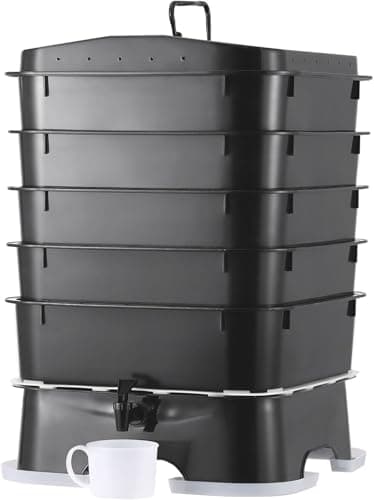 VermiHut Plus 5-Tray Worm Composter5 stacking trays with moisture and odor boards | Indoor composting, no yard | 8.6 | $79.95 - View on Amazon |
| 3 | 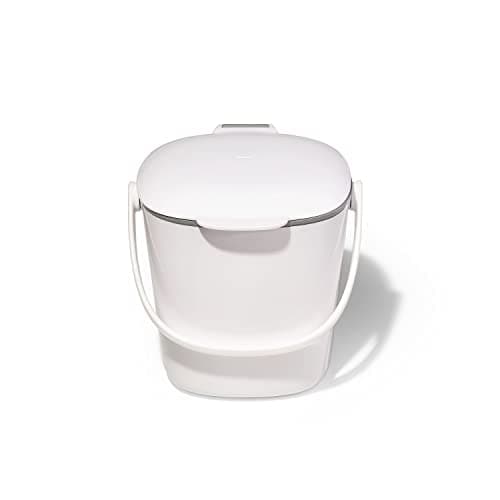 OXO Good Grips Easy-Clean Compost BinSmall lidded pail, smooth-walled for rinsing | The counter caddy | 8.3 | $25.00 - View on Amazon |
#ad We may earn a commission - Price as of October 17, 2026
Scores are our own editorial judgment, formed from published specifications and independent sources. They are not aggregated customer ratings, and they are not the result of hands-on testing, which we do not currently do. See how we choose.
Common questions
Does compost still break down in winter?
Very slowly, and in deep cold it effectively stops. The microbes that do the work go dormant rather than dying, so decomposition pauses and restarts on its own in spring. A large pile keeps a warm, active core far longer than a small one, which is why building up volume in fall is the main winter strategy.
Can I keep adding kitchen scraps to a compost bin in winter?
Yes, and you should. Dig a hole in the center of the pile, drop the scraps in and cover them with dry browns. Scraps left on a frozen surface simply freeze, and in a thaw they are exposed and attractive to rodents. Keep a stockpile of dry leaves or shredded cardboard under cover for this.
Should I turn my compost pile in winter?
No. Turning vents whatever warm core the pile has managed to hold, which sets it back further than leaving it alone. Give it a final turn in late fall, cover it against rain and snow, and leave it undisturbed until it thaws.
How do I compost in winter without going outside?
Keep scraps in a sealed container in the freezer and empty it when the weather allows, or run a stacking-tray worm bin indoors. An indoor worm bin at room temperature is the only common setup that keeps producing finished material right through the cold months.
Will my compost bin attract rats in winter?
It can, because a bin is warm, sheltered and full of food at the time of year when little else is. Bury food scraps in the center rather than leaving them on the surface, keep meat and dairy out entirely, and use an enclosed bin with a lid rather than an open heap in a yard with known rodent pressure.
Do compost tumblers work in winter?
Barely. A tumbler is small and raised off the ground, so it loses heat from every surface and the contents often freeze into a single block. It is still worth filling through the winter -- the material composts quickly once it thaws -- but expect no activity until spring.
Sources
Factual claims on this page are backed by the published sources below, and product specifications are the manufacturers’ own. Where a figure is not published, we say so rather than estimating it.