Step 3 - Seed Starting
When to Start Seeds in a Greenhouse
A greenhouse is a daytime machine. What decides your sowing date is the night it cannot keep warm.
Janet H. - the hands-on owner behind Janet Media Group.
Published
This page contains affiliate links. If you buy through them we may earn a commission at no cost to you, and it never decides what we recommend. How this site is funded.
In an unheated greenhouse, start seeds about two to four weeks earlier than you would outdoors -- not months earlier. The structure traps solar gain during the day and loses almost all of it overnight, so by dawn an unheated greenhouse is usually within a couple of degrees of the outside air. Your sowing date is set by the night temperature your seedlings can survive, not by how warm the greenhouse gets at two in the afternoon. With a heat mat under the trays, or a thermostatically controlled heater holding a frost-free minimum, you can go six to eight weeks ahead of outdoor sowing.
The thing almost everyone gets wrong
A greenhouse in March can hit 80 degrees on a sunny afternoon and 33 degrees before sunrise the same day. That daytime figure is what persuades people to sow in February; the night figure is what kills the result. Polycarbonate and glass are poor insulators and there is no thermal mass in an empty hobby greenhouse to carry heat through the night, so the inside tracks the outside within a degree or two by the small hours.
This is why the first thing to buy for a greenhouse is not a heater but a min/max thermometer. One week of recorded overnight lows tells you more about what you can actually sow and when than any general advice, including this page. Until you have that number you are guessing.
Setting your dates from the last frost
| Crop | Unheated greenhouse | Heat mat under trays | Frost-free heated |
|---|---|---|---|
| Peppers, eggplant | Too risky -- start indoors | 8 to 10 weeks | 8 to 10 weeks |
| Tomatoes | 4 to 5 weeks | 6 to 8 weeks | 6 to 8 weeks |
| Brassicas (cabbage, broccoli, kale) | 5 to 6 weeks | 6 to 8 weeks | 8 weeks |
| Lettuce, spinach, Asian greens | 6 to 8 weeks | 8 weeks | 10 weeks or overwinter |
| Onions and leeks from seed | 8 to 10 weeks | 10 to 12 weeks | 12 weeks |
| Squash, cucumber, melon | 2 to 3 weeks | 3 to 4 weeks | 4 weeks |
| Beans, corn | 1 to 2 weeks | 2 weeks | 2 to 3 weeks |
Find your own average last frost date first -- it is the only input that makes these numbers mean anything, and it varies by weeks across short distances. Then work backward. The full indoor version of this timetable, with the germination temperatures crop by crop, is in when to start seeds indoors; the greenhouse numbers above are that table shifted for a structure that is cold at night.
Germination temperature is the real gate
Seeds germinate on soil temperature, not air temperature, and the spread between crops is wide. Lettuce and brassicas will germinate in soil at around 50 degrees. Tomatoes want 70 or more to come up promptly. Peppers and eggplant want 75 to 85 and will simply sit, sulk and sometimes rot in a cold tray -- which is why they are the one group we would start indoors even if you own a greenhouse.
A heat mat solves this for a few dollars of electricity because it heats the one cubic foot that matters instead of the whole building. That is the single highest-value purchase for greenhouse seed starting, and it is covered properly in seedling heat mats. Take the trays off the mat once germination is through, though -- continued bottom heat on emerged seedlings produces stretched, weak growth.
Quick picks
| # | Product | Best for | Score | Price |
|---|---|---|---|---|
| 1 | 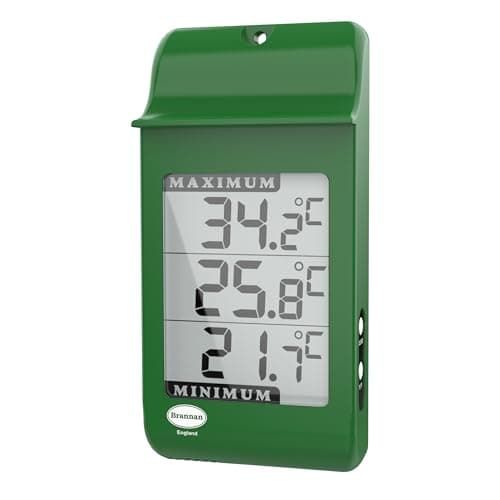 Top pickMin/Max Greenhouse ThermometerRecords the high and low since last reset | Knowing what actually happened overnight | 8.6 | $13.95 - View on Amazon |
| 2 | 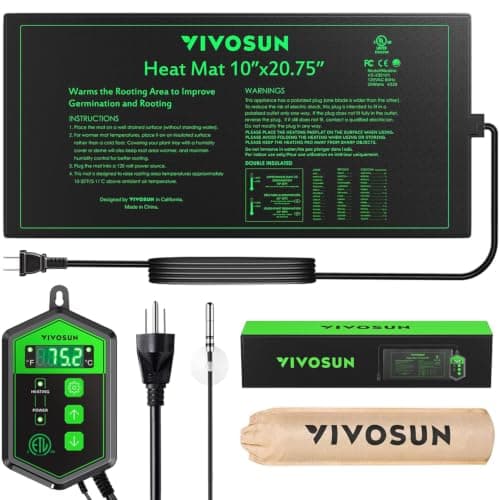 VIVOSUN Seedling Heat MatWaterproof mat sized for 1020 trays | Peppers, tomatoes and slow germinators | 8.8 | $30.99 - View on Amazon |
| 3 | 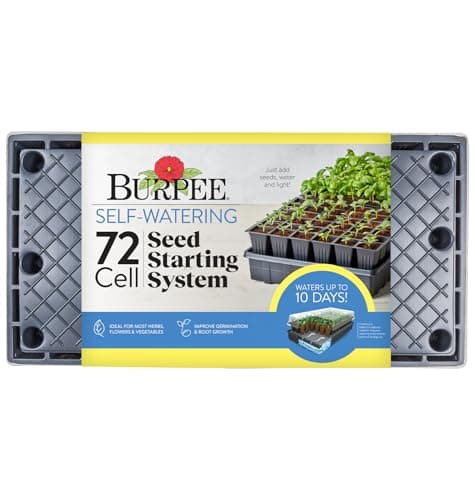 Burpee Self-Watering Seed Starting KitCell tray, dome and watering mat in one box | First-time seed starting | 8.4 | Check price on Amazon |
| 4 | 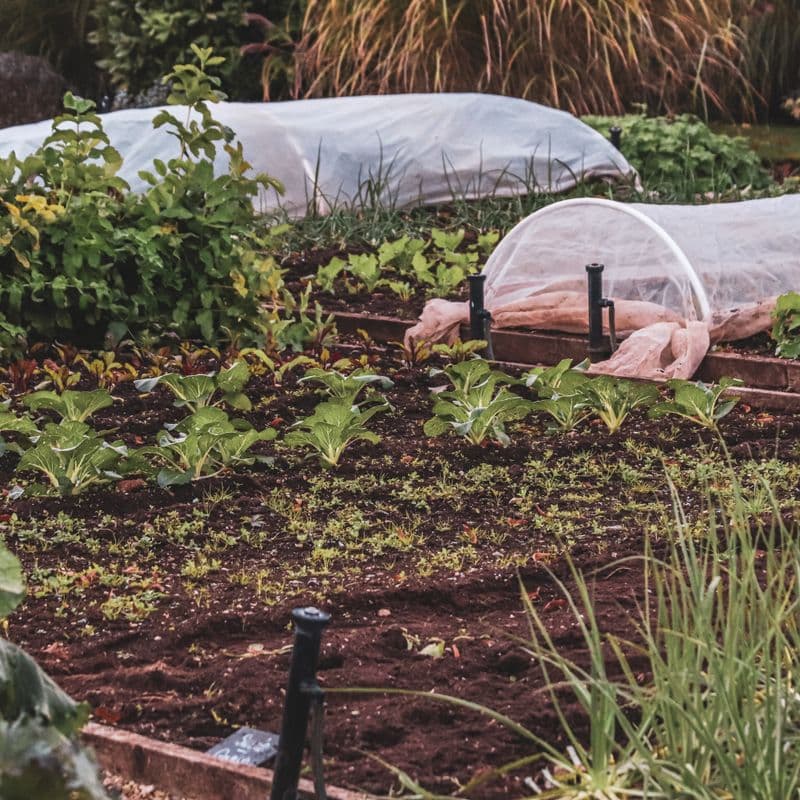 Agribon AG-19 Floating Row Cover0.55 oz/sq yd fabric, about 85% light transmission | A few degrees for almost no money | 8.4 | Check price on Amazon |
#ad We may earn a commission - Price as of October 11, 2026
Scores are our own editorial judgment, formed from published specifications and independent sources. They are not aggregated customer ratings, and they are not the result of hands-on testing, which we do not currently do. See how we choose.
Light, which a greenhouse does give you
This is the genuine advantage over a windowsill. A greenhouse gives seedlings light from every direction at close to full outdoor intensity, which is the one thing an indoor setup cannot match without a grow light. Seedlings raised in a greenhouse are typically stockier and better colored than windowsill seedlings of the same age, and they need less hardening off because they have already had real light and some temperature variation.
In midwinter, though, day length is still the limit no matter how clear the glazing is. Seeds sown in late December and January in an unheated greenhouse germinate slowly and then grow very little until the light returns in February, which is why sowing earlier often produces no earlier harvest. If you want to start genuinely early, you need light as well as warmth -- see grow lights vs windowsill for what a light actually buys.
Protecting trays on a cold night
- Group the trays together on a bench rather than spreading them along the greenhouse. A block of trays holds heat better than scattered ones.
- Away from the glazing. The air at the panel edge is several degrees colder on a cold night than the middle of the house.
- Throw row cover fabric over them. A layer of lightweight floating row cover draped over trays overnight is worth a few degrees for almost nothing, and it is removed in seconds in the morning.
- Add thermal mass. Dark water containers under the bench absorb daytime heat and release it overnight. Cheap, and it measurably flattens the swing.
- Use the heat mat at night, not the day. If you only have one source of heat, nights are when it earns its keep.
Ventilation, in spring, matters as much as heat
The opposite failure is just as common. A closed greenhouse on a bright March day cooks seedlings, and the trays dry out between morning and evening. Vent whenever the day is mild enough -- an automatic vent opener that works off temperature is the one accessory that makes a greenhouse safe to leave for a working day. Greenhouse gardening tips covers the ventilation, watering and hygiene routine in full.
A realistic greenhouse sowing year
Late winter: onions, leeks and the first salad sowings, on a heat mat if you have one. Early spring: brassicas, then tomatoes. Mid spring: squash, cucumbers and beans, which germinate fast in warming conditions and resent being started too early. Early summer: direct sowings for the autumn and winter crops, which is the half of the year most greenhouse owners never use -- fall seed starting covers that timetable.
And if the overnight lows you record turn out to be the thing standing between you and a six-week head start, that is the honest signal to look at heating rather than at sowing dates. Do I need a greenhouse heater? answers it with the running costs attached.
Common questions
When should you start seeds in an unheated greenhouse?
About two to four weeks earlier than you would sow outdoors. An unheated greenhouse is warm during the day but drops to within a couple of degrees of the outside air overnight, and the overnight low is what limits you. With a heat mat or a frost-free heater you can go six to eight weeks ahead.
How much earlier can a greenhouse let you sow?
Two to four weeks unheated, six to eight weeks with bottom heat under the trays or a thermostatically controlled heater holding a frost-free minimum. Claims of starting months early assume a heated greenhouse and enough winter day length to support growth once seeds germinate.
Is a greenhouse warm enough to start seeds in February?
Usually not without heat. Run a min/max thermometer for a week first -- most unheated hobby greenhouses are near freezing before dawn in February, which stops tomatoes and peppers entirely and makes everything else very slow. Hardy salads and onions are the exception.
Do I need a heat mat for a greenhouse?
It is the highest-value thing you can buy for greenhouse seed starting, because it warms the trays rather than the whole building. Peppers and eggplant need soil around 75 to 85 degrees to germinate reliably and will not do it in a cold greenhouse tray. Take seedlings off the mat once they are up.
Do greenhouse seedlings still need hardening off?
Yes, but less. They have had full-intensity light from all sides and some temperature variation, which is most of the job. They have not had wind, and they have not seen a night colder than the greenhouse minimum, so give them a shortened hardening-off period rather than skipping it.
Sources
Factual claims on this page are backed by the published sources below, and product specifications are the manufacturers’ own. Where a figure is not published, we say so rather than estimating it.