Step 5 - Greenhouses
The Best Raised Beds for a Greenhouse
Inside a greenhouse the constraints flip: width is set by the path, and the heat makes the material choice matter more than it does outdoors.
Janet H. - the hands-on owner behind Janet Media Group.
Published
This page contains affiliate links. If you buy through them we may earn a commission at no cost to you, and it never decides what we recommend. How this site is funded.
In a 6-foot-wide greenhouse the layout that works is two beds about 24 inches wide with an 18- to 24-inch path down the middle, and a modular metal bed such as the Vego 17 is the easiest way to build that, because the panels reconfigure to whatever length the structure is. A Greenes Fence cedar kit is the cheapest route to the same geometry and the most pleasant to work next to in heat. A Vita Classic 4 x 4 vinyl bed suits an 8-foot-wide house where you can run a bed across the back. And a Smart Pot 100-gallon fabric bed is the one to choose if you ever want the bed gone -- it folds flat, and inside a structure its fast drainage is an advantage rather than a nuisance.
Beds beat pots inside a greenhouse for one practical reason: a larger connected volume of soil dries out far more slowly, and a greenhouse in July is the most aggressive drying environment on the property.
Sizing beds to the structure
| Greenhouse width | Layout | Bed width | Path |
|---|---|---|---|
| 6 ft | Two beds, center path | About 24 in each | 18 to 24 in |
| 6 ft | One bed, one side bench | About 30 in | About 24 in |
| 8 ft | Two beds, center path | About 30 in each | About 24 in |
| 8 ft | Two side beds plus a short end bed | 24 to 30 in | 24 in, L-shaped |
| 10 ft and up | Three beds, two paths | 30 to 36 in | 20 to 24 in each |
| 12 ft | Two deep beds plus a center bed | Up to 36 in | 24 in each |
Protect the path before you protect the growing area. A 12-inch path in a greenhouse is unusable once plants lean into it, and in a structure you cannot step around the outside of a bed the way you can in a yard. Twenty-four inches is comfortable with a wheelbarrow; 18 is the practical minimum.
Depth is more forgiving. Inside a greenhouse a bed usually sits on soil, so roots can continue into the ground beneath it -- which means 11 to 17 inches of bed is plenty even for tomatoes. If the greenhouse is on a slab or gravel over landscape fabric, treat the bed as a closed container and go deeper.
How these were chosen
- Widths that leave a real path. Everything here is available in a 24- to 36-inch width, which is the dimension that actually decides whether the greenhouse is pleasant to work in.
- Materials that behave in heat and humidity. A greenhouse is hotter and wetter than a yard, and it accelerates both timber rot and plastic degradation.
- Assembly inside a confined space. Nothing here needs cutting or a power tool, and nothing needs to be built outside and carried in.
- Reconfigurable where possible. Greenhouse layouts get changed. A bed that can be reshaped is worth more inside than out.
- Currently stocked. Each listing was confirmed live and currently sold before it was written in.
Quick picks
| # | Product | Best for | Score | Price |
|---|---|---|---|---|
| 1 | 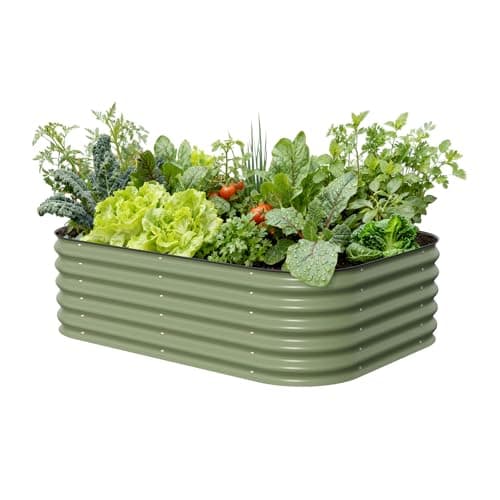 Top pickVego Garden 17" Modular Metal Raised Bed17 in deep, modular Aluzinc steel panels | Most first gardens | 9.2 | $159.95 - View on Amazon |
| 2 | 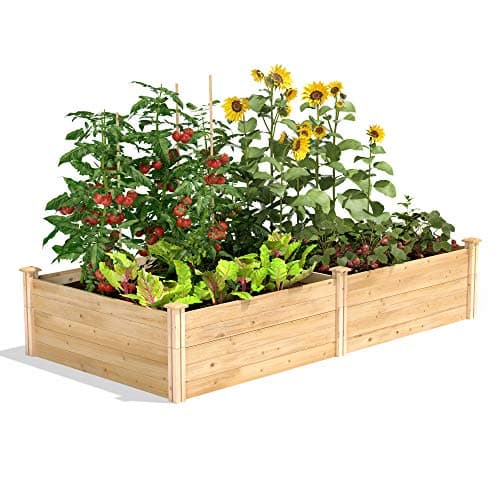 Greenes Fence Cedar Raised Garden Bed KitUntreated North American cedar, dovetail corners | People who want wood | 8.4 | $227.03 - View on Amazon |
| 3 | 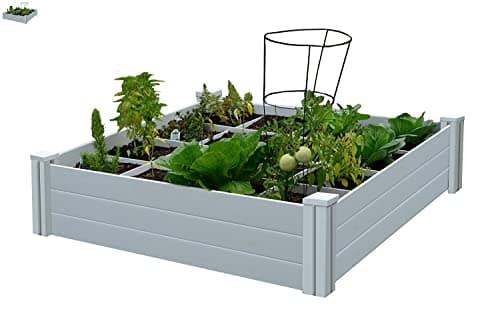 Vita Classic 4 x 4 ft Vinyl Raised Garden Bed11 in deep food-grade vinyl, tool-free posts | A tidy bed with no upkeep | 8.1 | $90.00 - View on Amazon |
| 4 | 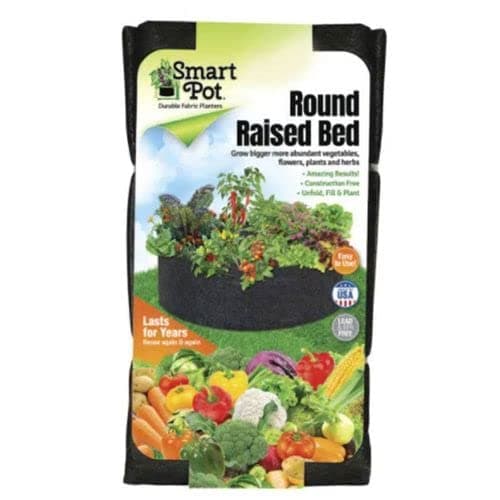 Smart Pot Round Raised Bed, 100 Gallon50 in across, 12 in deep, about 13.5 sq ft | A whole bed's worth | 8.8 | $69.95 - View on Amazon |
#ad We may earn a commission - Price as of October 17, 2026
Scores are our own editorial judgment, formed from published specifications and independent sources. They are not aggregated customer ratings, and they are not the result of hands-on testing, which we do not currently do. See how we choose.
Material inside a greenhouse
| Material | In a greenhouse | Watch for |
|---|---|---|
| Coated steel | Excellent. Unaffected by humidity, and the heat is no worse than full sun outdoors | Nothing specific. The best default |
| Cedar and timber | Pleasant to work beside and easy to attach supports to | Rots faster in constant warmth and humidity than it does outdoors |
| Vinyl and composite | Stable, no rot, easy to wipe down | Check it is rated for sustained heat and UV |
| Fabric beds | Drain and breathe well; fold away when not needed | Dry out fastest of anything here -- drip irrigation is close to essential |
| Concrete block | Thermal mass: absorbs heat by day, releases it at night | Permanent, heavy, and raises the pH of soil right at the edge |
What changes about growing in a bed indoors
- Watering becomes the whole job. There is no rain. A greenhouse bed needs irrigation planned in from day one, and drip is the obvious answer because overhead watering in a humid structure invites disease.
- Ventilation matters more than heat. Most greenhouse problems in summer are heat and stagnant air, not cold. Open vents early, and consider a shade cloth for the hottest months.
- Crop rotation gets harder. A greenhouse bed is a fixed small area, and growing tomatoes in the same soil year after year builds up soil-borne disease. Rotate within the structure, or replace the top layer periodically.
- Pests arrive and stay. Aphids and spider mites have no winter inside. Inspect regularly rather than waiting for damage.
- Pollination needs help. Fewer insects get inside. Tap or shake tomato flowers, or leave the door open during the day when they are flowering.
On the soil itself, treat an indoor bed the same as an outdoor one: a good compost-rich fill, topped with an inch or two of compost each spring. How to refresh raised bed soil covers the annual routine, and because a greenhouse bed cannot rely on rain, the best drip irrigation for raised beds is worth reading before the first planting rather than after.
For what to put in the beds once they are built, what to grow in a greenhouse sorts the crops that genuinely reward the space from the ones better grown outdoors.
The picks in full
Top pick
Vego Garden 17" Modular Metal Raised Bed
Vego Garden
The modular panel system is the reason to pay the premium: you can reshape the same bed into a different footprint next season without buying a second kit.
Vego is the brand most people meet first, and the modular panel system is the actual reason for that rather than the marketing. The kit arrives as flat corrugated panels plus corner pieces; you bolt them into whichever of the listed footprints suits your yard. If the 4 x 8 rectangle turns out to be wrong for your space, the same panels rebuild into a narrower or L-shaped bed next spring.
The steel matters more than the shape. Aluzinc is a zinc-aluminum-magnesium coating rather than plain galvanizing, and it is the finish you want on something that will sit in wet soil for years. That is the part of the price that buys durability rather than convenience.
Depth is the other thing to weigh. At 17 inches you can grow anything a beginner is likely to want, including carrots and potatoes, without hitting the bottom. The 32-inch version exists mainly so you can garden standing up, which is worth the extra soil cost if bending is the problem you are solving.
What works
- Panels unbolt and rebuild into a different shape
- Aluzinc coating is the better of the two steel finishes in this category
- 17 in is deep enough for carrots, potatoes and tomato roots
- Rolled safety edge along the top rail
What does not
- The most expensive metal bed of the ones we looked at
- Modularity is wasted if you build it once and leave it
- Steel warms fast in full afternoon sun in hot climates
Skip it if: you already know the exact shape you want and will never move it. You are paying for flexibility you would not use, and Vegega gives you the same steel for less.
| Material | Aluzinc-coated steel (zinc-aluminum-magnesium) |
|---|---|
| Depth | 17 in (a 32 in extra-tall version is also sold) |
| Shape | Modular panels, reconfigurable into several footprints |
| Assembly | Bolt-together panels, no cutting |
| Soil needed | About 32 cu ft for a 4 x 8 ft bed at 12 in of fill |
People who want wood
Greenes Fence Cedar Raised Garden Bed Kit
Greenes Fence
Real untreated cedar with tool-free dovetail corners -- the honest wood option, with the shorter lifespan that comes with wood.
Cedar is chosen for looks and for the fact that it is untreated, which matters if you are uneasy about what a pressure-treated board leaches into a bed you eat from. Cedar's natural oils slow rot without any chemistry at all.
The dovetail corner system is the reason to buy this particular kit rather than cutting boards yourself: the ends slot together, no hardware, and a second kit stacks on top to take a 7-inch tier up to 14 inches. That is worth doing -- one tier is too shallow for much beyond lettuce and herbs.
Set expectations on lifespan. In a wet climate a cedar bed is a multi-year item, not a permanent structure, and the boards touching soil go first.
What works
- Genuinely untreated cedar, no chemical concerns for food crops
- Tool-free dovetail corners go together in minutes
- Stack a second kit to double the depth
- Looks right in an ornamental garden
What does not
- Wood is a consumable -- expect years, not decades
- A single tier is shallow for root crops
- Cedar prices move a lot season to season
Skip it if: you want to buy a bed once. Even cedar is a wearing part in a wet climate, and steel is the better long-run answer.
| Material | Untreated North American cedar |
|---|---|
| Depth | Stackable boards, commonly 7 in per tier |
| Assembly | Dovetail corner joints, no tools required |
| Expandable | Kits stack to add depth |
| Soil needed | About 18 cu ft for 4 x 8 ft at 7 in |
A tidy bed with no upkeep
Vita Classic 4 x 4 ft Vinyl Raised Garden Bed
Vita
Board-and-post vinyl that goes together in about twenty minutes and never needs staining -- the lowest-maintenance of the kits sold on a store shelf.
Vinyl is the family most people overlook, and it earns its place on one argument: there is no maintenance at all. Cedar weathers and eventually rots, steel can scuff at the cut edges, and this does neither. The boards slide down into corner posts with no fasteners, so assembly is genuinely a twenty-minute job for one person.
The trade is depth. Eleven inches is enough for salad, bush beans, chard, herbs, strawberries and determinate tomatoes, and it is not enough for carrots, parsnips or a decent potato crop. Buy it knowing which half of the seed catalog it serves rather than discovering that in July.
Volume is modest too -- a 4 x 4 ft frame takes roughly 13.5 cubic feet of mix, which is one of the cheapest fills on this page and a real part of the appeal if the soil bill is what has been putting you off.
What works
- Tool-free assembly -- boards drop into the posts
- Nothing to stain, seal or re-treat, ever
- A white frame reflects more sun than dark steel in a hot yard
- The Grow Grid version marks out square-foot spacing for you
What does not
- Eleven inches is shallow for anything with a long root
- It reads as white vinyl fencing, which will not suit every garden
- A narrower range of sizes than the steel and cedar lines
Skip it if: you want carrots or potatoes. Eleven inches is the whole depth of the classic frame, and it does not stack the way a cedar or composite kit does.
| Material | Food-grade vinyl, BPA and phthalate free (manufacturer's figures) |
|---|---|
| Size | About 48 x 48 in, 11 in high |
| Assembly | Boards slide into corner posts, no tools |
| Warranty | 20-year limited, per the manufacturer |
| Soil needed | About 13.5 cu ft to fill |
A whole bed's worth
Smart Pot Round Raised Bed, 100 Gallon
Smart Pot
A fabric raised bed rather than a pot: wide enough to plant like a bed, cheap enough to buy two, and it folds flat in October.
This is the grow bag that behaves like a bed -- Smart Pot has also sold it as the Big Bag Bed. At roughly 50 inches across it gives you about 13.5 square feet of planting area -- the same growing area as a 4 x 4 ft frame -- in something that arrives folded in a flat parcel and needs no assembly at all.
Twelve inches of depth is the number that matters. That is enough for lettuce, beans, chard, bush cucumbers, peppers and determinate tomatoes, and it is shallow for carrots, parsnips and a serious potato crop. It is the same depth limit a shallow metal or vinyl bed has.
The cost is the fill. A bed-sized bag needs a bed-sized volume of potting mix, so the bag being inexpensive does not make the project inexpensive. Work out the mix cost first, using the soil calculator on this site, because that number rather than the bag decides whether this is the cheap option for you.
What works
- Gives you bed-scale planting area without a frame to assemble
- Twelve inches of depth is enough for most vegetables, including determinate tomatoes
- Folds flat for winter storage, which no rigid bed does
- Enclosed bottom means you can put it on a patio, gravel or a driveway
What does not
- Needs a full 13.5 sq ft of potting mix, which is the real cost of the format
- Dries out faster than a soil-filled frame of the same depth
- Fabric is a consumable -- plan on replacing it after a few seasons
Skip it if: you want the garden to look built. This is a black fabric circle sitting on the ground, and planting around it does not disguise that.
| Type | Round fabric raised bed |
|---|---|
| Capacity | 100 gal |
| Footprint | About 50 in across |
| Depth | 12 in |
| Growing area | About 13.5 sq ft |
| Base | Enclosed fabric bottom |
| Service life | Manufacturer states 3 to 5 years outdoors |
Common questions
How wide should raised beds be in a greenhouse?
About 24 inches each in a 6-foot-wide greenhouse, and up to 30 inches in an 8-foot one, with a path of at least 18 inches and ideally 24 between them. The path is the constraint: inside a structure you cannot walk around the outside of a bed, so a narrow path makes the whole greenhouse unpleasant to use.
How deep should a raised bed be inside a greenhouse?
Eleven to seventeen inches is plenty if the greenhouse sits on soil, because roots can carry on down into the ground beneath the bed. If the structure is on a concrete slab or on gravel over landscape fabric, treat the bed as a closed container and go deeper -- at least 17 inches for tomatoes.
Are raised beds better than pots in a greenhouse?
Generally yes. A larger connected volume of soil holds moisture far longer, and a greenhouse is the fastest-drying place on the property in summer. Pots are better only where you need to move plants around or rotate crops aggressively in a very small structure.
What is the best material for a greenhouse raised bed?
Coated steel is the easiest default -- unaffected by the humidity, and no worse in the heat than it would be in full sun outdoors. Cedar is pleasant to work beside and easy to attach supports to, but rots noticeably faster in constant warmth and damp than it does in a yard.
Do greenhouse raised beds need drainage?
If the greenhouse is on soil, the bed drains into the ground as usual and needs nothing special. On a slab, water has to run somewhere -- make sure the floor drains to a point rather than pooling under the bed, and never seal the base of the bed itself.
How do you water raised beds in a greenhouse?
With drip irrigation, planned in before the first planting. There is no rain inside, so every drop is yours to supply, and overhead watering in a humid enclosed structure encourages fungal disease. A pressure-compensating emitter line along each bed on a tap timer is the standard setup.
Sources
Factual claims on this page are backed by the published sources below, and product specifications are the manufacturers’ own. Where a figure is not published, we say so rather than estimating it.