Step 2 - Soil & Fill
How to Fill a Raised Garden Bed on Legs
Eight inches of soil with air underneath behaves like a large pot. Fill it like a pot and it works; fill it like a bed and it compacts.
Janet H. - the hands-on owner behind Janet Media Group.
Published
This page contains affiliate links. If you buy through them we may earn a commission at no cost to you, and it never decides what we recommend. How this site is funded.
Fill a raised bed on legs with a light container or potting mix, not a raised bed mix: the planter is typically only 8 to 12 inches deep, it is cut off from the ground entirely, and it drains and dries like a large pot. Line the base with landscape fabric or weed cloth to hold the mix in while letting water through, fill to within an inch of the rim, and plan on watering far more often than you would a ground-level bed. Heavy bed mix in a shallow elevated planter compacts into a dense slab within a season.
Why this is a container, not a bed
Every piece of advice about filling a raised bed assumes two things: that the bed is deep, and that it sits on soil. An elevated planter breaks both. There is no subsoil for roots to reach into, so the stated depth is the entire root zone. And there is air underneath, so water leaves through the base and evaporates from five surfaces rather than one.
That changes the mix requirement completely. A good raised bed mix is relatively heavy and holds moisture well, which is right when there is 17 inches of it over open ground. In 8 inches on legs it slumps, loses its air spaces and holds water at the base while drying at the top. A proper container mix -- lighter, with more coarse material for structure -- keeps its porosity under that regime.
| Depth of planter | Fill with | What grows well |
|---|---|---|
| 6 to 8 in | Container or potting mix, no bulk layer | Lettuce, spinach, herbs, radish, bush beans |
| 8 to 12 in | Container mix, optional inch of coarse base | The above plus chard, bush tomatoes, peppers |
| 12 to 18 in | Container mix over 2 to 3 in coarse material | Most vegetables except deep root crops |
| Over 18 in on legs | Bed mix on top, coarse lower third | Treat it as a deep bed; check the weight |
The fill, step by step
- 1
Check the base and the drainage
You need holes or a slatted base. Most timber planters have gaps; resin ones have drilled holes. If yours is solid, drill it -- a sealed elevated planter kills plants faster than any other mistake on this page.
- 2
Line it, but with the right thing
Landscape fabric or weed cloth stapled to the inside walls and base holds mix in and lets water through. Do not use plastic sheet. A coir liner works and looks better but breaks down in two or three seasons.
- 3
A thin coarse layer only if it is deep
In a planter over 12 inches, an inch or two of coarse wood chips or broken-up twigs at the base is fine. In a shallow one it just steals root depth you cannot spare.
- 4
Fill with container mix, moist not dry
Wet the mix as you go. Dry peat- or coir-based mixes repel water for a surprisingly long time, and a planter filled dry can take a week of watering to wet right through.
- 5
Stop an inch below the rim and mulch
The gap stops mix washing over the edge when you water. An inch of compost or fine bark mulch on top cuts evaporation, which is the planter's main weakness.
Quick picks
| # | Product | Best for | Score | Price |
|---|---|---|---|---|
| 1 | 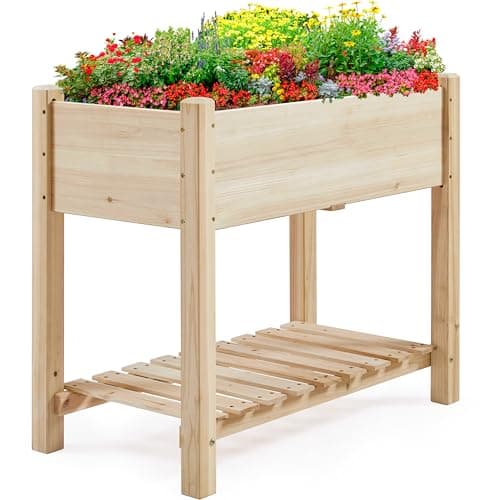 Top pickYaheetech Elevated Wooden Planter BoxWaist-height fir planter with drainage liner | Balconies and bad backs | 8.0 | $47.99 - View on Amazon |
| 2 |  Keter Easy Grow Elevated Garden BedResin planter with self-watering reservoir | Low-maintenance patio growing | 8.1 | Check price on Amazon |
| 3 | 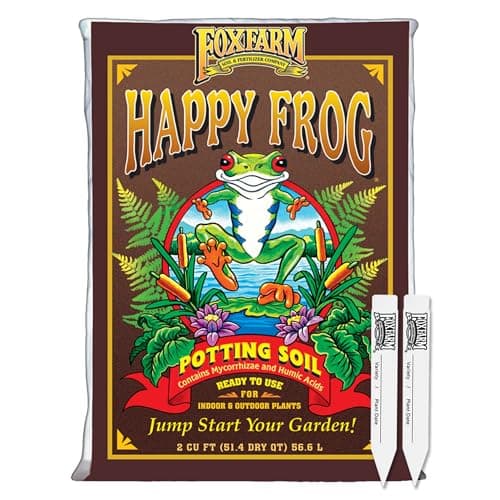 FoxFarm Happy Frog Potting SoilLight, biologically inoculated potting soil | Containers and intensive plantings | 8.5 | $38.94 - View on Amazon |
#ad We may earn a commission - Price as of October 11, 2026
Scores are our own editorial judgment, formed from published specifications and independent sources. They are not aggregated customer ratings, and they are not the result of hands-on testing, which we do not currently do. See how we choose.
Weight, which is the part to check before you fill
Moist container mix weighs far more than the dry bagged material suggests, and an elevated planter puts all of it on four small feet. A full waist-height planter is a concentrated point load, and on a timber deck or a balcony that is a structural question, not a gardening one. Stand the planter over a joist line rather than mid-span, spread the load with a board or paving slab under the feet if you can, and check the rated load for a balcony before filling anything.
If weight is tight, a lighter fill genuinely helps: a good container mix is substantially lighter than bed mix per cubic foot, and perlite or coarse bark in the blend lightens it further. The full treatment of decks and balconies, including load, is in raised beds for a deck, patio or balcony.
Watering is the trade you are making
- Expect daily watering in summer. A shallow planter in full sun with a crop in it can want water every day, and small ones twice on hot days.
- Mulch the surface. An inch of compost or fine bark is the cheapest single improvement you can make to an elevated planter.
- Water until it runs out of the base. Light watering wets the top inch only, and roots follow water. Water less often and more thoroughly.
- Consider a self-watering planter. A reservoir base genuinely changes the maintenance picture for this format, and it is the main reason to pay more for a resin planter over a timber one.
- Group planters together. Side by side they shade each other and dry more slowly than planters spread around a patio.
Feeding, because a container leaches
Every thorough watering carries some nutrients out of the base. Over a season that adds up, and a shallow planter has no reserve of subsoil to fall back on. Start with a mix that has some fertility in it, then feed through the season -- a balanced liquid feed every week or two once plants are growing strongly, at the label rate, is the straightforward version.
This is the clearest exception to the general advice in do you need to fertilize raised beds?. A deep bed over open ground often needs nothing but annual compost. A container on legs needs feeding, and a shallow one needs it most.
What to grow in it, realistically
Shallow and fast is the brief. Salad leaves, spinach, chard, radish, bush beans, herbs and strawberries all do well in 8 to 10 inches. Determinate tomatoes and peppers work in 12 inches with attention to watering and feeding. What does not work is the deep root crops -- parsnips, long carrots, main-crop potatoes -- and perennials that want to stay put for a decade.
If the reason you are looking at legs is reach rather than a hard surface, a tall ground-standing bed gives you standing height *and* full root depth, which is strictly better. Elevated raised beds ranks the planters themselves and is honest about that trade-off.
Common questions
What soil do you put in a raised garden bed on legs?
A light container or potting mix, not a raised bed mix. An elevated planter is typically only 8 to 12 inches deep and sits over air, so it drains and dries like a large pot. Heavy bed mix compacts into a dense slab in that depth within a season.
Do you need rocks in the bottom of an elevated planter?
No. A coarse layer in a shallow planter steals root depth you cannot spare and does not improve drainage -- water stalls at the boundary between fine mix and coarse material. What you do need is holes or a slatted base and a fabric liner that lets water through.
Should you line a raised garden bed on legs?
Yes, with landscape fabric or weed cloth, which holds the mix in while letting water out. Never line it with plastic sheet -- a sealed planter has nowhere for water to go and the roots drown.
How often do you water a raised bed on legs?
Daily in summer for a shallow planter in full sun, and potentially twice a day for a small one. Water thoroughly until it runs from the base rather than lightly and often, and mulch the surface with an inch of compost or fine bark to cut evaporation.
How much weight does a full elevated planter put on a deck?
Enough that it is worth checking. Moist container mix is far heavier than the dry bagged product, and the whole load sits on four small feet. Stand the planter over a joist line rather than mid-span, spread the load with a board under the feet, and check the rated load on a balcony before you fill it.
Sources
Factual claims on this page are backed by the published sources below, and product specifications are the manufacturers’ own. Where a figure is not published, we say so rather than estimating it.