Step 1 - Raised Beds
The Best Raised Bed for Potatoes
Potatoes are the one crop where the harvest decides the container. You are going to have to dig the whole thing out.
Janet H. - the hands-on owner behind Janet Media Group.
Published
This page contains affiliate links. If you buy through them we may earn a commission at no cost to you, and it never decides what we recommend. How this site is funded.
For most gardens the best container for potatoes is a potato grow bag with a harvest flap -- around 10 gallons, with a side access window so you can take early potatoes without tipping the whole thing out. If you want a real bed instead, go deep: a 24 inch steel bed or a tall standing-height bed gives you room to hill, which is what actually increases the yield. A standard 12 inch bed grows potatoes, just fewer of them.
Depth is about hilling, not roots
Potatoes form on stolons above the seed potato, not below it. That is why hilling works: every time you pull soil up around the stem you create more of the dark, cool zone where new tubers can form. Depth in a potato container is not root space -- it is hilling room.
Which means the arithmetic is simple. Plant the seed potato about 4 inches above the base, then you need another 8 to 12 inches of free space above it to hill into as the plant grows. Anything under about 14 inches total leaves you no room to do the thing that increases the crop.
Quick picks
| # | Product | Best for | Score | Price |
|---|---|---|---|---|
| 1 | 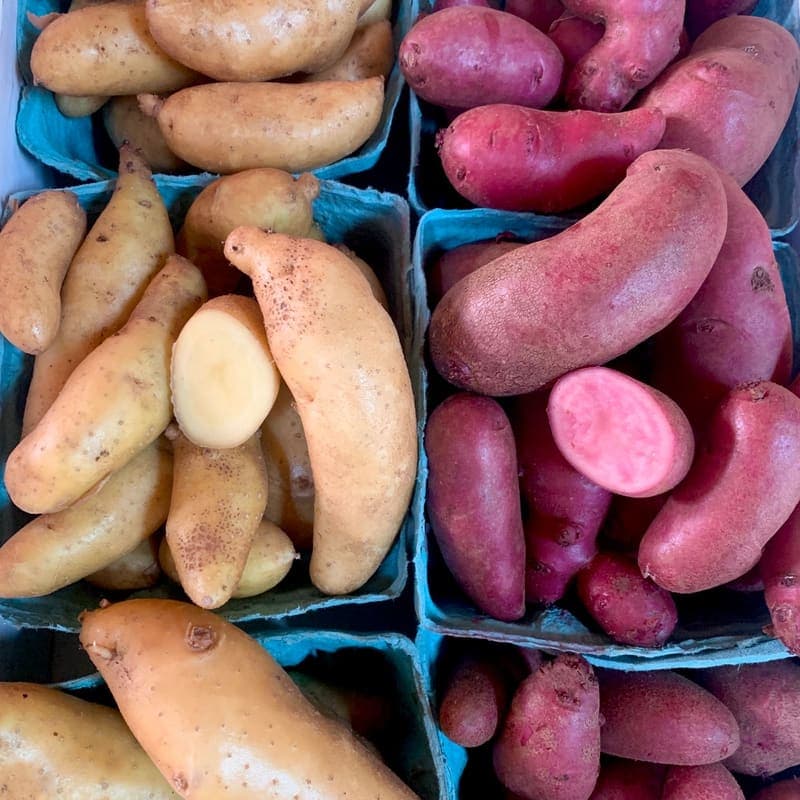 Top pickPotato Grow Bags with Harvest Flap10 gal with a side access window | Potatoes and sweet potatoes | 7.9 | Check price on Amazon |
| 2 | 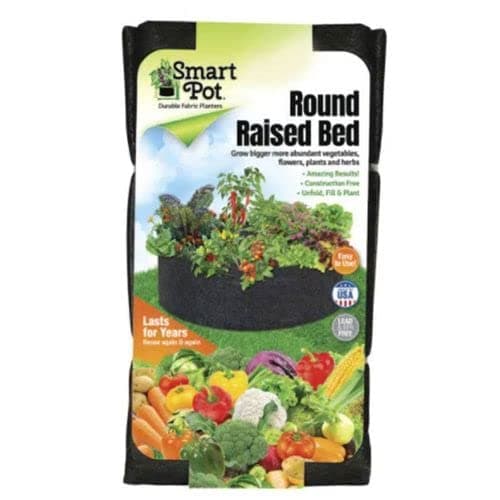 Smart Pot Round Raised Bed, 100 Gallon50 in across, 12 in deep, about 13.5 sq ft | A whole bed's worth | 8.8 | $69.95 - View on Amazon |
| 3 |  Birdies Tall Metal Raised Garden BedAbout 30 in tall, Aluzinc steel | Standing-height gardening | 8.7 | Check price on Amazon |
| 4 | 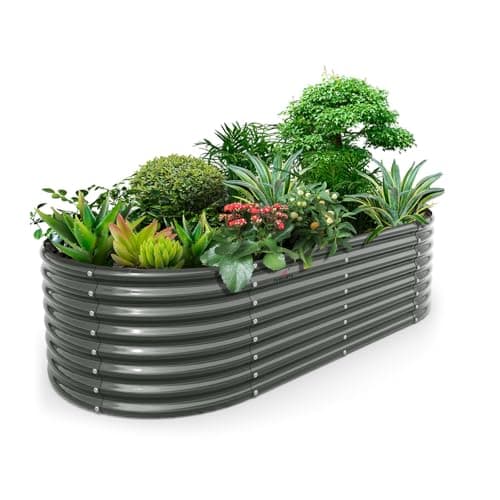 Anleolife 8 x 4 ft Metal Raised Garden BedUp to 24 in deep, 22-gauge corrugated steel | Deep beds for root crops | 8.8 | $148.85 - View on Amazon |
#ad We may earn a commission - Price as of October 10, 2026
Scores are our own editorial judgment, formed from published specifications and independent sources. They are not aggregated customer ratings, and they are not the result of hands-on testing, which we do not currently do. See how we choose.
Depth and spacing by type
| Type | Total depth | Plants per container |
|---|---|---|
| Earlies in a 10 gal bag | 14 in or more | 2 to 3 seed potatoes |
| Maincrop in a 10 gal bag | 14 in or more | 1 to 2 seed potatoes |
| Earlies in a deep bed | 18 to 24 in | About one per square foot |
| Maincrop in a deep bed | 24 in | One per 1.5 square feet |
| Sweet potatoes | 18 in or more | One slip per 2 square feet, wide spacing |
| Fingerlings | 14 in or more | Closer spacing tolerated |
Overcrowding is the standard first-year mistake with bags. Three seed potatoes in a 10 gallon bag gives a good crop of small earlies; six gives a disappointing crop of very small ones. The bag does not get bigger.
Why a harvest flap matters more than it sounds
Harvesting potatoes means going through the entire volume of the container with your hands, because any tuber you miss is next year's volunteer -- and volunteer potatoes carry disease forward into whatever you plant next in that bed.
In a bag you tip it out onto a tarp, pick through it and refill. That is fine, and it is far easier than digging a bed. A side flap lets you do something better still: reach in mid-season and take a few new potatoes while leaving the plant growing, which is most of the point of growing your own earlies.
In a bed you are digging, carefully, through soil you have otherwise spent three years building structure in. Doable, but it is a real argument for keeping potatoes out of your main vegetable bed -- see the best grow bags for vegetables for the full case.
Rotation, and why potatoes are the awkward crop
Potatoes are susceptible to soil-borne problems that build up where they grow repeatedly, and extension guidance is consistent: do not plant potatoes in the same ground in consecutive years, and keep them away from tomatoes, peppers and eggplants, which share the same diseases.
In a two-bed garden that rotation is hard. Bags solve it completely -- fresh mix every year, nothing carried forward, and you can put them on a path or a driveway where there is no bed to rotate at all. That is the strongest practical argument for growing potatoes in bags rather than in your best bed.
Soil and feeding
- Use a loose, free-draining mix. Potatoes in dense, waterlogged soil produce scabby, misshapen tubers. A standard raised bed mix is fine; heavy garden soil is not.
- Do not add fresh manure. It encourages scab. Finished compost is what you want -- see the best compost for raised beds.
- Keep watering even. Alternating dry and wet causes cracked and hollow tubers, and bags dry out fast in summer.
- Stop feeding nitrogen once flowering starts. More nitrogen late means more leaf and fewer tubers.
- Keep developing tubers covered. Potatoes exposed to light go green, which makes them inedible. That is the other reason to keep hilling.
The hilling routine, start to finish
- 1
Fill a third of the way
Put 4 to 6 inches of loose mix in the bottom of the bag or bed, and no more. The empty space above it is the whole point.
- 2
Plant the seed potatoes
Chitted side up, spaced as the table above, covered with about 3 inches of mix. Water in.
- 3
Hill when the shoots are 6 to 8 inches tall
Add mix around the stems so only the top few inches of foliage show. The buried stem is where the next tubers form.
- 4
Hill again two or three weeks later
Repeat until the container is full. Two or three rounds is normal; stop when you run out of room.
- 5
Keep every tuber covered
Any potato exposed to light turns green and is inedible. Top up if the surface settles or washes down.
- 6
Harvest by the foliage
Earlies once the plants flower; maincrop once the tops yellow and die back. Tip the bag out onto a tarp and pick through all of it.
Bags or a bed: how to choose
Choose bags if you have a small garden, you want to rotate without planning, you would rather not dig, or you want to grow potatoes on a patio with no bed at all. They are cheap, they work, and they are genuinely the better tool for this one crop.
Choose a deep bed if you are growing enough maincrop to store, you already have the bed, and you have somewhere else to put tomatoes next season. A 24 inch steel bed grows a serious quantity of potatoes and the depth is useful for carrots and parsnips in the years between.
A standing-height bed is the third answer, for anyone who finds harvesting at ground level the problem rather than the digging. Elevated raised beds covers that choice, and raised beds vs grow bags sets the two side by side.
The picks in full
Top pick
Potato Grow Bags with Harvest Flap
Various
#ad We may earn a commission - prices are shown by Amazon, not by us
The one grow bag with a feature you cannot get any other way: a flap at the base, so you can take new potatoes out without ending the plant.
Potatoes are the crop that justifies a grow bag on its own terms rather than as a substitute for a bed. They want depth, they want to be earthed up as they grow, and they are the one crop where harvesting means destroying the root zone anyway.
The flap is the real feature. Open it in midsummer, feel for the potatoes nearest the surface, take a meal's worth and close it again. The plant keeps growing and keeps setting tubers.
Buy on fabric weight rather than on the number of bags in the pack. The flap seam carries the load of wet mix, and that is where a thin bag gives out.
What works
- The harvest flap lets you pull early potatoes and leave the plant growing
- Deep enough to earth up a potato crop as it grows, which a shallow bed is not
- No digging, so no fork through a tuber
- Empties in one tip at the end of the season
What does not
- The flap is a weak point and the first place a bag fails
- Fabric quality varies a lot across brands in this category
- Needs steady watering -- potatoes in a dry bag crack and go knobbly
Skip it if: you are not growing potatoes. For everything else the flap is a seam waiting to leak, and a plain bag is the better buy.
| Type | Nonwoven fabric bag with hook-and-loop side flap |
|---|---|
| Capacity | Commonly 7 to 10 gal per bag |
| Access | Flap at the base for harvesting |
| Handles | Side handles for moving a full bag |
| Pack | Usually sold in multipacks |
A whole bed's worth
Smart Pot Round Raised Bed, 100 Gallon
Smart Pot
A fabric raised bed rather than a pot: wide enough to plant like a bed, cheap enough to buy two, and it folds flat in October.
This is the grow bag that behaves like a bed -- Smart Pot has also sold it as the Big Bag Bed. At roughly 50 inches across it gives you about 13.5 square feet of planting area -- the same growing area as a 4 x 4 ft frame -- in something that arrives folded in a flat parcel and needs no assembly at all.
Twelve inches of depth is the number that matters. That is enough for lettuce, beans, chard, bush cucumbers, peppers and determinate tomatoes, and it is shallow for carrots, parsnips and a serious potato crop. It is the same depth limit a shallow metal or vinyl bed has.
The cost is the fill. A bed-sized bag needs a bed-sized volume of potting mix, so the bag being inexpensive does not make the project inexpensive. Work out the mix cost first, using the soil calculator on this site, because that number rather than the bag decides whether this is the cheap option for you.
What works
- Gives you bed-scale planting area without a frame to assemble
- Twelve inches of depth is enough for most vegetables, including determinate tomatoes
- Folds flat for winter storage, which no rigid bed does
- Enclosed bottom means you can put it on a patio, gravel or a driveway
What does not
- Needs a full 13.5 sq ft of potting mix, which is the real cost of the format
- Dries out faster than a soil-filled frame of the same depth
- Fabric is a consumable -- plan on replacing it after a few seasons
Skip it if: you want the garden to look built. This is a black fabric circle sitting on the ground, and planting around it does not disguise that.
| Type | Round fabric raised bed |
|---|---|
| Capacity | 100 gal |
| Footprint | About 50 in across |
| Depth | 12 in |
| Growing area | About 13.5 sq ft |
| Base | Enclosed fabric bottom |
| Service life | Manufacturer states 3 to 5 years outdoors |
Standing-height gardening
Birdies Tall Metal Raised Garden Bed
Birdies
#ad We may earn a commission - prices are shown by Amazon, not by us
The original Australian-designed tall bed: expensive, well finished, and the one to buy if the point is gardening without kneeling.
Birdies is the bed the rest of the category copied. If a 30-inch working height is the specific problem you are solving -- a bad back, a wheelchair, or simply not wanting to kneel on wet ground -- this is a sensible place to spend money.
The catch is volume. Doubling the height doubles the fill, and fill is where a raised bed budget actually goes. Plan the bottom half as coarse material: logs, branches, leaves, spent potting soil. Only the top 10 to 12 inches has to be a proper growing mix, because that is where almost all vegetable roots live.
One practical note: tall beds dry from the top faster than they drain from the bottom. Mulch the surface, and water deeply rather than often.
What works
- Standing height removes most of the kneeling and bending
- Long-standing design with a good reputation for finish
- Rounded-corner shapes suit tight patios
- Aluzinc steel throughout
What does not
- Premium price before you have bought any soil
- Fill volume is the highest of any bed here
- Availability varies more than the mass-market brands
Skip it if: you are filling it with bagged mix alone. A 30-inch bed swallows an enormous amount of soil, and the bottom half should be cheap bulk material.
| Material | Aluzinc-coated steel |
|---|---|
| Height | About 30 in on the tall models |
| Shapes | Rectangular and rounded corner versions |
| Assembly | Bolt-together panels |
| Soil needed | Roughly 2x a 15 in bed of the same footprint |
Deep beds for root crops
Anleolife 8 x 4 ft Metal Raised Garden Bed
Anleolife
Thicker gauge steel and a deeper box than most kits, which is what stops a long bed bowing outward once it is full of wet soil.
Gauge is the specification nobody reads and everybody should. Steel gauge runs backwards -- a lower number is thicker metal -- and Anleolife's 22-gauge panels are noticeably more rigid than the thin budget beds that bulge in the middle after the first heavy watering.
That rigidity matters most on an 8-foot run, where soil pressure has the most leverage. The center brace on the long sizes is not decoration; leave it out and the sides will slowly bow.
Be realistic about the depth. A 24-inch bed at 8 x 4 ft holds around 64 cubic feet of fill. You do not have to buy 64 cubic feet of bagged mix -- the bottom third can be coarse organic material, which is what the hugelkultur and cheap-fill guides are for -- but you do have to plan it.
What works
- Heavier 22-gauge steel resists bowing on long runs
- 24 in depth suits potatoes, parsnips and long carrots
- Large growing area in one kit
- Center brace included on the long sizes
What does not
- Deep beds need a lot of fill, and fill is the real cost
- Galvanized rather than Aluzinc coating
- Long panels are awkward to handle solo
Skip it if: your budget is tight. The extra depth is real, but it also means roughly twice the soil of a 12-inch bed, and soil is the bigger bill.
| Material | 22-gauge corrugated galvanized steel |
|---|---|
| Depth | Sold in several heights, including 24 in |
| Footprint | 8 x 4 ft and other sizes |
| Assembly | Bolt-together panels with center support |
| Soil needed | About 64 cu ft for 8 x 4 ft at 24 in of fill |
Common questions
How deep does a raised bed need to be for potatoes?
At least 14 inches, and 18 to 24 inches is better. The depth is not for roots -- potatoes form tubers on stolons above the seed potato, so you need free space above it to hill into as the plant grows. A 12 inch bed grows potatoes, just noticeably fewer.
How many potatoes can you plant in a 10 gallon grow bag?
Two to three seed potatoes for earlies, one to two for maincrop. Overcrowding is the standard mistake: six seed potatoes in a 10 gallon bag gives a disappointing crop of very small tubers, because the bag does not get any bigger.
Are grow bags better than a raised bed for potatoes?
For most home gardens, yes. Bags give you fresh mix every year, which sidesteps the disease build-up that makes potatoes awkward to rotate; they tip out for harvest instead of being dug; and a side harvest flap lets you take early potatoes without disturbing the plant.
Can you grow potatoes in the same raised bed every year?
You should not. Extension guidance is consistent that potatoes need rotating, and that they should be kept away from tomatoes, peppers and eggplants, which share the same soil-borne diseases. If your garden is too small to rotate properly, grow them in bags instead.
What soil should I use for potatoes in a raised bed?
A loose, free-draining raised bed mix with finished compost in it. Avoid fresh manure, which encourages scab, and avoid heavy wet soil, which produces misshapen tubers. Keep watering even -- alternating dry and wet spells cause cracking and hollow centres.
Sources
Factual claims on this page are backed by the published sources below, and product specifications are the manufacturers’ own. Where a figure is not published, we say so rather than estimating it.