Step 5 - Greenhouses
Greenhouse vs Conservatory
One is designed for people, the other for plants. They look similar and behave very differently.
Janet H. - the hands-on owner behind Janet Media Group.
Published - last updated
This page contains affiliate links. If you buy through them we may earn a commission at no cost to you, and it never decides what we recommend. How this site is funded.
A conservatory or sunroom is a room with glass walls, designed to be comfortable for people. A greenhouse is a structure designed to grow plants. If the goal is vegetables, the greenhouse wins on almost every count including cost -- often by an order of magnitude.
| Greenhouse | Conservatory or sunroom | |
|---|---|---|
| Primary purpose | Growing plants | Living space |
| Cost | Hundreds to low thousands | Tens of thousands |
| Light quality | Diffused, from all sides and above | Often directional; roof frequently shaded or tinted |
| Humidity | High, and that is fine | Must stay low -- it is a room |
| Ventilation | Roof vents, opened wide | Windows sized for comfort, not for crop cooling |
| Water on the floor | Expected and useful | A problem |
| Best for | Vegetables and seedlings | Houseplants, citrus, overwintering tender plants |
Quick picks
| # | Product | Best for | Score | Price |
|---|---|---|---|---|
| 1 | 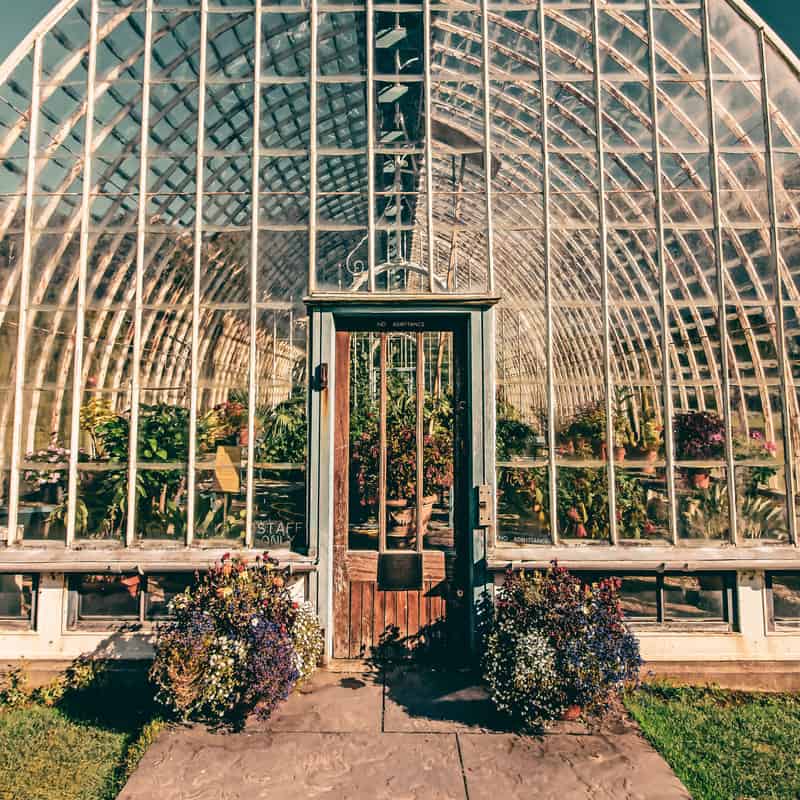 Top pickPalram Canopia Hybrid GreenhouseClear side panels, twin-wall roof | Seeing in, and light diffusion | 8.8 | Check price on Amazon |
| 2 |  Palram Canopia Mythos GreenhouseAluminum frame, 4 mm twin-wall polycarbonate | A first real greenhouse | 9.0 | Check price on Amazon |
| 3 |  Barrina T5 Full-Spectrum LED Grow LightsLinkable LED strips, full spectrum | Stopping leggy seedlings | 9.0 | Check price on Amazon |
#ad We may earn a commission - prices are shown by Amazon, not by us
Scores are our own editorial judgment, formed from published specifications and independent sources. They are not aggregated customer ratings, and they are not the result of hands-on testing, which we do not currently do. See how we choose.
Why plants struggle in a conservatory
Three reasons, all structural rather than fixable.
- Light from the wrong directions. Conservatory roofs are frequently tinted, shaded or partly solid to keep the room usable in summer. Plants want overhead light most of all.
- Ventilation sized for people. A conservatory vents enough to keep a room comfortable, not enough to dump the heat a crop generates under glass on a hot day.
- Humidity is a conflict. Growing plants raise humidity, and a room with soft furnishings and plaster needs it kept low. Something has to give, and it is usually the plants.
What a conservatory is genuinely good for
Overwintering tender plants -- citrus, pelargoniums, tender perennials -- in a frost-free space. Houseplants that want bright light. Somewhere to sit among greenery, which is a perfectly good reason to have one.
It is not a vegetable-growing structure, and trying to make it one usually makes the room less pleasant without making the plants much happier.
The window-sill trap
The same logic applies at small scale. A bright windowsill or sunroom shelf looks like a good place to raise seedlings and is not: light comes from one side, intensity through glass in late winter is low, and seedlings stretch toward it. That is a light problem with a cheap fix -- see grow lights for seedlings.
If you want a growing structure, the best greenhouse kits covers the options at a fraction of conservatory money.
The picks in full
Top pick
Palram Canopia Hybrid Greenhouse
Palram Canopia
#ad We may earn a commission - prices are shown by Amazon, not by us
Clear walls so you can see what is happening inside, with a diffusing twin-wall roof over the plants that need protection from hard overhead sun.
The Hybrid name refers to two glazing types in one kit: crystal-clear panels on the walls, twin-wall on the roof. In practice that means high light levels from the sides and diffused light from above, which is a good compromise in a northern or cloudy garden.
It also means you can see in. That sounds trivial until you have walked out in the rain three times a week to check whether anything needs water.
In a hot, south-facing, unshaded spot the clear walls become a liability. If that is your site, choose the fully diffused model or plan on shade cloth from midsummer.
What works
- You can see the plants without opening the door
- High light transmission through the clear walls
- Twin-wall roof still protects from midday sun
- Same aluminum frame as the rest of the range
What does not
- Clear walls run hotter than fully diffused glazing
- Shows dirt and algae sooner
- Needs shading in a hot, exposed spot
Skip it if: your site bakes in afternoon sun. Clear walls transmit far more light, and heat follows light.
| Frame | Rust-resistant aluminum |
|---|---|
| Glazing | Clear polycarbonate walls, twin-wall roof |
| Sizes | 6 ft wide, multiple lengths |
| Ventilation | Roof vent plus hinged door |
| Base | Integrated base, anchoring required |
A first real greenhouse
Palram Canopia Mythos Greenhouse
Palram Canopia
#ad We may earn a commission - prices are shown by Amazon, not by us
The sensible first greenhouse: an aluminum frame with twin-wall panels, sized to fit a normal backyard rather than a nursery.
Twin-wall polycarbonate is the thing that separates a greenhouse from a plastic tent. Two skins with an air gap between them insulate, and the panel diffuses light rather than throwing hard shadows, which suits seedlings better than clear glass does.
The Mythos sits at the point in the range where you get a proper aluminum frame, a roof vent and a lockable door without paying for the heavy-duty glazing. For starting seeds, hardening off, and stretching the tomato season at both ends, that is the right specification.
Two warnings from the manual that people ignore. Anchor it -- every lightweight greenhouse that ends up in a neighbor's yard was not anchored. And build it with a second person; the panels flex and the frame is not square until the last bolt.
What works
- Twin-wall panels diffuse light and insulate better than single-skin plastic
- Aluminum frame will not rust or need painting
- Lengths let you match the run to the space you have
- Roof vent included rather than sold as an extra
What does not
- 4 mm glazing is thin for real winter use
- Assembly is a long afternoon and genuinely needs two people
- Must be anchored -- an unanchored kit is a sail
Skip it if: you live somewhere with heavy snow load. 4 mm panels are a three-season specification; the thicker-glazed models exist for a reason.
| Frame | Rust-resistant aluminum |
|---|---|
| Glazing | 4 mm twin-wall polycarbonate |
| Sizes | 6 ft wide, several lengths including 6 x 8 and 6 x 10 |
| Ventilation | Roof vent, lockable door handle |
| Base | Integrated base rail, anchoring required |
Stopping leggy seedlings
Barrina T5 Full-Spectrum LED Grow Lights
Barrina
#ad We may earn a commission - prices are shown by Amazon, not by us
The fix for the most common seed-starting failure. A windowsill grows pale, stretched seedlings; a strip light 3 inches above them does not.
A seedling stretches toward light. On a windowsill in February the light comes from one side and there is not enough of it, so the stem elongates, the plant gets pale and floppy, and it never fully recovers. That is the single most common seed-starting failure and it is entirely a light problem.
LED strips fix it because they can sit 2 to 4 inches above the leaves without cooking them. Distance is what matters more than wattage: the same light at 18 inches does very little.
Run them about 14 to 16 hours a day on a timer and raise them as the seedlings grow. Linkable strips mean a whole shelving rack runs from one outlet.
What works
- Directly fixes stretched, leggy seedlings
- Linkable, so one outlet runs a whole shelf
- Very low heat, so it can sit close to the leaves
- Cheap to run
What does not
- Needs to be within a few inches of the seedlings to work
- Height must be adjusted as plants grow
- White light is unflattering in a living space
Skip it if: you have a genuinely bright greenhouse and are sowing in season. Then you are buying light you already have.
| Type | Linkable LED strip lights |
|---|---|
| Spectrum | Full spectrum, commonly 5000K white |
| Lengths | 1 ft, 2 ft and 4 ft strips |
| Mounting | Clips, hanging kit or double-sided tape |
| Linking | Strips daisy-chain from one outlet |
Common questions
Can you grow vegetables in a conservatory?
Some, but poorly compared with a greenhouse. Conservatory roofs are often tinted or shaded, ventilation is sized for human comfort rather than crop cooling, and the humidity growing plants create conflicts with a room containing furnishings and plaster.
Is a conservatory the same as a greenhouse?
No. A conservatory is a room designed for people, with glazing chosen for comfort. A greenhouse is a structure designed for plants, with glazing chosen for light transmission and diffusion, and ventilation sized to dump heat rather than to keep a room pleasant.
What plants do well in a sunroom?
Overwintering tender plants such as citrus, pelargoniums and tender perennials, plus houseplants that want bright light. It is a frost-free bright space, which is a genuinely useful thing -- just not a vegetable-growing structure.
Can I start seeds in a sunroom?
You can, but expect stretched seedlings unless you add a grow light. Light through glass in late winter is low in intensity and comes from one side, which is exactly the condition that makes seedlings elongate. A strip light a few inches above the tray fixes it.
Sources
Factual claims on this page are backed by the published sources below, and product specifications are the manufacturers’ own. Where a figure is not published, we say so rather than estimating it.